Vauxhall Insignia I Sports Tourer 2.0 CDTi ecoTEC (130 Hp) Automatic
The Vauxhall Insignia I Sports Tourer represents the first generation of Vauxhall’s mid-size (D-segment) car, launched in 2008. As the British arm of General Motors’ Opel brand, Vauxhall introduced the Insignia as a successor to the Vectra, aiming for a more premium and dynamic image. While the Insignia was sold as an Opel in continental Europe and later as a Buick Regal in North America, the specific “Sports Tourer” (station wagon) variant with the 2.0 CDTi ecoTEC (130 Hp) Automatic powertrain was a key offering in the UK and European markets, where diesel engines and station wagons hold significant popularity. This particular model, produced from 2008 to 2013, was designed to blend practicality with a sleek aesthetic, offering a comfortable and efficient family or business vehicle. It was recognized for its sophisticated design, competitive features, and strong emphasis on fuel efficiency, especially with the ecoTEC diesel engine.
Engine and Performance of the Vauxhall Insignia I Sports Tourer
At the heart of this particular Vauxhall Insignia I Sports Tourer is a 2.0-liter (1956 cm³ or 119.36 cubic inches) inline-four cylinder diesel engine, designated A20DT. This powerplant, equipped with a turbocharger and intercooler, utilizes a Common Rail fuel injection system and a DOHC (Double Overhead Camshaft) valvetrain with four valves per cylinder. It produces a respectable 130 horsepower at 4000 rpm, delivering power efficiently across the rev range.
Torque output is a significant aspect of diesel engines, and the Insignia’s 2.0 CDTi ecoTEC does not disappoint, generating 300 Nm (or 221.27 lb-ft) between 1750 and 2500 rpm. This broad torque band is crucial for effortless acceleration and strong pulling power, especially beneficial for a larger vehicle like a station wagon, and for towing. Power is sent to the front wheels via a smooth 6-speed automatic transmission, providing a comfortable driving experience without the need for manual gear changes.
In terms of acceleration, the Insignia I Sports Tourer 2.0 CDTi ecoTEC (130 Hp) Automatic reaches 60 mph from a standstill in an estimated 10.5 seconds (0-100 km/h in 11.1 seconds), and has a top speed of 123.03 mph (198 km/h). These figures position it as a capable rather than sporty performer, prioritizing efficiency and practicality. Fuel economy was a strong selling point, with a combined cycle rating of 6.9 l/100 km, which translates to an impressive 34.1 US mpg. Urban consumption was rated at 9.3 l/100 km (25.3 US mpg), while extra-urban driving saw figures as low as 5.3 l/100 km (44.4 US mpg). With CO2 emissions of 183 g/km and compliance with the Euro 5 emission standard, it was considered an environmentally conscious option for its time, further aided by the inclusion of a particulate filter.
Design and Features
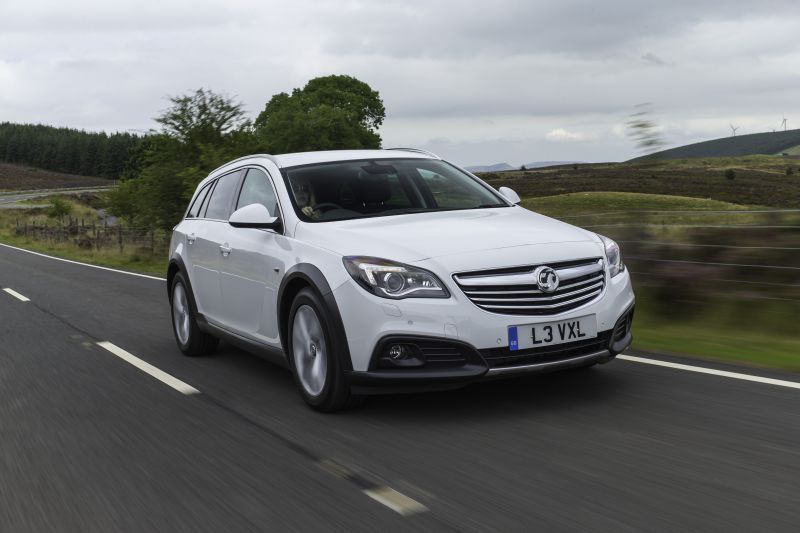
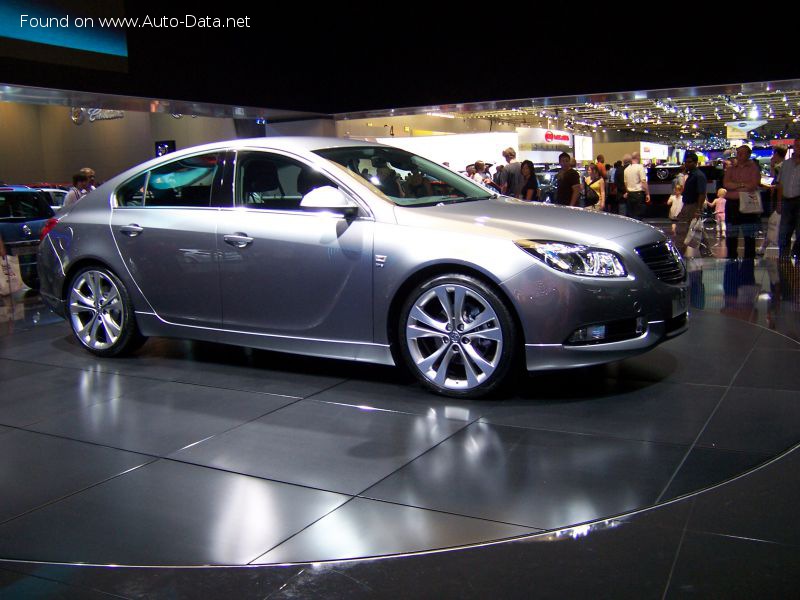
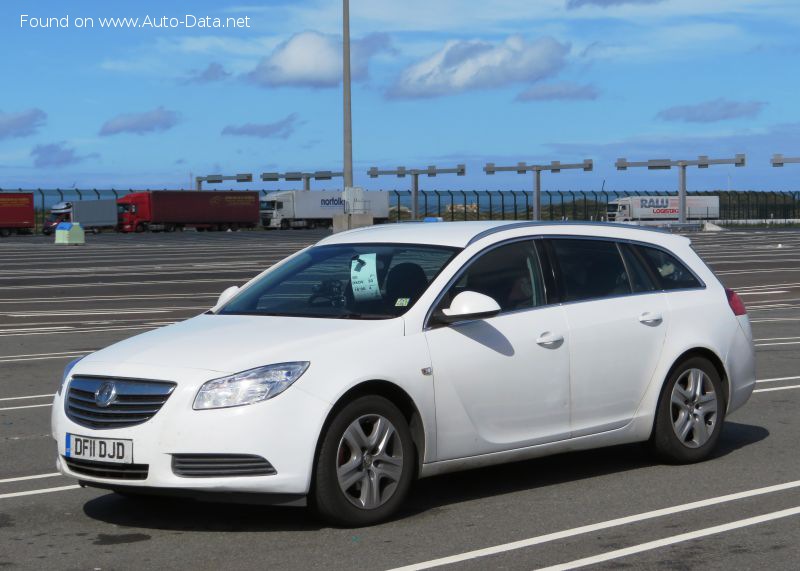
The Vauxhall Insignia I Sports Tourer made a strong visual statement upon its introduction, moving away from the more conservative design language of its Vectra predecessor. Its “Sports Tourer” designation reflected a more dynamic and sculpted approach to the traditional station wagon (estate) body type. The exterior featured flowing lines, a distinctive grille, and swept-back headlights, giving it a premium and athletic stance. With five doors and seating for five occupants, it offered excellent practicality and passenger comfort.
Dimensionally, the Insignia Sports Tourer was a substantial vehicle, measuring 193.23 inches (4908 mm) in length, 73.07 inches (1856 mm) in width (82.05 inches or 2084 mm including mirrors), and 59.84 inches (1520 mm) in height. Its wheelbase of 107.76 inches (2737 mm) contributed to a stable ride and generous interior space. The design was also aerodynamically efficient, boasting a drag coefficient (Cd) of 0.30.
Inside, the Insignia offered a well-appointed cabin with a focus on ergonomics and quality materials. As a station wagon, its primary strength lay in its cargo capacity. The trunk (boot) provided a minimum of 19.07 cubic feet (540 liters) of space, which could expand significantly to 53.33 cubic feet (1510 liters) with the rear seats folded down, making it highly versatile for families and those needing to transport larger items. The car also featured a substantial 18.49 US gallon (70 liter) fuel tank, offering a good cruising range, especially with its efficient diesel engine.
Underneath, the Insignia was equipped with a sophisticated chassis designed for both comfort and confident handling. It featured an independent McPherson strut front suspension with coil springs and an anti-roll bar, complemented by an independent multi-link rear suspension. Braking duties were handled by ventilated discs at the front and solid discs at the rear, supported by an Anti-lock Braking System (ABS) for enhanced safety. Hydraulic power steering provided good feedback to the driver. The vehicle rode on 215/60 R16 tires mounted on 16-inch wheel rims, a common setup for balancing ride comfort and handling capability in this segment.
Technical Specifications
| Category | Specification | US Equivalent (Approx.) |
|---|---|---|
| General Information | ||
| Brand | Vauxhall | |
| Model | Insignia | |
| Generation | Insignia I Sports Tourer | |
| Type (Engine) | 2.0 CDTi ecoTEC (130 Hp) Automatic | |
| Production Start | 2008 | |
| Production End | 2013 | |
| Powertrain Architecture | Internal Combustion engine | |
| Body Type | Station wagon (estate) | |
| Seats | 5 | |
| Doors | 5 | |
| Performance Specs | ||
| Fuel Consumption (Urban) | 9.3 l/100 km | 25.3 US mpg |
| Fuel Consumption (Extra Urban) | 5.3 l/100 km | 44.4 US mpg |
| Fuel Consumption (Combined) | 6.9 l/100 km | 34.1 US mpg |
| CO2 Emissions | 183 g/km | |
| Fuel Type | Diesel | |
| Acceleration 0-60 mph | 10.5 sec | |
| Acceleration 0-100 km/h | 11.1 sec | |
| Maximum Speed | 198 km/h | 123.03 mph |
| Emission Standard | Euro 5 | |
| Weight-to-Power Ratio | 12.8 kg/Hp | 28.22 lbs/Hp |
| Weight-to-Torque Ratio | 5.5 kg/Nm | |
| Engine Specs | ||
| Power | 130 Hp @ 4000 rpm | |
| Power per liter | 66.5 Hp/l | |
| Torque | 300 Nm @ 1750-2500 rpm | 221.27 lb-ft @ 1750-2500 rpm |
| Engine Layout | Front, Transverse | |
| Engine Model/Code | A20DT | |
| Engine Displacement | 1956 cm³ | 119.36 cu. in. (2.0 Liters) |
| Number of Cylinders | 4 | |
| Engine Configuration | Inline | |
| Cylinder Bore | 83 mm | 3.27 in. |
| Piston Stroke | 90.4 mm | 3.56 in. |
| Valves per Cylinder | 4 | |
| Fuel Injection System | Diesel Commonrail | |
| Engine Aspiration | Turbocharger, Intercooler | |
| Valvetrain | DOHC | |
| Engine Oil Capacity | 4.5 l | 4.76 US qt |
| Coolant Capacity | 9 l | 9.51 US qt |
| Engine Systems | Particulate filter | |
| Dimensions & Weights | ||
| Kerb Weight | 1658 kg | 3655.26 lbs. |
| Max. Weight | 2300 kg | 5070.63 lbs. |
| Max Load | 642 kg | 1415.37 lbs. |
| Trunk Space (Minimum) | 540 l | 19.07 cu. ft. |
| Trunk Space (Maximum) | 1510 l | 53.33 cu. ft. |
| Fuel Tank Capacity | 70 l | 18.49 US gal |
| Permitted Trailer Load (with brakes 12%) | 1600 kg | 3527.4 lbs. |
| Permitted Trailer Load (without brakes) | 750 kg | 1653.47 lbs. |
| Length | 4908 mm | 193.23 in. |
| Width | 1856 mm | 73.07 in. |
| Width (incl. mirrors) | 2084 mm | 82.05 in. |
| Height | 1520 mm | 59.84 in. |
| Wheelbase | 2737 mm | 107.76 in. |
| Front Track | 1585 mm | 62.4 in. |
| Rear Track | 1585 mm | 62.4 in. |
| Front Overhang | 1015 mm | 39.96 in. |
| Rear Overhang | 1156 mm | 45.51 in. |
| Ride Height (Ground Clearance) | 160 mm | 6.3 in. |
| Drag Coefficient (Cd) | 0.30 | |
| Minimum Turning Circle | 10.89 m | 35.73 ft. |
| Drivetrain, Brakes & Suspension | ||
| Drivetrain Architecture | Front-wheel drive (ICE drives front wheels) | |
| Drive Wheel | Front wheel drive | |
| Gearbox Type | 6 gears, automatic transmission | |
| Front Suspension | Independent, McPherson with coil spring and anti-roll bar | |
| Rear Suspension | Independent multi-link suspension | |
| Front Brakes | Ventilated discs | |
| Rear Brakes | Disc | |
| Assisting Systems | ABS (Anti-lock braking system) | |
| Power Steering | Hydraulic Steering | |
| Tires Size | 215/60 R16 | |
| Wheel Rims Size | 16 inches |
Legacy and Market Impact
The Vauxhall Insignia I Sports Tourer, and indeed the entire Insignia range, represented a pivotal moment for Vauxhall and Opel, marking a significant departure from the Vectra’s utilitarian image. Launched during a period of intense competition in the European D-segment, the Insignia was designed to elevate the brand’s perception, focusing on design flair, interior quality, and technological sophistication. The Sports Tourer variant, in particular, was crucial for markets like the UK and Germany, where station wagons traditionally account for a substantial portion of mid-size sales, catering to both family buyers and fleet customers.
In its primary markets, the Vauxhall Insignia I Sports Tourer 2.0 CDTi ecoTEC (130 Hp) Automatic faced stiff competition from well-established rivals such as the Ford Mondeo Estate, Volkswagen Passat Variant, Mazda 6 Tourer, and Skoda Superb Combi. What set the Insignia apart was its distinctive “Sports Tourer” styling, which offered a more dynamic profile than many of its boxier competitors, without significantly compromising on the essential practicality expected from a wagon. The ecoTEC diesel engine, with its balance of 130 horsepower, ample torque, and strong fuel economy (34.1 US mpg combined), made it a highly attractive proposition for those seeking low running costs and a relaxed driving experience, especially for long-distance cruising.
The car garnered positive reviews for its comfortable ride, refined powertrain, and substantial cargo capacity. Its Euro 5 emission compliance and integrated particulate filter were also important attributes, reflecting a growing consumer and regulatory focus on environmental performance during its production run. While not a performance leader, its competent handling and stable demeanor made it a pleasant vehicle for daily use and extended journeys.
The Insignia’s legacy is one of successful brand reinvention for Vauxhall/Opel. It helped shed the somewhat bland image of its predecessor and established a new design language that influenced subsequent models. Its success paved the way for the second-generation Insignia and demonstrated that Vauxhall could compete effectively against more premium European brands in terms of design and perceived quality, while still offering compelling value. For the used car market in the UK and Europe, the Insignia I Sports Tourer remains a popular choice for those seeking a spacious, comfortable, and economical family vehicle with a touch of style. Its impact was significant in solidifying Vauxhall’s position in the fiercely competitive European mid-size segment.