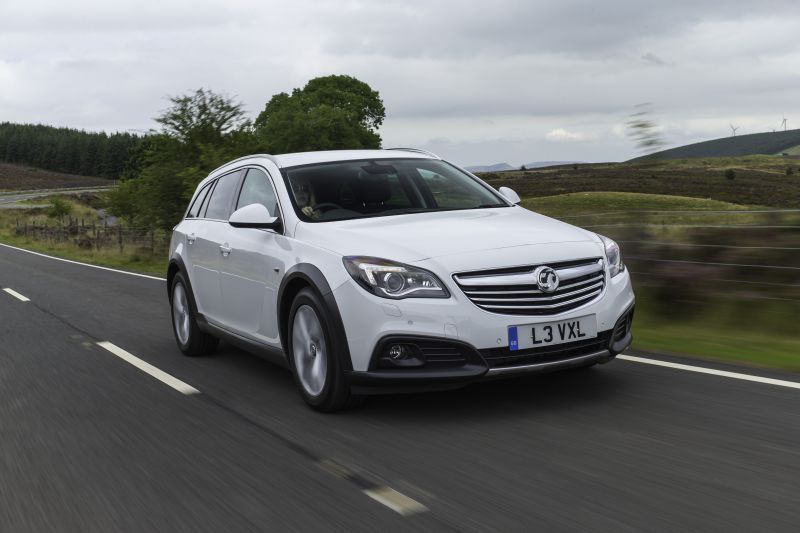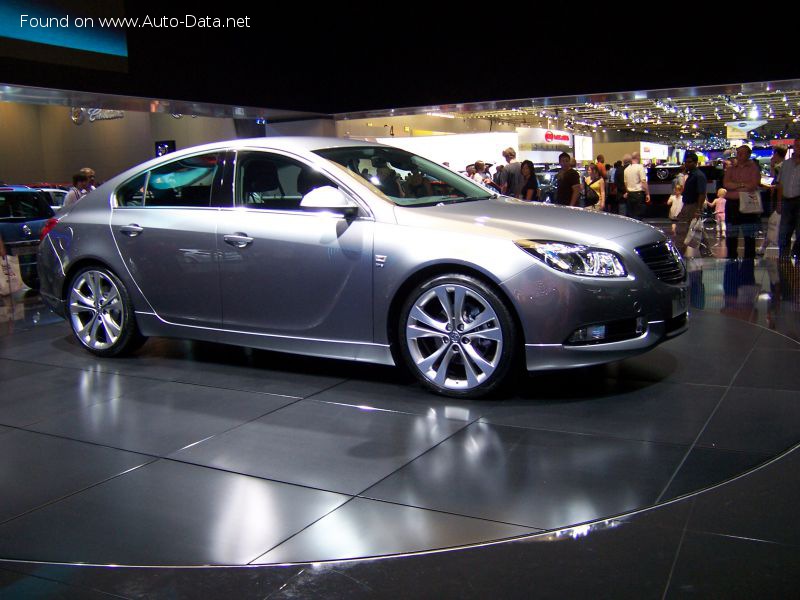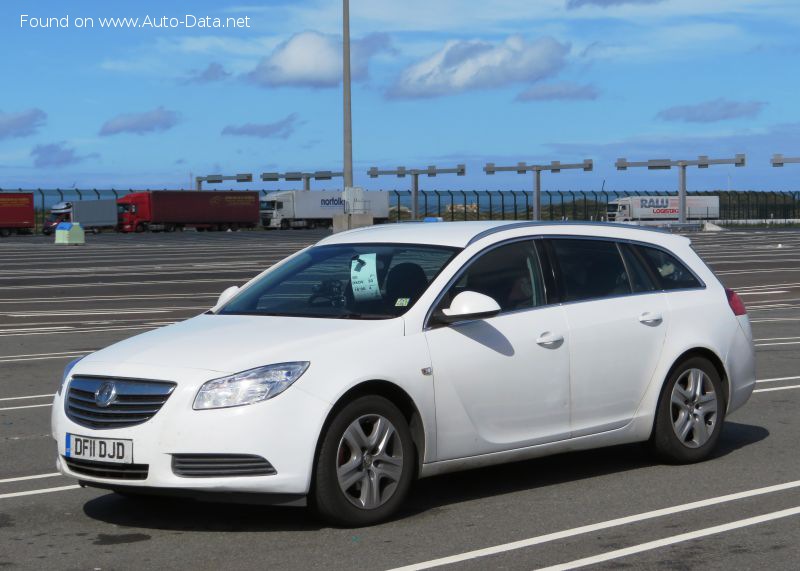
The Vauxhall Insignia I Sports Tourer 2.0 CDTi ecoTEC (160 Hp): A European Mid-Size Contender
The Vauxhall Insignia I Sports Tourer 2.0 CDTi ecoTEC (160 Hp) represents a significant chapter in General Motors’ European automotive strategy, particularly for the British market under the Vauxhall brand. Launched in 2008, the first-generation Insignia was a pivotal model, replacing the long-running Vectra and aiming to elevate Vauxhall’s presence in the highly competitive mid-size (D-segment) market. While never officially sold in the United States, the Insignia, known as the Opel Insignia across mainland Europe, was a cornerstone of GM’s global product portfolio, showcasing contemporary design, advanced engineering, and a strong emphasis on efficiency, especially with its diesel powertrains.
The Insignia I Sports Tourer, specifically, offered a compelling blend of style, practicality, and economical performance. Its “Sports Tourer” designation indicated a station wagon (known as an estate car in the UK) body style, designed to combine the sleek aesthetics of a sedan with the versatile cargo capacity demanded by European families and fleet operators. The 2.0 CDTi ecoTEC variant, with its 160 horsepower diesel engine, stood out for its balance of robust power delivery and impressive fuel economy, aligning with the growing demand for efficient vehicles during its production run from 2008 to 2013.
Engineering and Performance of the Vauxhall Insignia I Sports Tourer 2.0 CDTi ecoTEC (160 Hp)
At the heart of the Vauxhall Insignia I Sports Tourer 2.0 CDTi ecoTEC (160 Hp) was a sophisticated 2.0-liter (1956 cm3 or 119.36 cu. in.) inline-four diesel engine, internally designated A20DTH. This powerplant was a testament to GM Europe’s focus on advanced diesel technology, featuring a common rail fuel injection system, a turbocharger, and an intercooler to optimize performance and efficiency. The “ecoTEC” badge signified a commitment to environmental performance, incorporating technologies aimed at reducing fuel consumption and emissions, such as a particulate filter to meet Euro 5 emission standards.
The engine delivered a respectable 160 horsepower at 4000 rpm, providing ample motivation for the mid-size wagon. More crucially for a diesel, it produced a substantial 258.15 lb.-ft. (350 Nm) of torque, available across a broad rev range from 1750 to 2500 rpm. This characteristic torque delivery made the Insignia feel effortless in daily driving, offering strong acceleration from low speeds and confident overtaking ability. Power was sent to the front wheels via a smooth-shifting 6-speed manual transmission, a popular choice in the European market for its driver engagement and efficiency benefits.
In terms of outright performance, the Insignia Sports Tourer 2.0 CDTi ecoTEC was capable of accelerating from 0 to 60 mph in a brisk 8.8 seconds, with a top speed of 131.73 mph. These figures underscored its capability as a practical yet engaging family vehicle. However, where the ecoTEC truly shone was in its fuel economy. It achieved an impressive combined fuel consumption rating of 39.9 US mpg (5.9 liters per 100 km), with extra-urban figures reaching an outstanding 48 US mpg (4.9 liters per 100 km). This efficiency, coupled with a generous 18.49 US gallon fuel tank, provided an excellent cruising range, making it a favorite for long-distance travel across Europe.
Design and Features
The design of the Vauxhall Insignia I Sports Tourer marked a radical departure from its predecessor, the Vectra, embracing a more dynamic and sculpted aesthetic. It was recognized for its sleek, almost coupe-like profile, which was unusual for a station wagon of its size. The vehicle’s dimensions—193.23 inches long, 73.07 inches wide (82.05 inches including mirrors), and 59.84 inches high, with a 107.76-inch wheelbase—contributed to a commanding road presence while maintaining a relatively low drag coefficient of 0.3, aiding both aesthetics and aerodynamic efficiency.
As a 5-door, 5-seat station wagon, practicality was paramount. The Sports Tourer offered a versatile cargo area, with a minimum trunk space of 19.07 cu. ft. (540 liters) that could expand to an expansive 53.33 cu. ft. (1510 liters) with the rear seats folded down. This made it an ideal choice for families requiring ample space for luggage, groceries, or sports equipment. The interior was designed with a focus on ergonomics and quality, featuring materials and finishes that aimed to compete with more premium European brands.
Underneath its stylish exterior, the Insignia featured a robust chassis designed for comfort and confident handling. It utilized an independent McPherson strut suspension with coil springs and an anti-roll bar at the front, paired with an independent multi-link suspension at the rear. This setup provided a compliant ride while maintaining stability. Braking duties were handled by ventilated discs at the front and solid discs at the rear, complemented by an Anti-lock Braking System (ABS) for enhanced safety. Hydraulic power steering offered precise control, while the standard 215/60 R16 tires on 16-inch wheels provided a good balance of grip and ride comfort.
Technical Specifications
| Category | Specification |
|---|---|
| Brand | Vauxhall |
| Model | Insignia |
| Generation | Insignia I Sports Tourer |
| Engine Type | 2.0 CDTi ecoTEC (160 Hp) |
| Production Start | 2008 |
| Production End | 2013 |
| Powertrain Architecture | Internal Combustion Engine |
| Body Type | Station wagon (estate), 5 Doors, 5 Seats |
| Performance | |
| Fuel Consumption (Urban) | 7.7 l/100 km (30.5 US mpg) |
| Fuel Consumption (Extra Urban) | 4.9 l/100 km (48 US mpg) |
| Fuel Consumption (Combined) | 5.9 l/100 km (39.9 US mpg) |
| CO2 Emissions | 157 g/km |
| Fuel Type | Diesel |
| Acceleration 0-60 mph | 8.8 sec |
| Maximum Speed | 212 km/h (131.73 mph) |
| Emission Standard | Euro 5 |
| Weight-to-Power Ratio | 10.4 kg/Hp (96.5 Hp/tonne) |
| Weight-to-Torque Ratio | 4.7 kg/Nm (211.1 Nm/tonne) |
| Engine Specifications | |
| Power | 160 Hp @ 4000 rpm |
| Power per liter | 81.8 Hp/l |
| Torque | 350 Nm (258.15 lb.-ft.) @ 1750-2500 rpm |
| Engine Layout | Front, Transverse |
| Engine Model/Code | A20DTH |
| Engine Displacement | 1956 cm3 (119.36 cu. in.) |
| Number of Cylinders | 4, Inline |
| Cylinder Bore | 83 mm (3.27 in.) |
| Piston Stroke | 90.4 mm (3.56 in.) |
| Valves per Cylinder | 4 |
| Fuel Injection System | Diesel Commonrail |
| Engine Aspiration | Turbocharger, Intercooler |
| Valvetrain | DOHC |
| Engine Oil Capacity | 4.5 l (4.76 US qt) |
| Coolant Capacity | 9 l (9.51 US qt) |
| Engine Systems | Particulate filter |
| Dimensions & Weight | |
| Kerb Weight | 1658 kg (3655.26 lbs.) |
| Maximum Weight | 2290 kg (5048.59 lbs.) |
| Maximum Load | 632 kg (1393.32 lbs.) |
| Trunk Space (Min) | 540 l (19.07 cu. ft.) |
| Trunk Space (Max) | 1510 l (53.33 cu. ft.) |
| Fuel Tank Capacity | 70 l (18.49 US gal) |
| Permitted Trailer Load (with brakes) | 1600 kg (3527.4 lbs.) |
| Permitted Trailer Load (without brakes) | 750 kg (1653.47 lbs.) |
| Length | 4908 mm (193.23 in.) |
| Width | 1856 mm (73.07 in.) |
| Width (incl. mirrors) | 2084 mm (82.05 in.) |
| Height | 1520 mm (59.84 in.) |
| Wheelbase | 2737 mm (107.76 in.) |
| Front Track | 1585 mm (62.4 in.) |
| Rear Track | 1585 mm (62.4 in.) |
| Front Overhang | 1015 mm (39.96 in.) |
| Rear Overhang | 1156 mm (45.51 in.) |
| Ride Height (Ground Clearance) | 160 mm (6.3 in.) |
| Drag Coefficient (Cd) | 0.3 |
| Minimum Turning Circle | 10.89 m (35.73 ft.) |
| Drivetrain, Brakes & Suspension | |
| Drivetrain Architecture | Front-wheel drive, Internal Combustion Engine |
| Drive Wheel | Front-wheel drive |
| Gearbox | 6 gears, Manual transmission |
| Front Suspension | Independent, McPherson with coil spring and anti-roll bar |
| Rear Suspension | Independent multi-link suspension |
| Front Brakes | Ventilated discs |
| Rear Brakes | Disc |
| Assisting Systems | ABS (Anti-lock braking system) |
| Power Steering | Hydraulic Steering |
| Tires Size | 215/60 R16 |
| Wheel Rims Size | 16 inches |
Legacy and Market Impact
The Vauxhall Insignia I Sports Tourer, particularly the 2.0 CDTi ecoTEC (160 Hp) variant, left a significant mark on the European automotive landscape. Its introduction signaled a strategic shift for Vauxhall and Opel, moving away from the more utilitarian image of the Vectra towards a more aspirational, premium-feeling product. The Insignia’s striking design, which earned it the prestigious European Car of the Year award in 2009, was a key factor in attracting new buyers and challenging established rivals.
In the UK market, the Insignia Sports Tourer was a popular choice for both families and, crucially, for large corporate fleets, where its blend of space, comfort, and the 2.0 CDTi ecoTEC’s exceptional fuel economy made it a cost-effective and attractive proposition. It competed fiercely with other strong contenders in the D-segment, such as the Ford Mondeo Estate, Volkswagen Passat Variant, Skoda Superb Combi, and the Mazda6 Wagon. The Insignia often distinguished itself with its bolder styling and strong value proposition.
The ecoTEC diesel engines were particularly important for the Insignia’s success, embodying the European consumer’s preference for diesel power in larger vehicles due to its superior fuel efficiency and torque characteristics. The 160 horsepower variant offered an ideal balance of performance and running costs, cementing its reputation as a sensible yet capable choice for the discerning driver. Its compliance with Euro 5 emissions standards also reflected a forward-looking approach to environmental responsibility for its era.
Ultimately, the first-generation Vauxhall Insignia Sports Tourer played a vital role in redefining the brand’s image and demonstrating GM Europe’s capability to produce globally competitive vehicles. While it never crossed the Atlantic to the American market, its influence was keenly felt in its primary European domain, where it helped establish a new benchmark for design, efficiency, and practicality in the mid-size station wagon segment for Vauxhall and Opel.