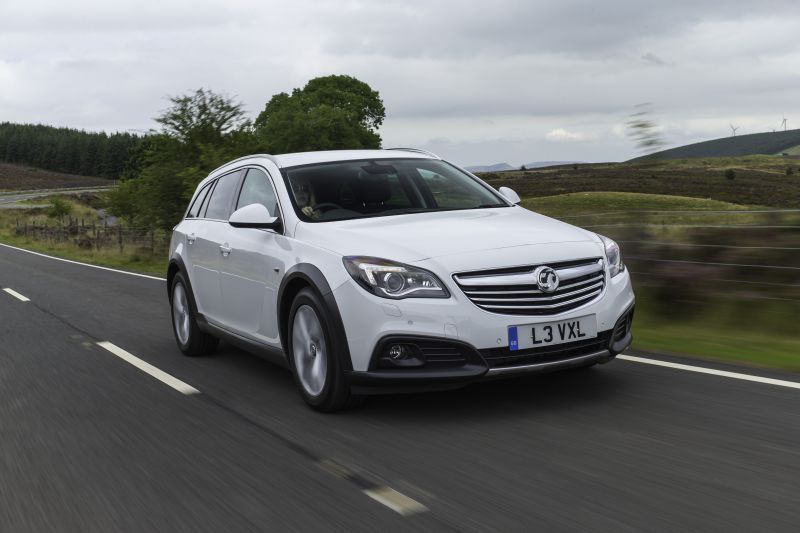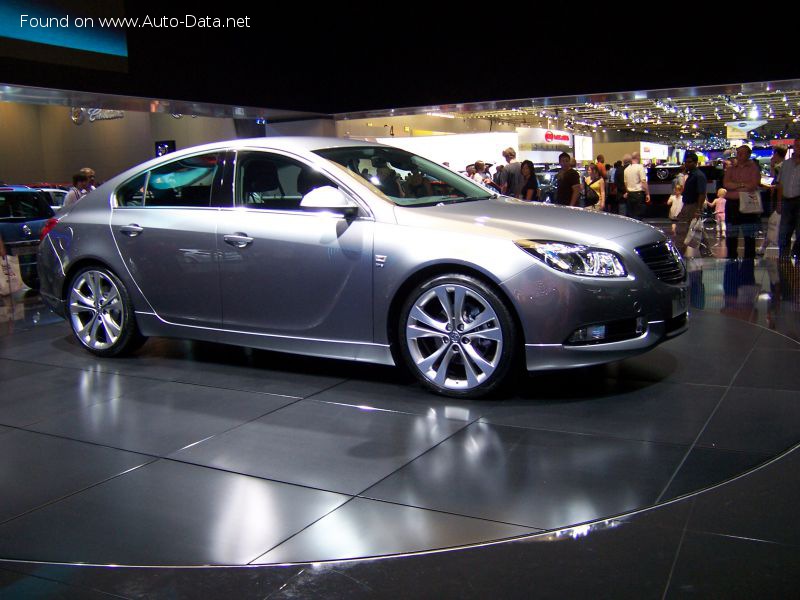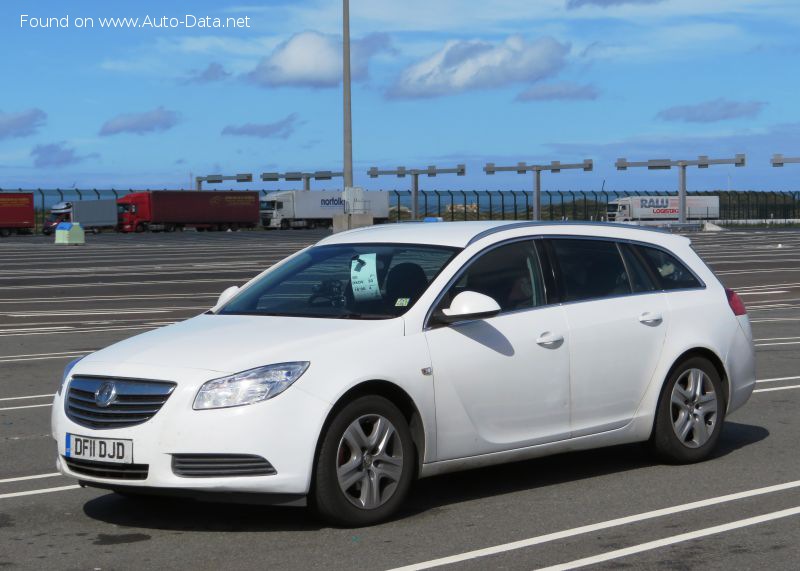
Introduction to the Vauxhall Insignia I Sports Tourer 2.0i Turbo ecoTEC (220 Hp) AWD Automatic
The Vauxhall Insignia I Sports Tourer, a prominent figure in the European mid-size car segment, represented a significant departure for the brand, succeeding the long-running Vectra. Launched in 2008, the first-generation Insignia aimed to elevate Vauxhall’s image with a more sophisticated design, enhanced driving dynamics, and a premium feel. The “Sports Tourer” designation specifically referred to the station wagon (or estate, as it’s known in the UK) variant, offering practicality without sacrificing the sleek aesthetic of the sedan. This particular model, the Vauxhall Insignia I Sports Tourer 2.0i Turbo ecoTEC (220 Hp) AWD Automatic, produced between 2008 and 2011, stood out in the lineup as a performance-oriented, all-wheel-drive (AWD) offering, combining a potent turbocharged engine with the versatility of a family wagon.
While Vauxhall is a British brand, part of General Motors’ European operations at the time, the Insignia was sold across Europe as the Opel Insignia and later formed the basis for the Buick Regal in North America. This particular variant, with its 2.0-liter turbocharged engine, 220 horsepower, and intelligent AWD system paired with an automatic transmission, was designed to appeal to drivers seeking a blend of spirited performance, all-weather capability, and generous cargo space within the competitive D-segment market. It showcased Vauxhall’s ambition to compete with more established premium brands by offering advanced technology and a compelling driving experience.
Engine and Performance of the Vauxhall Insignia I Sports Tourer 2.0i Turbo ecoTEC (220 Hp) AWD Automatic
At the heart of this specific Insignia Sports Tourer was a robust 2.0-liter (1,998 cubic inches) inline four-cylinder gasoline engine, designated with the internal code A20NHT. This powerplant was engineered with a twin-scroll turbocharger and an intercooler, technologies designed to maximize power output and efficiency across the RPM range. Further enhancing its performance and fuel delivery, the engine utilized direct injection, a system that precisely atomizes fuel directly into the combustion chamber, leading to improved combustion and increased power. With a DOHC (Dual Overhead Camshaft) valvetrain and four valves per cylinder, the engine was capable of producing a respectable 220 horsepower at 5,300 RPM.
Torque delivery was equally impressive, with a peak of 258.15 lb.-ft. available across a broad rev band, from 2,000 to 4,000 RPM. This wide torque plateau meant strong acceleration and flexible power in various driving conditions, whether navigating city streets or cruising on the highway. Power was routed through a smooth 6-speed automatic transmission, which contributed to a refined driving experience and allowed the driver to harness the engine’s capabilities effectively.
Performance figures for the Vauxhall Insignia I Sports Tourer 2.0i Turbo ecoTEC (220 Hp) AWD Automatic were competitive for its class, especially for a family station wagon. It could accelerate from 0 to 60 mph in an estimated 7.3 seconds, with a top speed of 144.16 mph. The “ecoTEC” branding signified Vauxhall’s commitment to balancing performance with environmental considerations, even in a higher-output model. Fuel economy, while not segment-leading for its time, was reasonable for an AWD turbocharged vehicle, achieving a combined rating of 24 US mpg. The engine met the Euro 5 emission standard, reflecting contemporary efforts to reduce vehicle pollutants. The sophisticated all-wheel-drive architecture ensured power was delivered efficiently to the road, with the system primarily driving the front wheels and engaging the rear wheels via an electrically or mechanically operated clutch only when additional traction was necessary, optimizing both grip and fuel efficiency.
Design and Features
Exterior and Interior Design
The Vauxhall Insignia I Sports Tourer marked a significant aesthetic shift for Vauxhall, moving away from the more conservative lines of its Vectra predecessor. Its design was characterized by flowing, sculpted surfaces, a prominent grille, and distinctive “blade” side styling that gave it a dynamic and upscale appearance. The Sports Tourer body style, specifically, was lauded for its integration of practicality with sleek design, avoiding the boxy look often associated with station wagons. At 193.23 inches long, 73.07 inches wide (82.05 inches including mirrors), and 59.84 inches high, the Insignia Sports Tourer was a substantial vehicle, offering a commanding presence on the road. Its aerodynamic drag coefficient (Cd) of 0.30 was commendable for a vehicle of its size and type, contributing to both fuel efficiency and reduced wind noise at higher speeds.
Inside, the Insignia offered a spacious cabin designed to comfortably accommodate five occupants. The focus was on quality materials and an ergonomic layout, creating an inviting environment for both driver and passengers. Practicality was a strong suit of the Sports Tourer, boasting a minimum trunk (boot) space of 19.07 cubic feet, which could expand significantly to 53.33 cubic feet with the rear seats folded down. This generous cargo capacity, combined with a maximum load of 1,448.44 lbs. and a permitted trailer load with brakes of 3,968.32 lbs., made it an ideal choice for families and those requiring considerable hauling capability.
Chassis, Safety, and Convenience
The Insignia’s chassis was engineered for a balanced ride, combining comfort with confident handling. It featured an independent McPherson strut suspension with coil springs and an anti-roll bar at the front, complemented by an independent multi-link suspension at the rear. This setup provided good body control and a compliant ride, suitable for diverse European road conditions. Braking performance was handled by ventilated discs at the front and solid discs at the rear, augmented by an Anti-lock Braking System (ABS) for enhanced safety during emergency stops.
Steering was managed by a hydraulic rack and pinion system, offering a direct and communicative feel, a characteristic often appreciated by enthusiasts. The vehicle rode on 17-inch wheels fitted with 225/55 R17 tires, providing a good balance of grip and ride comfort. The intelligent AWD system, which could send power to the rear wheels when slip was detected at the front, significantly enhanced traction and stability, particularly in adverse weather conditions, making the Insignia a reliable choice year-round. Other features typical for a car of its era included various driver aids and comfort amenities, though specific details beyond the core technical data are not provided. The 70-liter (18.49 US gallon) fuel tank ensured a decent cruising range.
Technical Specifications
| Category | Specification |
|---|---|
| General Information | |
| Brand | Vauxhall |
| Model | Insignia |
| Generation | Insignia I Sports Tourer |
| Type | 2.0i Turbo ecoTEC (220 Hp) AWD Automatic |
| Production Start | 2008 |
| Production End | 2011 |
| Powertrain Architecture | Internal Combustion Engine |
| Body Type | Station wagon (estate) |
| Seats | 5 |
| Doors | 5 |
| Performance Specs | |
| Fuel Consumption (Urban) | 16.3 US mpg |
| Fuel Consumption (Extra Urban) | 32.7 US mpg |
| Fuel Consumption (Combined) | 24 US mpg |
| CO2 Emissions | 231 g/km |
| Fuel Type | Petrol (Gasoline) |
| Acceleration 0-60 mph | 7.3 sec |
| Maximum Speed | 144.16 mph |
| Emission Standard | Euro 5 |
| Weight-to-Power Ratio | 8 kg/Hp (124.4 Hp/tonne) |
| Weight-to-Torque Ratio | 5.1 kg/Nm (198 Nm/tonne) |
| Engine Specs | |
| Power | 220 Hp @ 5300 rpm |
| Power per liter | 110.1 Hp/l |
| Torque | 258.15 lb.-ft. @ 2000-4000 rpm |
| Engine Layout | Front, Transverse |
| Engine Model/Code | A20NHT |
| Engine Displacement | 2.0 liters (121.93 cu. in.) |
| Number of Cylinders | 4 |
| Engine Configuration | Inline |
| Cylinder Bore | 3.39 in. (86 mm) |
| Piston Stroke | 3.39 in. (86 mm) |
| Compression Ratio | 9.3:1 |
| Valves per Cylinder | 4 |
| Fuel Injection System | Direct injection |
| Engine Aspiration | Twin-scroll turbo, Intercooler |
| Valvetrain | DOHC |
| Engine Oil Capacity | 6.34 US qt |
| Coolant Capacity | 7.71 US qt |
| Space, Volume, and Weights | |
| Kerb Weight | 3897.77 lbs. (1768 kg) |
| Max. Weight | 5346.21 lbs. (2425 kg) |
| Max Load | 1448.44 lbs. (657 kg) |
| Trunk Space (Minimum) | 19.07 cu. ft. (540 l) |
| Trunk Space (Maximum) | 53.33 cu. ft. (1510 l) |
| Fuel Tank Capacity | 18.49 US gal (70 l) |
| Permitted Trailer Load (with brakes) | 3968.32 lbs. (1800 kg) |
| Permitted Trailer Load (without brakes) | 1653.47 lbs. (750 kg) |
| Dimensions | |
| Length | 193.23 in. (4908 mm) |
| Width | 73.07 in. (1856 mm) |
| Width (including mirrors) | 82.05 in. (2084 mm) |
| Height | 59.84 in. (1520 mm) |
| Wheelbase | 107.76 in. (2737 mm) |
| Front Track | 62.4 in. (1585 mm) |
| Rear Track | 62.4 in. (1585 mm) |
| Front Overhang | 39.96 in. (1015 mm) |
| Rear Overhang | 45.51 in. (1156 mm) |
| Ride Height (Ground Clearance) | 6.3 in. (160 mm) |
| Drag Coefficient (Cd) | 0.30 |
| Minimum Turning Circle | 35.99 ft. (10.97 m) |
| Drivetrain, Brakes, and Suspension | |
| Drivetrain Architecture | ICE drives front wheels permanently; rear wheels driven via clutch if necessary. |
| Drive Wheel | All-wheel drive (4×4) |
| Number of Gears & Type | 6 gears, automatic transmission |
| Front Suspension | Independent, McPherson with coil spring and anti-roll bar |
| Rear Suspension | Independent multi-link suspension |
| Front Brakes | Ventilated discs |
| Rear Brakes | Disc |
| Assisting Systems | ABS (Anti-lock Braking System) |
| Steering Type | Steering rack and pinion |
| Power Steering | Hydraulic Steering |
| Tire Size | 225/55 R17 |
| Wheel Rims Size | 17 inches |
Legacy and Market Impact
The Vauxhall Insignia I Sports Tourer, particularly in its potent 2.0i Turbo ecoTEC AWD Automatic guise, carved out a distinct niche in the European market. It arrived as a successor to the venerable, but somewhat uninspired, Vectra, tasked with repositioning Vauxhall as a brand capable of delivering stylish, technologically advanced, and dynamically engaging vehicles. The Insignia largely succeeded in this mission. Its bold “sculptural artistry meets German precision” design language was a breath of fresh air, earning it the prestigious European Car of the Year award in 2009.
In its primary markets, such as the United Kingdom and mainland Europe (as the Opel Insignia), this model competed fiercely with established players like the Ford Mondeo, Volkswagen Passat, Skoda Superb, and offerings from French and Asian manufacturers such as the Peugeot 508, Citroën C5, Mazda 6, and Toyota Avensis. The 2.0-liter turbo AWD variant specifically aimed to offer a more premium driving experience, often seen as an alternative to entry-level executive sedans and wagons from brands like Audi (A4 Avant quattro), BMW (3 Series Touring xDrive), and Mercedes-Benz (C-Class Estate 4MATIC), but at a more accessible price point. Its combination of a powerful yet efficient turbocharged engine, the security of all-wheel drive, and the practicality of a large station wagon made it a compelling proposition for those needing versatility without compromising on performance or style.
The Insignia I generation, including the Sports Tourer, was instrumental in shaping Vauxhall’s identity for the subsequent decade. It demonstrated General Motors’ capability to produce globally competitive vehicles that could be adapted for different markets – famously becoming the Buick Regal in North America and a Holden Commodore in Australia. While the specific 2.0i Turbo ecoTEC (220 Hp) AWD Automatic configuration wasn’t a direct global transplant, the underlying architecture and design philosophy were shared, showcasing the vehicle’s inherent strengths. The first-generation Insignia’s legacy is one of successful transformation, proving that a mainstream brand could deliver aspirational design, advanced engineering, and a genuinely engaging driving experience, especially in its higher-specification, performance-oriented variants like the Sports Tourer. It solidified Vauxhall’s position in the D-segment and laid the groundwork for future generations of the model.