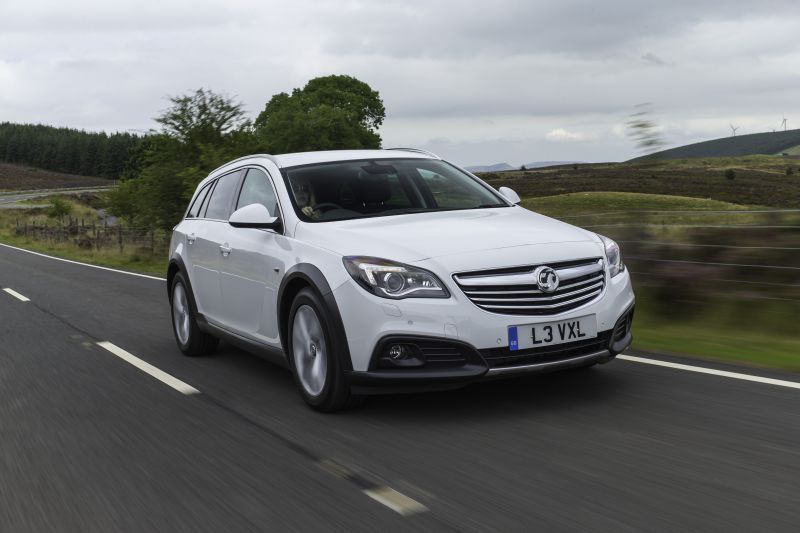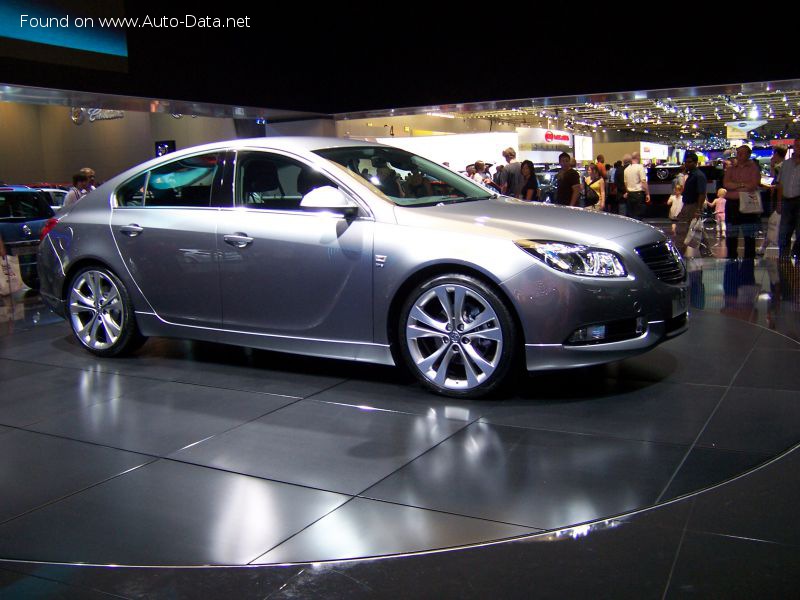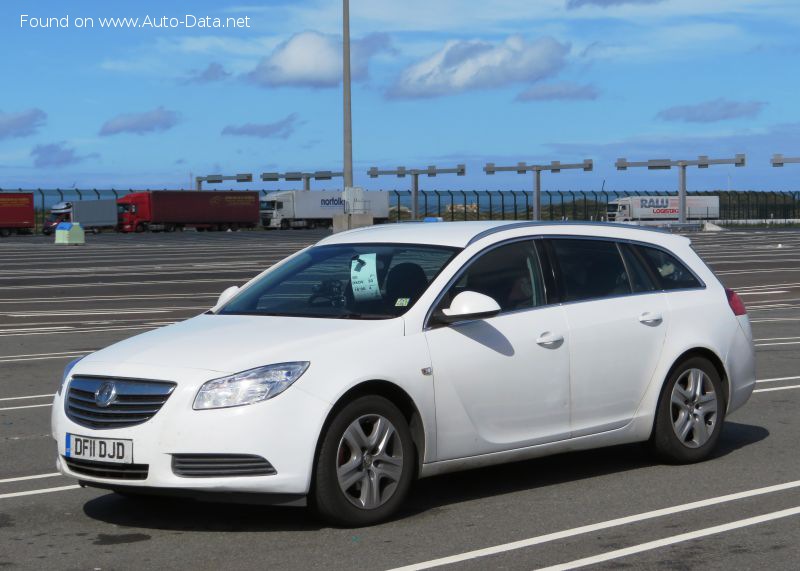
The Vauxhall Insignia I Sports Tourer 2.8i Turbo ecoTEC (260 Hp) AWD Automatic: A European Power Wagon
The Vauxhall Insignia, introduced in 2008, marked a pivotal moment for General Motors’ European operations, succeeding the long-running Vectra. As the UK-market badge for the Opel Insignia in continental Europe, this mid-size (D-segment) vehicle aimed to elevate the brand’s image with a more premium design, enhanced technology, and refined driving dynamics. Among its diverse lineup, the Vauxhall Insignia I Sports Tourer 2.8i Turbo ecoTEC (260 Hp) AWD Automatic, produced from 2009 to 2013, stood out as a performance-oriented station wagon variant. This particular model combined the practicality of a family estate with the spirited performance of a turbocharged V6 engine and the assured traction of an all-wheel-drive system, positioning it as a compelling option for those seeking versatility without compromising on driving excitement in the European market.
Engineering and Performance: The Heart of the Vauxhall Insignia I Sports Tourer 2.8i Turbo ecoTEC (260 Hp) AWD Automatic
At the core of this Insignia Sports Tourer was a robust 2.8-liter (2792 cm3 or 170.38 cu. in.) V6 engine, designated A28NET. This powerplant was a prime example of General Motors’ global engineering efforts, featuring a sophisticated DOHC (Double Overhead Camshaft) valvetrain and multi-port manifold injection. Crucially, it was equipped with a turbocharger and intercooler, enabling it to produce a formidable 260 horsepower at 5500 rpm. The torque output was equally impressive, delivering 258.15 lb.-ft. (350 Nm) across a broad rev range, from 1900 to 4500 rpm, which translated into excellent responsiveness and strong acceleration from low speeds.
The performance figures for this variant underscored its sporting intentions. It could accelerate from 0 to 60 mph in a swift 6.7 seconds, and reach a top speed of 154.1 mph (248 km/h). Such statistics placed it firmly among the more potent offerings in its segment. Power was efficiently managed and distributed through a 6-speed automatic transmission and a sophisticated all-wheel-drive (AWD) system, ensuring optimal grip and stability, particularly in adverse weather conditions or during spirited driving. Despite its performance capabilities, the engine carried the “ecoTEC” moniker, indicative of Vauxhall’s efforts to balance power with a degree of efficiency, meeting Euro 5 emission standards. However, with a combined fuel economy of 20.1 US mpg (11.7 l/100 km), and urban consumption at 13.1 US mpg (18 l/100 km), it was clear that performance was prioritized over outright fuel frugality, as is often the case with turbocharged V6 engines of this era.
Design and Features: Practicality Meets Style
The Insignia Sports Tourer’s design was a significant departure from its Vectra predecessor, characterized by flowing lines, a coupe-like roofline, and a muscular stance that gave it considerable road presence. The station wagon body type, or “estate” as it’s known in the UK, provided a blend of elegant styling and practical utility. Measuring 193.23 inches (4908 mm) in length and 73.07 inches (1856 mm) in width, with a wheelbase of 107.76 inches (2737 mm), the Insignia Sports Tourer offered a spacious interior for five occupants.
Practicality was a key strength, with a generous minimum trunk space of 19.07 cu. ft. (540 liters) that could expand to an impressive 53.33 cu. ft. (1510 liters) with the rear seats folded down, making it highly versatile for families and cargo hauling. The vehicle’s suspension system featured an independent McPherson setup with coil springs and an anti-roll bar at the front, complemented by an independent multi-link suspension at the rear. This configuration, coupled with hydraulic power steering, contributed to a balanced ride and handling experience, offering both comfort for long journeys and composure through corners. Safety features included standard ABS (Anti-lock Braking System), and the car was designed to meet contemporary European safety standards. The exterior aesthetic was completed by 16-inch wheels, typically fitted with 215/60 R16 tires, which provided a comfortable ride quality.
Technical Specifications: Vauxhall Insignia I Sports Tourer 2.8i Turbo ecoTEC (260 Hp) AWD Automatic
| General Information | |
|---|---|
| Brand | Vauxhall |
| Model | Insignia |
| Generation | Insignia I Sports Tourer |
| Engine Type | 2.8i Turbo ecoTEC (260 Hp) AWD Automatic |
| Production Start | 2009 year |
| Production End | 2013 year |
| Powertrain Architecture | Internal Combustion Engine |
| Body Type | Station wagon (estate) |
| Seats | 5 |
| Doors | 5 |
| Performance Specifications | |
| Fuel Consumption (Urban) | 13.1 US mpg (18 l/100 km) |
| Fuel Consumption (Extra Urban) | 29.4 US mpg (8 l/100 km) |
| Fuel Consumption (Combined) | 20.1 US mpg (11.7 l/100 km) |
| CO2 Emissions | 275 g/km |
| Fuel Type | Petrol (Gasoline) |
| Acceleration 0 – 60 mph | 6.7 sec |
| Maximum Speed | 154.1 mph (248 km/h) |
| Emission Standard | Euro 5 |
| Weight-to-Power Ratio | 7.2 kg/Hp, 138.4 Hp/tonne |
| Weight-to-Torque Ratio | 5.4 kg/Nm, 186.4 Nm/tonne |
| Engine Specifications | |
| Power | 260 Hp @ 5500 rpm |
| Power per Liter | 93.1 Hp/l |
| Torque | 258.15 lb.-ft. (350 Nm) @ 1900-4500 rpm |
| Engine Layout | Front, Transverse |
| Engine Model/Code | A28NET |
| Engine Displacement | 2.8 Liters (2792 cm3, 170.38 cu. in.) |
| Number of Cylinders | 6 |
| Engine Configuration | V-engine |
| Cylinder Bore | 3.5 in. (89 mm) |
| Piston Stroke | 2.94 in. (74.8 mm) |
| Compression Ratio | 9.5:1 |
| Valves per Cylinder | 4 |
| Fuel Injection System | Multi-port manifold injection |
| Engine Aspiration | Turbocharger, Intercooler |
| Valvetrain | DOHC |
| Engine Oil Capacity | 6.66 US qt (6.3 l) |
| Coolant Capacity | 7.08 US qt (6.7 l) |
| Space, Volume and Weights | |
| Kerb Weight | 4140.28 lbs. (1878 kg) |
| Max. Weight | 5555.65 lbs. (2520 kg) |
| Max Load | 1415.37 lbs. (642 kg) |
| Trunk Space (Minimum) | 19.07 cu. ft. (540 l) |
| Trunk Space (Maximum) | 53.33 cu. ft. (1510 l) |
| Fuel Tank Capacity | 18.49 US gal (70 l) |
| Permitted Trailer Load (with brakes) | 3747.86 lbs. (1700 kg) |
| Permitted Trailer Load (without brakes) | 1653.47 lbs. (750 kg) |
| Dimensions | |
| Length | 193.23 in. (4908 mm) |
| Width | 73.07 in. (1856 mm) |
| Width (including mirrors) | 82.05 in. (2084 mm) |
| Height | 59.84 in. (1520 mm) |
| Wheelbase | 107.76 in. (2737 mm) |
| Front Track | 62.4 in. (1585 mm) |
| Rear (Back) Track | 62.4 in. (1585 mm) |
| Front Overhang | 39.96 in. (1015 mm) |
| Rear Overhang | 45.51 in. (1156 mm) |
| Ride Height (Ground Clearance) | 6.3 in. (160 mm) |
| Drag Coefficient (Cd) | 0.30 |
| Minimum Turning Circle | 35.73 ft. (10.89 m) |
| Drivetrain, Brakes and Suspension Specifications | |
| Drive Wheel | All-wheel drive (4×4) |
| Gearbox Type | 6 gears, automatic transmission |
| Front Suspension | Independent, McPherson with coil spring and anti-roll bar |
| Rear Suspension | Independent multi-link suspension |
| Front Brakes | Ventilated discs |
| Rear Brakes | Disc |
| Assisting Systems | ABS (Anti-lock braking system) |
| Power Steering | Hydraulic Steering |
| Tires Size | 215/60 R16 |
| Wheel Rims Size | 16 inches |
Legacy and Market Impact in Europe
The Vauxhall Insignia, and specifically the Sports Tourer variant with its powerful 2.8i Turbo ecoTEC engine, made a significant impact in the highly competitive European D-segment. It faced strong rivals such as the Ford Mondeo Estate, Volkswagen Passat Variant, and even challenged entry-level premium wagons like the BMW 3 Series Touring and Audi A4 Avant, albeit with a different brand positioning. The Insignia’s success was largely attributed to its striking design, which was a clear step up from its predecessor and helped redefine Vauxhall’s aesthetic direction.
This particular 2.8T AWD automatic model garnered a reputation for its robust performance and confident handling, especially appealing to drivers who needed the practicality of a station wagon but desired a more engaging driving experience. While its “ecoTEC” branding might have hinted at efficiency, the reality was a balance; it was efficient for a powerful, turbocharged V6 AWD vehicle of its size and era, but certainly not a fuel-sipper compared to smaller, diesel-powered alternatives that dominated sales in Europe. Its higher CO2 emissions (275 g/km) reflected its performance orientation and would have incurred higher taxes in some European markets.
The Insignia I Sports Tourer also showcased General Motors’ commitment to offering a broad range of powertrains and configurations to cater to diverse European tastes. The underlying platform and design language were even adapted for the North American market as the Buick Regal, although the Sports Tourer body style with this specific high-performance V6 engine was less common or not offered in the US. For Vauxhall, the Insignia represented a crucial model that helped modernize its image, offering a sophisticated package of style, technology, and performance, solidifying its position as a strong contender in the mainstream European automotive landscape during its production run.