The Vauxhall Insignia I Sports Tourer: A European Mid-Size Contender
The Vauxhall Insignia I Sports Tourer, specifically the facelifted model introduced in 2013 for the 2014 model year, represents a significant offering in the highly competitive European D-segment. Manufactured by Vauxhall, the British marque of Opel (General Motors’ former European subsidiary, now part of Stellantis), the Insignia served as a crucial family car and fleet vehicle across the United Kingdom and continental Europe. This particular variant, equipped with the 1.4i Turbo ecoTEC (140 Hp) Start/Stop engine, exemplifies the trend towards downsized, turbocharged powertrains aimed at balancing performance with improved fuel efficiency and reduced emissions. While not sold in the United States, where General Motors offered models like the Chevrolet Malibu or Buick Regal (which shared some platform DNA with the Insignia/Opel Insignia), the Vauxhall Insignia I Sports Tourer carved out a strong niche in its primary markets from its production start in 2014 until its discontinuation in 2017. It was designed to appeal to families and business users seeking a practical, comfortable, and well-equipped vehicle with substantial cargo capacity.
Powertrain and Performance: The 1.4i Turbo ecoTEC Advantage
At the heart of this specific Vauxhall Insignia I Sports Tourer model is the 1.4-liter (1364 cm3 or 83.24 cu. in.) Turbo ecoTEC inline four-cylinder engine, designated with the code B14NET. This powerplant, featuring a turbocharger and intercooler, was a testament to modern engine design focused on extracting considerable power from a compact displacement. It delivered a respectable 140 horsepower between 4900 and 6000 rpm, coupled with a robust 147.51 lb.-ft. (200 Nm) of torque available across a wide band from 1850 to 4900 rpm. This broad torque curve ensured flexible performance in various driving conditions, from urban commuting to highway cruising.
Power was sent to the front wheels via a precise 6-speed manual transmission, offering an engaging driving experience while maximizing efficiency. The vehicle’s performance figures were solid for a family station wagon of its size and engine capacity. It could accelerate from 0 to 60 mph in approximately 10.9 seconds and reach a top speed of 124.27 mph (200 km/h).
A key feature of this ecoTEC engine was its integration of a Start/Stop system. This technology automatically shuts off the engine when the vehicle comes to a halt (e.g., at traffic lights or in congestion) and restarts it seamlessly when the driver presses the clutch pedal, contributing significantly to fuel savings, particularly in city driving. The fuel economy figures were impressive for a vehicle of its class: a combined rating of 42 US mpg (5.6 l/100 km), with urban consumption at 33.1 US mpg (7.1 l/100 km) and an extra-urban rating of 50 US mpg (4.7 l/100 km). With CO2 emissions of 131 g/km, the Insignia 1.4i Turbo ecoTEC met the stringent Euro 6 emission standard, underscoring its environmental consciousness for its time.
Design and Features of the Vauxhall Insignia I Sports Tourer
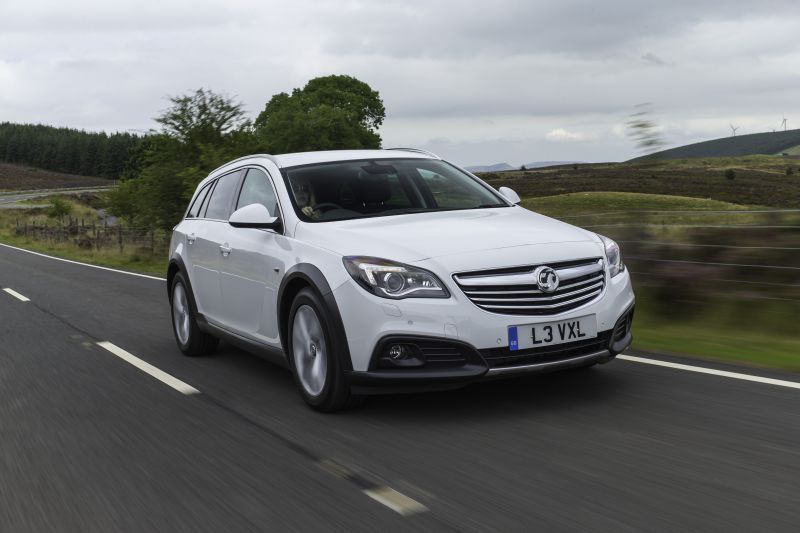
The Vauxhall Insignia I Sports Tourer, particularly after its 2013 facelift, presented a sleek and sophisticated aesthetic that helped it stand out in its segment. The “Sports Tourer” designation indicated its station wagon body style, designed for maximum practicality without sacrificing visual appeal. Measuring 193.43 inches (4913 mm) in length, 73.07 inches (1856 mm) in width (82.05 inches or 2084 mm including mirrors), and 59.57 inches (1513 mm) in height, the Insignia Sports Tourer commanded a substantial road presence. Its long wheelbase of 107.76 inches (2737 mm) contributed to both stable handling and a spacious interior.
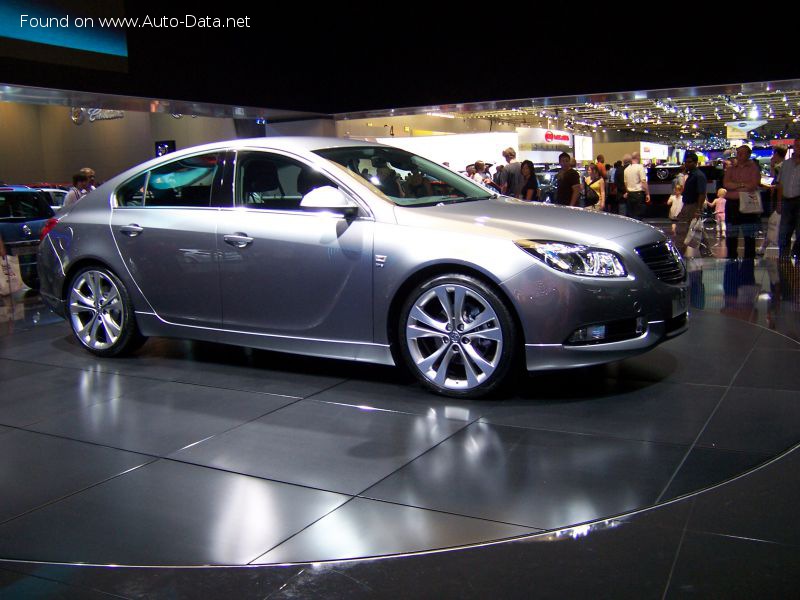
The facelift brought updated styling cues, including revised front and rear fascias, new lighting signatures, and a more refined grille, aligning the Insignia with Vauxhall’s contemporary design language. The overall silhouette was aerodynamic, hinting at its highway efficiency.
Inside, the Insignia Sports Tourer offered a comfortable and ergonomic cabin for five occupants across its five doors. The emphasis was on high-quality materials and intuitive controls. As a family-oriented vehicle, practicality was paramount. The trunk (boot) space was generous, starting at 19.07 cu. ft. (540 liters) with all seats in place, and expanding to a cavernous 54.03 cu. ft. (1530 liters) when the rear seats were folded down. This made it an ideal choice for hauling luggage, sports equipment, or goods.
Chassis-wise, the Insignia featured an independent McPherson strut suspension with a coil spring and anti-roll bar at the front, complemented by an independent multi-link setup at the rear. This sophisticated suspension system aimed to provide a comfortable ride while maintaining composed handling. Stopping power came from ventilated disc brakes at the front and solid discs at the rear, augmented by an Anti-lock Braking System (ABS) for enhanced safety. The vehicle rode on 16-inch wheels fitted with 215/60 R16 tires, offering a good balance of grip and ride comfort.
Technical Specifications
| Category | Specification |
|---|---|
| General Information | |
| Brand | Vauxhall |
| Model | Insignia |
| Generation | Insignia I Sports Tourer (facelift 2013) |
| Type (Engine) | 1.4i Turbo ecoTEC (140 Hp) Start/Stop |
| Start of production | 2014 year |
| End of production | 2017 year |
| Powertrain Architecture | Internal Combustion engine |
| Body type | Station wagon (estate) |
| Seats | 5 |
| Doors | 5 |
| Performance Specs | |
| Fuel consumption (economy) – urban | 7.1 l/100 km (33.1 US mpg) |
| Fuel consumption (economy) – extra urban | 4.7 l/100 km (50 US mpg) |
| Fuel consumption (economy) – combined | 5.6 l/100 km (42 US mpg) |
| CO2 emissions | 131 g/km |
| Fuel Type | Petrol (Gasoline) |
| Acceleration 0 – 60 mph | 10.9 sec |
| Acceleration 0 – 100 km/h | 11.5 sec |
| Maximum speed | 124.27 mph (200 km/h) |
| Emission standard | Euro 6 |
| Weight-to-power ratio | 11.6 kg/Hp, 86.3 Hp/tonne |
| Weight-to-torque ratio | 8.1 kg/Nm, 123.2 Nm/tonne |
| Engine Specs | |
| Power | 140 Hp @ 4900-6000 rpm. |
| Power per liter | 102.6 Hp/l |
| Torque | 147.51 lb.-ft. (200 Nm) @ 1850-4900 rpm. |
| Engine layout | Front, Transverse |
| Engine Model/Code | B14NET |
| Engine displacement | 1.4 liters (1364 cm3 / 83.24 cu. in.) |
| Number of cylinders | 4 |
| Engine configuration | Inline |
| Cylinder Bore | 2.85 in. (72.5 mm) |
| Piston Stroke | 3.25 in. (82.6 mm) |
| Number of valves per cylinder | 4 |
| Fuel injection system | Multi-port manifold injection |
| Engine aspiration | Turbocharger, Intercooler |
| Valvetrain | DOHC, VVT |
| Engine oil capacity | 4.23 US qt (4 l) |
| Coolant | 9.51 US qt (9 l) |
| Engine systems | Start & Stop System |
| Space, Volume and Weights | |
| Kerb Weight | 3578.1 lbs. (1623 kg) |
| Max. weight | 4717.89 lbs. (2140 kg) |
| Max load | 1139.79 lbs. (517 kg) |
| Trunk (boot) space – minimum | 19.07 cu. ft. (540 l) |
| Trunk (boot) space – maximum | 54.03 cu. ft. (1530 l) |
| Fuel tank capacity | 18.49 US gal (70 l) |
| Permitted trailer load with brakes (12%) | 2645.55 lbs. (1200 kg) |
| Permitted trailer load without brakes | 1653.47 lbs. (750 kg) |
| Dimensions | |
| Length | 193.43 in. (4913 mm) |
| Width | 73.07 in. (1856 mm) |
| Width including mirrors | 82.05 in. (2084 mm) |
| Height | 59.57 in. (1513 mm) |
| Wheelbase | 107.76 in. (2737 mm) |
| Front overhang | 40.16 in. (1020 mm) |
| Rear overhang | 45.51 in. (1156 mm) |
| Minimum turning circle (turning diameter) | 37.4 ft. (11.4 m) |
| Drivetrain, Brakes and Suspension Specs | |
| Drivetrain Architecture | The Internal combustion engine (ICE) drives the front wheels of the vehicle. |
| Drive wheel | Front wheel drive |
| Number of gears and type of gearbox | 6 gears, manual transmission |
| Front suspension | Independent, type McPherson with coil spring and anti-roll bar |
| Rear suspension | Independent multi-link suspension |
| Front brakes | Ventilated discs |
| Rear brakes | Disc |
| Assisting systems | ABS (Anti-lock braking system) |
| Tires size | 215/60 R16 |
| Wheel rims size | 16 |
Legacy and Market Impact in Europe
The Vauxhall Insignia I Sports Tourer, especially in its facelifted form from 2014 to 2017, played a crucial role in Vauxhall’s lineup, serving as its flagship family car in the UK. Across Europe, its Opel badged counterpart, the Opel Insignia, held a similar position. This model competed fiercely in the D-segment, which includes strong contenders like the Ford Mondeo (Fusion in North America), Volkswagen Passat, Skoda Superb, and Mazda6. The Insignia’s appeal lay in its blend of stylish design, spacious interior, practical station wagon utility, and a range of efficient engines.
The introduction of downsized, turbocharged engines like the 1.4i Turbo ecoTEC was a strategic move to meet increasingly stringent emissions regulations and consumer demand for lower running costs. This specific engine variant allowed the Insignia Sports Tourer to offer a compelling package of sufficient power for daily driving combined with excellent fuel economy and favorable tax implications in European markets due to its Euro 6 compliance and relatively low CO2 emissions. This made it particularly attractive to fleet buyers and company car drivers, a significant portion of the D-segment market in Europe.
The Insignia I, including its Sports Tourer variant, was generally well-regarded for its comfortable ride, stable handling, and overall value proposition. While perhaps not as dynamically engaging as some rivals, its strengths in practicality, equipment levels, and efficiency ensured its continued relevance. The facelift further refined its aesthetics and interior, keeping it fresh against newer competitors. Its legacy is one of a dependable, versatile, and economically sensible choice for European families and businesses, embodying Vauxhall’s commitment to providing practical and modern transportation solutions tailored to the needs of its primary market. The Insignia paved the way for its successor, continuing the brand’s presence in the mid-size segment with a focus on technology and efficiency.