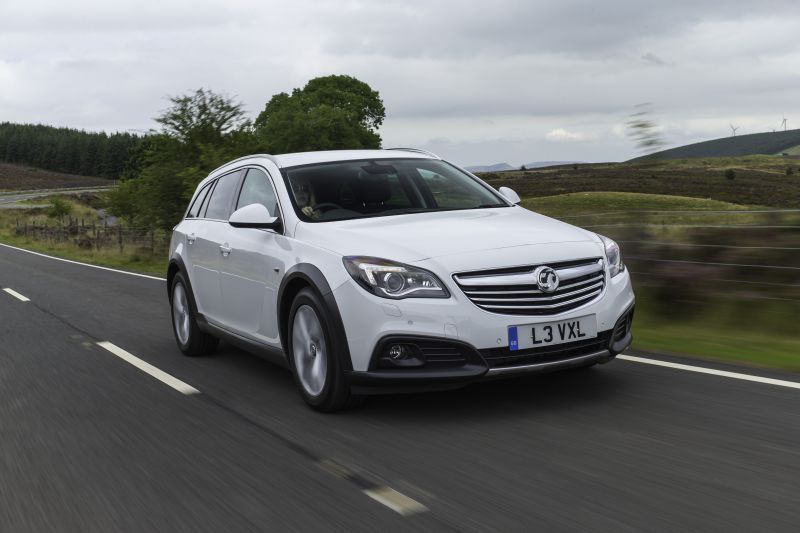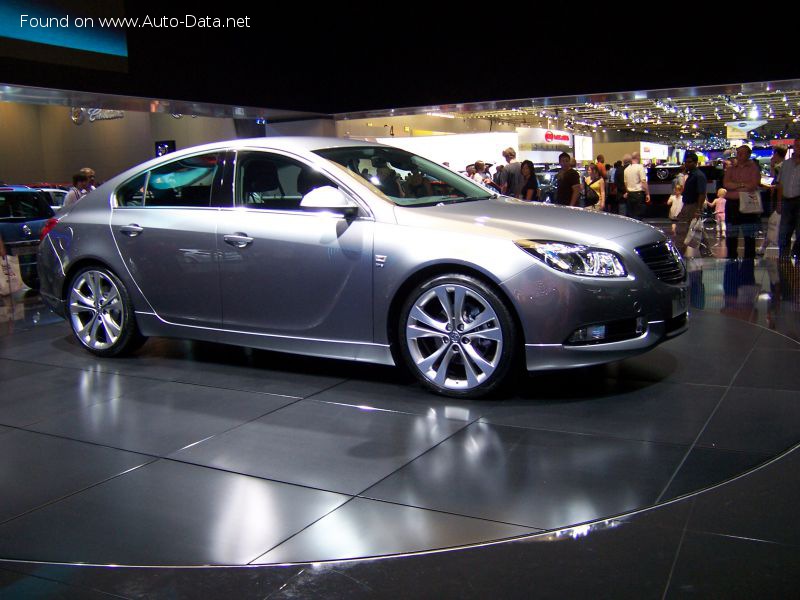
Vauxhall Insignia I Sports Tourer (facelift 2013) 2.0 CDTi ecoFLEX (120 Hp) Start/Stop: An Overview
The Vauxhall Insignia I Sports Tourer (facelift 2013) 2.0 CDTi ecoFLEX (120 Hp) Start/Stop represents a significant iteration of Vauxhall’s flagship mid-size vehicle, primarily aimed at the European market. Launched in 2013 as part of a comprehensive facelift for the first-generation Insignia, this particular model combines the practicality of a station wagon (known as an estate in the UK) with a focus on fuel efficiency and reduced emissions, characteristic of the “ecoFLEX” designation. As a rebadged version of the Opel Insignia sold across mainland Europe, and sharing its platform with the North American Buick Regal, the Insignia was a cornerstone of General Motors’ global D-segment strategy during its production run from 2008 to 2017. This facelifted model, produced from 2013 to 2015, aimed to refresh its appeal with updated styling, enhanced technology, and refined powertrains, placing a strong emphasis on economical operation for both private and fleet buyers.
The Insignia I Sports Tourer, with its five doors and seating for five, offered a compelling blend of space, comfort, and dynamic styling in a competitive segment. The 2.0 CDTi ecoFLEX variant, specifically, was engineered to deliver a balance of usable performance and exceptional fuel economy, leveraging a diesel common rail injection system, turbocharging, and a Start/Stop system to achieve its efficiency goals. This approach made it a popular choice for long-distance commuters and families seeking a practical yet economical vehicle solution in regions where diesel powertrains held a strong market share.
Engine and Performance: The 2.0 CDTi ecoFLEX Powerplant
At the heart of the Vauxhall Insignia I Sports Tourer (facelift 2013) 2.0 CDTi ecoFLEX (120 Hp) Start/Stop lies a robust 2.0-liter (119.36 cubic inch) A20DTE inline-four diesel engine. This powertrain, a staple in GM’s European lineup, was meticulously engineered for efficiency and low emissions without compromising everyday drivability. It delivers a respectable 120 horsepower at 4000 rpm, which for a vehicle of its size and purpose, provides adequate motivation. More importantly for a diesel, it generates a substantial 221.27 lb-ft of torque, available across a broad rev range from 1750 to 2500 rpm. This low-end torque is crucial for effortless acceleration, especially when carrying passengers or cargo, and contributes significantly to its relaxed cruising ability.
The engine’s layout is front, transverse, driving the front wheels through a precise 6-speed manual transmission. This configuration is typical for front-wheel-drive mid-size vehicles, optimizing packaging and weight distribution. The DOHC (Double Overhead Camshaft) valvetrain with four valves per cylinder ensures efficient air intake and exhaust scavenging, contributing to the engine’s smooth operation and responsiveness. Fuel is delivered via a sophisticated Diesel Commonrail injection system, enhancing combustion efficiency and reducing noise. Furthermore, the engine benefits from a turbocharger and intercooler, which significantly boost power output and torque for its displacement, allowing it to perform above what its horsepower figure might suggest.
A key feature of this ecoFLEX model is the integrated Start/Stop system and a particulate filter, both designed to minimize fuel consumption and harmful emissions. The Start/Stop system automatically shuts off the engine when the vehicle is stationary, such as at a traffic light, and restarts it seamlessly when the driver depresses the clutch, thereby cutting idle emissions and saving fuel in urban environments. This technology, combined with the inherently efficient diesel architecture, results in impressive fuel economy figures: an estimated 50 US mpg (4.7 l/100 km) in urban driving, an outstanding 67.2 US mpg (3.5 l/100 km) on the highway, and a combined average of 60.3 US mpg (3.9 l/100 km). With CO2 emissions of just 104 g/km, the Insignia ecoFLEX met strict Euro 5 emission standards, making it an environmentally conscious choice for its time.
In terms of acceleration, the Insignia 2.0 CDTi ecoFLEX reaches 60 mph from a standstill in approximately 11.8 seconds, and 100 km/h in 12.4 seconds, with a maximum speed of 118.06 mph (190 km/h). While not a performance powerhouse, these figures are entirely adequate for daily driving and comfortable highway cruising, prioritizing efficiency and practicality over outright speed. The vehicle’s weight-to-power ratio stands at 14.4 kg/Hp (69.2 Hp/tonne), reflecting its emphasis on balanced performance and economy.
Design and Features: Practicality Meets Modernity
The Vauxhall Insignia I Sports Tourer (facelift 2013) received a notable refresh that refined its already sleek design, bringing it more in line with contemporary automotive aesthetics. The “Sports Tourer” designation emphasizes its station wagon body type, offering a blend of dynamic styling and exceptional utility. The facelift introduced updated front and rear fascias, including new headlights and taillights, a revised grille, and subtle chrome accents that gave it a more premium and sophisticated appearance. Its long and flowing lines, coupled with a relatively low roofline for a station wagon, contributed to a visually appealing and aerodynamic profile.
Measuring 193.43 inches (4913 mm) in length, 73.07 inches (1856 mm) in width (82.05 inches or 2084 mm including mirrors), and 59.57 inches (1513 mm) in height, the Insignia Sports Tourer is a substantial vehicle, providing ample interior space. The generous 107.76-inch (2737 mm) wheelbase contributes to a stable ride and a spacious cabin, especially for rear passengers. The station wagon body style is inherently practical, offering a minimum trunk space of 19.07 cubic feet (540 liters), which expands to an impressive 54.03 cubic feet (1530 liters) with the rear seats folded down. This cavernous cargo area makes it an ideal choice for families, professionals, or anyone requiring significant hauling capacity without resorting to an SUV.
Inside, the facelifted Insignia featured an updated dashboard with a cleaner layout, higher quality materials, and revised infotainment options. While specific interior features vary by trim, the general focus was on ergonomic design and user-friendly technology. Standard features typically included air conditioning, power windows, and a multi-function steering wheel. For a 2013 model, advanced safety features were a strong selling point. The Insignia came equipped with ABS (Anti-lock Braking System) as standard, complemented by ventilated disc brakes at the front and disc brakes at the rear, ensuring confident stopping power. The suspension system, featuring an independent McPherson strut setup with coil springs and an anti-roll bar at the front and an independent multi-link suspension at the rear, provided a comfortable yet composed ride, characteristic of European mid-size cars. The car rode on 225/55 R17 tires mounted on 17-inch wheel rims, striking a good balance between ride comfort and handling precision.
The vehicle’s overall design emphasized a blend of executive presence and family-friendly utility, positioning it as a versatile contender in its segment. The thoughtful inclusion of a 70-liter (18.49 US gallon) fuel tank further enhanced its long-distance touring capabilities, minimizing stops at the pump thanks to its impressive fuel economy.
Technical Specifications
| Category | Specification |
|---|---|
| General Information | |
| Brand | Vauxhall |
| Model | Insignia |
| Generation | Insignia I Sports Tourer (facelift 2013) |
| Type (Engine) | 2.0 CDTi ecoFLEX (120 Hp) Start/Stop |
| Start of Production | 2013 year |
| End of Production | 2015 year |
| Powertrain Architecture | Internal Combustion engine |
| Body type | Station wagon (estate) |
| Seats | 5 |
| Doors | 5 |
| Performance Specs | |
| Fuel consumption (urban) | 4.7 l/100 km (50 US mpg) |
| Fuel consumption (extra urban) | 3.5 l/100 km (67.2 US mpg) |
| Fuel consumption (combined) | 3.9 l/100 km (60.3 US mpg) |
| CO2 emissions | 104 g/km |
| Fuel Type | Diesel |
| Acceleration 0 – 60 mph | 11.8 sec |
| Acceleration 0 – 100 km/h | 12.4 sec |
| Maximum speed | 190 km/h (118.06 mph) |
| Emission standard | Euro 5 |
| Weight-to-power ratio | 14.4 kg/Hp (69.2 Hp/tonne) |
| Weight-to-torque ratio | 5.8 kg/Nm (173.1 Nm/tonne) |
| Engine Specs | |
| Power | 120 Hp @ 4000 rpm |
| Power per liter | 61.3 Hp/l |
| Torque | 300 Nm (221.27 lb.-ft.) @ 1750-2500 rpm |
| Engine layout | Front, Transverse |
| Engine Model/Code | A20DTE |
| Engine displacement | 1956 cm3 (119.36 cu. in.) |
| Number of cylinders | 4 |
| Engine configuration | Inline |
| Cylinder Bore | 83 mm (3.27 in.) |
| Piston Stroke | 90.4 mm (3.56 in.) |
| Number of valves per cylinder | 4 |
| Fuel injection system | Diesel Commonrail |
| Engine aspiration | Turbocharger, Intercooler |
| Valvetrain | DOHC |
| Engine oil capacity | 4.5 l (4.76 US qt) |
| Coolant | 9 l (9.51 US qt) |
| Engine systems | Start & Stop System, Particulate filter |
| Space, Volume and Weights | |
| Kerb Weight | 1733 kg (3820.61 lbs.) |
| Max. weight | 2300 kg (5070.63 lbs.) |
| Max load | 567 kg (1250.02 lbs.) |
| Trunk (boot) space – minimum | 540 l (19.07 cu. ft.) |
| Trunk (boot) space – maximum | 1530 l (54.03 cu. ft.) |
| Fuel tank capacity | 70 l (18.49 US gal) |
| Permitted trailer load with brakes (12%) | 1600 kg (3527.4 lbs.) |
| Permitted trailer load without brakes | 750 kg (1653.47 lbs.) |
| Dimensions | |
| Length | 4913 mm (193.43 in.) |
| Width | 1856 mm (73.07 in.) |
| Width including mirrors | 2084 mm (82.05 in.) |
| Height | 1513 mm (59.57 in.) |
| Wheelbase | 2737 mm (107.76 in.) |
| Front overhang | 1020 mm (40.16 in.) |
| Rear overhang | 1156 mm (45.51 in.) |
| Minimum turning circle (turning diameter) | 11.4 m (37.4 ft.) |
| Drivetrain, Brakes and Suspension Specs | |
| Drivetrain Architecture | Front-wheel drive with Internal Combustion engine |
| Drive wheel | Front wheel drive |
| Number of gears and type of gearbox | 6 gears, manual transmission |
| Front suspension | Independent, McPherson with coil spring and anti-roll bar |
| Rear suspension | Independent multi-link suspension |
| Front brakes | Ventilated discs |
| Rear brakes | Disc |
| Assisting systems | ABS (Anti-lock braking system) |
| Tires size | 225/55 R17 |
| Wheel rims size | 17 inches |
Legacy and Market Impact of the Vauxhall Insignia I Sports Tourer (facelift 2013)
The Vauxhall Insignia I Sports Tourer (facelift 2013) 2.0 CDTi ecoFLEX (120 Hp) Start/Stop played a vital role in Vauxhall’s product lineup and the broader European D-segment market. As the successor to the venerable Vectra, the Insignia was tasked with elevating Vauxhall’s image in the fiercely competitive mid-size category, competing against established rivals such as the Ford Mondeo, Volkswagen Passat, Skoda Superb, and Mazda6. The facelifted first-generation model, in particular, solidified its reputation as a stylish, comfortable, and highly practical option, especially in its Sports Tourer (station wagon) guise.
Its market impact was significant, particularly among fleet buyers and families in the UK and Ireland, where Vauxhall (and its Opel counterpart in mainland Europe) held strong brand loyalty. The ecoFLEX variant, with its impressive fuel economy and low CO2 emissions, was especially appealing to corporate fleets due to favorable tax implications and reduced running costs. This focus on efficiency, coupled with the generous cargo capacity of the Sports Tourer, made it a compelling proposition for business users who often cover high mileage.
The Insignia’s heritage as a “world car” platform, shared with the Opel Insignia and Buick Regal, demonstrated General Motors’ strategy of leveraging global engineering for regional markets. While the Vauxhall Insignia was never officially sold in the United States under its original badge, its underlying architecture and design philosophy were familiar to American consumers through the Buick Regal. This cross-pollination of design and engineering allowed for economies of scale and a robust, well-engineered product.
Critically, the Insignia was generally praised for its comfortable ride, refined interior, and elegant styling. While the 120 HP ecoFLEX engine prioritized efficiency over outright performance, its substantial torque delivery ensured it never felt underpowered in everyday driving. The introduction of the Start/Stop system and adherence to Euro 5 emission standards showcased Vauxhall’s commitment to environmental responsibility, a growing concern for European consumers and regulators alike.
Ultimately, the Vauxhall Insignia I Sports Tourer (facelift 2013) 2.0 CDTi ecoFLEX (120 Hp) Start/Stop carved out a strong niche for itself as a sensible, economical, and practical choice in the European mid-size segment. Its blend of modern design, efficient diesel powertrain, and versatile station wagon body style ensured its lasting legacy as a competent and well-regarded family and fleet vehicle. It represented a mature and competitive offering from Vauxhall, demonstrating the brand’s capability to produce vehicles that met the evolving demands of efficiency, practicality, and driving comfort.