The Vauxhall Insignia I Sports Tourer (facelift 2013): A European Mainstay
The Vauxhall Insignia I Sports Tourer (facelift 2013) 2.0 CDTi ecoTEC (163 Hp) Automatic represents a significant iteration of Vauxhall’s flagship mid-size vehicle, a crucial player in the highly competitive European D-segment. Introduced in 2013 as part of a comprehensive refresh for the first-generation Insignia, this particular model combined the practicality of a station wagon (known as an “estate” in European markets) with a fuel-efficient diesel powertrain and an automatic transmission. While the Vauxhall brand, as the United Kingdom’s arm of Opel (then part of General Motors), was not directly sold in the United States, the Insignia platform shared roots with the Buick Regal, offering a glimpse into GM’s global engineering efforts. This facelifted model aimed to enhance the Insignia’s appeal through updated styling, improved interior quality, and refined mechanicals, positioning it as a strong contender against rivals like the Ford Mondeo, Volkswagen Passat, and Skoda Superb in its primary markets.
Engineering and Performance of the {original_focus_keyword}
At the heart of the Vauxhall Insignia I Sports Tourer (facelift 2013) 2.0 CDTi ecoTEC (163 Hp) Automatic lies a robust and efficient 2.0-liter (119.36 cubic inch) inline-four diesel engine, designated as the A20DTH. This powerplant, featuring a DOHC valvetrain, four valves per cylinder, and a common rail fuel injection system, was further enhanced by a turbocharger and intercooler. The “ecoTEC” designation underscored Vauxhall’s commitment to fuel efficiency and reduced emissions, a critical selling point in Europe’s diesel-dominated market.
This 2.0-liter unit delivered a respectable 163 horsepower at 4000 rpm, providing a lively yet economical driving experience. More impressively, the engine produced a substantial 258.15 lb.-ft. of torque, available across a broad rev range from 1750 to 2500 rpm. This ample torque was particularly beneficial for hauling cargo, towing, and effortless highway cruising, characteristics highly valued in a family-oriented station wagon. Power was channeled to the front wheels via a smooth-shifting 6-speed automatic transmission, offering a balance of convenience and efficiency.
Performance figures for the Insignia 2.0 CDTi ecoTEC were competitive for its class. It could accelerate from 0 to 60 mph in a calculated 9.6 seconds, with 0-100 km/h achieved in 10.1 seconds, and reach a maximum speed of 129.87 mph (209 km/h). Fuel economy was a strong suit, with a combined rating of 42 US mpg (5.6 l/100 km), and an impressive 52.3 US mpg (4.5 l/100 km) on the extra-urban cycle. Urban consumption stood at 31.4 US mpg (7.5 l/100 km). These figures, coupled with CO2 emissions of 149 g/km and Euro 5 emission standard compliance, made it an attractive option for both private buyers and fleet operators seeking lower running costs and environmental responsibility.
Design and Features: The Practicality of the Vauxhall Insignia I Sports Tourer
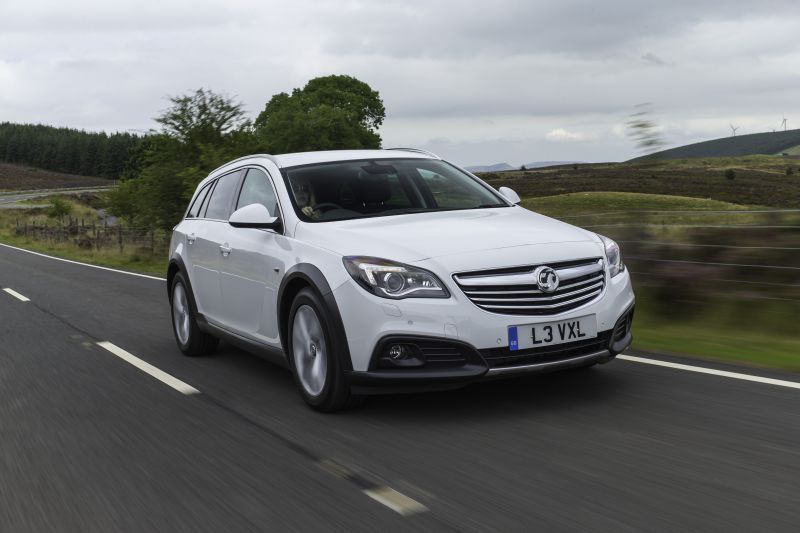
The Insignia I Sports Tourer (facelift 2013) maintained the sleek and dynamic exterior design that characterized the first-generation Insignia, but with key updates. The facelift brought revised front and rear fascias, including a wider grille, new headlight designs (often incorporating LED daytime running lights), and updated taillights, giving the car a more contemporary and refined appearance. The station wagon body style was particularly popular in Europe, offering a significant increase in cargo volume without compromising the car’s aesthetic appeal.
Measuring 193.43 inches in length, 73.07 inches in width (82.05 inches including mirrors), and 59.57 inches in height, with a wheelbase of 107.76 inches, the Insignia Sports Tourer provided generous interior space for five occupants. The practical design ethos was evident in its cargo capacity: a minimum of 19.07 cubic feet (540 liters) with all seats in place, expanding to a cavernous 54.03 cubic feet (1530 liters) when the rear seats were folded down. This made it an ideal vehicle for families, tradespeople, and anyone requiring substantial hauling capability.
Inside, the 2013 facelift addressed some of the criticisms of the original Insignia’s button-heavy dashboard. It introduced a cleaner, more intuitive center console layout with fewer buttons and, in higher trims, a larger, more modern infotainment system. Standard features included power windows, air conditioning, and a comprehensive suite of safety systems such as ABS (Anti-lock Braking System). The vehicle also came equipped with ventilated disc brakes at the front and disc brakes at the rear, ensuring confident stopping power. Its suspension system featured an independent McPherson strut setup with coil springs and an anti-roll bar at the front, complemented by an independent multi-link suspension at the rear, providing a comfortable and composed ride characteristic of a long-distance cruiser.
Technical Specifications
| Category | Specification |
|---|---|
| Brand | Vauxhall |
| Model | Insignia I Sports Tourer (facelift 2013) |
| Engine Type | 2.0 CDTi ecoTEC (163 Hp) Automatic |
| Production Years | 2013 – 2015 |
| Body Type | Station wagon (estate) |
| Seats | 5 |
| Doors | 5 |
| Fuel Type | Diesel |
| Engine Displacement | 1956 cm3 (119.36 cu. in.) |
| Power | 163 Hp @ 4000 rpm |
| Torque | 350 Nm (258.15 lb.-ft.) @ 1750-2500 rpm |
| Acceleration 0-60 mph | 9.6 seconds |
| Maximum Speed | 129.87 mph (209 km/h) |
| Fuel Economy – Urban | 31.4 US mpg (7.5 l/100 km) |
| Fuel Economy – Extra Urban | 52.3 US mpg (4.5 l/100 km) |
| Fuel Economy – Combined | 42 US mpg (5.6 l/100 km) |
| CO2 Emissions | 149 g/km |
| Emission Standard | Euro 5 |
| Kerb Weight | 3820.61 lbs. (1733 kg) |
| Max. Weight | 5103.7 lbs. (2315 kg) |
| Max Load | 1283.09 lbs. (582 kg) |
| Trunk Space – Minimum | 19.07 cu. ft. (540 l) |
| Trunk Space – Maximum | 54.03 cu. ft. (1530 l) |
| Fuel Tank Capacity | 18.49 US gal (70 l) |
| Length | 193.43 in. (4913 mm) |
| Width | 73.07 in. (1856 mm) |
| Height | 59.57 in. (1513 mm) |
| Wheelbase | 107.76 in. (2737 mm) |
| Minimum Turning Circle | 37.4 ft. (11.4 m) |
| Drive Wheel | Front wheel drive |
| Gearbox | 6 gears, automatic transmission |
| Front Suspension | Independent, McPherson with coil spring and anti-roll bar |
| Rear Suspension | Independent multi-link suspension |
| Front Brakes | Ventilated discs |
| Rear Brakes | Disc |
| Assisting Systems | ABS (Anti-lock braking system) |
| Tires Size | 225/55 R17 |
| Wheel Rims Size | 17 inches |
| Engine Layout | Front, Transverse |
| Number of Cylinders | 4 |
| Engine Configuration | Inline |
| Cylinder Bore | 3.27 in. (83 mm) |
| Piston Stroke | 3.56 in. (90.4 mm) |
| Valves per Cylinder | 4 |
| Fuel Injection System | Diesel Commonrail |
| Engine Aspiration | Turbocharger, Intercooler |
| Valvetrain | DOHC |
| Engine Oil Capacity | 4.76 US qt (4.5 l) |
| Coolant Capacity | 9.51 US qt (9 l) |
| Engine Systems | Particulate filter |
| Permitted Trailer Load (with brakes 12%) | 3527.4 lbs. (1600 kg) |
| Permitted Trailer Load (without brakes) | 1653.47 lbs. (750 kg) |
Legacy and Market Impact in Europe
The Vauxhall Insignia I Sports Tourer (facelift 2013) played a vital role in Vauxhall’s lineup, particularly in the UK and other European markets where its Opel counterpart, the Insignia, was sold. It was a direct competitor to established segment leaders such as the Ford Mondeo Estate, Volkswagen Passat Variant, and the Skoda Superb Combi, all vying for the attention of families and, crucially, corporate fleet managers.
Its reputation was built on a foundation of practicality, comfort, and strong value. The Sports Tourer’s ample cargo space, combined with the efficient 2.0 CDTi ecoTEC diesel engine and automatic transmission, made it an excellent choice for long-distance commuting and family vacations. The facelift ensured it remained visually competitive and offered improved interior ergonomics and technology, addressing feedback from early first-generation models. The presence of a particulate filter and Euro 5 emissions compliance also underscored its commitment to environmental standards of the era.
While the Insignia never made it to US shores under the Vauxhall badge, its underlying platform and engineering were familiar to American consumers through the Buick Regal. This cross-pollination of platforms was a common strategy for global automakers like GM, allowing for economies of scale and shared development costs. In its home markets, the Insignia Sports Tourer was widely regarded as a solid, dependable, and practical choice, cementing Vauxhall’s position in the highly competitive mid-size segment. Its blend of performance, efficiency, and utility ensured its enduring popularity throughout its production run from 2013 to 2015, paving the way for its successor.