
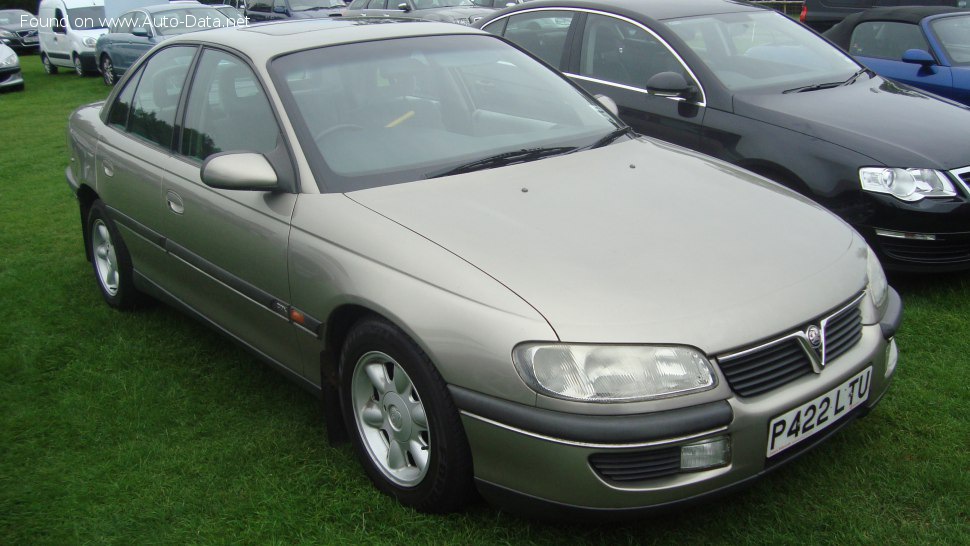
The Vauxhall Omega B 2.0i 16V (136 Hp) represents a significant offering from Vauxhall, the British subsidiary of Opel, during the mid-to-late 1990s. Launched in 1994, this second-generation Omega (internally designated “B”) served as Vauxhall’s flagship executive sedan, positioned to compete in the highly contested European E-segment. While the Omega platform itself had a global reach, famously being rebadged as the Cadillac Catera in North America, this specific Vauxhall variant was primarily tailored for the UK and European markets. The 2.0i 16V model, with its 136 horsepower engine, aimed to provide a compelling balance of refined performance, spacious comfort, and practicality for discerning buyers who sought a rear-wheel-drive sedan that exuded understated elegance without the premium price tag of German luxury marques. Its production run spanned from 1994 to 1999, embodying the design and engineering philosophies prevalent in European automotive manufacturing of that era.
The Vauxhall Omega B 2.0i 16V (136 Hp): A European Executive Sedan
The Vauxhall Omega B was a successor to the acclaimed Carlton/Omega A, carrying forward the tradition of a large, comfortable, and dynamically capable executive car. Its market position in Europe was one of a robust, value-oriented alternative to more expensive BMW 5 Series and Mercedes-Benz E-Class models, offering comparable space and features. The 2.0i 16V variant was particularly popular, striking a harmonious chord between fuel efficiency and adequate power for everyday driving and longer journeys. As a product of the General Motors empire, the Omega B benefited from shared engineering resources, ensuring a solid foundation and a reputation for reliability that was crucial in its segment.
Powertrain and Performance
At the heart of the Vauxhall Omega B 2.0i 16V (136 Hp) lay a robust and well-regarded 2.0-liter, 16-valve inline-four gasoline engine, identified by the engine code X20XEV. This naturally aspirated unit, utilizing a Double Overhead Camshaft (DOHC) valvetrain, was designed for smooth power delivery and respectable efficiency. It produced 136 horsepower at 5600 rpm, a commendable output for a 2.0-liter engine of its time, translating to a power-per-liter rating of 68.1 HP/liter. Torque figures were equally competitive, with the engine generating 136.45 lb.-ft. (185 Nm) at a relatively accessible 4000 rpm. This torque characteristic ensured ample pulling power in various driving conditions, making the Omega feel responsive in urban traffic and composed on highways.
The engine’s compression ratio of 10.8:1 contributed to its efficiency and power output, optimized for regular gasoline. Power was channeled to the rear wheels via a 5-speed manual transmission, a classic rear-wheel-drive (RWD) architecture that provided balanced handling dynamics and a traditional driving feel preferred by many enthusiasts. This powertrain configuration allowed the Omega B 2.0i 16V to achieve a top speed of 129.87 mph (209 km/h), demonstrating its capability for sustained high-speed cruising on European autobahns. Fuel economy, while not a primary selling point for large sedans of this era, was reasonable for its class; the urban consumption was rated at 21.8 US mpg (10.8 l/100 km). With a 19.81 US gallon (75-liter) fuel tank, the Omega B offered a substantial cruising range, making it suitable for long-distance travel. The vehicle’s curb weight, ranging from 3141.59 to 3238.59 lbs. (1425-1469 kg), resulted in a weight-to-power ratio of 10.5 kg/HP, or 95.4 HP/tonne, indicating a solid performance foundation for its segment.
Design, Chassis, and Features
The design of the Vauxhall Omega B was characterized by its conservative yet elegant lines, a hallmark of European executive sedans in the mid-1990s. As a 4-door sedan accommodating five occupants, it offered generous interior space, a key differentiator in its class. Its substantial dimensions, measuring 188.46 inches (4787 mm) in length, 70.31 inches (1786 mm) in width (77.17 inches or 1960 mm including mirrors), and 57.28 inches (1455 mm) in height, gave it a commanding road presence. The long wheelbase of 107.48 inches (2730 mm) was instrumental in providing both a smooth ride and ample legroom for rear passengers, enhancing its executive appeal. Aerodynamic efficiency was considered, evidenced by a low drag coefficient (Cd) of 0.29, contributing to improved fuel economy and reduced wind noise at higher speeds.
Chassis engineering was a strong suit for the Omega B. It featured an independent McPherson strut suspension with coil springs and an anti-roll bar at the front, paired with a sophisticated independent multi-link suspension at the rear. This setup delivered a well-judged balance between ride comfort and handling precision, making the Omega B a pleasant car to drive on a variety of road surfaces. Braking performance was ensured by ventilated disc brakes at the front and solid disc brakes at the rear, complemented by an Anti-lock Braking System (ABS) as a standard assisting system, a crucial safety feature for the era. The vehicle rode on 195/65 R15 tires mounted on 6.5J x 15-inch steel or alloy wheels, providing a comfortable ride and predictable grip.
Practicality was another strong point. The trunk offered an impressive 18.72 cubic feet (530 liters) of cargo space, making it highly versatile for family use or business travel. The Omega B also boasted substantial towing capabilities, rated at 3747.86 lbs. (1700 kg) with brakes and 1653.47 lbs. (750 kg) without brakes, further underscoring its utility. The maximum roof load capacity was 220.46 lbs. (100 kg), and the tongue weight capacity was 165.35 lbs. (75 kg). Overall, the Vauxhall Omega B 2.0i 16V (136 Hp) stood as a testament to European automotive engineering, offering a compelling blend of space, comfort, and performance in a refined package, particularly for its target market in the United Kingdom and other European nations.
Technical Specifications of the Vauxhall Omega B 2.0i 16V (136 Hp)
Below is a detailed compilation of the technical specifications for the Vauxhall Omega B 2.0i 16V (136 Hp) model, produced between 1994 and 1999. These figures highlight the engineering and design characteristics that defined this executive sedan during its production run.
| Brand | Vauxhall |
| Model | Omega |
| Generation | Omega B |
| Engine Type | 2.0i 16V (136 Hp) |
| Production Start | 1994 year |
| Production End | 1999 year |
| Powertrain Architecture | Internal Combustion engine |
| Body type | Sedan |
| Seats | 5 |
| Doors | 4 |
| Fuel consumption (economy) – urban | 21.8 US mpg (10.8 l/100 km) |
| Fuel Type | Gasoline |
| Maximum speed | 129.87 mph (209 km/h) |
| Weight-to-power ratio | 10.5 kg/Hp (95.4 Hp/tonne) |
| Weight-to-torque ratio | 7.7 kg/Nm (129.8 Nm/tonne) |
| Power | 136 Hp @ 5600 rpm |
| Power per liter | 68.1 Hp/l |
| Torque | 136.45 lb.-ft. (185 Nm) @ 4000 rpm |
| Engine layout | Front, Longitudinal |
| Engine Model/Code | X20XEV |
| Engine displacement | 121.93 cu. in. (1998 cm3) |
| Number of cylinders | 4 |
| Compression ratio | 10.8:1 |
| Engine aspiration | Naturally aspirated engine |
| Valvetrain | DOHC |
| Engine oil capacity | 4.76 US qt (4.5 l) |
| Coolant capacity | 9.3 US qt (8.8 l) |
| Curb Weight | 3141.59 – 3238.59 lbs. (1425-1469 kg) |
| Max. weight (GVWR) | 4310.04 lbs. (1955 kg) |
| Max load capacity | 1071.45 – 1168.45 lbs. (486-530 kg) |
| Trunk space – maximum | 18.72 cu. ft. (530 l) |
| Fuel tank capacity | 19.81 US gal (75 l) |
| Max. roof load | 220.46 lbs. (100 kg) |
| Towing capacity with brakes (12%) | 3747.86 lbs. (1700 kg) |
| Towing capacity without brakes | 1653.47 lbs. (750 kg) |
| Tongue weight capacity | 165.35 lbs. (75 kg) |
| Length | 188.46 in. (4787 mm) |
| Width | 70.31 in. (1786 mm) |
| Width including mirrors | 77.17 in. (1960 mm) |
| Height | 57.28 in. (1455 mm) |
| Wheelbase | 107.48 in. (2730 mm) |
| Front track width | 59.61 in. (1514 mm) |
| Rear track width | 60.16 in. (1528 mm) |
| Rear overhang | 44.88 in. (1140 mm) |
| Drag coefficient (Cd) | 0.29 |
| Minimum turning circle diameter | 33.46 ft. (10.2 m) |
| Drivetrain Architecture | Internal combustion engine drives the rear wheels |
| Drive type | Rear wheel drive |
| Transmission | 5 gears, manual transmission |
| Front suspension | Independent, McPherson type with coil spring and anti-roll bar |
| Rear suspension | Independent multi-link suspension |
| Front brakes | Ventilated discs |
| Rear brakes | Disc |
| Safety and Driver Aids | ABS (Anti-lock braking system) |
| Tire size | 195/65 R15 |
| Wheel size | 6.5J x 15 |
