
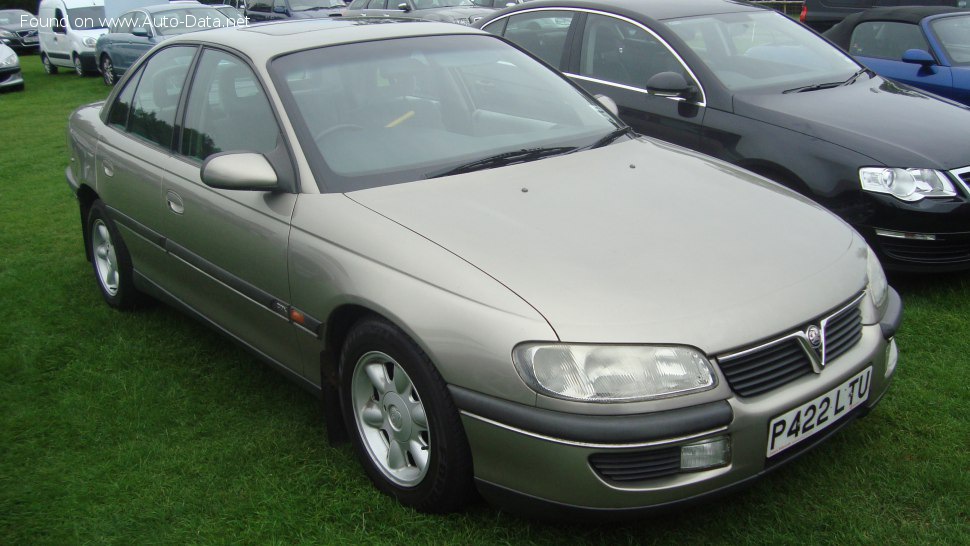
The Vauxhall Omega B 2.2i (144 Hp) represents a significant offering from the British marque in the European executive car segment during its production run from 1999 to 2000. As a rebadged version of the German-engineered Opel Omega, the Vauxhall variant catered specifically to the United Kingdom market, where it was positioned as a large, comfortable, and well-equipped sedan designed to compete with offerings from Ford, BMW, and Mercedes-Benz. The Omega B generation, launched in 1994, received a substantial facelift in 1999, which introduced revised styling, improved interiors, and updated powertrains, including the focus of this analysis: the 2.2-liter, four-cylinder gasoline engine. This particular model aimed to provide a compelling blend of performance, refinement, and practicality for discerning buyers seeking a full-size sedan, embodying the traditional values of a spacious, rear-wheel-drive platform in a market increasingly leaning towards front-wheel drive.
Engineering and Performance of the Vauxhall Omega B 2.2i (144 Hp)
At the heart of the 1999-2000 Vauxhall Omega B 2.2i (144 Hp) lies the Y22XE engine, a naturally aspirated, 2.2-liter (2198 cm3 or 134.13 cu. in.) inline four-cylinder powerplant. This engine featured a Double Overhead Camshaft (DOHC) valvetrain with four valves per cylinder, a configuration that was well-regarded for its efficiency and ability to produce power across a broad rev range. Fuel delivery was managed by a multi-port manifold injection system, ensuring precise fuel metering and combustion efficiency, critical for balancing performance with the increasing environmental consciousness of the late 1990s. With a compression ratio of 10:1, the engine was optimized for standard unleaded gasoline, a practical consideration for everyday use.
The Y22XE engine generated a respectable 144 horsepower at 5400 revolutions per minute (rpm), translating to a power-per-liter output of 65.5 Hp/l. This power output was more than adequate for the Omega’s executive mission, providing smooth acceleration and confident overtaking capabilities. Torque figures were equally impressive for a naturally aspirated four-cylinder of its size, peaking at 151.2 lb.-ft. (205 Nm) at 4000 rpm. This substantial torque at mid-range engine speeds contributed significantly to the car’s drivability, allowing for effortless cruising and responsive acceleration without constant downshifting. The engine’s longitudinal layout, mounted at the front, was a hallmark of its traditional rear-wheel-drive architecture, contributing to balanced weight distribution and a more engaging driving experience compared to many front-wheel-drive rivals.
Power was delivered to the rear wheels via a 5-speed manual transmission. This gearbox was chosen for its durability and direct feel, offering drivers a greater sense of control and engagement. The rear-wheel-drive powertrain architecture was a distinguishing feature of the Omega in its class, providing superior traction under acceleration and a more balanced handling dynamic, particularly when cornering. In terms of outright performance, the Vauxhall Omega B 2.2i (144 Hp) was capable of reaching a maximum speed of 125.52 mph (202 km/h), a highly competitive figure for a large family sedan of its era. This combination of a robust, refined engine and a capable drivetrain made the Omega a strong contender for both long-distance executive travel and daily commuting.
Design and Features of the Vauxhall Omega B
The Vauxhall Omega B, particularly in its post-1999 facelift guise, presented a refined and understated executive aesthetic. As a four-door sedan with seating for five, its dimensions were generous, reflecting its position in the full-size car segment. Measuring 188.46 inches (4787 mm) in length, 70.31 inches (1786 mm) in width (77.17 inches or 1960 mm including mirrors), and 57.28 inches (1455 mm) in height, the Omega commanded a significant road presence. The long wheelbase of 107.48 inches (2730 mm) was instrumental in providing exceptional interior space, particularly for rear-seat passengers, a key selling point for an executive car.
Aerodynamic efficiency was also a focus, with a respectable drag coefficient (Cd) of 0.29. This figure not only contributed to improved fuel economy at higher speeds but also reduced wind noise, enhancing the cabin’s tranquility – a crucial attribute for an executive sedan. The design incorporated subtle curves and clean lines, projecting an image of quiet competence rather than overt sportiness. The minimum turning circle of 33.46 feet (10.2 m) was commendable for a vehicle of its size, aiding maneuverability in urban environments.
Underneath, the Omega B 2.2i featured a sophisticated suspension system designed for comfort and stability. The front suspension employed an independent McPherson strut setup with coil springs and an anti-roll bar, a common and effective design for precise steering and good ride quality. The rear utilized an independent multi-link suspension, which was more advanced for the time, providing superior wheel control over uneven surfaces and enhancing both ride comfort and handling dynamics. Braking duties were handled by ventilated discs at the front and solid discs at the rear, a powerful combination for confident stopping. An Anti-lock Braking System (ABS) was standard, offering enhanced safety by preventing wheel lock-up during hard braking and maintaining steering control.
The vehicle rode on 195/65 R15 tires mounted on 6.5J x 15-inch wheel rims, a practical choice that balanced ride comfort, grip, and replacement cost. Inside, the Omega offered a substantial trunk capacity of 18.72 cu. ft. (530 liters), making it highly practical for family trips or executive luggage. The fuel tank capacity of 19.81 US gallons (75 liters) provided a commendable cruising range, reducing the frequency of fuel stops on long journeys. Furthermore, the Omega was designed with practical utility in mind, boasting a maximum roof load of 220.46 lbs (100 kg) and a permitted towbar download of 165.35 lbs (75 kg), highlighting its versatility beyond just passenger transport. The Vauxhall Omega B 2.2i, therefore, stood as a well-rounded and thoughtfully engineered executive sedan, tailored to the demands of the European market in the late 1990s and early 2000s.
Technical Specifications: Vauxhall Omega B 2.2i (144 Hp)
| Brand | Vauxhall |
|---|---|
| Model | Omega |
| Generation | Omega B |
| Engine Type | 2.2i (144 Hp) |
| Production Start | 1999 year |
| Production End | 2000 year |
| Powertrain Architecture | Internal Combustion engine |
| Body Type | Sedan |
| Seats | 5 |
| Doors | 4 |
| Fuel Type | Petrol (Gasoline) |
| Maximum Speed | 125.52 mph (202 km/h) |
| Power | 144 Hp @ 5400 rpm |
| Power per liter | 65.5 Hp/l |
| Torque | 151.2 lb.-ft. (205 Nm) @ 4000 rpm |
| Engine Layout | Front, Longitudinal |
| Engine Model/Code | Y22XE |
| Engine Displacement | 134.13 cu. in. (2198 cm3) |
| Number of Cylinders | 4 |
| Engine Configuration | Inline |
| Compression Ratio | 10:1 |
| Valves per Cylinder | 4 |
| Fuel Injection System | Multi-port manifold injection |
| Engine Aspiration | Naturally aspirated engine |
| Valvetrain | DOHC |
| Engine Oil Capacity | 4.76 US qt (4.5 l) |
| Coolant Capacity | 9.93 US qt (9.4 l) |
| Trunk (boot) Space – maximum | 18.72 cu. ft. (530 l) |
| Fuel Tank Capacity | 19.81 US gal (75 l) |
| Max. Roof Load | 220.46 lbs (100 kg) |
| Permitted Towbar Download | 165.35 lbs (75 kg) |
| Length | 188.46 in. (4787 mm) |
| Width | 70.31 in. (1786 mm) |
| Width including mirrors | 77.17 in. (1960 mm) |
| Height | 57.28 in. (1455 mm) |
| Wheelbase | 107.48 in. (2730 mm) |
| Rear Overhang | 44.88 in. (1140 mm) |
| Drag Coefficient (Cd) | 0.29 |
| Minimum Turning Circle | 33.46 ft (10.2 m) |
| Drivetrain Architecture | Internal combustion engine drives the rear wheels |
| Drive Wheel | Rear wheel drive |
| Gearbox Type | 5 gears, manual transmission |
| Front Suspension | Independent, McPherson with coil spring and anti-roll bar |
| Rear Suspension | Independent multi-link suspension |
| Front Brakes | Ventilated discs |
| Rear Brakes | Disc |
| Assisting Systems | ABS (Anti-lock braking system) |
| Tires Size | 195/65 R15 |
| Wheel Rims Size | 6.5J x 15 |
