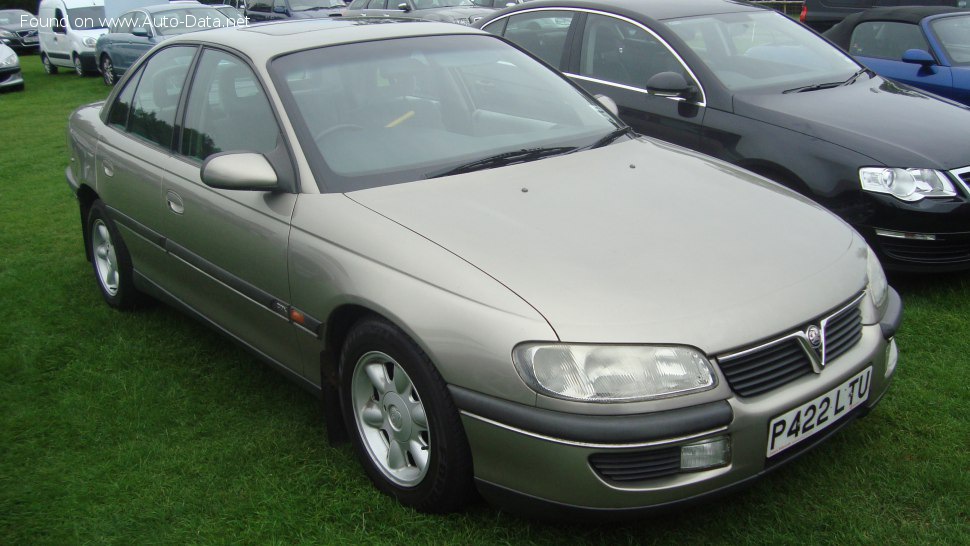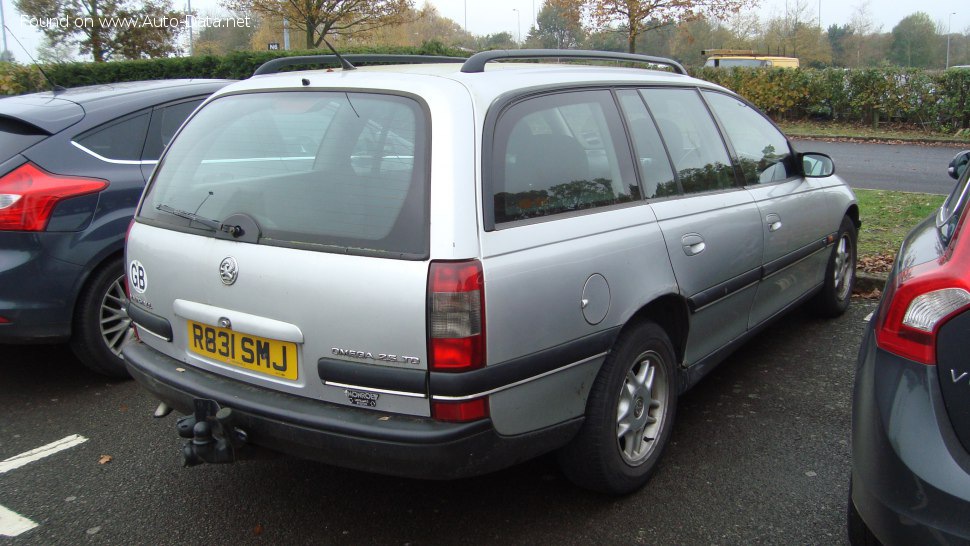
The Vauxhall Omega Estate B 2.0 16V (136 Hp) represents a significant offering from the British marque during the mid to late 1990s, specifically targeting the executive and large family car segment within the European market. As a rebadged version of the Opel Omega, this model, designated as the ‘B’ generation, succeeded the original Omega A and was produced from 1994 until 1999. Unlike many contemporary vehicles that had transitioned to front-wheel drive, the Omega B retained a traditional rear-wheel drive powertrain architecture, a characteristic often associated with more premium, driver-focused vehicles of the era. This particular iteration, the 2.0 16V, was positioned as a practical yet capable option within the Omega Estate lineup, balancing everyday usability with respectable performance for its class. The Estate, or station wagon as it’s known in the US, emphasized versatility, offering substantial cargo capacity alongside comfortable seating for five passengers, making it a popular choice for families and business users across the UK and continental Europe where its Opel counterpart thrived. Given its European-centric market, the Vauxhall Omega was never officially sold in the United States, making it a distinctive example of European automotive engineering and market strategy from that period.
Engineering and Performance of the Vauxhall Omega Estate B 2.0 16V (136 Hp)
At the heart of the Vauxhall Omega Estate B 2.0 16V (136 Hp) lies its robust 2.0-liter, 16-valve inline-four engine, designated by the code X20XEV. This naturally aspirated gasoline engine was a common and well-regarded unit across various Opel and Vauxhall models of the time, known for its balance of efficiency and smooth power delivery. With a displacement of 1998 cubic centimeters (approximately 121.93 cubic inches), the engine produced a healthy 136 horsepower at 5600 revolutions per minute, providing ample motivation for the large estate body. Torque figures stood at 188 Newton-meters, or 138.66 pound-feet, peaking at a relatively accessible 3200 rpm, which contributed to its flexible performance in varied driving conditions, from urban commuting to highway cruising. The engine’s configuration featured a dual overhead camshaft (DOHC) valvetrain with four valves per cylinder, a sophisticated setup for its time that optimized airflow for improved combustion and efficiency. Fuel delivery was managed by a multi-port manifold injection system, ensuring precise fuel metering for consistent performance and emissions control.
The performance metrics for the Vauxhall Omega Estate B 2.0 16V were competitive for a large family wagon of the mid-1990s. Acceleration from 0 to 60 miles per hour was achieved in a respectable 10.9 seconds, while the vehicle could reach a maximum speed of 125.52 miles per hour. These figures underscore the car’s capability to handle long-distance travel with ease, maintaining comfortable cruising speeds on European autobahns and motorways. Power was transmitted to the rear wheels via a 5-speed manual transmission, offering engaging driver control and efficiency. The rear-wheel-drive architecture, a hallmark of the Omega range, also contributed to a balanced chassis feel and predictable handling characteristics, especially when laden. In terms of fuel economy, the 2.0 16V model offered reasonable figures for its size and era, with an urban consumption of approximately 17.7 US miles per gallon and a more impressive 32.2 US miles per gallon on the extra-urban cycle, translating to a practical cost of ownership for its target demographic. The engine’s bore and stroke of 86 mm (3.39 inches) each, combined with a compression ratio of 10.8:1, indicate a well-engineered unit designed for durability and responsive power delivery throughout its rev range.
Design, Features, and Practicality of the Vauxhall Omega Estate B
The design philosophy behind the Vauxhall Omega Estate B was one of understated elegance combined with paramount practicality, a common theme for European executive wagons of the 1990s. Its station wagon body type, often referred to as an “estate” in the UK, provided a substantial and versatile platform. Measuring 189.72 inches in length, 70.31 inches in width (77.17 inches including mirrors), and 60.83 inches in height, the Omega Estate presented a commanding presence on the road. The generous wheelbase of 107.48 inches contributed significantly to both interior space and ride comfort, allowing for a spacious cabin capable of comfortably accommodating five adults. The exterior styling was clean and aerodynamic, achieving a drag coefficient (Cd) of 0.32, which aided in both fuel efficiency and reduced wind noise at higher speeds.
Inside, the Omega Estate B was designed with a focus on passenger comfort and cargo flexibility. The five-seat configuration provided ample head, shoulder, and legroom for all occupants, making long journeys less fatiguing. However, it was the cargo capacity that truly set the estate version apart. With the rear seats in place, the trunk offered a substantial 540 liters (19.07 cubic feet) of space, more than enough for everyday groceries or holiday luggage. When the rear seats were folded down, this capacity expanded dramatically to an impressive 1800 liters (63.57 cubic feet), transforming the vehicle into a highly capable load-hauler, suitable for everything from furniture transport to outdoor equipment. This versatility was a key selling point for the Omega Estate, catering to active families and professionals requiring significant carrying capability.
Beyond its spacious interior, the Vauxhall Omega Estate B 2.0 16V also incorporated features aimed at enhancing safety, driving dynamics, and convenience. Safety systems included an Anti-lock Braking System (ABS), which was becoming standard on many executive cars of the era, providing improved stopping power and control in emergency braking situations. The suspension setup was sophisticated for its class, featuring an independent McPherson strut system with coil springs and an anti-roll bar at the front, paired with an independent multi-link suspension at the rear. This combination delivered a refined ride quality, absorbing road imperfections effectively, while also maintaining good body control and handling stability. Braking performance was assured by ventilated discs at the front and disc brakes at the rear. Power steering, specifically a hydraulic system, provided clear feedback to the driver, offering a good balance between effort and road feel. The vehicle rode on 195/65 R15 tires mounted on 6.5J x 15 wheel rims, a practical size that offered a good compromise between ride comfort, grip, and replacement cost. Additional practical features included a fuel tank capacity of 75 liters (19.81 US gallons), providing a substantial cruising range, and a permissible trailer load with brakes of 1600 kg (3527.4 lbs), further underscoring its utility.
Technical Specifications: Vauxhall Omega Estate B 2.0 16V (136 Hp)
| Brand | Vauxhall |
| Model | Omega |
| Generation | Omega Estate B |
| Type (Engine) | 2.0 16V (136 Hp) |
| Start of production | 1994 year |
| End of production | 1999 year |
| Powertrain Architecture | Internal Combustion engine |
| Body type | Station wagon (estate) |
| Seats | 5 |
| Doors | 5 |
| Fuel consumption (economy) – urban | 13.3

|