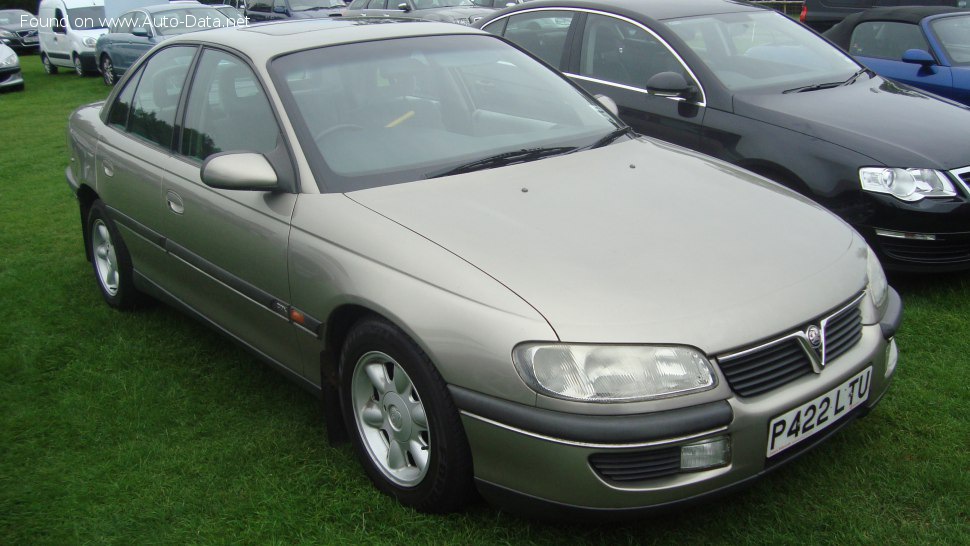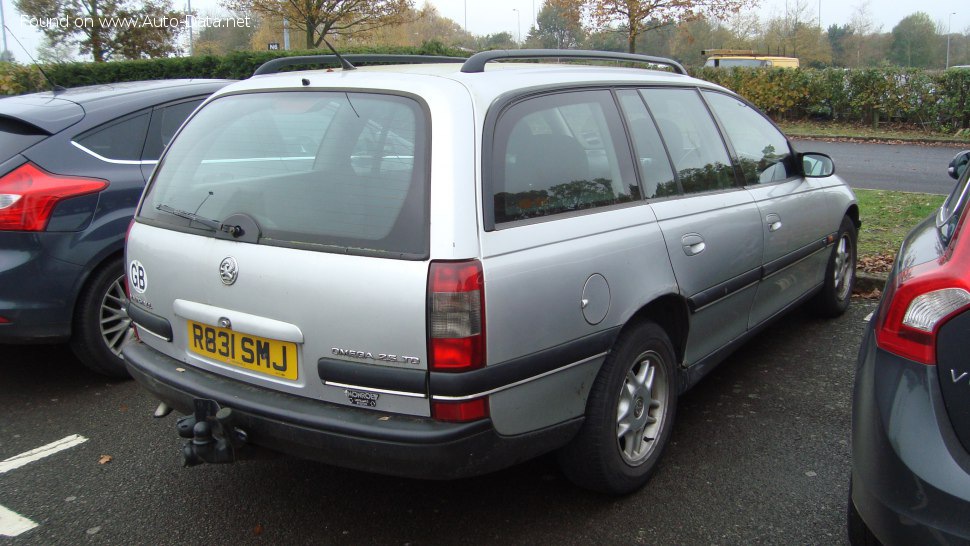
The Vauxhall Omega, particularly the second-generation B model, represented Vauxhall’s flagship offering in the executive and large family car segment during its production run. Manufactured between 1998 and 1999 for this specific iteration, the Vauxhall Omega Estate B 2.0 DTI 16V (101 Hp) was a prominent choice in the European market for buyers seeking a spacious, comfortable, and practical vehicle with a focus on diesel efficiency. While not directly sold under the Vauxhall badge in the United States, its Opel counterpart (Opel Omega B) provided a robust and well-regarded platform, catering to a demographic that valued generous interior volume, particularly in its station wagon (estate) configuration, combined with economical running costs. This specific variant, powered by a 2.0-liter turbo-diesel engine, underscored the growing European preference for diesel powertrains that offered a compelling blend of torque, fuel economy, and long-distance cruising capability.
The Vauxhall Omega Estate B Legacy
The Vauxhall Omega B, launched in 1994, built upon the success of its predecessor, the Omega A (known as the Vauxhall Carlton in the UK). As a large family car, it competed in a highly competitive segment, offering a more contemporary design, enhanced safety features, and a refined driving experience. The Estate B variant, in particular, was designed to maximize utility and cargo space, making it a popular choice for families and professionals requiring significant load-carrying capacity. The Vauxhall Omega Estate B 2.0 DTI 16V (101 Hp) specifically emerged as a practical and economical option within the lineup, leveraging advanced diesel technology for its time. Its role in the European market was significant, providing a spacious and rear-wheel-drive alternative to front-wheel-drive competitors, appealing to drivers who appreciated a more traditional, balanced chassis setup.
Engine and Performance: The 2.0 DTI 16V Powerplant
Powertrain Architecture and Diesel Efficiency
At the heart of the Vauxhall Omega Estate B 2.0 DTI 16V (101 Hp) was a sophisticated 2.0-liter (1995 cm3 or 121.74 cu. in.) inline-four diesel engine, designated X20DTH. This powerplant was a testament to the advancements in diesel technology of the late 1990s. Featuring a turbocharger and intercooler, it produced a respectable 101 horsepower (Hp) at an unspecified RPM, translating to a power output of 50.6 Hp per liter. More critically for a diesel of its era, it delivered a robust 205 Newton-meters (Nm) or 151.2 lb.-ft. of torque, peaking at a low 1650 rpm. This characteristic low-end torque was instrumental in providing strong pulling power, especially useful for a large estate car, whether for acceleration or when carrying heavy loads or towing. The engine utilized a Diesel Commonrail fuel injection system, a cutting-edge technology at the time that allowed for more precise fuel delivery, contributing to both improved performance and fuel efficiency. With four valves per cylinder and an OHC (Overhead Camshaft) valvetrain, the engine was designed for efficient combustion and smooth operation. Its high compression ratio of 18.5:1 was typical for a direct-injection diesel, optimizing fuel atomization and power generation. The engine’s layout was front, longitudinal, driving the rear wheels, a configuration that contributed to the Omega’s balanced weight distribution and handling characteristics.
Performance figures for the Omega Estate B 2.0 DTI 16V (101 Hp) were competitive for its segment and engine size. It was capable of reaching a maximum speed of 203 km/h (126.14 mph), demonstrating its ability for comfortable highway cruising. Fuel economy was a significant selling point, with an urban consumption figure of 10.8 liters per 100 kilometers, which translates to approximately 21.8 US miles per gallon. This efficiency was a key factor in its appeal, especially in European markets where fuel prices were a considerable concern. The weight-to-power ratio stood at 14.5 kg/Hp (or 69 Hp/tonne), while the weight-to-torque ratio was 7.1 kg/Nm (or 140.1 Nm/tonne), indicating a well-matched powertrain for its intended purpose.
Drivetrain and Handling
The Omega Estate B 2.0 DTI 16V (101 Hp) featured a traditional rear-wheel-drive architecture, which was a hallmark of the Omega line and contributed to its stable and predictable handling dynamics. Power was transmitted to the rear wheels via a 5-speed manual transmission, offering drivers direct engagement and control over the engine’s power delivery. The suspension system was designed to provide a comfortable ride while maintaining competent road holding. The front utilized an independent McPherson strut setup with coil springs and an anti-roll bar, a common and effective design for passenger cars. The rear featured an independent multi-link suspension, which offered superior wheel control over simpler beam axles, further enhancing ride comfort and handling stability, particularly for a vehicle designed to carry significant loads. Braking duties were handled by ventilated discs at the front and solid discs at the rear, providing ample stopping power. An Anti-lock Braking System (ABS) was included as a standard assisting system, enhancing safety by preventing wheel lock-up during hard braking. The vehicle rode on 195/65 R15 tires mounted on 6.5J x 15 wheel rims, a practical size offering a good balance of comfort and grip.
Design and Features: The Omega Estate B’s Practicality
Exterior Design and Aerodynamics
The Vauxhall Omega Estate B presented a refined and understated aesthetic that was characteristic of late 1990s European executive cars. Its overall length measured 4819 mm (189.72 in.), with a width of 1786 mm (70.31 in.) and a height of 1545 mm (60.83 in.). The design prioritized interior space and aerodynamic efficiency, boasting a drag coefficient (Cd) of 0.32, which was commendable for a large station wagon of its time and contributed to both fuel economy and reduced wind noise at speed. The long wheelbase of 2730 mm (107.48 in.) provided a stable platform and contributed significantly to interior roominess. The estate body type, with its five doors, offered excellent accessibility to both passenger and cargo areas, making it a highly versatile family or business vehicle.
Interior Space and Utility
The true strength of the Omega Estate B lay in its exceptional interior space and utility. Designed to comfortably accommodate five occupants, the cabin offered ample head, leg, and shoulder room. However, it was the cargo area that truly set it apart. The trunk (boot) space ranged from a generous minimum of 540 liters (19.07 cu. ft.) with all seats in place, expanding to an cavernous 1800 liters (63.57 cu. ft.) when the rear seats were folded down. This expansive cargo capacity made it ideal for carrying luggage, sports equipment, or even large furniture items, solidifying its reputation as a highly practical estate car. The maximum load capacity ranged from 561 to 622 kg (1236.79 – 1371.28 lbs.), further emphasizing its utility. Furthermore, the Omega Estate B was well-equipped for towing, with a permitted trailer load of 1600 kg (3527.4 lbs.) with brakes and 750 kg (1653.47 lbs.) without brakes, along with a permitted towbar download of 75 kg (165.35 lbs.), making it a capable vehicle for a wide range of tasks. The fuel tank capacity of 75 liters (19.81 US gallons) ensured a considerable cruising range, especially with the efficient diesel engine, making it a suitable choice for long journeys across continents.
Technical Specifications: Vauxhall Omega Estate B 2.0 DTI 16V (101 Hp)
| Brand | Vauxhall |
| Model | Omega |
| Generation | Omega Estate B |
| Type (Engine) | 2.0 DTI 16V (101 Hp) |
| Start of production | 1998 year |
| End of production | 1999 year |
| Powertrain Architecture | Internal Combustion engine |
| Body type | Station wagon (estate) |
| Seats | 5 |
| Doors | 5 |
| Fuel consumption (economy) – urban | 10.8 l/100 km (21.8 US mpg, 26.2 UK mpg, 9.3 km/l) |
| Fuel Type | Diesel |
| Maximum speed | 203 km/h (126.14 mph) |
| Weight-to-power ratio | 14.5 kg/Hp, 69 Hp/tonne |
| Weight-to-torque ratio | 7.1 kg/Nm, 140.1 Nm/tonne |
| Power | 101 Hp |
| Power per litre | 50.6 Hp/l |
| Torque | 205 Nm @ 1650 rpm. (151.2 lb.-ft. @ 1650 rpm.) |
| Engine layout | Front, Longitudinal |
| Engine Model/Code | X20DTH |
| Engine displacement | 1995 cm3 (121.74 cu. in.) |
| Number of cylinders | 4 |
| Engine configuration | Inline |
| Cylinder Bore | 84 mm (3.31 in.) |
| Piston Stroke | 90 mm (3.54 in.) |
| Compression ratio | 18.5:1 |
| Number of valves per cylinder | 4 |
| Fuel injection system | Diesel Commonrail |
| Engine aspiration | Turbocharger, Intercooler |
| Valvetrain | OHC |
| Engine oil capacity | 5.5 l (5.81 US qt | 4.84 UK qt) |
| Coolant | 7.9 l (8.35 US qt | 6.95 UK qt) |
| Kerb Weight | 1463-1524 kg (3225.36 – 3359.84 lbs.) |
| Max. weight | 2085 kg (4596.64 lbs.) |
| Max load | 561-622 kg (1236.79 – 1371.28 lbs.) |
| Trunk (boot) space – minimum | 540 l (19.07 cu. ft.) |
| Trunk (boot) space – maximum | 1800 l (63.57 cu. ft.) |
| Fuel tank capacity | 75 l (19.81 US gal | 16.5 UK gal) |
| Max. roof load | 100 kg (220.46 lbs.) |
| Permitted trailer load with brakes (12%) | 1600 kg (3527.4 lbs.) |
| Permitted trailer load without brakes | 750 kg (1653.47 lbs.) |
| Permitted towbar download | 75 kg (165.35 lbs.) |
| Length | 4819 mm (189.72 in.) |
| Width | 1786 mm (70.31 in.) |
| Width including mirrors | 1960 mm (77.17 in.) |
| Height | 1545 mm (60.83 in.) |
| Wheelbase | 2730 mm (107.48 in.) |
| Front track | 1514 mm (59.61 in.) |
| Rear (Back) track | 1528 mm (60.16 in.) |
| Rear overhang | 1170 mm (46.06 in.) |
| Drag coefficient (Cd) | 0.32 |
| Minimum turning circle (turning diameter) | 10.2 m (33.46 ft.) |
| Drivetrain Architecture | The Internal combustion engine (ICE) drives the rear wheels of the vehicle. |
| Drive wheel | Rear wheel drive |
| Number of gears and type of gearbox | 5 gears, manual transmission |
| Front suspension | Independent, type McPherson with coil spring and anti-roll bar |
| Rear suspension | Independent multi-link suspension |
| Front brakes | Ventilated discs |
| Rear brakes | Disc |
| Assisting systems | ABS (Anti-lock braking system) |
| Tires size | 195/65 R15 |
| Wheel rims size | 6.5J x 15 |