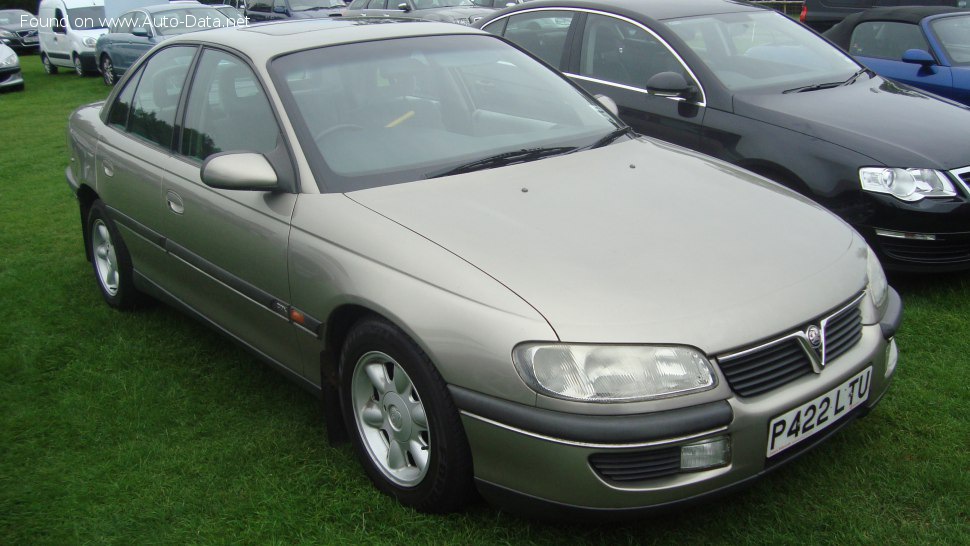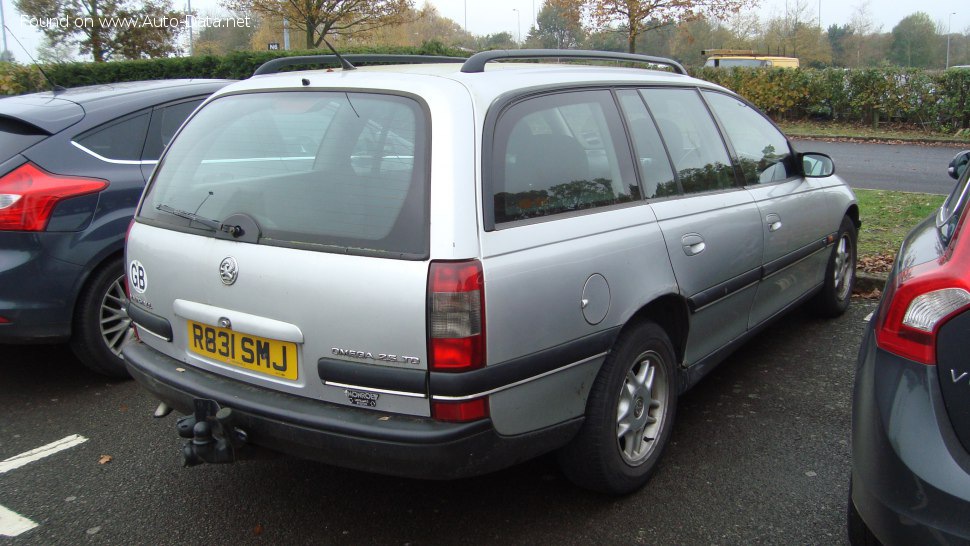
The Vauxhall Omega Estate B 2.5i V6 (170 Hp) represents a significant chapter in European automotive engineering, particularly within the executive car segment during the mid-to-late 1990s. As a product of Vauxhall, the British arm of General Motors’ European operations (primarily Opel in mainland Europe), the Omega B generation, produced from 1994 to 1999, was positioned as a large, comfortable, and capable family or executive station wagon. While never officially sold in the United States, the Omega B shared its platform with the Cadillac Catera, providing a distant but recognizable link for American enthusiasts. This particular variant, the 2.5i V6, was a popular choice for its blend of performance, refinement, and practicality, embodying the traditional rear-wheel-drive, V6-powered European executive car ethos of its era. It competed in a fiercely contested segment, offering spaciousness, a robust powertrain, and a comfortable driving experience tailored for long-distance journeys across Europe.
The Vauxhall Omega Estate B 2.5i V6 (170 Hp): Engineering and Performance
At the heart of the Vauxhall Omega Estate B 2.5i V6 (170 Hp) lay its longitudinally mounted 2.5-liter (2498 cm3 or 152.44 cu. in.) V6 gasoline engine, designated by the code X25XE. This naturally aspirated power plant was a sophisticated unit for its time, featuring a Double Overhead Camshaft (DOHC) valvetrain, contributing to its smooth power delivery and efficiency. It produced a respectable 170 horsepower at a peak of 6000 rpm, translating to a power-per-liter output of 68.1 HP/l. Torque output was equally impressive, reaching 227 Nm (167.43 lb.-ft.) at a relatively low 3200 rpm, providing ample pulling power for a vehicle of its size and intended use, especially when fully loaded or towing. This strong torque delivery at mid-range engine speeds was crucial for effortless cruising and confident overtaking maneuvers on European highways.
The engine’s V-configuration, with six cylinders, contributed to its inherent balance and refinement, qualities highly valued in the executive segment. With a compression ratio of 10.8:1, the engine was designed for optimal combustion efficiency with petrol (gasoline) fuel. The cylinder bore measured 81.5 mm (3.21 in.) and the piston stroke was 79.6 mm (3.13 in.), indicating a slightly undersquare design, typically favoring higher revs and power rather than low-end grunt, though the V6’s inherent torque delivery compensated effectively. This powertrain was mated to a 5-speed manual transmission, offering drivers direct control over the engine’s output and contributing to a more engaging driving experience, a common preference in Europe for its efficiency and driver involvement. The rear-wheel-drive architecture, a hallmark of traditional executive cars, ensured balanced handling and a distinct driving feel.
In terms of outright performance, the Vauxhall Omega Estate B 2.5i V6 was capable of reaching a maximum speed of 216 km/h (134.22 mph). While not a sports car, this top speed was more than adequate for autobahn cruising and demonstrated the V6 engine’s capability. Fuel economy, a practical consideration for any large family vehicle, was rated at 11.6 liters per 100 km (20.3 US mpg) in urban driving conditions. This figure, though appearing modest by modern standards, was competitive for a large, naturally aspirated V6 station wagon in the mid-1990s. The vehicle’s weight-to-power ratio stood at 9.4 kg/Hp (106.9 Hp/tonne), indicating a solid performance-to-weight balance for its class. The 75-liter (19.81 US gallon) fuel tank provided a substantial cruising range, further enhancing its suitability for long-distance travel.
Design, Features, and Practicality
The Vauxhall Omega Estate B was designed with practicality and passenger comfort as paramount considerations. Its body type, a traditional station wagon (or “estate” in UK English), offered a cavernous interior suitable for five occupants and their luggage. Measuring 4819 mm (189.72 in.) in length, 1786 mm (70.31 in.) in width (1960 mm or 77.17 in. including mirrors), and 1545 mm (60.83 in.) in height, the Omega Estate B was a substantial vehicle. Its generous wheelbase of 2730 mm (107.48 in.) was key to providing excellent ride quality and ample passenger legroom, particularly for rear passengers.
The design philosophy of the Omega B was one of understated elegance and functional aerodynamics. A drag coefficient (Cd) of 0.32 was quite respectable for a large station wagon of its era, contributing to reduced wind noise at higher speeds and improved fuel efficiency. The vehicle’s exterior styling was conservative yet refined, aiming for a broad appeal among executive and family buyers. The five-door configuration provided easy access to both the passenger compartment and the expansive cargo area.
Inside, the Omega Estate B excelled in versatility. The trunk (boot) space was impressive, starting at 540 liters (19.07 cu. ft.) with all seats in place. When the rear seats were folded down, this capacity expanded dramatically to a maximum of 1800 liters (63.57 cu. ft.), making it an incredibly capable hauler for luggage, sports equipment, or even light commercial duties. The maximum load capacity ranged from 586 to 605 kg (1291.91 to 1333.8 lbs.), underscoring its robust construction. Furthermore, the Omega Estate B was a capable tow vehicle, with a permitted trailer load with brakes of 1600-1650 kg (3527.4 – 3637.63 lbs.) and 750 kg (1653.47 lbs.) without brakes, along with a permitted towbar download of 75 kg (165.35 lbs.) and a maximum roof load of 100 kg (220.46 lbs.).
Chassis and safety features were also noteworthy for the period. The Omega Estate B featured an independent front suspension with McPherson struts, coil springs, and an anti-roll bar, providing a good balance of comfort and handling precision. The rear suspension employed a sophisticated independent multi-link setup, further enhancing ride comfort, stability, and road holding, particularly important for a heavy vehicle with varying loads. Braking performance was handled by ventilated discs at the front and solid discs at the rear, complemented by an Anti-lock Braking System (ABS) as a crucial safety feature, preventing wheel lock-up during hard braking and maintaining steering control. The standard tire size was 195/65 R15, mounted on 6.5J x 15 wheel rims, providing a comfortable ride and adequate grip. The minimum turning circle of 10.2 meters (33.46 ft.) was respectable for a vehicle of its size, aiding maneuverability in urban environments.
Technical Specifications
| Brand | Vauxhall |
| Model | Omega |
| Generation | Omega Estate B |
| Type (Engine) | 2.5i V6 (170 Hp) |
| Start of production | 1994 year |
| End of production | 1999 year |
| Powertrain Architecture | Internal Combustion engine |
| Body type | Station wagon (estate) |
| Seats | 5 |
| Doors | 5 |
| Fuel consumption (economy) – urban | 11.6 l/100 km (20.3 US mpg) |
| Fuel Type | Petrol (Gasoline) |
| Maximum speed | 216 km/h (134.22 mph) |
| Weight-to-power ratio | 9.4 kg/Hp (106.9 Hp/tonne) |
| Weight-to-torque ratio | 7 kg/Nm (142.8 Nm/tonne) |
| Power | 170 Hp @ 6000 rpm |
| Power per liter | 68.1 Hp/l |
| Torque | 227 Nm @ 3200 rpm (167.43 lb.-ft. @ 3200 rpm) |
| Engine layout | Front, Longitudinal |
| Engine Model/Code | X25XE |
| Engine displacement | 2498 cm3 (2.5 l, 152.44 cu. in.) |
| Number of cylinders | 6 |
| Engine configuration | V-engine |
| Cylinder Bore | 81.5 mm (3.21 in.) |
| Piston Stroke | 79.6 mm (3.13 in.) |
| Compression ratio | 10.8:1 |
| Engine aspiration | Naturally aspirated engine |
| Valvetrain | DOHC |
| Engine oil capacity | 5.75 l (6.08 US qt) |
| Engine oil specification | Not specified |
| Coolant | 9.7 l (10.25 US qt) |
| Kerb Weight | 1590-1639 kg (3505.35 – 3613.38 lbs.) |
| Max. weight | 2195-2225 kg (4839.15 – 4905.29 lbs.) |
| Max load | 586-605 kg (1291.91 – 1333.8 lbs.) |
| Trunk (boot) space – minimum | 540 l (19.07 cu. ft.) |
| Trunk (boot) space – maximum | 1800 l (63.57 cu. ft.) |
| Fuel tank capacity | 75 l (19.81 US gal) |
| Max. roof load | 100 kg (220.46 lbs.) |
| Permitted trailer load with brakes (12%) | 1600-1650 kg (3527.4 – 3637.63 lbs.) |
| Permitted trailer load without brakes | 750 kg (1653.47 lbs.) |
| Permitted towbar download | 75 kg (165.35 lbs.) |
| Length | 4819 mm (189.72 in.) |
| Width | 1786 mm (70.31 in.) |
| Width including mirrors | 1960 mm (77.17 in.) |
| Height | 1545 mm (60.83 in.) |
| Wheelbase | 2730 mm (107.48 in.) |
| Front track | 1514 mm (59.61 in.) |
| Rear (Back) track | 1528 mm (60.16 in.) |
| Rear overhang | 1170 mm (46.06 in.) |
| Drag coefficient (Cd) | 0.32 |
| Minimum turning circle (turning diameter) | 10.2 m (33.46 ft.) |
| Drivetrain Architecture | The Internal combustion engine (ICE) drives the rear wheels of the vehicle. |
| Drive wheel | Rear wheel drive |
| Number of gears and type of gearbox | 5 gears, manual transmission |
| Front suspension | Independent, type McPherson with coil spring and anti-roll bar |
| Rear suspension | Independent multi-link suspension |
| Front brakes | Ventilated discs |
| Rear brakes | Disc |
| Assisting systems | ABS (Anti-lock braking system) |
| Tires size | 195/65 R15 |
| Wheel rims size | 6.5J x 15 |