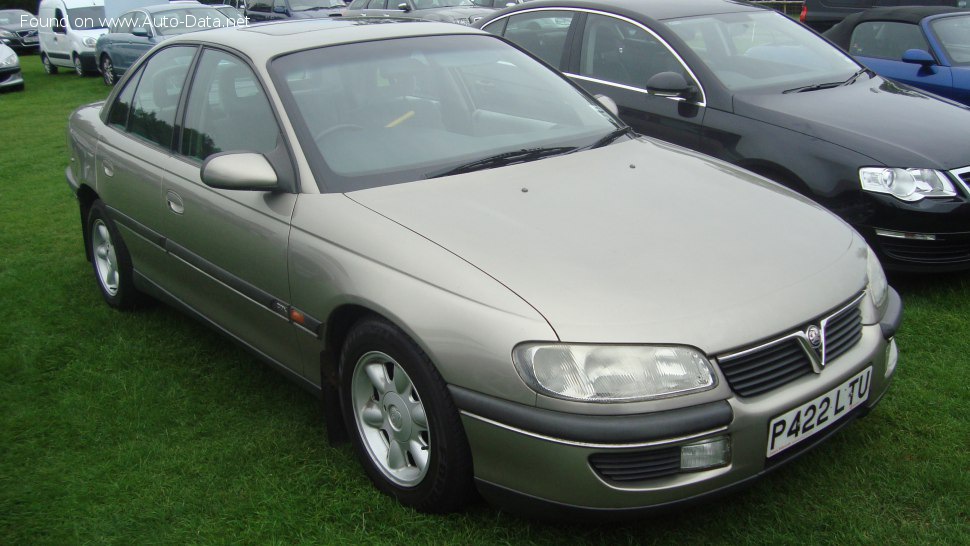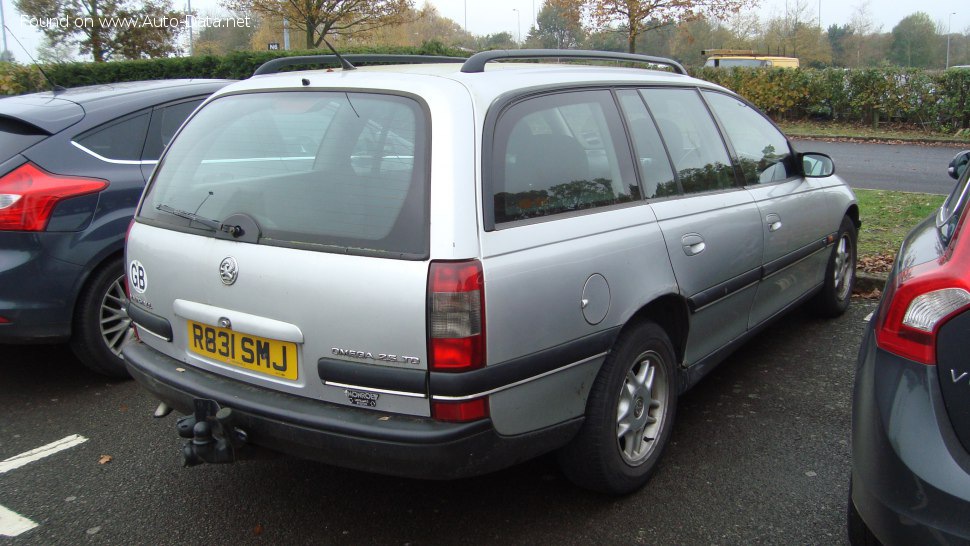
The Vauxhall Omega Estate B 3.0i V6 (211 Hp), produced between 1994 and 1999, represented a significant offering in the European executive car segment, particularly for the United Kingdom market where the Vauxhall brand, a subsidiary of General Motors, was prominent. Known as the Opel Omega elsewhere in Europe, this B-generation model succeeded the Omega A and aimed to blend sophisticated engineering with practicality, especially in its spacious station wagon (estate) configuration. During its production run, the Omega B was lauded for its comfortable ride, robust build quality, and a range of powerful engine options, with the 3.0i V6 variant standing out as a performance-oriented choice for discerning buyers who required both speed and substantial cargo capacity. This model carved a niche for itself as a refined, rear-wheel-drive family hauler, offering a blend of luxury, performance, and utilitarianism that was increasingly rare in an era trending towards front-wheel-drive platforms.
Engineering and Performance of the Vauxhall Omega Estate B 3.0i V6 (211 Hp)
At the heart of the Vauxhall Omega Estate B 3.0i V6 (211 Hp) was its potent 3.0-liter V6 engine, designated as the X30XE. This naturally aspirated, multi-port manifold injected gasoline engine was a testament to late 20th-century European engineering, featuring a DOHC (Double Overhead Camshaft) valvetrain with four valves per cylinder. With an engine displacement of 2962 cm3 (180.75 cu. in.) and a compression ratio of 10.8:1, the V6 was engineered for a smooth, responsive power delivery. It produced a robust 211 horsepower at 6200 rpm, translating to a healthy power per liter figure of 71.2 HP/l. Torque output was equally impressive for its time, delivering 199.14 lb.-ft. (270 Nm) at a relatively accessible 3600 rpm, ensuring strong mid-range acceleration and effortless cruising.
The powertrain architecture of the Omega B 3.0i V6 was traditional yet effective, featuring a front, longitudinal engine layout driving the rear wheels. This rear-wheel-drive configuration, paired with a standard 5-speed manual transmission, offered a driving dynamic favored by enthusiasts for its balanced handling and direct feel. Performance figures underscored its capabilities as a swift executive estate: the vehicle could achieve a maximum speed of 144.16 mph (232 km/h), making it one of the faster family wagons of its era. Despite its substantial curb weight of 3756.68 lbs. (1704 kg), the engine’s power provided a favorable weight-to-power ratio of 8.1 kg/Hp (123.8 Hp/tonne) and a weight-to-torque ratio of 6.3 kg/Nm (158.5 Nm/tonne). While not primarily designed for fuel economy, the urban consumption was rated at 18 US mpg (13.1 l/100 km), typical for a large V6 engine of the period.
The vehicle’s overall performance was complemented by a sophisticated chassis. The front suspension utilized an independent McPherson strut system with coil springs and an anti-roll bar, providing precise steering and good road holding. The rear featured an independent multi-link suspension, which was advanced for a car of its class and era, contributing significantly to ride comfort and stability, especially when fully loaded or towing. Braking was handled by ventilated discs at the front and solid discs at the rear, augmented by an Anti-lock Braking System (ABS) as standard, enhancing safety and control under heavy braking.
Design and Features of the Vauxhall Omega Estate B
The Vauxhall Omega Estate B presented a distinguished and practical design, embodying the “station wagon” body type with five doors and seating for five occupants. Its design language was characterized by smooth, flowing lines and a relatively low drag coefficient (Cd) of 0.32, which was commendable for a vehicle of its size and type in the mid-1990s. This aerodynamic efficiency contributed to both fuel economy and reduced wind noise at higher speeds, enhancing the overall driving experience.
Dimensionally, the Omega Estate B was a substantial vehicle, measuring 189.72 inches (4819 mm) in length, 70.31 inches (1786 mm) in width (77.17 inches or 1960 mm including mirrors), and 60.83 inches (1545 mm) in height. Its generous wheelbase of 107.48 inches (2730 mm) was crucial for providing ample interior space for both passengers and cargo. The vehicle’s practicality was a significant selling point, offering a minimum trunk (boot) space of 19.07 cu. ft. (540 liters), which could expand to an impressive 63.57 cu. ft. (1800 liters) with the rear seats folded down. This made it an ideal choice for families, tradespeople, or anyone needing significant hauling capacity, further bolstered by a maximum payload of 1203.72 lbs. (546 kg) and a substantial permitted trailer load with brakes of 3747.86 lbs. (1700 kg).
Inside, the Omega B Estate was designed with comfort and functionality in mind. The cabin offered a refined environment, with an emphasis on ergonomic controls and quality materials typical of an executive-class vehicle. Standard features for the 3.0i V6 model would have included power windows, central locking, and a comprehensive audio system, alongside the aforementioned ABS. The 75-liter (19.81 US gal) fuel tank provided a decent cruising range, suitable for long journeys. The vehicle’s tires, sized 225/55 R16 on 7J x 16 wheel rims, provided a good balance of grip and ride comfort, consistent with its executive touring aspirations. The Omega Estate B, therefore, represented a compelling package for those seeking a practical, powerful, and comfortable large family car that retained a classic rear-wheel-drive driving feel in a modern (for its time) wrapper.
Technical Specifications
| Brand | Vauxhall |
| Model | Omega |
| Generation | Omega Estate B |
| Type (Engine) | 3.0i V6 (211 Hp) |
| Start of production | 1994 year |
| End of production | 1999 year |
| Powertrain Architecture | Internal Combustion engine |
| Body type | Station wagon (estate) |
| Seats | 5 |
| Doors | 5 |
| Fuel consumption (economy) – urban | 13.1 l/100 km (18 US mpg) |
| Fuel Type | Petrol (Gasoline) |
| Maximum speed | 232 km/h (144.16 mph) |
| Weight-to-power ratio | 8.1 kg/Hp, 123.8 Hp/tonne |
| Weight-to-torque ratio | 6.3 kg/Nm, 158.5 Nm/tonne |
| Power | 211 Hp @ 6200 rpm. |
| Power per liter | 71.2 Hp/l |
| Torque | 270 Nm @ 3600 rpm (199.14 lb.-ft. @ 3600 rpm) |
| Engine layout | Front, Longitudinal |
| Engine Model/Code | X30XE |
| Engine displacement | 2962 cm3 (180.75 cu. in.) |
| Number of cylinders | 6 |
| Engine configuration | V-engine |
| Cylinder Bore | 86 mm (3.39 in.) |
| Piston Stroke | 85 mm (3.35 in.) |
| Compression ratio | 10.8:1 |
| Number of valves per cylinder | 4 |
| Fuel injection system | Multi-port manifold injection |
| Engine aspiration | Naturally aspirated engine |
| Valvetrain | DOHC |
| Engine oil capacity | 5.75 l (6.08 US qt) |
| Coolant | 9.7 l (10.25 US qt) |
| Kerb Weight | 1704 kg (3756.68 lbs.) |
| Max. weight | 2250 kg (4960.4 lbs.) |
| Max load | 546 kg (1203.72 lbs.) |
| Trunk (boot) space – minimum | 540 l (19.07 cu. ft.) |
| Trunk (boot) space – maximum | 1800 l (63.57 cu. ft.) |
| Fuel tank capacity | 75 l (19.81 US gal) |
| Max. roof load | 100 kg (220.46 lbs.) |
| Permitted trailer load with brakes (12%) | 1700 kg (3747.86 lbs.) |
| Permitted trailer load without brakes | 750 kg (1653.47 lbs.) |
| Permitted towbar download | 75 kg (165.35 lbs.) |
| Length | 4819 mm (189.72 in.) |
| Width | 1786 mm (70.31 in.) |
| Width including mirrors | 1960 mm (77.17 in.) |
| Height | 1545 mm (60.83 in.) |
| Wheelbase | 2730 mm (107.48 in.) |
| Front track | 1514 mm (59.61 in.) |
| Rear (Back) track | 1528 mm (60.16 in.) |
| Rear overhang | 1170 mm (46.06 in.) |
| Drag coefficient (Cd) | 0.32 |
| Minimum turning circle (turning diameter) | 10.2 m (33.46 ft.) |
| Drivetrain Architecture | The Internal combustion engine (ICE) drives the rear wheels of the vehicle. |
| Drive wheel | Rear wheel drive |
| Number of gears and type of gearbox | 5 gears, manual transmission |
| Front suspension | Independent, type McPherson with coil spring and anti-roll bar |
| Rear suspension | Independent multi-link suspension |
| Front brakes | Ventilated discs |
| Rear brakes | Disc |
| Assisting systems | ABS (Anti-lock braking system) |
| Tires size | 225/55 R16 |
| Wheel rims size | 7J x 16 |