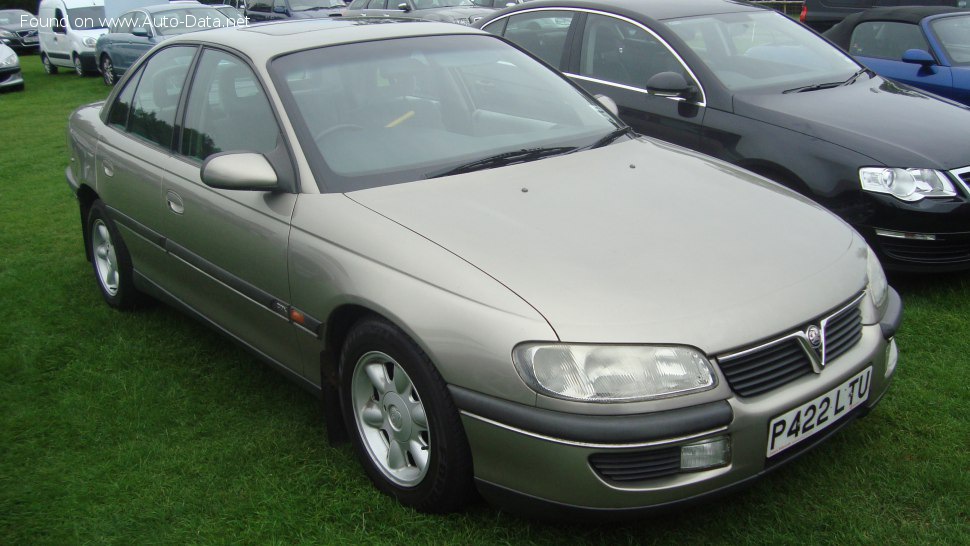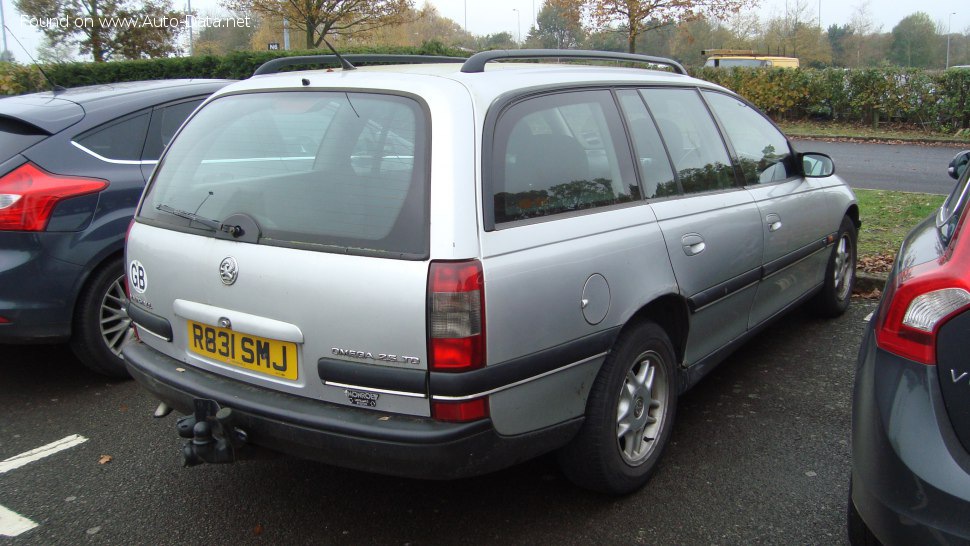
The Vauxhall Omega Estate B 3.0i V6 (211 Hp) Automatic represents a significant chapter in European automotive history, serving as Vauxhall’s flagship executive vehicle in the United Kingdom during its production run from 1994 to 1999. As the British sibling to Opel’s Omega B, this model catered to a discerning market segment demanding a blend of comfort, practicality, and robust performance. Positioned as a direct competitor to premium offerings from BMW, Mercedes-Benz, and Volvo in the large executive estate class, the Omega B Estate carved out its niche by offering generous interior space, a powerful V6 engine, and a comprehensive list of features, all while maintaining a strong value proposition. Though not officially sold in the United States, its Opel counterpart, the Omega B, was briefly rebadged as the Cadillac Catera, providing a tangential connection to the American market, albeit in sedan form. This particular Estate variant, however, remained a European-market specialty, prized for its versatility as a family hauler and a capable long-distance cruiser.
The Omega B Generation: An Executive Workhorse
Succeeding the original Omega A (known as the Vauxhall Carlton in the UK), the Omega B generation brought a more contemporary design and refined engineering to the executive segment. Launched in 1994, it quickly established itself as a staple on European roads, particularly in its station wagon (estate) guise. Vauxhall, as General Motors’ British subsidiary, consistently offered Opel models rebadged for the UK market, and the Omega B was no exception. It was designed to appeal to both corporate fleets and private buyers who required substantial cargo capacity without compromising on driving dynamics or passenger comfort. The Omega B Estate was notable for its sleek, aerodynamic profile, boasting a drag coefficient (Cd) of 0.32, which was commendable for a vehicle of its size and body type in the mid-1990s. This attention to aerodynamics contributed not only to improved fuel efficiency but also to reduced wind noise at higher speeds, enhancing the overall refinement of the driving experience.
The vehicle’s dimensions underscore its substantial presence: a length of 189.72 inches, a width of 70.31 inches (77.17 inches including mirrors), and a height of 60.83 inches. A generous wheelbase of 107.48 inches was crucial for providing ample passenger room and stable handling, particularly at highway speeds. The Omega Estate B was engineered to handle diverse driving conditions, from urban commuting to extended motorway journeys, making it a truly versatile executive workhorse for the European landscape.
Powertrain and Performance: The 3.0-liter V6
At the heart of the Vauxhall Omega Estate B 3.0i V6 (211 Hp) Automatic was the robust X30XE engine, a 3.0-liter (2962 cm3 or 180.75 cu. in.) naturally aspirated V6 powerplant. This engine, featuring a DOHC (Dual Overhead Camshaft) valvetrain with four valves per cylinder, was engineered for a smooth delivery of power and a refined acoustic character, befitting an executive-class vehicle. It produced a healthy 211 horsepower at 6200 rpm, translating to a power-per-liter output of 71.2 HP/l, a respectable figure for its era. Torque peaked at 199.14 lb.-ft. (270 Nm) at a relatively accessible 3600 rpm, ensuring strong mid-range acceleration and effortless cruising capability. The engine’s layout was front, longitudinal, optimizing weight distribution and allowing for the rear-wheel-drive architecture.
Power was channeled to the rear wheels via a 4-speed automatic transmission. While modern vehicles often feature more gears, this 4-speed unit was typical for automatic transmissions of the mid-1990s, prioritized for smooth shifts and reliability. The rear-wheel-drive setup provided a more engaging driving experience and better traction under certain load conditions compared to front-wheel-drive alternatives, aligning with the preferences of many executive car buyers. Performance figures included a top speed of 136.7 mph (220 km/h), demonstrating its capability for sustained high-speed travel on autobahns and motorways. The weight-to-power ratio stood at 8.2 kg/Hp (122.4 Hp/tonne), indicating a solid balance of mass and motive force for its class.
Fuel economy, while not the primary focus for a large V6 estate of this era, was rated at 17.4 US mpg (urban cycle) and had a fuel tank capacity of 19.81 US gallons (75 liters), providing a substantial cruising range. The engine’s compression ratio of 10.8:1 and multi-port manifold fuel injection system were standard for optimizing combustion efficiency and power output. With a generous engine oil capacity of 6.08 US quarts and a coolant capacity of 10.25 US quarts, the X30XE was designed for durability and consistent performance over long periods of use.
Design, Ergonomics, and Features
Exterior Design and Practicality
The Vauxhall Omega Estate B was a masterclass in practical design for its time. Its station wagon (estate) body type was not merely an afterthought but a core offering, designed to maximize utility without sacrificing aesthetic appeal. The five-door configuration provided easy access for both passengers and cargo. With a minimum trunk space of 19.07 cubic feet (540 liters) and an expansive maximum of 63.57 cubic feet (1800 liters) with the rear seats folded, the Omega Estate B was exceptionally versatile. This substantial cargo volume made it an ideal choice for families, tradespeople, or anyone requiring significant hauling capability for luggage, sports equipment, or goods. The rear overhang of 46.06 inches further contributed to the capacious load area, while the maximum roof load of 220.46 lbs. added to its utility for carrying larger items like bicycles or roof boxes.
Interior Comfort and Technology
Inside, the Omega Estate B was designed for comfort and functionality. The five-seat configuration offered ample room for all occupants, with a focus on ergonomic seating and quality materials typical of an executive car in the mid-1990s. While specific interior features would vary by trim level, standard or available amenities often included automatic climate control, power windows, central locking, and a multi-speaker audio system. The dashboard layout was logical and driver-oriented, with clear instrumentation and accessible controls. The emphasis was on creating a serene and comfortable cabin environment, crucial for long journeys. Noise insulation and ride quality were carefully considered, contributing to a refined passenger experience.
Safety, Chassis, and Drivetrain
Safety features for the Omega Estate B included an Anti-lock Braking System (ABS) as a standard assisting system, providing enhanced control during emergency braking. The braking system itself comprised ventilated discs at the front and solid discs at the rear, ensuring strong and consistent stopping power. The chassis was engineered for a compliant yet controlled ride, featuring an independent McPherson strut suspension with coil springs and an anti-roll bar at the front, and an independent multi-link suspension at the rear. This sophisticated suspension setup contributed to the vehicle’s stable handling and comfortable ride quality, absorbing road imperfections effectively. The 225/55 R16 tires mounted on 7J x 16 wheel rims provided a good balance of grip and ride comfort. Furthermore, the Omega B Estate was a capable hauler, with a permitted trailer load of 3747.86 lbs. (with brakes) and 1653.47 lbs. (without brakes), showcasing its robust construction and utility beyond just cargo space.
The Legacy of the Vauxhall Omega Estate B 3.0i V6 (211 Hp) Automatic
The Vauxhall Omega Estate B 3.0i V6 (211 Hp) Automatic left a lasting impression in the European executive car segment, particularly in the UK. It was lauded for its combination of spaciousness, robust V6 performance, and competitive pricing relative to its more premium German rivals. The model appealed to a wide range of buyers, from large families needing substantial cargo capacity to business professionals requiring a comfortable and capable vehicle for extensive travel. Its reputation for reliability, coupled with its strong powertrain and comfortable ride, made it a popular choice for many years. Despite its eventual discontinuation in 2003 (with the B generation ending production in 1999 for this specific variant), the Omega Estate B continues to be appreciated by enthusiasts and those seeking a practical, powerful, and well-built used car. It represents an era when large, rear-wheel-drive executive estates offered a compelling blend of luxury, utility, and driving enjoyment, embodying the essence of a true European workhorse with executive aspirations.
Technical Specifications
| Brand | Vauxhall |
| Model | Omega |
| Generation | Omega Estate B |
| Type (Engine) | 3.0i V6 (211 Hp) Automatic |
| Start of production | 1994 year |
| End of production | 1999 year |
| Powertrain Architecture | Internal Combustion engine |
| Body type | Station wagon (estate) |
| Seats | 5 |
| Doors | 5 |
| Fuel consumption (economy) – urban | 13.5 l/100 km (17.4 US mpg) |
| Fuel Type | Petrol (Gasoline) |
| Maximum speed | 220 km/h (136.7 mph) |
| Weight-to-power ratio | 8.2 kg/Hp (122.4 Hp/tonne) |
| Weight-to-torque ratio | 6.4 kg/Nm (156.6 Nm/tonne) |
| Power | 211 Hp @ 6200 rpm |
| Power per liter | 71.2 Hp/l |
| Torque | 270 Nm @ 3600 rpm (199.14 lb.-ft. @ 3600 rpm) |
| Engine layout | Front, Longitudinal |
| Engine Model/Code | X30XE |
| Engine displacement | 2962 cm3 (180.75 cu. in.) |
| Number of cylinders | 6 |
| Engine configuration | V-engine |
| Cylinder Bore | 86 mm (3.39 in.) |
| Piston Stroke | 85 mm (3.35 in.) |
| Compression ratio | 10.8:1 |
| Number of valves per cylinder | 4 |
| Fuel injection system | Multi-port manifold injection |
| Engine aspiration | Naturally aspirated engine |
| Valvetrain | DOHC |
| Engine oil capacity | 5.75 l (6.08 US qt) |
| Coolant | 9.7 l (10.25 US qt) |
| Kerb Weight | 1724 kg (3800.77 lbs.) |
| Max. weight | 2250 kg (4960.4 lbs.) |
| Max load | 526 kg (1159.63 lbs.) |
| Trunk (boot) space – minimum | 540 l (19.07 cu. ft.) |
| Trunk (boot) space – maximum | 1800 l (63.57 cu. ft.) |
| Fuel tank capacity | 75 l (19.81 US gal) |
| Max. roof load | 100 kg (220.46 lbs.) |
| Permitted trailer load with brakes (12%) | 1700 kg (3747.86 lbs.) |
| Permitted trailer load without brakes | 750 kg (1653.47 lbs.) |
| Permitted towbar download | 75 kg (165.35 lbs.) |
| Length | 4819 mm (189.72 in.) |
| Width | 1786 mm (70.31 in.) |
| Width including mirrors | 1960 mm (77.17 in.) |
| Height | 1545 mm (60.83 in.) |
| Wheelbase | 2730 mm (107.48 in.) |
| Front track | 1514 mm (59.61 in.) |
| Rear (Back) track | 1528 mm (60.16 in.) |
| Rear overhang | 1170 mm (46.06 in.) |
| Drag coefficient (Cd) | 0.32 |
| Minimum turning circle (turning diameter) | 10.2 m (33.46 ft.) |
| Drivetrain Architecture | The Internal combustion engine (ICE) drives the rear wheels of the vehicle. |
| Drive wheel | Rear wheel drive |
| Number of gears and type of gearbox | 4 gears, automatic transmission |
| Front suspension | Independent, type McPherson with coil spring and anti-roll bar |
| Rear suspension | Independent multi-link suspension |
| Front brakes | Ventilated discs |
| Rear brakes | Disc |
| Assisting systems | ABS (Anti-lock braking system) |
| Tires size | 225/55 R16 |
| Wheel rims size | 7J x 16 |