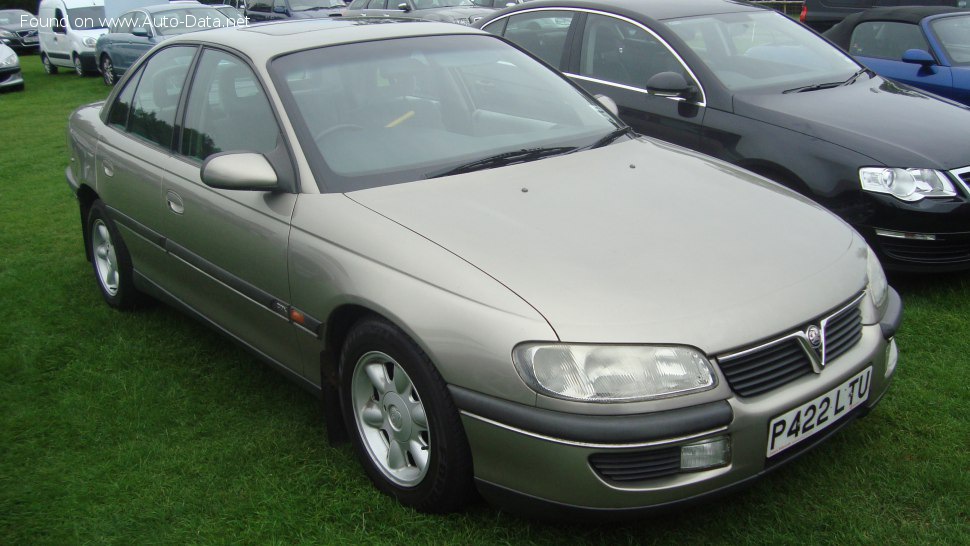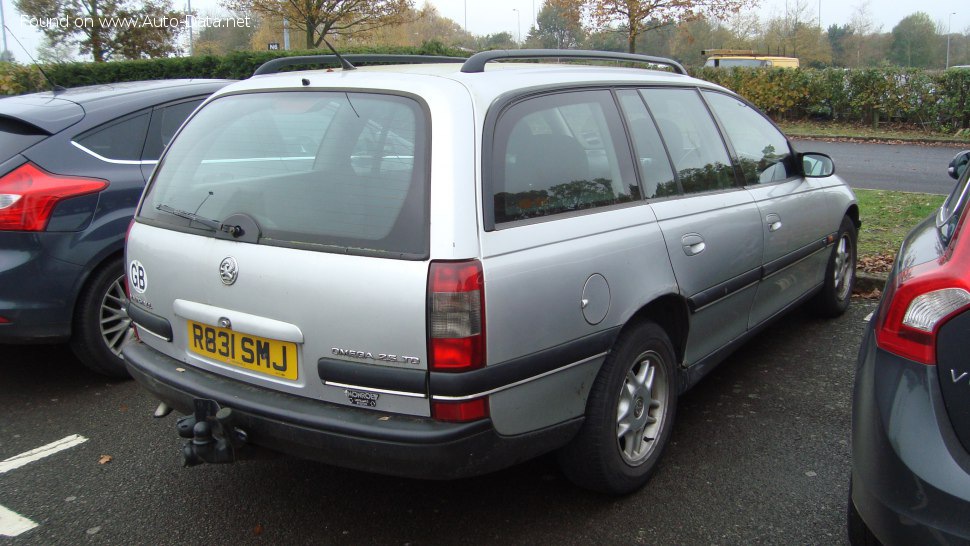
The Vauxhall Omega Estate B 5.7 V8, produced for a brief period between 2000 and 2001, represents a fascinating and somewhat unexpected chapter in the history of European executive automobiles. As a product of Vauxhall, the British arm of General Motors, the Omega was essentially a rebadged Opel Omega, a mainstream executive car in continental Europe. However, this particular variant, the Omega Estate B 5.7 V8, stood out significantly from its more conventional siblings. While the Omega typically competed with vehicles like the Ford Scorpio and BMW 5-Series in the upper-midsize segment, this specific model elevated its performance credentials dramatically by incorporating a robust 5.7-liter V8 engine, an option rarely seen in a European-market family station wagon. Its role was to offer a unique blend of practicality, understated design, and formidable power, appealing to a niche market desiring high performance without the overt styling of dedicated sports cars.
Engine and Performance: The Heart of the Vauxhall Omega Estate B 5.7 V8
At the core of the Vauxhall Omega Estate B 5.7 V8’s appeal was its formidable powertrain. This model was equipped with a 5.7-liter (5665 cm3 / 345.7 cu. in.) V8 engine, specifically designated with the model code Y57XE. This naturally aspirated unit delivered a robust 310 horsepower, translating to a power-per-liter output of 54.7 HP/l. Such an engine in a Vauxhall family estate was a remarkable engineering feat, likely a derivative of GM’s LS-series V8, which was more commonly found in performance vehicles like the Chevrolet Corvette or Pontiac GTO in the North American market, or its Holden counterparts in Australia. The engine’s configuration was a classic V-engine, featuring eight cylinders with two valves per cylinder, a design known for its durability and torque delivery.
The engine produced a substantial 450 Nm of torque, which equates to 331.9 lb.-ft., peaking at a relatively accessible 4400 rpm. This impressive torque figure ensured strong acceleration and effortless cruising, even when the spacious estate was fully loaded. Power was channeled to the rear wheels via a 4-speed automatic transmission, a common choice for executive vehicles of this era, prioritizing smooth shifts and comfortable driving over outright manual engagement. This drivetrain architecture, with its front-longitudinal engine layout driving the rear wheels, provided balanced handling dynamics and a traditional, engaging driving experience, a characteristic often appreciated by enthusiasts.
In terms of outright performance, the Vauxhall Omega Estate B 5.7 V8 was capable of reaching a maximum speed of 250 km/h (155.34 mph), a highly respectable figure for a large station wagon. However, the trade-off for such power and performance was reflected in its fuel economy. The urban fuel consumption was rated at 18 liters per 100 km, which translates to approximately 13.1 US miles per gallon. While this figure might seem high by modern standards, it was typical for a large displacement V8 engine from that period, especially considering its application in a vehicle designed for both performance and practicality. The engine oil capacity stood at 6 liters (6.34 US qt), indicating a substantial lubrication system necessary for the V8’s operation.
Design and Features: Practicality Meets Performance
The Vauxhall Omega Estate B, in its 5.7 V8 guise, embodied the quintessential executive station wagon design of the early 2000s. Its body type, a 5-door estate (station wagon), prioritized functionality and cargo capacity without sacrificing a refined aesthetic. Measuring 4819 mm (189.72 in.) in length, 1786 mm (70.31 in.) in width (1960 mm / 77.17 in. including mirrors), and 1545 mm (60.83 in.) in height, the Omega Estate presented a substantial and commanding presence on the road. The generous wheelbase of 2730 mm (107.48 in.) contributed significantly to interior space and ride comfort, characteristics expected of a vehicle in its class.
One of the Omega Estate’s most compelling features was its versatile cargo area. With the rear seats in place, it offered a minimum trunk space of 540 liters (19.07 cu. ft.), ample for daily errands or family trips. When the rear seats were folded, this capacity expanded dramatically to a maximum of 1800 liters (63.57 cu. ft.), transforming the vehicle into a highly capable hauler for larger items. This blend of passenger comfort for five occupants and extensive cargo versatility made the Omega Estate a highly practical choice for families or individuals requiring significant space.
The vehicle’s chassis and suspension system were engineered to handle both the demands of its powerful V8 engine and the comfort expectations of an executive car. The front suspension featured an independent McPherson strut setup with coil springs and an anti-roll bar, providing precise steering and stability. The rear utilized an independent multi-link suspension, a sophisticated arrangement designed to optimize ride quality, handling, and tire contact patch under varying loads. Braking duties were handled by ventilated discs both front and rear, ensuring robust stopping power, especially crucial given the vehicle’s performance capabilities. An Anti-lock Braking System (ABS) was included as a standard assisting system, enhancing safety by preventing wheel lock-up during hard braking. The drag coefficient (Cd) of 0.32 was competitive for a vehicle of its size and type, contributing to reduced wind noise and improved fuel efficiency at higher speeds. Furthermore, a minimum turning circle of 10.2 meters (33.46 ft.) offered reasonable maneuverability for a vehicle of its dimensions.
Technical Specifications
| Brand | Vauxhall |
| Model | Omega |
| Generation | Omega Estate B |
| Type (Engine) | 5.7 V8 (310 Hp) Automatic |
| Start of production | 2000 year |
| End of production | 2001 year |
| Powertrain Architecture | Internal Combustion engine |
| Body type | Station wagon (estate) |
| Seats | 5 |
| Doors | 5 |
| Fuel consumption (economy) – urban | 18 l/100 km (13.1 US mpg / 15.7 UK mpg / 5.6 km/l) |
| Fuel Type | Petrol (Gasoline) |
| Maximum speed | 250 km/h (155.34 mph) |
| Power | 310 Hp |
| Power per liter | 54.7 Hp/l |
| Torque | 450 Nm @ 4400 rpm (331.9 lb.-ft. @ 4400 rpm) |
| Engine layout | Front, Longitudinal |
| Engine Model/Code | Y57XE |
| Engine displacement | 5665 cm3 (345.7 cu. in.) |
| Number of cylinders | 8 |
| Engine configuration | V-engine |
| Cylinder Bore | 99 mm (3.9 in.) |
| Piston Stroke | 92 mm (3.62 in.) |
| Compression ratio | 10.1:1 |
| Number of valves per cylinder | 2 |
| Fuel injection system | Multi-port manifold injection |
| Engine aspiration | Naturally aspirated engine |
| Engine oil capacity | 6 l (6.34 US qt | 5.28 UK qt) |
| Trunk (boot) space – minimum | 540 l (19.07 cu. ft.) |
| Trunk (boot) space – maximum | 1800 l (63.57 cu. ft.) |
| Fuel tank capacity | 75 l (19.81 US gal | 16.5 UK gal) |
| Length | 4819 mm (189.72 in.) |
| Width | 1786 mm (70.31 in.) |
| Width including mirrors | 1960 mm (77.17 in.) |
| Height | 1545 mm (60.83 in.) |
| Wheelbase | 2730 mm (107.48 in.) |
| Rear overhang | 1170 mm (46.06 in.) |
| Drag coefficient (Cd) | 0.32 |
| Minimum turning circle (turning diameter) | 10.2 m (33.46 ft.) |
| Drivetrain Architecture | The Internal combustion engine (ICE) drives the rear wheels of the vehicle. |
| Drive wheel | Rear wheel drive |
| Number of gears and type of gearbox | 4 gears, automatic transmission |
| Front suspension | Independent, type McPherson with coil spring and anti-roll bar |
| Rear suspension | Independent multi-link suspension |
| Front brakes | Ventilated discs |
| Rear brakes | Ventilated discs |
| Assisting systems | ABS (Anti-lock braking system) |