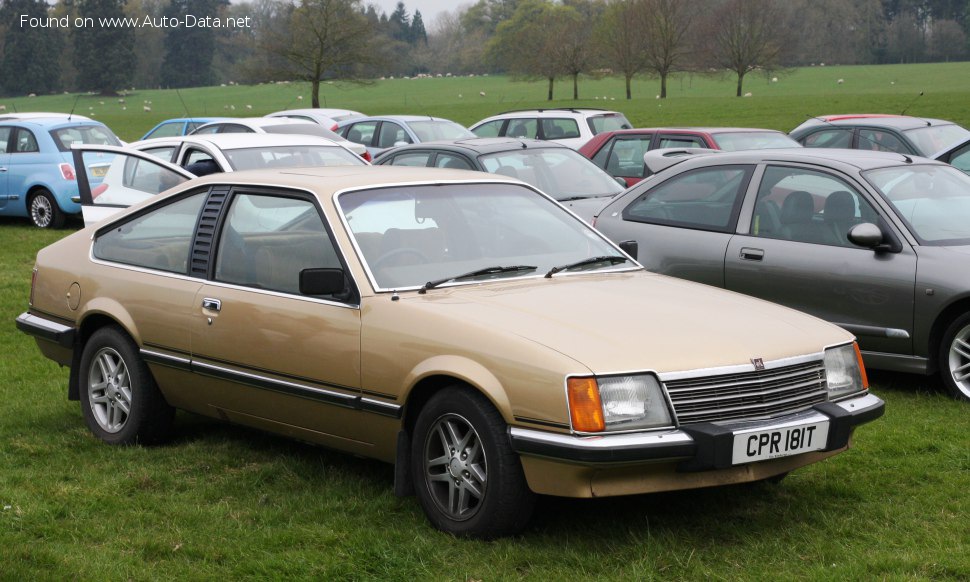
The Vauxhall Royale Coupe 2.8 (140 Hp), a distinctive grand tourer from the late 1970s and early 1980s, represented a significant offering from General Motors’ British marque. Produced between 1979 and 1982, this two-door, five-seat coupe was a rebadged and slightly restyled version of the German Opel Senator A/Monza A, tailored for the UK market. Positioned as a premium vehicle, the Royale Coupe aimed to provide a blend of luxury, performance, and sophisticated design, appealing to discerning buyers seeking a more exclusive and sporting experience than traditional sedans. While never officially sold in the United States, its engineering and market positioning mirror the aspirations of American personal luxury coupes of the era, albeit with a distinctly European flavor. It stood out in its segment as a car offering a robust inline-six engine, rear-wheel drive architecture, and a comfortable interior designed for long-distance cruising, embodying the spirit of European grand touring.
The Vauxhall Royale Coupe: A European Grand Tourer
The Vauxhall Royale Coupe, particularly the 2.8 (140 Hp) variant, emerged during a transitional period for the automotive industry, balancing traditional engineering with evolving demands for refinement and efficiency. As a direct descendant of Opel’s successful Senator/Monza platform, the Royale Coupe inherited a reputation for solid build quality and dynamic capabilities. Its role in the UK market was to offer a compelling alternative to more established luxury coupes from BMW, Mercedes-Benz, and even Ford’s Granada Coupe. The decision to market it under the Vauxhall banner underscored GM’s strategy of localizing its European products, giving British consumers a familiar badge on a technically advanced and stylish car. The coupe body style, with its sleek lines and pillarless design, exuded a sense of sportiness and elegance, setting it apart from its sedan counterpart, the Royale. This generation of the Royale Coupe was not merely a rebadge; it was a statement of intent from Vauxhall to compete in the upper echelons of the market, offering a sophisticated package that resonated with the era’s automotive enthusiasts.
Powertrain and Performance
At the heart of the Vauxhall Royale Coupe 2.8 (140 Hp) lay a robust and well-regarded 2.8-liter inline-six engine. This naturally aspirated gasoline (petrol) unit, configured with a single overhead camshaft (SOHC) valvetrain and fed by a carburetor, was a staple of GM’s European offerings. It delivered a respectable 140 horsepower at 5200 rpm, which, for its time, provided ample power for a comfortable and engaging driving experience. The engine’s torque output was equally impressive, peaking at 214 Nm (157.84 lb.-ft.) at a relatively low 3400 rpm. This broad torque band contributed to the car’s tractable nature, allowing for smooth acceleration and effortless cruising, characteristics essential for a grand tourer. The inline-six configuration, with its inherent balance, ensured a refined and vibration-free operation, enhancing the overall luxury feel of the vehicle. Power was channeled to the rear wheels via a four-speed manual transmission, a common setup for performance-oriented cars of the period, offering direct driver engagement. This powertrain enabled the Royale Coupe to achieve a maximum speed of 195 km/h (121.17 mph), a commendable figure that underscored its capabilities as a long-distance cruiser. Its weight-to-power ratio stood at 9.8 kg/Hp, or 101.8 Hp per tonne, indicating a solid, if not blistering, performance profile. Fuel consumption in urban conditions was rated at 15.8 liters per 100 km, or approximately 14.9 US miles per gallon, a typical figure for a large-displacement, carbureted engine of its vintage.
Design, Interior, and Features
The design of the Vauxhall Royale Coupe was a harmonious blend of period-correct European styling and functional elegance. As a three-door coupe, it offered a sleek profile characterized by clean lines and a relatively low roofline, contributing to its sporty aesthetic. The absence of a B-pillar, a common feature in coupes of this era, further enhanced its sophisticated appearance and provided an airy cabin feel when the windows were down. With a length of 187.32 inches, a width of 68.27 inches, and a height of 52.52 inches, the Royale Coupe commanded a significant road presence. Despite its coupe designation, it was designed to accommodate five occupants, offering a degree of practicality often missing in two-door vehicles. The interior was appointed with materials and features typical of a premium car of the late 1970s. While specifics on infotainment systems or advanced driver aids are not relevant for this era, comfort features such as supportive seating, well-laid-out instrumentation, and adequate sound insulation would have been priorities. The trunk (boot) space was generous for a coupe, offering a minimum of 9.89 cubic feet, expandable to a substantial 26.98 cubic feet with the rear seats folded, highlighting its suitability for grand touring and luggage capacity. Safety features, by the standards of the time, would have included robust construction, disc brakes on all four wheels (ventilated discs at the front), and a well-engineered suspension system to maintain stability and control.
Driving Dynamics and Engineering
The engineering foundation of the Vauxhall Royale Coupe 2.8 (140 Hp) was geared towards delivering a balanced and comfortable driving experience. The powertrain architecture, with its internal combustion engine driving the rear wheels, provided classic handling characteristics favored by enthusiasts. This rear-wheel-drive setup, combined with a longitudinally mounted engine, ensured good weight distribution and predictable dynamics. The suspension system was sophisticated for its time, featuring an independent McPherson strut setup with coil springs and an anti-roll bar at the front, and an independent coil spring arrangement at the rear. This combination provided a comfortable ride quality, effectively absorbing road imperfections, while also offering competent handling during spirited driving. The 105.04-inch wheelbase contributed to ride stability, and the minimum turning circle of 32.94 feet made it reasonably maneuverable despite its size. Braking performance was handled by ventilated discs at the front and solid discs at the rear, offering confident stopping power. The car rode on 195/70 R14 tires, mounted on 14-inch wheel rims, providing a good balance of grip and ride comfort. The overall engineering philosophy aimed for a blend of luxury, stability, and engaging driving dynamics, making the Royale Coupe a capable and enjoyable car for both daily use and extended journeys across continents.
Technical Specifications of the Vauxhall Royale Coupe 2.8 (140 Hp)
| Brand | Vauxhall |
| Model | Royale |
| Generation | Royale Coupe |
| Type (Engine) | 2.8 (140 Hp) |
| Start of production | 1979 year |
| End of production | 1982 year |
| Powertrain Architecture | Internal Combustion engine |
| Body type | Coupe |
| Seats | 5 |
| Doors | 3 |
| Fuel consumption (economy) – urban | 15.8 l/100 km (14.9 US mpg) |
| Fuel Type | Petrol (Gasoline) |
| Maximum speed | 195 km/h (121.17 mph) |
| Weight-to-power ratio | 9.8 kg/Hp (101.8 Hp/tonne) |
| Weight-to-torque ratio | 6.4 kg/Nm (155.6 Nm/tonne) |
| Power | 140 Hp @ 5200 rpm |
| Power per liter | 50.3 Hp/l |
| Torque | 214 Nm @ 3400 rpm (157.84 lb.-ft. @ 3400 rpm) |
| Engine layout | Front, Longitudinal |
| Engine displacement | 2784 cm3 (169.89 cu. in.) |
| Number of cylinders | 6 |
| Engine configuration | Inline |
| Cylinder Bore | 92 mm (3.62 in.) |
| Piston Stroke | 69.8 mm (2.75 in.) |
| Compression ratio | 9:1 |
| Fuel injection system | Carburetor |
| Engine aspiration | Naturally aspirated engine |
| Valvetrain | SOHC |
| Kerb Weight | 1375 kg (3031.36 lbs.) |
| Max. weight | 1900 kg (4188.78 lbs.) |
| Max load | 525 kg (1157.43 lbs.) |
| Trunk (boot) space – minimum | 280 l (9.89 cu. ft.) |
| Trunk (boot) space – maximum | 764 l (26.98 cu. ft.) |
| Fuel tank capacity | 70 l (18.49 US gal) |
| Max. roof load | 80 kg (176.37 lbs.) |
| Length | 4758 mm (187.32 in.) |
| Width | 1734 mm (68.27 in.) |
| Height | 1334 mm (52.52 in.) |
| Wheelbase | 2668 mm (105.04 in.) |
| Ride height (ground clearance) | 152 mm (5.98 in.) |
| Minimum turning circle (turning diameter) | 10.04 m (32.94 ft.) |
| Drivetrain Architecture | The Internal combustion engine (ICE) drives the rear wheels of the vehicle. |
| Drive wheel | Rear wheel drive |
| Number of gears and type of gearbox | 4 gears, manual transmission |
| Front suspension | Independent, type McPherson with coil spring and anti-roll bar |
| Rear suspension | Independent coil spring |
| Front brakes | Ventilated discs |
| Rear brakes | Disc |
| Tires size | 195/70 R14 |
| Wheel rims size | 14 |