
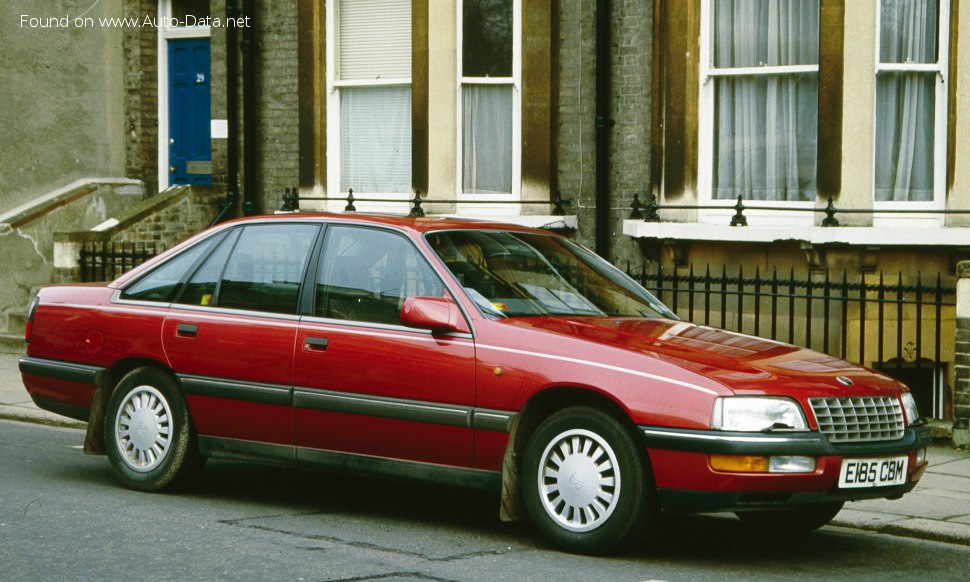
The Vauxhall Senator B 3.0i (156 Hp) represents a compelling chapter in the history of European executive sedans, a segment traditionally dominated by German manufacturers. Produced by Vauxhall, the British arm of General Motors’ Opel division, the Senator B series emerged in 1987 as a sophisticated, rear-wheel-drive flagship, offering a distinctive blend of comfort, performance, and practicality for its time. Positioned above the Carlton/Omega, the Senator B was designed to appeal to discerning buyers seeking a large, refined vehicle without necessarily opting for the more ubiquitous German premium brands. This particular iteration, the 3.0i (156 Hp), was a key offering in the lineup during its production run from 1987 to 1990, embodying the engineering prowess and design philosophy prevalent in the late 1980s automotive landscape.
Powertrain and Performance of the Vauxhall Senator B 3.0i (156 Hp)
At the heart of the Vauxhall Senator B 3.0i (156 Hp) lies a robust 3.0-liter (2969 cm³, or 181.18 cu. in.) inline-six engine, designated with the code C30LE. This naturally aspirated internal combustion engine, mounted longitudinally at the front, was designed for smooth power delivery and durability, characteristics highly valued in executive vehicles of its era. The engine features a multi-port manifold injection system, ensuring precise fuel delivery, and a CIH (Cam-In-Head) valvetrain with two valves per cylinder, a common and reliable configuration for its time. With a bore of 3.74 inches (95 mm) and a stroke of 2.75 inches (69.8 mm), combined with a compression ratio of 8.6:1, the engine was engineered to provide a balance of power and efficiency.
The 3.0-liter unit generates a respectable 156 horsepower at 5400 rpm, translating to a power-per-liter output of 52.5 HP/l. Torque figures stand at a robust 169.64 lb.-ft. (230 Nm), available across a broad and usable band from 3800 to 4400 rpm, which contributed significantly to the car’s effortless cruising ability and responsive acceleration in daily driving. This power is channeled to the rear wheels via a 5-speed manual transmission, a choice that offered enthusiasts a more engaging driving experience compared to the automatic options also available in the range. The rear-wheel-drive architecture was a hallmark of executive sedans, providing balanced handling characteristics.
Performance-wise, the Senator B 3.0i was capable of reaching a maximum speed of 133.59 mph (215 km/h), a commendable figure for a large sedan in the late 1980s. Its kerb weight of 3163.63 lbs. (1435 kg) resulted in a weight-to-power ratio of 9.2 kg/Hp and a weight-to-torque ratio of 6.2 kg/Nm, indicating a solid, planted feel on the road without being overtly sporty. The engine oil capacity is 5.81 US quarts (5.5 liters), highlighting the robust lubrication system designed for sustained performance. Fueling the journey is a substantial 19.81 US gallon (75-liter) fuel tank, providing ample range for long-distance travel, a key requirement for an executive touring car.
Chassis, Handling, and Ride
The chassis architecture of the Vauxhall Senator B was engineered to deliver a comfortable yet composed ride, typical of a European executive sedan. The front suspension featured an independent McPherson strut setup with coil springs and an anti-roll bar, a well-proven design for combining ride comfort with predictable handling. At the rear, an independent coil spring suspension system was employed, complemented by a transverse stabilizer and trailing arms, further enhancing stability and passenger comfort, especially over varied road surfaces. This independent setup at both ends was crucial for isolating road imperfections and maintaining composure during spirited driving.
Steering for the Senator B 3.0i was handled by a cone worm with recirculation balls system, augmented by hydraulic power steering. This setup provided a degree of assistance that made maneuvering the large sedan manageable at low speeds while retaining a reassuring feel at higher velocities. The minimum turning circle of 35.93 feet (10.95 meters) was respectable for a vehicle of its dimensions, aiding in urban maneuverability. Braking performance was entrusted to a system featuring ventilated discs at the front and solid discs at the rear, a configuration that offered strong and consistent stopping power. Critically, the inclusion of ABS (Anti-lock Braking System) as an assisting system was a significant safety feature for the period, enhancing driver control during emergency braking situations.
The car rode on 205/65 R15 tires mounted on 6J x 15 wheel rims, a combination chosen to balance grip, ride comfort, and durability. The overall chassis tuning aimed for a sophisticated driving experience, prioritizing smooth highway cruising and confident handling over outright sportiness, aligning perfectly with its executive market positioning.
Design, Ergonomics, and Features of the Vauxhall Senator B
The Vauxhall Senator B, a classic 4-door, 5-seat sedan, boasted a design that was both elegant and understated, reflecting the prevailing automotive aesthetics of the late 1980s. Its exterior dimensions – a length of 190.75 inches (4845 mm), a width of 69.41 inches (1763 mm), and a height of 57.09 inches (1450 mm) – gave it a substantial road presence, characteristic of a flagship model. The generous wheelbase of 107.48 inches (2730 mm) contributed significantly to both directional stability at speed and a spacious cabin for all five occupants. The design was also aerodynamically efficient for its time, evidenced by a drag coefficient (Cd) of 0.30, which helped reduce wind noise and improve fuel economy during highway travel.
Inside, the Senator B was designed with driver and passenger comfort in mind. While specific interior features aren’t detailed in the raw data, as an executive sedan of its vintage, it would have offered a high level of standard equipment. This would typically include comfortable, supportive seating, possibly with power adjustments, a comprehensive instrument cluster, and thoughtful ergonomics for controls. Features like advanced heating and ventilation systems, power windows, and a quality sound system would have been expected. The focus would have been on creating a refined and quiet cabin environment, conducive to long journeys.
Practicality was also a strong suit, with a substantial trunk (boot) space ranging from 18.72 cu. ft. (530 liters) to an impressive 32.84 cu. ft. (930 liters) when the rear seats were folded or utilized in a flexible configuration, making it highly capable for family travel or business trips. The Senator B’s maximum permissible load was 1234.59 lbs. (560 kg), further underscoring its utility. It also offered significant towing capabilities, with a permitted trailer load of 3747.86 lbs. (1700 kg) with brakes and 1587.33 lbs. (720 kg) without brakes, along with a towbar download limit of 165.35 lbs. (75 kg). These attributes cemented its reputation as a versatile and capable executive car in its primary European market, distinguishing it as a sophisticated, well-engineered option for those seeking a blend of classic rear-wheel-drive dynamics and understated luxury.
Detailed Technical Specifications for the Vauxhall Senator B 3.0i (156 Hp)
| Brand | Vauxhall |
| Model | Senator |
| Generation | Senator B |
| Type (Engine) | 3.0i (156 Hp) |
| Start of production | 1987 year |
| End of production | 1990 year |
| Powertrain Architecture | Internal Combustion engine |
| Body type | Sedan |
| Seats | 5 |
| Doors | 4 |
| Fuel Type | Petrol (Gasoline) |
| Maximum speed | 133.59 mph (215 km/h) |
| Weight-to-power ratio | 9.2 kg/Hp, 108.7 Hp/tonne |
| Weight-to-torque ratio | 6.2 kg/Nm, 160.3 Nm/tonne |
| Power | 156 Hp @ 5400 rpm. |
| Power per litre | 52.5 Hp/l |
| Torque | 169.64 lb.-ft. @ 3800-4400 rpm. (230 Nm @ 3800-4400 rpm.) |
| Engine layout | Front, Longitudinal |
| Engine Model/Code | C30LE |
| Engine displacement | 181.18 cu. in. (2969 cm³) |
| Number of cylinders | 6 |
| Engine configuration | Inline |
| Cylinder Bore | 3.74 in. (95 mm) |
| Piston Stroke | 2.75 in. (69.8 mm) |
| Compression ratio | 8.6:1 |
| Number of valves per cylinder | 2 |
| Fuel injection system | Multi-port manifold injection |
| Engine aspiration | Naturally aspirated engine |
| Valvetrain | CIH |
| Engine oil capacity | 5.81 US qt (5.5 l) |
| Kerb Weight | 3163.63 lbs. (1435 kg) |
| Max. weight | 4398.22 lbs. (1995 kg) |
| Max load | 1234.59 lbs. (560 kg) |
| Trunk (boot) space – minimum | 18.72 cu. ft. (530 l) |
| Trunk (boot) space – maximum | 32.84 cu. ft. (930 l) |
| Fuel tank capacity | 19.81 US gal (75 l) |
| Max. roof load | 220.46 lbs. (100 kg) |
| Permitted trailer load with brakes (12%) | 3747.86 lbs. (1700 kg) |
| Permitted trailer load without brakes | 1587.33 lbs. (720 kg) |
| Permitted towbar download | 165.35 lbs. (75 kg) |
| Length | 190.75 in. (4845 mm) |
| Width | 69.41 in. (1763 mm) |
| Width including mirrors | 76.06 in. (1932 mm) |
| Height | 57.09 in. (1450 mm) |
| Wheelbase | 107.48 in. (2730 mm) |
| Front track | 57.09 in. (1450 mm) |
| Rear (Back) track | 57.8 in. (1468 mm) |
| Drag coefficient (Cd) | 0.30 |
| Minimum turning circle (turning diameter) | 35.93 ft. (10.95 m) |
| Drivetrain Architecture | The Internal combustion engine (ICE) drives the rear wheels of the vehicle. |
| Drive wheel | Rear wheel drive |
| Number of gears and type of gearbox | 5 gears, manual transmission |
| Front suspension | Independent, type McPherson with coil spring and anti-roll bar |
| Rear suspension | Independent coil spring, Transverse stabilizer, Trailing arm |
| Front brakes | Ventilated discs |
| Rear brakes | Disc |
| Assisting systems | ABS (Anti-lock braking system) |
| Steering type | Cone worm with recirculation balls |
| Power steering | Hydraulic Steering |
| Tires size | 205/65 R15 |
| Wheel rims size | 6J x 15 |
