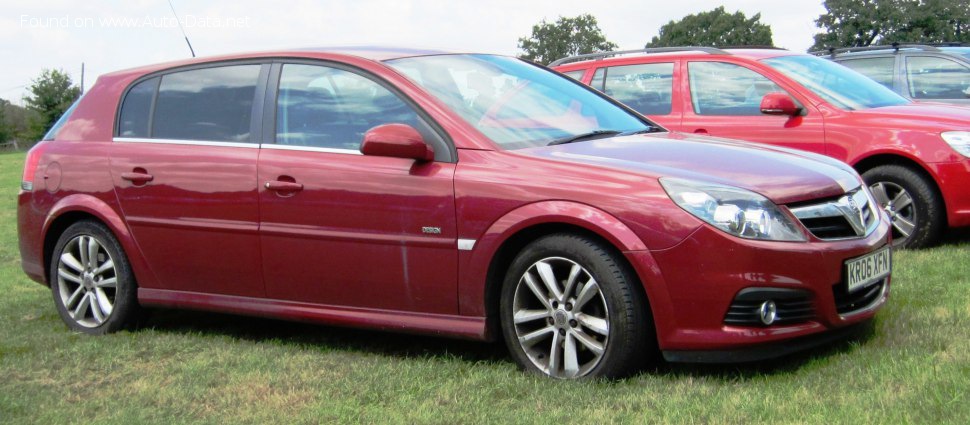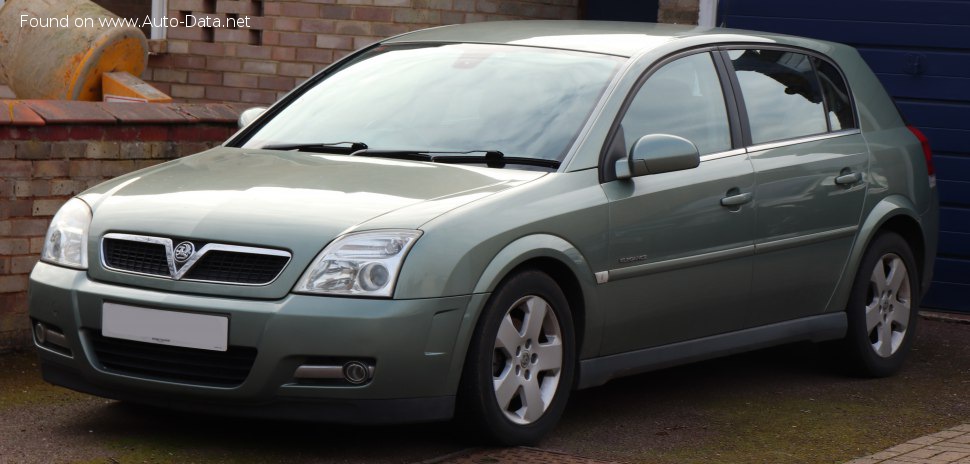
The Vauxhall Signum 1.9 CDTi ECOTEC (120 Hp), produced between 2004 and 2005, represented a distinctive and somewhat niche offering within the European automotive landscape. Positioned above the conventional Vectra C upon which it was largely based, the Signum aimed to blend the practicality of a large hatchback with the upscale aspirations of an executive sedan. Marketed primarily in the UK and continental Europe (where it was sold as the Opel Signum), this vehicle carved out its own segment, appealing to buyers seeking versatility and comfort without the traditional three-box sedan silhouette. Its innovative interior packaging and robust diesel powertrain were key to its identity, emphasizing efficiency and long-distance cruising capability, a common priority for European motorists during this era.
Engineering and Performance of the Vauxhall Signum
At the heart of the 2004-2005 Vauxhall Signum 1.9 CDTi ECOTEC was its highly regarded diesel engine, a testament to the increasing sophistication of compression-ignition technology in passenger vehicles. This particular variant, designated with the engine code Z19DT, featured a 1.9-liter (1910 cm3 or 116.56 cu. in.) inline four-cylinder configuration. Utilizing a modern Commonrail fuel injection system, paired with a turbocharger and intercooler, the engine was designed for a balance of power, torque, and fuel efficiency.
The powerplant delivered a respectable 120 horsepower (Hp) at a usable range of 3500-4000 revolutions per minute (rpm). More significantly for a diesel, it produced a strong 280 Nm (206.52 lb.-ft.) of torque, available from a low 2000 rpm and sustained up to 2750 rpm. This broad torque band was crucial for effortless acceleration and flexible driving, particularly beneficial for highway cruising and overtaking maneuvers common on European motorways. The engine’s valvetrain employed an Overhead Camshaft (OHC) design, with two valves per cylinder, contributing to its robust and reliable operation. The compression ratio stood at 18:1, typical for a direct-injection diesel of its time.
Power was delivered to the front wheels via a precise 6-speed manual transmission, offering drivers engaging control and optimizing the engine’s output across various driving conditions. This drivetrain architecture, with the internal combustion engine (ICE) driving the front wheels, provided predictable handling and efficient packaging. The Signum was capable of reaching a maximum speed of 119.92 mph (193 km/h), a competitive figure for a vehicle of its class and engine output. Its weight-to-power ratio was 11.8 kg/Hp (84.8 Hp/tonne), and the weight-to-torque ratio was 5.1 kg/Nm (197.9 Nm/tonne), indicating a well-matched powertrain for its kerb weight of 3119.54 lbs (1415 kg).
Fuel economy was a significant selling point for the Vauxhall Signum 1.9 CDTi ECOTEC. Official figures highlighted its efficiency: an urban consumption of 7.6 l/100 km (30.9 US mpg), an extra-urban consumption of 4.9 l/100 km (48 US mpg), and a combined cycle rating of 5.9 l/100 km (39.9 US mpg). These numbers underscore its design as a practical, economical choice for everyday driving and longer journeys. Furthermore, with CO2 emissions of 159 g/km, the vehicle met the Euro 4 emission standard, demonstrating its compliance with the then-current environmental regulations in Europe.
Design and Features
The Vauxhall Signum presented a distinctive aesthetic that set it apart from its Vectra sibling. Classified as a 5-door hatchback, its design language aimed for an executive, almost coupe-like profile, while retaining considerable practicality. The vehicle’s dimensions were substantial for its segment: a length of 183.11 inches (4651 mm), a width of 70.79 inches (1798 mm) (or 80.16 inches / 2036 mm including mirrors), and a height of 57.72 inches (1466 mm). A generous wheelbase of 111.42 inches (2830 mm) was a key enabler for its acclaimed interior space, particularly for rear passengers.
Aerodynamics played a role in both the Signum’s styling and efficiency, evidenced by its commendably low drag coefficient (Cd) of 0.28. This sleek profile contributed to reduced wind noise and improved fuel economy at higher speeds. The exterior design was characterized by clean lines and a purposeful stance, typical of Vauxhall/Opel vehicles of the mid-2000s.
Inside, the Signum was engineered to offer a more versatile and comfortable cabin experience. While technically a 5-seater, its rear seating arrangement was particularly innovative, featuring individual sliding and reclining seats that could be adjusted for optimal legroom or cargo space. The minimum trunk (boot) space was 12.89 cu. ft. (365 liters), which could be expanded significantly to 49.79 cu. ft. (1410 liters) with the rear seats folded, showcasing its practical hatchback utility. This flexibility made it an attractive option for families or individuals requiring adaptable cargo solutions alongside passenger comfort.
Underpinning the Signum’s ride quality and handling were its sophisticated suspension systems. The front utilized an independent McPherson strut setup with coil springs and an anti-roll bar, a common and effective design for front-wheel-drive vehicles. The rear featured an independent multi-link suspension, which was more advanced than the simpler torsion beam often found in contemporary hatchbacks, contributing to a refined ride and improved road holding. Braking performance was ensured by ventilated discs at the front and solid discs at the rear, complemented by an Anti-lock Braking System (ABS) for enhanced safety during emergency stops. The 60-liter (15.85 US gal) fuel tank capacity provided a substantial cruising range, further cementing its credentials as a capable long-distance tourer.
In summary, the Vauxhall Signum 1.9 CDTi ECOTEC (120 Hp) was more than just a family car; it was a European executive lifestyle vehicle that dared to break the mold of traditional body styles. It offered a compelling combination of a powerful yet efficient diesel engine, a comfortable and highly adaptable interior, and a chassis tuned for both dynamic driving and passenger comfort. Its brief production run from 2004 to 2005 marked it as a unique chapter in Vauxhall’s history, a vehicle that prioritized innovation and practicality for its target market.
Technical Specifications
| Brand | Vauxhall |
| Model | Signum |
| Generation | Signum |
| Engine Type | 1.9 CDTi ECOTEC (120 Hp) |
| Start of production | 2004 year |
| End of production | 2005 year |
| Powertrain Architecture | Internal Combustion engine |
| Body type | Hatchback |
| Seats | 5 |
| Doors | 5 |
| Fuel consumption (economy) – urban | 7.6 l/100 km (30.9 US mpg) |
| Fuel consumption (economy) – extra urban | 4.9 l/100 km (48 US mpg) |
| Fuel consumption (economy) – combined | 5.9 l/100 km (39.9 US mpg) |
| CO2 emissions | 159 g/km |
| Fuel Type | Diesel |
| Maximum speed | 193 km/h (119.92 mph) |
| Emission standard | Euro 4 |
| Weight-to-power ratio | 11.8 kg/Hp (84.8 Hp/tonne) |
| Weight-to-torque ratio | 5.1 kg/Nm (197.9 Nm/tonne) |
| Power | 120 Hp @ 3500-4000 rpm |
| Power per liter | 62.8 Hp/l |
| Torque | 280 Nm @ 2000-2750 rpm (206.52 lb.-ft.) |
| Engine layout | Front, Transverse |
| Engine Model/Code | Z19DT |
| Engine displacement | 1910 cm3 (116.56 cu. in.) |
| Number of cylinders | 4 |
| Engine configuration | Inline |
| Cylinder Bore | 82 mm (3.23 in.) |
| Piston Stroke | 90.4 mm (3.56 in.) |
| Compression ratio | 18:1 |
| Number of valves per cylinder | 2 |
| Fuel injection system | Diesel Commonrail |
| Engine aspiration | Turbocharger, Intercooler |
| Valvetrain | OHC |
| Engine oil capacity | 4.3 l (4.54 US qt) |
| Coolant | 7 l (7.4 US qt) |
| Kerb Weight | 1415 kg (3119.54 lbs.) |
| Trunk (boot) space – minimum | 365 l (12.89 cu. ft.) |
| Trunk (boot) space – maximum | 1410 l (49.79 cu. ft.) |
| Fuel tank capacity | 60 l (15.85 US gal) |
| Length | 4651 mm (183.11 in.) |
| Width | 1798 mm (70.79 in.) |
| Width including mirrors | 2036 mm (80.16 in.) |
| Height | 1466 mm (57.72 in.) |
| Wheelbase | 2830 mm (111.42 in.) |
| Drag coefficient (Cd) | 0.28 |
| Drivetrain Architecture | Front wheel drive; Internal Combustion engine (ICE) drives front wheels |
| Drive wheel | Front wheel drive |
| Number of gears and type of gearbox | 6 gears, manual transmission |
| Front suspension | Independent, type McPherson with coil spring and anti-roll bar |
| Rear suspension | Independent multi-link suspension |
| Front brakes | Ventilated discs |
| Rear brakes | Disc |
| Assisting systems | ABS (Anti-lock braking system) |