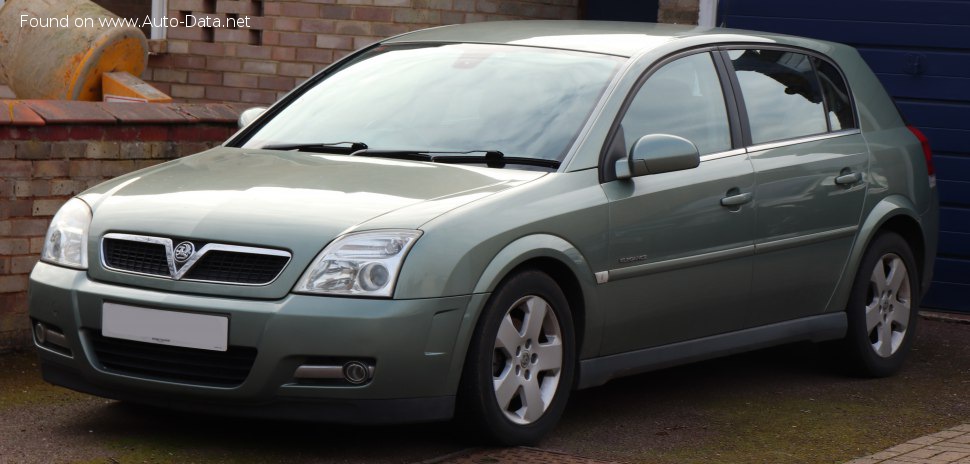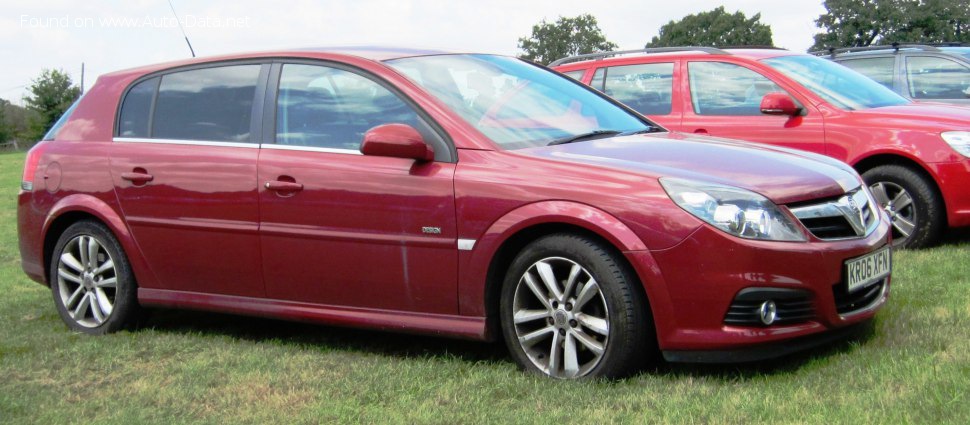
The Vauxhall Signum, particularly the facelifted version introduced in 2005, represents an intriguing attempt to blend hatchback practicality with executive car comfort. Positioned above the Vectra in Vauxhall’s lineup (and Opel in mainland Europe), the Signum aimed to offer a more distinctive and premium experience. While never achieving widespread popularity, especially outside of Europe, the 2005-2008 facelift brought notable improvements to the vehicle’s styling and interior. This article focuses on the Signum 2.0 Turbo model, equipped with a 175 horsepower engine, detailing its specifications, design, and place within the automotive landscape.
The Vauxhall Signum (Facelift 2005)
The Signum was conceived as a more stylish and sophisticated alternative to traditional large family cars. Launched initially in 2003, it received a significant facelift in 2005, addressing some of the criticisms leveled at the original design. The facelift included revised front and rear styling, along with interior enhancements. The 2.0 Turbo model, producing 175 horsepower, was a key engine option, offering a balance of performance and fuel economy. The Signum was primarily a European market vehicle; Vauxhall (and Opel) did not offer it for sale in North America. It competed with vehicles like the Ford Mondeo, Volkswagen Passat, and Peugeot 607, aiming to attract buyers seeking a more individualistic and upscale option.
Engine & Performance
The heart of the Signum 2.0 Turbo is a 1998 cc (121.93 cubic inches) inline four-cylinder gasoline engine, designated the Z20NET. This engine utilizes a turbocharger and intercooler to boost power output to 175 horsepower at 5500 rpm, and 265 Nm (195.45 lb.-ft.) of torque at 2500 rpm. This configuration provides a respectable power-to-weight ratio of 9 kg/Hp. The engine features multi-port fuel injection and a double overhead camshaft (DOHC) valvetrain with four valves per cylinder. The engine’s power per liter is 87.6 Hp/l. Power is delivered to the front wheels via a five-speed manual transmission. Performance figures include a maximum speed of 222 km/h (137.94 mph). Fuel economy is rated at 8.9 l/100 km (26.4 US mpg, 31.7 UK mpg) on a combined cycle, with urban consumption at 12.8 l/100 km (18.4 US mpg) and extra-urban at 6.6 l/100 km (35.6 US mpg). CO2 emissions are rated at 214 g/km.
Design & Features
The Signum is a five-door hatchback, offering a practical and versatile body style. Its design, particularly after the 2005 facelift, aimed for a more contemporary and dynamic appearance. The interior was designed with comfort and practicality in mind, offering seating for five passengers, although rear headroom could be limited for taller occupants. Key features included a spacious cargo area, adjustable seating, and a range of standard equipment. Safety features, typical for a vehicle of this era, included ABS (Anti-lock Braking System) and ventilated front disc brakes, with discs also used on the rear. The Signum’s suspension utilizes an independent McPherson strut setup at the front and a torsion beam arrangement at the rear. The steering is rack and pinion with hydraulic power assistance. The vehicle rides on 215/55 R16 tires mounted on 6.5J x 16 inch wheel rims.
Technical Specifications
| Brand | Vauxhall |
| Model | Signum |
| Generation | Signum (facelift 2005) |
| Type (Engine) | 2.0 Turbo (175 Hp) |
| Start of production | 2005 |
| End of production | 2008 |
| Powertrain Architecture | Internal Combustion engine |
| Body type | Hatchback |
| Seats | 4 |
| Doors | 5 |
| Fuel consumption (urban) | 12.8 l/100 km (18.4 US mpg, 22.1 UK mpg) |
| Fuel consumption (extra urban) | 6.6 l/100 km (35.6 US mpg, 42.8 UK mpg) |
| Fuel consumption (combined) | 8.9 l/100 km (26.4 US mpg, 31.7 UK mpg) |
| CO2 emissions | 214 g/km |
| Fuel Type | Petrol (Gasoline) |
| Maximum speed | 222 km/h (137.94 mph) |
| Weight-to-power ratio | 9 kg/Hp |
| Weight-to-torque ratio | 5.9 kg/Nm |
| Power | 175 Hp @ 5500 rpm |
| Torque | 265 Nm @ 2500 rpm (195.45 lb.-ft. @ 2500 rpm) |
| Engine layout | Front, Transverse |
| Engine Model/Code | Z20NET |
| Engine displacement | 1998 cm3 (121.93 cu. in.) |
| Number of cylinders | 4 |
| Engine configuration | Inline |
| Cylinder Bore | 86 mm (3.39 in.) |
| Piston Stroke | 86 mm (3.39 in.) |
| Compression ratio | 9.5:1 |
| Number of valves per cylinder | 4 |
| Fuel injection system | Multi-port manifold injection |
| Engine aspiration | Turbocharger, Intercooler |
| Valvetrain | DOHC |
| Engine oil capacity | 6 l (6.34 US qt | 5.28 UK qt) |
| Coolant capacity | 7.5 l (7.93 US qt | 6.6 UK qt) |
| Kerb Weight | 1575 kg (3472.28 lbs.) |
| Fuel tank capacity | 60 l (15.85 US gal | 13.2 UK gal) |
| Max. roof load | 100 kg (220.46 lbs.) |
| Length | 4651 mm (183.11 in.) |
| Width | 1798 mm (70.79 in.) |
| Width including mirrors | 2036 mm (80.16 in.) |
| Height | 1466 mm (57.72 in.) |
| Wheelbase | 2830 mm (111.42 in.) |
| Minimum turning circle | 11.92 m (39.11 ft.) |
| Drivetrain Architecture | Front wheel drive |
| Number of gears | 5 |
| Gearbox type | Manual transmission |
| Front suspension | Independent, McPherson with coil spring and anti-roll bar |
| Rear suspension | Torsion |
| Front brakes | Ventilated discs |
| Rear brakes | Disc |
The Vauxhall Signum, while not a mainstream success, offered a unique proposition in the European market. The 2.0 Turbo model provided a good balance of performance, economy, and practicality, making it a viable alternative to more conventional family cars. Its distinctive styling and focus on comfort aimed to appeal to buyers seeking something a little different.