
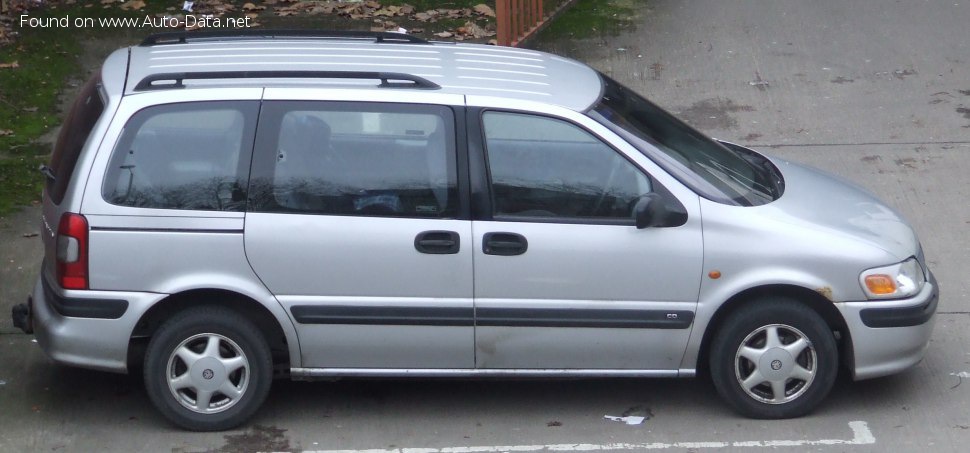
The Vauxhall Sintra 3.0i 24V, produced between 1997 and 1999, was a large, seven-seat minivan aimed at families and those requiring substantial passenger and cargo space. While marketed under the Vauxhall brand in the United Kingdom, the Sintra was a product of a joint venture between Vauxhall (then part of General Motors), Peugeot, and Citroën. This collaboration resulted in three nearly identical vehicles – the Vauxhall Sintra, the Peugeot 806, and the Citroën Espace – each tailored to their respective brand identities and markets. The Sintra, specifically, represented Vauxhall’s entry into the increasingly popular European minivan segment, offering a blend of practicality, comfort, and a relatively powerful engine option in the 3.0i 24V guise.
Vauxhall Sintra 3.0i 24V: Overview and Market Position
The Sintra occupied a niche between traditional estate cars and larger MPVs. It was designed to provide a comfortable and versatile alternative to conventional family vehicles. Its key selling points included its spacious interior, flexible seating arrangements, and the availability of a V6 engine, which was relatively uncommon in the minivan class at the time. The Sintra wasn’t a massive sales success in the UK, facing competition from established players like the Ford Galaxy and Renault Espace, but it offered a distinctive package for buyers prioritizing space and a more refined driving experience. It’s important to note that the Sintra was not officially sold in the United States; this article details its specifications and characteristics for a US audience.
Engine & Performance
The 3.0i 24V Sintra was powered by a 2.962-liter (180.75 cubic inch) V6 engine, designated the X30XE. This naturally aspirated engine produced 201 horsepower at 6000 rpm and 353 Newton-meters (260.36 lb-ft) of torque at 3600 rpm. The engine featured multi-port fuel injection and a double overhead camshaft (DOHC) valvetrain with four valves per cylinder. Power was delivered to the front wheels via a four-speed automatic transmission. Performance figures included a 0-100 km/h (0-62 mph) acceleration time of 10.9 seconds and a top speed of 202 km/h (125.52 mph). The weight-to-power ratio of 8.6 kg/Hp and a weight-to-torque ratio of 4.9 kg/Nm indicated a reasonably responsive powertrain for a vehicle of its size and class. Fuel economy was rated at 8.3 liters per 100 kilometers (28.3 US mpg) combined, with 11.3 l/100km (20.8 US mpg) in urban driving and 6.6 l/100km (35.6 US mpg) on the open road.
Design & Features
The Vauxhall Sintra was a five-door minivan with a boxy, functional design typical of the era. Its primary focus was maximizing interior space. The vehicle could accommodate up to seven passengers across three rows of seats, with the rear seats capable of being folded or removed to create a larger cargo area. The Sintra offered a minimum trunk capacity of 460 liters (16.24 cubic feet), expanding to a substantial 3763 liters (132.89 cubic feet) with the rear seats folded. Standard features included ABS (Anti-lock Braking System) and a steering rack and pinion system. The suspension utilized an independent McPherson strut setup at the front with coil springs and an anti-roll bar, providing a comfortable ride. Safety features, while limited by the standards of today, included the aforementioned ABS and a robust body structure. The Sintra’s design prioritized practicality and usability over stylistic flair, reflecting its intended role as a family vehicle. It rode on 205/65 HR 15 tires mounted on 6J x 15 inch wheel rims.
Technical Specifications
| Brand | Vauxhall |
| Model | Sintra |
| Type (Engine) | 3.0i 24V (201 Hp) Automatic |
| Start of production | 1997 |
| End of production | 1999 |
| Powertrain Architecture | Internal Combustion engine |
| Body type | Minivan |
| Seats | 7 |
| Doors | 5 |
| Fuel consumption (urban) | 11.3 l/100 km (20.8 US mpg) |
| Fuel consumption (extra urban) | 6.6 l/100 km (35.6 US mpg) |
| Fuel consumption (combined) | 8.3 l/100 km (28.3 US mpg) |
| Fuel Type | Petrol (Gasoline) |
| Acceleration 0 – 100 km/h | 10.9 sec |
| Acceleration 0 – 62 mph | 10.9 sec |
| Acceleration 0 – 60 mph | 10.4 sec |
| Maximum speed | 202 km/h (125.52 mph) |
| Weight-to-power ratio | 8.6 kg/Hp |
| Weight-to-torque ratio | 4.9 kg/Nm |
| Power | 201 Hp @ 6000 rpm |
| Torque | 353 Nm @ 3600 rpm (260.36 lb.-ft. @ 3600 rpm) |
| Engine layout | Front, Transverse |
| Engine Model/Code | X30XE |
| Engine displacement | 2962 cm3 (180.75 cu. in.) |
| Number of cylinders | 6 |
| Engine configuration | V-engine |
| Cylinder Bore | 86 mm (3.39 in.) |
| Piston Stroke | 85 mm (3.35 in.) |
| Compression ratio | 10.8:1 |
| Number of valves per cylinder | 4 |
| Fuel injection system | Multi-port manifold injection |
| Engine aspiration | Naturally aspirated engine |
| Valvetrain | DOHC |
| Engine oil capacity | 4.5 l (4.76 US qt | 3.96 UK qt) |
| Coolant capacity | 5.9 l (6.23 US qt | 5.19 UK qt) |
| Kerb Weight | 1725 kg (3802.97 lbs.) |
| Max. weight | 2430 kg (5357.23 lbs.) |
| Max load | 705 kg (1554.26 lbs.) |
| Trunk (boot) space – minimum | 460 l (16.24 cu. ft.) |
| Trunk (boot) space – maximum | 3763 l (132.89 cu. ft.) |
| Fuel tank capacity | 76 l (20.08 US gal | 16.72 UK gal) |
| Length | 4670 mm (183.86 in.) |
| Width | 1830 mm (72.05 in.) |
| Height | 1711 mm (67.36 in.) |
| Wheelbase | 2845 mm (112.01 in.) |
| Front track | 1562 mm (61.5 in.) |
| Rear track | 1608 mm (63.31 in.) |
| Drag coefficient (Cd) | 0.34 |
| Minimum turning circle | 12 m (39.37 ft.) |
| Drivetrain | Front wheel drive |
| Number of gears | 4 |
| Gearbox type | Automatic transmission |
| Front suspension | Independent, McPherson with coil spring and anti-roll bar |
| Front brakes | Ventilated discs |
| Rear brakes | Disc |
| Tires size | 205/65 HR 15 |
| Wheel rims size | 6J x 15 |
The Vauxhall Sintra 3.0i 24V, while not a runaway success, remains a notable example of European minivan design from the late 1990s. Its spacious interior, comfortable ride, and relatively powerful engine made it a practical choice for families, even if it didn’t achieve the same level of popularity as some of its competitors.
