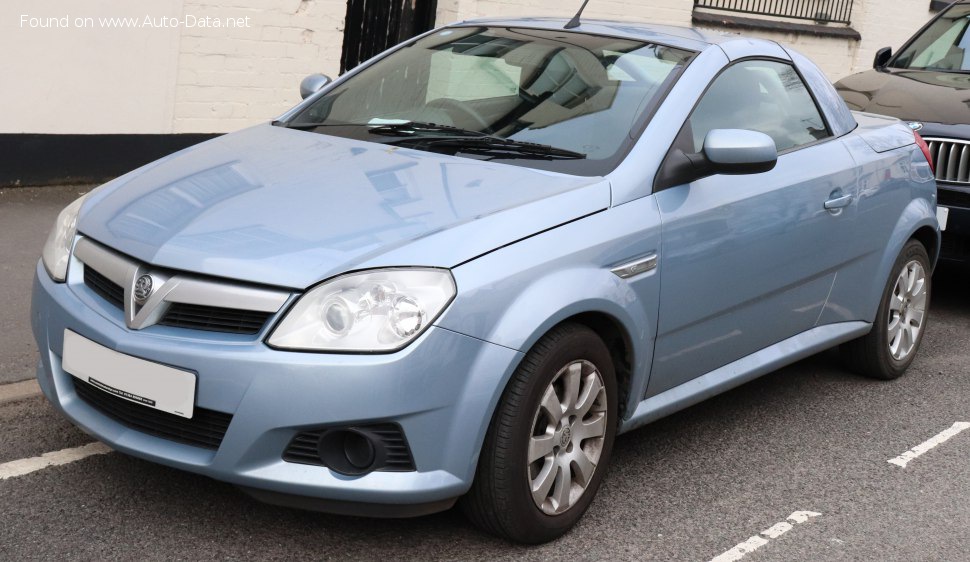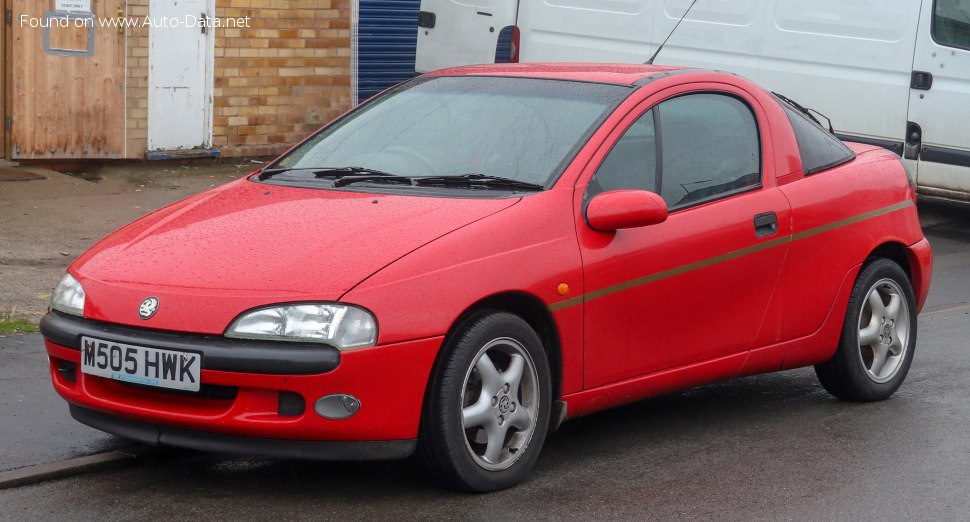
The Vauxhall Tigra Mk I, produced between 1994 and 2000, was a small, sporty coupe aimed at the affordable end of the market. Based on the Vauxhall Corsa B subcompact, the Tigra represented an attempt to offer a stylish and relatively inexpensive coupe option to buyers, particularly in Europe. While not officially sold in the United States, the Tigra was a significant model for Vauxhall (and its sister brand Opel) in Europe, offering a more individualistic alternative to mainstream hatchbacks. The 1.4 16V variant, producing 90 horsepower, was a popular choice within the Tigra range, balancing performance with fuel efficiency.
Vauxhall Tigra Mk I: Overview and Market Position
The Tigra Mk I emerged during a period when the coupe market was relatively strong, but increasingly focused on affordability. Manufacturers sought to capitalize on the desire for sporty styling without the high price tags associated with premium brands. Vauxhall positioned the Tigra as a fashionable and accessible option, targeting younger buyers and those seeking a more dynamic alternative to conventional small cars. The car’s design, characterized by its flowing lines and compact dimensions, was a key selling point. It was marketed as a fun-to-drive, stylish vehicle, and its relatively low cost of ownership made it appealing to a broad audience.
Engine & Performance
The 1.4 16V engine powering the Tigra Mk I is a naturally aspirated, inline-four cylinder unit. Displacing 1389 cc (84.76 cubic inches), it produces 90 horsepower at 6000 rpm and 125 Nm (92.2 lb-ft) of torque at 4000 rpm. This engine utilizes multi-port fuel injection and a double overhead camshaft (DOHC) valvetrain, contributing to its relatively efficient operation and respectable power output for its size. The engine’s power-to-weight ratio of 10.9 kg/Hp (91.8 Hp/tonne) provides adequate acceleration, with a 0-62 mph (0-100 km/h) time of 11 seconds. The top speed is rated at 190 km/h (118.06 mph). The engine is transversely mounted at the front of the vehicle, driving the front wheels through a five-speed manual transmission. Fuel economy figures are 31.4 US mpg combined, with 22.4 US mpg in urban conditions and 42.8 US mpg on the extra-urban cycle.
Design & Features
The Tigra Mk I is a three-door coupe with seating for four passengers. Its body style is characterized by a sloping roofline and a relatively long hood, giving it a sporty appearance. The design prioritized aesthetics, and while rear passenger space is limited, the Tigra offered a more visually appealing alternative to the more practical Corsa upon which it was based. Safety features for the time included an Anti-lock Braking System (ABS), which was becoming increasingly common on European vehicles. The steering system is a rack and pinion type with hydraulic power assistance, providing responsive handling. The suspension utilizes a conventional setup, with ventilated discs on the front and drum brakes on the rear. Standard tire size was 175/65 R14, mounted on 14-inch wheel rims. The trunk offers 7.59 to 15.01 cubic feet of space depending on the rear seats being up or folded down.
Technical Specifications
| Brand | Vauxhall |
| Model | Tigra |
| Generation | Tigra Mk I |
| Type (Engine) | 1.4 16V (90 Hp) |
| Start of production | 1994 |
| End of production | 2000 |
| Powertrain Architecture | Internal Combustion engine |
| Body type | Coupe |
| Seats | 4 |
| Doors | 3 |
| Fuel consumption (urban) | 10.5 l/100 km (22.4 US mpg) |
| Fuel consumption (extra urban) | 5.5 l/100 km (42.8 US mpg) |
| Fuel consumption (combined) | 7.5 l/100 km (31.4 US mpg) |
| Fuel Type | Petrol (Gasoline) |
| Acceleration 0 – 100 km/h | 11 sec |
| Acceleration 0 – 62 mph | 11 sec |
| Acceleration 0 – 60 mph | 10.5 sec |
| Maximum speed | 190 km/h (118.06 mph) |
| Weight-to-power ratio | 10.9 kg/Hp |
| Weight-to-torque ratio | 7.8 kg/Nm |
| Power | 90 Hp @ 6000 rpm |
| Torque | 125 Nm @ 4000 rpm (92.2 lb.-ft. @ 4000 rpm) |
| Engine layout | Front, Transverse |
| Engine Model/Code | X14XE |
| Engine displacement | 1389 cm3 (84.76 cu. in.) |
| Number of cylinders | 4 |
| Engine configuration | Inline |
| Cylinder Bore | 77.6 mm (3.06 in.) |
| Piston Stroke | 73.4 mm (2.89 in.) |
| Compression ratio | 10:1 |
| Number of valves per cylinder | 4 |
| Fuel injection system | Multi-port manifold injection |
| Engine aspiration | Naturally aspirated |
| Engine oil capacity | 3.5 l (3.7 US qt | 3.08 UK qt) |
| Coolant capacity | 5.6 l (5.92 US qt | 4.93 UK qt) |
| Kerb Weight | 980 kg (2160.53 lbs.) |
| Max. weight | 1330 kg (2932.15 lbs.) |
| Max load | 350 kg (771.62 lbs.) |
| Trunk (boot) space – minimum | 215 l (7.59 cu. ft.) |
| Trunk (boot) space – maximum | 425 l (15.01 cu. ft.) |
| Fuel tank capacity | 46 l (12.15 US gal | 10.12 UK gal) |
| Length | 3922 mm (154.41 in.) |
| Width including mirrors | 1812 mm (71.34 in.) |
| Height | 1340 mm (52.76 in.) |
| Wheelbase | 2443 mm (96.18 in.) |
| Drag coefficient (Cd) | 0.31 |
| Drivetrain Architecture | ICE, Front Wheel Drive |
| Drive wheel | Front wheel drive |
| Number of gears | 5 |
| Gearbox type | Manual transmission |
| Front brakes | Ventilated discs |
| Rear brakes | Drum |
| Assisting systems | ABS |
| Steering type | Steering rack and pinion |
| Power steering | Hydraulic |
| Tires size | 175/65 R14 |
| Wheel rims size | 14 |
The Vauxhall Tigra Mk I, while not a performance icon, offered a compelling package for buyers seeking an affordable and stylish coupe. Its success lay in its ability to blend sporty aesthetics with the practicality of a small car, making it a popular choice in the European market during its production run.