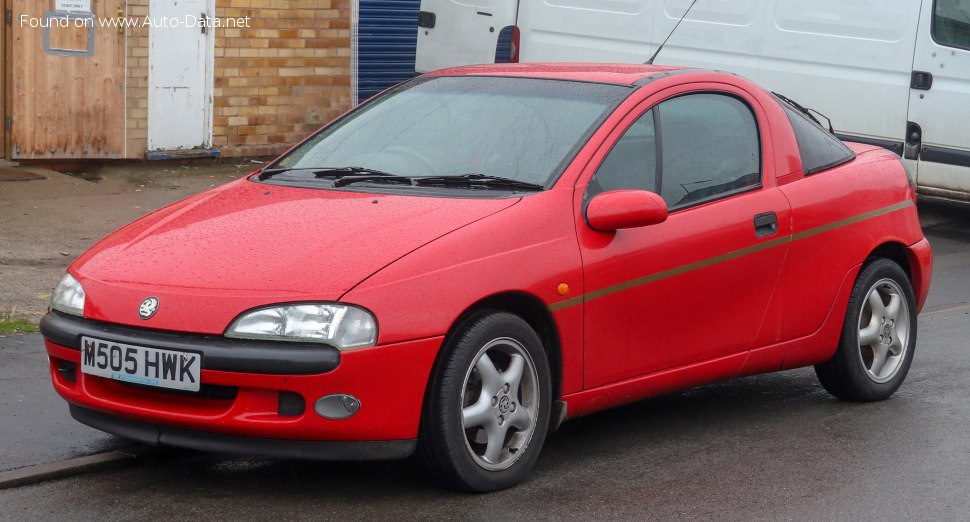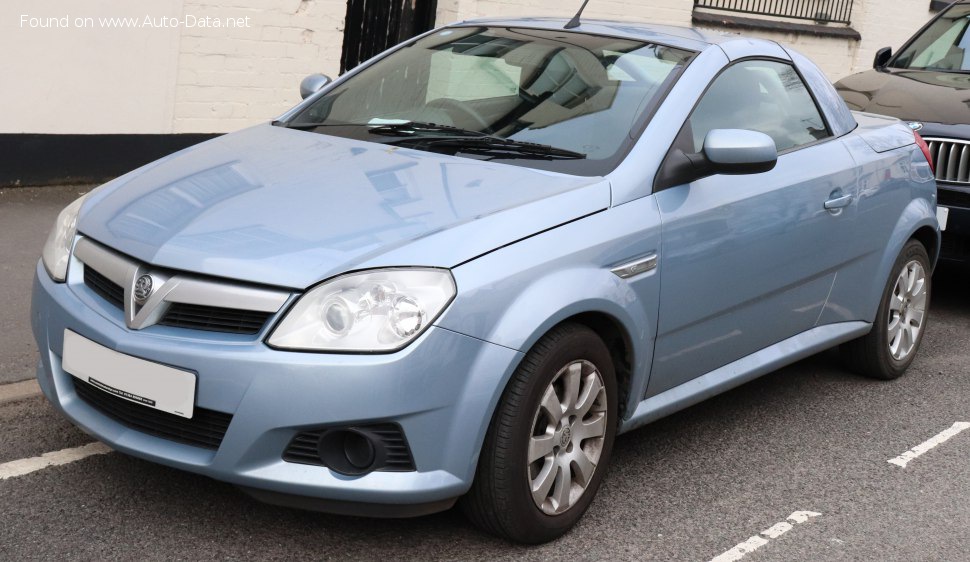
The Vauxhall Tigra Mk II Roadster, produced between 2004 and 2009, represents a return to the open-top sports car segment for Vauxhall (and its Opel counterpart). Positioned as an affordable and stylish roadster, the Tigra Mk II aimed to capture a market segment seeking a fun-to-drive, compact convertible. While not a high-performance machine, it offered a blend of practicality and enjoyment, particularly appealing to buyers in Europe where it was primarily sold. The Tigra name had been used previously in the 1990s on a coupe, but the Mk II marked a significant shift to a dedicated roadster platform, sharing its underpinnings with the Fiat Barchetta.
Vauxhall Tigra Mk II Roadster: An Overview
The Tigra Mk II Roadster was conceived as a successor to the original Tigra coupe, but with a renewed focus on the open-air driving experience. It was designed to be a relatively accessible sports car, competing with models like the Mazda MX-5 (Miata) and Toyota MR2 Spyder, though generally offering a more comfort-oriented driving experience. Vauxhall, as a British brand under General Motors ownership, primarily targeted the UK and European markets with the Tigra Mk II. It was never officially sold in the United States, reflecting the generally smaller market for small roadsters in North America.
Engine & Performance
The Tigra Mk II Roadster 1.4i 16V ECOTEC, as detailed here, is powered by a 1.4-liter inline four-cylinder engine. This engine, designated Z14XEP, produces 90 horsepower at 5600 rpm and 125 Nm (92.2 lb.-ft.) of torque at 4000 rpm. The ECOTEC designation signifies Vauxhall/Opel’s efforts to improve fuel efficiency and reduce emissions. Power is delivered to the front wheels via a five-speed automatic transmission. Performance is modest, with a 0-62 mph (0-100 km/h) acceleration time of 13.4 seconds and a top speed of 110.6 mph (178 km/h). While not particularly quick, the engine provides adequate power for enjoyable cruising and spirited driving on winding roads. The engine’s power-to-weight ratio is 13.7 kg/Hp, and the torque-to-weight ratio is 9.9 kg/Nm. Fuel economy is a strong point, with combined fuel consumption rated at 6.0 l/100 km (39.2 US mpg or 47.1 UK mpg), and CO2 emissions of 146 g/km, meeting Euro 4 emission standards.
Design & Features
The Tigra Mk II Roadster features a classic roadster design with a two-seat configuration and a manually operated soft top. The body style is a two-door convertible. The exterior styling is characterized by its flowing lines and relatively compact dimensions. The interior is focused on providing a comfortable driving experience, with supportive seats and a straightforward dashboard layout. Safety features, while not as comprehensive as those found in modern vehicles, include ABS (Anti-lock Braking System). The trunk (boot) offers a usable 250 liters (8.83 cu. ft.) of space with the roof up, expanding to 440 liters (15.54 cu. ft.) with the roof down. The vehicle’s kerb weight is 1235 kg (2722.71 lbs), with a maximum permissible weight of 1450 kg (3196.7 lbs). The Tigra Mk II’s design prioritized aesthetics and the open-air driving experience over outright practicality, making it an appealing choice for drivers seeking a fun and stylish vehicle.
Technical Specifications
| Brand | Vauxhall |
| Model | Tigra |
| Generation | Tigra Mk II Roadster |
| Type (Engine) | 1.4i 16V ECOTEC (90 Hp) Automatic |
| Start of production | 2004 |
| End of production | 2009 |
| Powertrain Architecture | Internal Combustion engine |
| Body type | Roadster |
| Seats | 2 |
| Doors | 2 |
| Fuel consumption (urban) | 8 l/100 km (29.4 US mpg, 35.3 UK mpg, 12.5 km/l) |
| Fuel consumption (extra urban) | 4.9 l/100 km (48 US mpg, 57.6 UK mpg, 20.4 km/l) |
| Fuel consumption (combined) | 6 l/100 km (39.2 US mpg, 47.1 UK mpg, 16.7 km/l) |
| CO2 emissions | 146 g/km |
| Fuel Type | Petrol (Gasoline) |
| Acceleration 0 – 100 km/h | 13.4 sec |
| Acceleration 0 – 62 mph | 13.4 sec |
| Acceleration 0 – 60 mph | 12.7 sec |
| Maximum speed | 178 km/h (110.6 mph) |
| Emission standard | Euro 4 |
| Weight-to-power ratio | 13.7 kg/Hp |
| Weight-to-torque ratio | 9.9 kg/Nm |
| Power | 90 Hp @ 5600 rpm |
| Power per litre | 66 Hp/l |
| Torque | 125 Nm @ 4000 rpm (92.2 lb.-ft. @ 4000 rpm) |
| Engine layout | Front, Transverse |
| Engine Model/Code | Z14XEP |
| Engine displacement | 1364 cm3 (83.24 cu. in.) |
| Number of cylinders | 4 |
| Engine configuration | Inline |
| Cylinder Bore | 73.4 mm (2.89 in.) |
| Piston Stroke | 80.6 mm (3.17 in.) |
| Compression ratio | 10.5:1 |
| Number of valves per cylinder | 4 |
| Fuel injection system | Multi-port manifold injection |
| Engine aspiration | Naturally aspirated engine |
| Valvetrain | DOHC |
| Engine oil capacity | 3.5 l (3.7 US qt | 3.08 UK qt) |
| Coolant | 5 l (5.28 US qt | 4.4 UK qt) |
| Kerb Weight | 1235 kg (2722.71 lbs.) |
| Max. weight | 1450 kg (3196.7 lbs.) |
| Max load | 215 kg (473.99 lbs.) |
| Trunk (boot) space – minimum | 250 l (8.83 cu. ft.) |
| Trunk (boot) space – maximum | 440 l (15.54 cu. ft.) |
| Fuel tank capacity | 45 l (11.89 US gal | 9.9 UK gal) |
| Length | 3921 mm (154.37 in.) |
| Width | 1685 mm (66.34 in.) |
| Width including mirrors | 1905 mm (75 in.) |
| Height | 1364 mm (53.7 in.) |
| Wheelbase | 2491 mm (98.07 in.) |
| Front track | 1429 mm (56.26 in.) |
| Rear (Back) track | 1420 mm (55.91 in.) |
| Minimum turning circle | 10.46 m (34.32 ft.) |
| Drivetrain Architecture | Front wheel drive |
| Number of gears and type of gearbox | 5 gears, automatic transmission |
| Front suspension | Spring Strut |
| Rear suspension | Coil spring |
| Front brakes | Ventilated discs |
| Rear brakes | Disc |
| Assisting systems | ABS (Anti-lock braking system) |
| Steering type | Steering rack and pinion |
| Tires size | 185/60 R15 |
| Wheel rims size | 6J x 15 |