
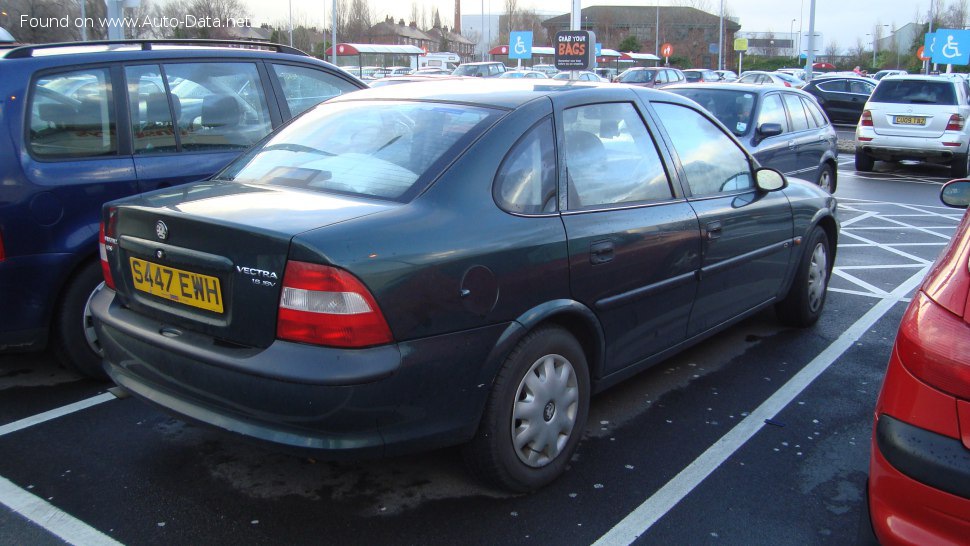
The Vauxhall Vectra B 2.0 DI 16V, produced between 1996 and 1998, represents a significant iteration in Vauxhall’s mid-size family car lineage. As a variant of the broader Vectra B generation (1995-2002), this model was primarily marketed in the United Kingdom and Europe. The Vectra B aimed to provide a more refined and modern alternative to its predecessor, the Vectra A, with improvements in comfort, safety, and styling. The 2.0 DI 16V specifically catered to buyers seeking a fuel-efficient diesel option with reasonable performance for everyday driving. While not officially sold in the United States, understanding the Vectra B provides insight into the European automotive landscape of the late 1990s and the growing demand for diesel-powered passenger vehicles.
Vauxhall Vectra B 2.0 DI 16V: An Overview
The Vectra B was Vauxhall’s (a subsidiary of General Motors) offering in the D-segment, competing with vehicles like the Ford Mondeo, Peugeot 406, and Volkswagen Passat. The 2.0 DI 16V trim level distinguished itself with a direct injection diesel engine, a technology gaining traction for its improved fuel economy and reduced emissions compared to older diesel designs. This model was offered as a four-door sedan, catering to families and individuals needing a practical and comfortable vehicle. The Vectra B represented a move upmarket for Vauxhall, incorporating more sophisticated features and a more contemporary design aesthetic.
Engine & Performance
The heart of the Vectra B 2.0 DI 16V is its 1995 cc inline-four cylinder diesel engine, designated the X20DTL. This engine utilizes direct fuel injection and a turbocharger to produce 82 horsepower at 4300 rpm and 185 Nm (136.45 lb.-ft.) of torque at 1800 rpm. While the horsepower figure might seem modest by modern standards, the engine’s torque delivery provides adequate performance for typical driving conditions. Acceleration from 0 to 60 mph takes approximately 14.3 seconds, and it achieves a top speed of 110.6 mph (178 km/h). Fuel economy is a strong point, with combined cycle consumption rated at 5.6 l/100 km (42 US mpg, 50.4 UK mpg). The engine’s transverse front-engine layout and a five-speed manual transmission contribute to its efficient operation and driveability. The weight-to-power ratio of 16.3 kg/Hp and weight-to-torque ratio of 7.2 kg/Nm reflect the engine’s focus on usability rather than outright speed.
Design & Features
The Vauxhall Vectra B sedan features a conventional four-door body style with a relatively conservative design. The exterior styling aimed for a more aerodynamic and modern look compared to the Vectra A. Key features included power steering, ventilated front disc brakes, and drum brakes on the rear axle. Interior appointments focused on practicality and comfort, with seating for five passengers. Safety features for the era included a robust body structure, though advanced safety technologies like electronic stability control were not yet commonplace on vehicles in this segment. The trunk offered a generous 550 liters (19.42 cu. ft.) of cargo space, making it suitable for family use. The vehicle’s dimensions – 4495 mm (176.97 in.) in length, 1710 mm (67.32 in.) in width, and 1425 mm (56.1 in.) in height – positioned it squarely within the mid-size sedan category.
Technical Specifications
| Brand | Vauxhall |
| Model | Vectra |
| Generation | Vectra B |
| Type (Engine) | 2.0 DI 16V (82 Hp) |
| Start of production | 1996 |
| End of production | 1998 |
| Powertrain Architecture | Internal Combustion engine |
| Body type | Sedan |
| Seats | 5 |
| Doors | 4 |
| Fuel consumption (urban) | 6.6 l/100 km (35.6 US mpg, 42.8 UK mpg) |
| Fuel consumption (extra urban) | 4.6 l/100 km (51.1 US mpg, 61.4 UK mpg) |
| Fuel consumption (combined) | 5.6 l/100 km (42 US mpg, 50.4 UK mpg) |
| Fuel Type | Diesel |
| Acceleration 0 – 100 km/h | 15 sec |
| Acceleration 0 – 62 mph | 15 sec |
| Acceleration 0 – 60 mph | 14.3 sec |
| Maximum speed | 178 km/h (110.6 mph) |
| Weight-to-power ratio | 16.3 kg/Hp |
| Weight-to-torque ratio | 7.2 kg/Nm |
| Power | 82 Hp @ 4300 rpm |
| Torque | 185 Nm @ 1800 rpm (136.45 lb.-ft. @ 1800 rpm) |
| Engine layout | Front, Transverse |
| Engine Model/Code | X20DTL |
| Engine displacement | 1995 cm3 (121.74 cu. in.) |
| Number of cylinders | 4 |
| Engine configuration | Inline |
| Cylinder Bore | 84 mm (3.31 in.) |
| Piston Stroke | 90 mm (3.54 in.) |
| Compression ratio | 18.5:1 |
| Number of valves per cylinder | 4 |
| Fuel injection system | Direct injection |
| Engine aspiration | Turbocharger |
| Valvetrain | OHC |
| Engine oil capacity | 5.5 l (5.81 US qt | 4.84 UK qt) |
| Coolant capacity | 7.4 l (7.82 US qt | 6.51 UK qt) |
| Kerb Weight | 1335 kg (2943.17 lbs.) |
| Max. weight | 1880 kg (4144.69 lbs.) |
| Max load | 545 kg (1201.52 lbs.) |
| Trunk (boot) space – maximum | 550 l (19.42 cu. ft.) |
| Fuel tank capacity | 60 l (15.85 US gal | 13.2 UK gal) |
| Length | 4495 mm (176.97 in.) |
| Width | 1710 mm (67.32 in.) |
| Width including mirrors | 1841 mm (72.48 in.) |
| Height | 1425 mm (56.1 in.) |
| Wheelbase | 2637 mm (103.82 in.) |
| Front track | 1464 mm (57.64 in.) |
| Rear (Back) track | 1467 mm (57.76 in.) |
| Drive wheel | Front wheel drive |
| Number of gears and type of gearbox | 5 gears, manual transmission |
| Front brakes | Ventilated discs |
| Rear brakes | Drum |
| Steering type | Steering rack and pinion |
| Power steering | Hydraulic Steering |
| Tires size | 195/65 R15 |
| Wheel rims size | 5.5J x 15 |
The Vauxhall Vectra B 2.0 DI 16V, while not a performance icon, offered a practical and economical transportation solution for European drivers in the late 1990s. Its blend of fuel efficiency, reasonable comfort, and adequate space made it a popular choice in the competitive D-segment. The model’s significance lies in its representation of the growing adoption of direct injection diesel technology and Vauxhall’s efforts to modernize its product lineup.
