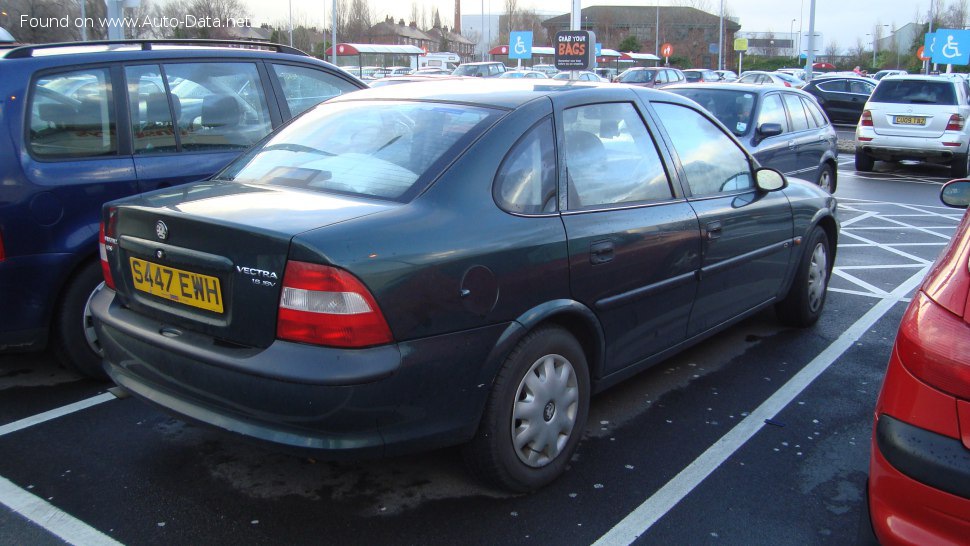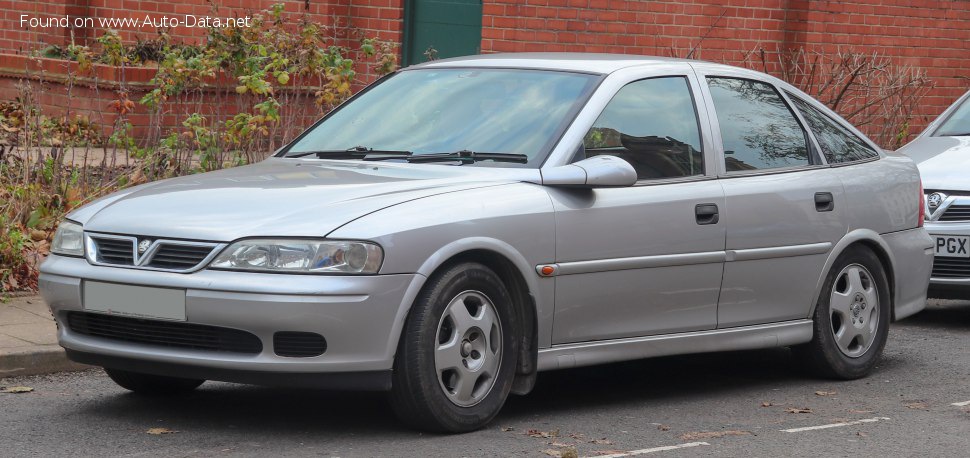
The Vauxhall Vectra B CC 1.8i 16V Automatic, produced between 1995 and 1998, represents a significant step forward for Vauxhall in the mid-size family car segment. As a compact liftback (CC – Combi Coupe), it offered a more practical alternative to traditional saloons while maintaining a stylish profile. The Vectra B, in general, was a crucial model for Vauxhall, aiming to compete with established European rivals like the Ford Mondeo and Volkswagen Passat. While not widely sold in the United States, understanding the Vectra B provides insight into the European automotive landscape of the mid-1990s and Vauxhall’s efforts to modernize its lineup.
Vauxhall Vectra B CC: A Detailed Overview
The Vectra B CC was part of the second generation of the Vectra, launched in late 1995. It replaced the somewhat conservative Vectra A, adopting a more rounded and aerodynamic design. The “CC” designation signifies the Combi Coupe body style, essentially a five-door hatchback with a sloping rear roofline, offering increased cargo space and versatility compared to a traditional saloon. This model was primarily marketed in Europe, where hatchbacks and liftbacks are significantly more popular than in North America.
Engine & Performance
The 1.8i 16V engine powering the Vectra B CC is a naturally aspirated, inline-four cylinder petrol (gasoline) engine. Displacing 1799 cc (109.78 cubic inches), it produces 116 horsepower at 5400 rpm and 170 Nm (125.39 lb-ft) of torque at 3600 rpm. This engine, designated X18XE, features multi-port fuel injection and a double overhead camshaft (DOHC) valvetrain with four valves per cylinder. While not a performance powerhouse, the 1.8i provided adequate power for everyday driving and cruising.
Paired with a four-speed automatic transmission, the Vectra B CC 1.8i achieves a 0-100 km/h (0-62 mph) acceleration time of 11 seconds, and a 0-60 mph time of approximately 10.5 seconds. Its maximum speed is rated at 200 km/h (124.27 mph). Fuel economy is rated at 13.3 l/100 km (17.7 US mpg) in urban conditions and 6.6 l/100 km (35.6 US mpg) on the extra-urban cycle. CO2 emissions are 200 g/km. The weight-to-power ratio of 11 kg/Hp and weight-to-torque ratio of 7.5 kg/Nm indicate a reasonably balanced vehicle for its time.
Design & Features
The Vectra B CC’s design was a departure from the boxier styling of its predecessor. The rounded lines and sloping roofline gave it a more modern and aerodynamic appearance. As a five-door hatchback, it prioritized practicality, offering easy access to the rear seats and a generous cargo area. The trunk space ranges from 480 liters (16.95 cubic feet) with the rear seats up to 790 liters (27.9 cubic feet) with them folded down.
Features for the 1995-1998 model year were typical for the mid-size segment. Standard equipment generally included power steering, central locking, and electric front windows. Safety features, while not as advanced as modern vehicles, included ventilated disc brakes on the front wheels and disc brakes on the rear. The vehicle rides on 195/65 R15 tires mounted on 5.5J x 15 inch wheel rims. The Vectra B CC aimed to provide a comfortable and practical driving experience for families and commuters.
Technical Specifications
| Brand | Vauxhall |
| Model | Vectra |
| Generation | Vectra B CC |
| Type (Engine) | 1.8i 16V (116 Hp) Automatic |
| Start of production | 1995 |
| End of production | 1998 |
| Powertrain Architecture | Internal Combustion engine |
| Body type | Hatchback |
| Seats | 5 |
| Doors | 5 |
| Fuel consumption (urban) | 13.3 l/100 km (17.7 US mpg, 21.2 UK mpg, 7.5 km/l) |
| Fuel consumption (extra urban) | 6.6 l/100 km (35.6 US mpg, 42.8 UK mpg, 15.2 km/l) |
| CO2 emissions | 200 g/km |
| Fuel Type | Petrol (Gasoline) |
| Acceleration 0 – 100 km/h | 11 sec |
| Acceleration 0 – 62 mph | 11 sec |
| Acceleration 0 – 60 mph | 10.5 sec |
| Maximum speed | 200 km/h (124.27 mph) |
| Weight-to-power ratio | 11 kg/Hp |
| Weight-to-torque ratio | 7.5 kg/Nm |
| Power | 116 Hp @ 5400 rpm |
| Power per litre | 64.5 Hp/l |
| Torque | 170 Nm @ 3600 rpm (125.39 lb.-ft. @ 3600 rpm) |
| Engine layout | Front, Transverse |
| Engine Model/Code | X18XE |
| Engine displacement | 1799 cm3 (109.78 cu. in.) |
| Number of cylinders | 4 |
| Engine configuration | Inline |
| Cylinder Bore | 81.6 mm (3.21 in.) |
| Piston Stroke | 86 mm (3.39 in.) |
| Compression ratio | 10.8:1 |
| Number of valves per cylinder | 4 |
| Fuel injection system | Multi-port manifold injection |
| Engine aspiration | Naturally aspirated engine |
| Valvetrain | DOHC |
| Engine oil capacity | 4.25 l (4.49 US qt | 3.74 UK qt) |
| Coolant capacity | 7.1 l (7.5 US qt | 6.25 UK qt) |
| Kerb Weight | 1279 kg (2819.71 lbs.) |
| Max. weight | 1790 kg (3946.27 lbs.) |
| Max load | 511 kg (1126.56 lbs.) |
| Trunk (boot) space – minimum | 480 l (16.95 cu. ft.) |
| Trunk (boot) space – maximum | 790 l (27.9 cu. ft.) |
| Fuel tank capacity | 60 l (15.85 US gal | 13.2 UK gal) |
| Length | 4495 mm (176.97 in.) |
| Width | 1707 mm (67.2 in.) |
| Width including mirrors | 1841 mm (72.48 in.) |
| Height | 1425 mm (56.1 in.) |
| Wheelbase | 2637 mm (103.82 in.) |
| Front track | 1484 mm (58.43 in.) |
| Rear (Back) track | 1487 mm (58.54 in.) |
| Drivetrain Architecture | Front wheel drive |
| Number of gears and type of gearbox | 4 gears, automatic transmission |
| Front brakes | Ventilated discs |
| Rear brakes | Disc |
| Tires size | 195/65 R15 |
| Wheel rims size | 5.5J x 15 |
The Vauxhall Vectra B CC 1.8i 16V Automatic, while not a groundbreaking vehicle, represented a solid and practical choice for European buyers in the mid-1990s. Its combination of hatchback versatility, reasonable performance, and comfortable features made it a competitive offering in a crowded market segment.