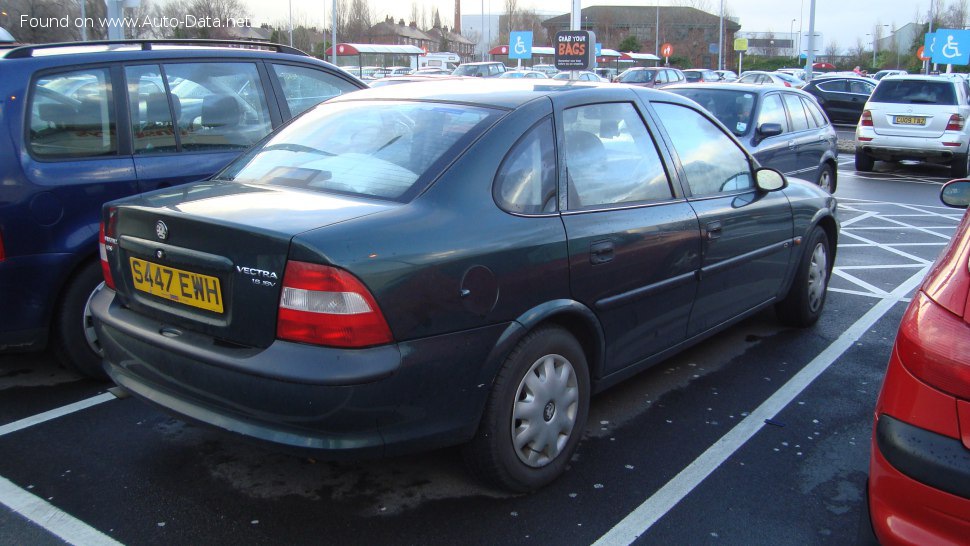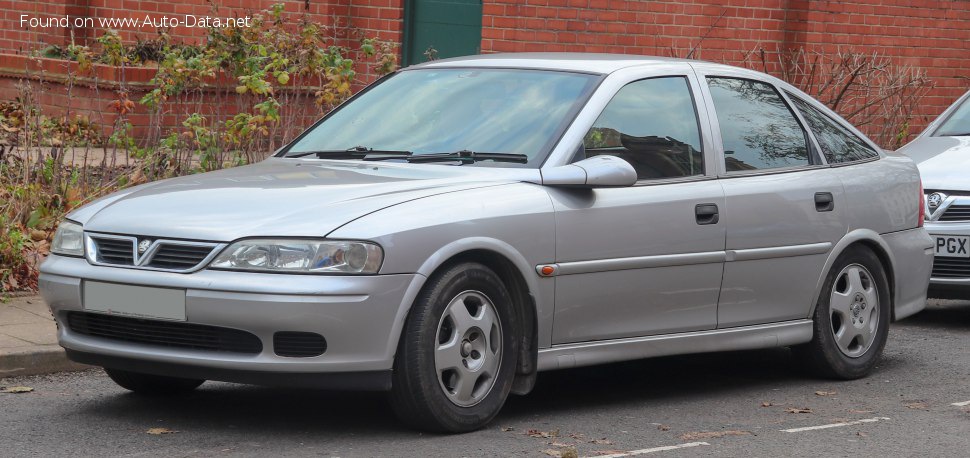
The Vauxhall Vectra B CC 2.0 DTi 16V, produced between 1997 and 1998, represents a significant iteration in Vauxhall’s mid-size family car lineage. As part of the Vectra B generation, the “CC” designation denotes a coupé-cabriolet body style, offering a more sporting aesthetic than the traditional saloon or hatchback versions. Marketed primarily in Europe, the Vectra B aimed to compete with established rivals like the Ford Mondeo and Volkswagen Passat, offering a blend of practicality, comfort, and relatively modern technology for its time. This particular variant, powered by a 2.0-liter turbocharged diesel engine, focused on fuel efficiency and reasonable performance, catering to drivers prioritizing economy and lower running costs.
Vauxhall Vectra B CC 2.0 DTi 16V: An Overview
The Vectra B CC was a key model in Vauxhall’s lineup during the late 1990s, representing a move towards more contemporary design and engineering. While not a high-volume seller compared to the standard saloon and hatchback models, the coupé-cabriolet offered a unique proposition, appealing to buyers seeking a more stylish and individual vehicle. The 2.0 DTi 16V engine was a notable feature, utilizing direct injection technology to improve fuel economy and reduce emissions – advancements that were becoming increasingly important in the European automotive market. The Vectra B CC aimed to provide a comfortable and practical driving experience, with a focus on everyday usability.
Engine & Performance
The heart of the Vectra B CC 2.0 DTi 16V is a 1,994 cc (121.68 cu. in.) inline-four cylinder diesel engine, designated the X20DTH. This engine produces 101 horsepower (Hp) at 4,300 rpm and 205 Newton-meters (151.2 lb.-ft.) of torque at 1,600 rpm. The engine employs a turbocharger with an intercooler to enhance power output, and utilizes a diesel common rail fuel injection system for precise fuel delivery. This configuration results in a respectable power-to-weight ratio of 13.2 kg/Hp and a weight-to-torque ratio of 6.5 kg/Nm. Performance figures include a 0-100 km/h (0-62 mph) acceleration time of 13 seconds and a maximum speed of 195 km/h (121.17 mph). Fuel economy is a strong point, with combined cycle consumption rated at 5.9 l/100 km (39.9 US mpg, 47.9 UK mpg), and CO2 emissions of 156 g/km. The engine is transversely mounted at the front of the vehicle, driving the front wheels through a five-speed manual transmission.
Design & Features
The Vauxhall Vectra B CC is a five-seater, five-door hatchback distinguished by its sleek, coupé-like roofline. The body style offers a more dynamic appearance compared to the standard Vectra models. Interior features, while typical for the late 1990s, focused on providing a comfortable and functional cabin. Standard equipment likely included power steering, central locking, and electric windows. Safety features, while not as comprehensive as modern vehicles, would have included anti-lock brakes (ABS) as an option, and a driver’s airbag. The trunk (boot) space offers a practical 480 liters (16.95 cu. ft.) with the rear seats up, expanding to 790 liters (27.9 cu. ft.) when folded down. The vehicle’s dimensions are: length 4,495 mm (176.97 in.), width 1,707 mm (67.2 in.), and height 1,425 mm (56.1 in.). The kerb weight is 1,335 kg (2,943.17 lbs), with a maximum permissible weight of 1,950 kg (4,299.01 lbs).
Technical Specifications
| Brand | Vauxhall |
| Model | Vectra |
| Generation | Vectra B CC |
| Type (Engine) | 2.0 DTi 16V (101 Hp) |
| Start of production | 1997 |
| End of production | 1998 |
| Powertrain Architecture | Internal Combustion engine |
| Body type | Hatchback |
| Seats | 5 |
| Doors | 5 |
| Fuel consumption (urban) | 8 l/100 km (29.4 US mpg, 35.3 UK mpg, 12.5 km/l) |
| Fuel consumption (extra urban) | 4.7 l/100 km (50 US mpg, 60.1 UK mpg, 21.3 km/l) |
| Fuel consumption (combined) | 5.9 l/100 km (39.9 US mpg, 47.9 UK mpg, 16.9 km/l) |
| CO2 emissions | 156 g/km |
| Fuel Type | Diesel |
| Acceleration 0 – 100 km/h | 13 sec |
| Acceleration 0 – 62 mph | 13 sec |
| Acceleration 0 – 60 mph | 12.4 sec |
| Maximum speed | 195 km/h (121.17 mph) |
| Weight-to-power ratio | 13.2 kg/Hp |
| Weight-to-torque ratio | 6.5 kg/Nm |
| Power | 101 Hp @ 4300 rpm |
| Power per litre | 50.7 Hp/l |
| Torque | 205 Nm @ 1600 rpm (151.2 lb.-ft. @ 1600 rpm) |
| Engine layout | Front, Transverse |
| Engine Model/Code | X20DTH |
| Engine displacement | 1994 cm3 (121.68 cu. in.) |
| Number of cylinders | 4 |
| Engine configuration | Inline |
| Cylinder Bore | 84 mm (3.31 in.) |
| Piston Stroke | 90 mm (3.54 in.) |
| Compression ratio | 18.5:1 |
| Number of valves per cylinder | 4 |
| Fuel injection system | Diesel Commonrail |
| Engine aspiration | Turbocharger, Intercooler |
| Valvetrain | OHC |
| Engine oil capacity | 5.5 l (5.81 US qt | 4.84 UK qt) |
| Coolant | 7.2 l (7.61 US qt | 6.34 UK qt) |
| Kerb Weight | 1335 kg (2943.17 lbs.) |
| Max. weight | 1950 kg (4299.01 lbs.) |
| Max load | 615 kg (1355.84 lbs.) |
| Trunk (boot) space – minimum | 480 l (16.95 cu. ft.) |
| Trunk (boot) space – maximum | 790 l (27.9 cu. ft.) |
| Fuel tank capacity | 60 l (15.85 US gal | 13.2 UK gal) |
| Length | 4495 mm (176.97 in.) |
| Width | 1707 mm (67.2 in.) |
| Width including mirrors | 1841 mm (72.48 in.) |
| Height | 1425 mm (56.1 in.) |
| Wheelbase | 2637 mm (103.82 in.) |
| Front track | 1484 mm (58.43 in.) |
| Rear (Back) track | 1487 mm (58.54 in.) |
| Drivetrain Architecture | Front wheel drive |
| Number of gears and type of gearbox | 5 gears, manual transmission |
| Front brakes | Ventilated discs |
| Rear brakes | Disc |
| Tires size | 195/65 R15 |
| Wheel rims size | 15 |