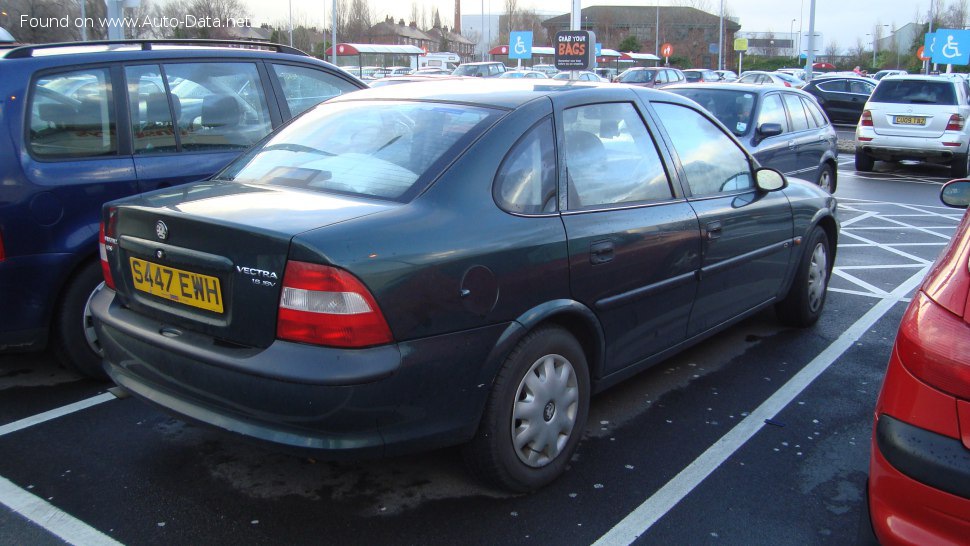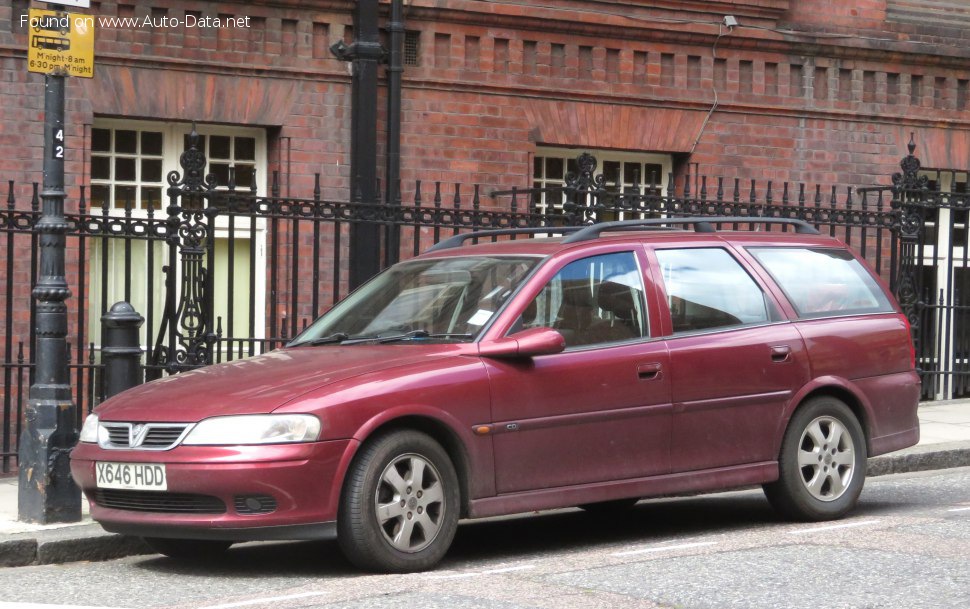
The Vauxhall Vectra B Estate 2.0 DI 16V, produced between 1996 and 1998, represents a significant iteration in Vauxhall’s mid-size family car lineup. As part of the B generation Vectra, this estate (station wagon) model offered a practical and relatively efficient option for families and individuals needing ample cargo space. While the Vectra nameplate had been around for decades, the B series, launched in 1995, brought a more modern design and improved engineering. The 2.0 DI 16V variant, powered by a direct injection diesel engine, was aimed at buyers prioritizing fuel economy and reasonable performance. The Vectra, and its Opel counterpart, were key models for General Motors in Europe, competing with vehicles like the Ford Mondeo and Volkswagen Passat.
Vauxhall Vectra B Estate 2.0 DI 16V: Overview
The Vectra B Estate 2.0 DI 16V occupied the mid-size estate segment, offering a balance between practicality, comfort, and running costs. It was designed to appeal to a broad customer base, providing a versatile vehicle suitable for both daily commuting and longer journeys. The estate body style, in particular, was popular in Europe, where demand for vehicles capable of carrying larger loads was consistently high. The “DI” designation signifies the use of direct injection technology in the diesel engine, a feature intended to improve fuel efficiency and reduce emissions compared to older indirect injection systems.
Engine & Performance
The heart of the Vectra B Estate 2.0 DI 16V is a 1,995 cc (121.74 cubic inches) inline four-cylinder diesel engine, designated the X20DTL. This engine produces 82 horsepower (Hp) at 4,300 rpm and 185 Newton-meters (136.45 lb.-ft.) of torque at 1,800 rpm. The engine utilizes a turbocharger and intercooler to enhance power output and efficiency. While not a performance-oriented vehicle, the 2.0 DI 16V offered adequate power for everyday driving, with a 0-100 km/h (0-62 mph) acceleration time of 17 seconds and a maximum speed of 170 km/h (105.63 mph). The engine’s direct injection system, coupled with its relatively high compression ratio of 18.5:1, contributed to its fuel efficiency. Fuel economy figures are rated at 7.9 l/100 km (29.8 US mpg) in urban conditions and 4.9 l/100 km (48 US mpg) on the extra-urban cycle. Power delivery is geared towards usability, with peak torque available at relatively low engine speeds. The engine is transversely mounted at the front of the vehicle and is coupled to a five-speed manual transmission, driving the front wheels.
Design & Features
The Vectra B Estate is a five-door station wagon with seating for five passengers. Its design reflects the styling trends of the mid-1990s, characterized by smooth lines and a relatively understated aesthetic. The estate body style provides a generous cargo capacity, ranging from 460 liters (16.24 cubic feet) with the rear seats up to 1,490 liters (52.62 cubic feet) with the rear seats folded down. This made it a practical choice for families or individuals needing to transport bulky items.
In terms of features, the Vectra B Estate 2.0 DI 16V was equipped with standard safety features for its time, including an Anti-lock Braking System (ABS). Comfort features were typically modest, reflecting the vehicle’s positioning as a mainstream family car. Interior appointments were functional rather than luxurious, with a focus on durability and practicality. The vehicle’s suspension system is designed to provide a comfortable ride, balancing handling with passenger comfort. The front brakes are ventilated discs, while the rear brakes are solid discs. The vehicle rides on 195/65 R15 tires mounted on 5.5J x 15 inch wheel rims.
Technical Specifications
| Brand | Vauxhall |
| Model | Vectra |
| Generation | Vectra B Estate |
| Type (Engine) | 2.0 DI 16V (82 Hp) |
| Start of production | 1996 |
| End of production | 1998 |
| Powertrain Architecture | Internal Combustion engine |
| Body type | Station wagon (estate) |
| Seats | 5 |
| Doors | 5 |
| Fuel consumption (urban) | 7.9 l/100 km (29.8 US mpg) |
| Fuel consumption (extra urban) | 4.9 l/100 km (48 US mpg) |
| Fuel Type | Diesel |
| Acceleration 0 – 100 km/h | 17 sec |
| Acceleration 0 – 62 mph | 17 sec |
| Acceleration 0 – 60 mph | 16.2 sec |
| Maximum speed | 170 km/h (105.63 mph) |
| Weight-to-power ratio | 17 kg/Hp |
| Weight-to-torque ratio | 7.5 kg/Nm |
| Power | 82 Hp @ 4300 rpm |
| Torque | 185 Nm @ 1800 rpm (136.45 lb.-ft. @ 1800 rpm) |
| Engine layout | Front, Transverse |
| Engine Model/Code | X20DTL |
| Engine displacement | 1995 cm3 (121.74 cu. in.) |
| Number of cylinders | 4 |
| Engine configuration | Inline |
| Cylinder Bore | 84 mm (3.31 in.) |
| Piston Stroke | 90 mm (3.54 in.) |
| Compression ratio | 18.5:1 |
| Number of valves per cylinder | 4 |
| Fuel injection system | Diesel Commonrail |
| Engine aspiration | Turbocharger, Intercooler |
| Valvetrain | OHC |
| Engine oil capacity | 5.5 l (5.81 US qt | 4.84 UK qt) |
| Coolant | 7.4 l (7.82 US qt | 6.51 UK qt) |
| Kerb Weight | 1390 kg (3064.43 lbs.) |
| Max. weight | 1985 kg (4376.18 lbs.) |
| Max load | 595 kg (1311.75 lbs.) |
| Trunk (boot) space – minimum | 460 l (16.24 cu. ft.) |
| Trunk (boot) space – maximum | 1490 l (52.62 cu. ft.) |
| Fuel tank capacity | 60 l (15.85 US gal | 13.2 UK gal) |
| Length | 4490 mm (176.77 in.) |
| Width | 1710 mm (67.32 in.) |
| Height | 1490 mm (58.66 in.) |
| Wheelbase | 2637 mm (103.82 in.) |
| Front track | 1464 mm (57.64 in.) |
| Rear track | 1463 mm (57.6 in.) |
| Drive wheel | Front wheel drive |
| Number of gears | 5 gears, manual transmission |
| Front brakes | Ventilated discs |
| Rear brakes | Disc |
| Tires size | 195/65 R15 |
| Wheel rims size | 5.5J x 15 |
The Vauxhall Vectra B Estate 2.0 DI 16V, while not a groundbreaking vehicle, represented a solid and practical choice for buyers in the late 1990s. Its combination of fuel efficiency, cargo capacity, and reasonable performance made it a popular option in the competitive mid-size estate segment.