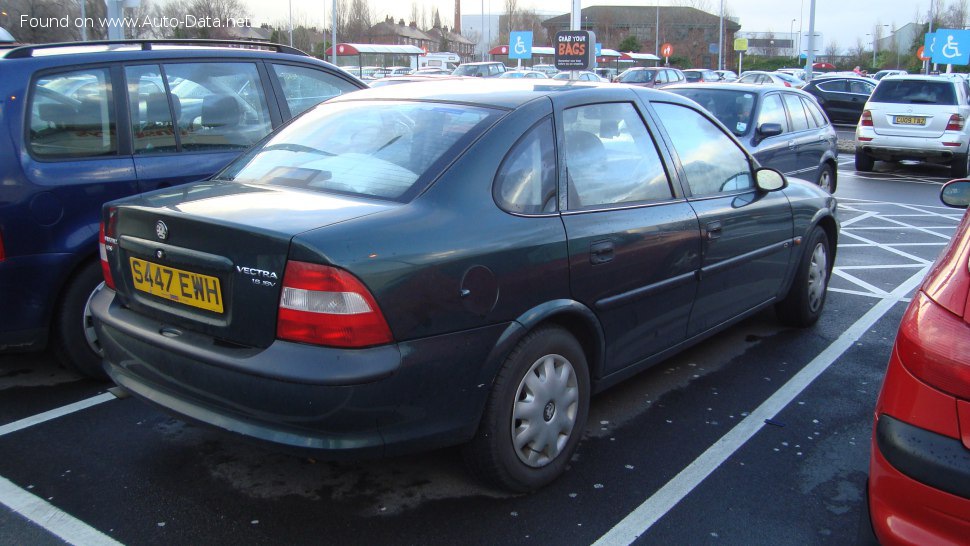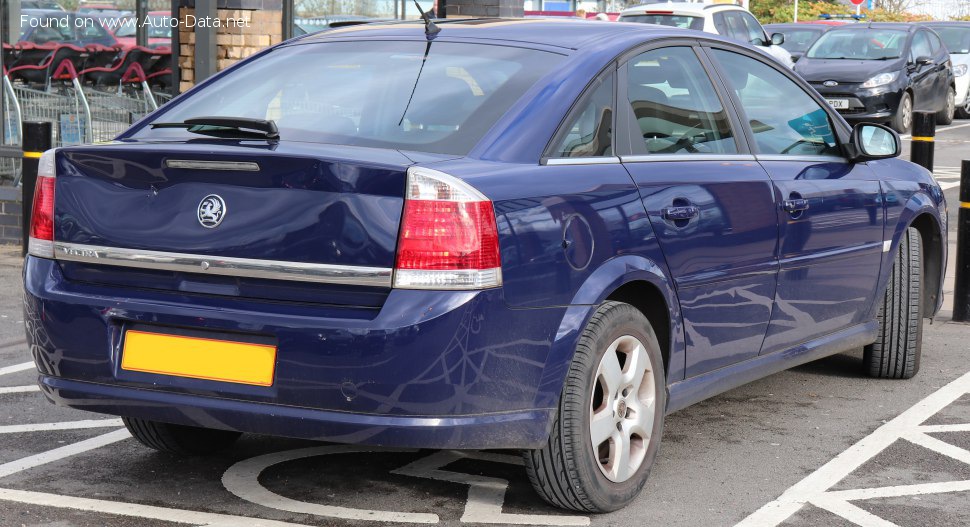
The Vauxhall Vectra C 2.0i 16V Turbo ECOTEC, produced between 2003 and 2005, represents a significant iteration in Vauxhall’s mid-size family car lineage. As part of the Vectra C generation (launched in 2002), this model aimed to provide a blend of practicality, comfort, and performance for the European market. While the Vectra nameplate was discontinued in the UK in 2008, the C generation, and specifically the 2.0i Turbo variant, offered a compelling package for buyers seeking a refined and capable sedan. The Vectra C was positioned to compete with vehicles like the Ford Mondeo, Peugeot 406, and Volkswagen Passat, offering a strong alternative in a competitive segment.
Vauxhall Vectra C 2.0i 16V Turbo ECOTEC: An Overview
The Vectra C marked a departure from previous Vectra models, featuring a more modern and aerodynamic design. The 2.0i 16V Turbo ECOTEC trim level specifically focused on delivering enhanced performance through the use of a turbocharged engine, while still aiming for reasonable fuel efficiency – a concept embodied in the “ECOTEC” branding. This model was primarily sold in Europe, where it was appreciated for its driving dynamics and spacious interior. It was never officially sold in the United States, as Vauxhall is a British brand primarily focused on the European market. However, understanding its specifications and features provides insight into the engineering trends of the early 2000s in European automotive design.
Engine & Performance
At the heart of the Vectra C 2.0i 16V Turbo ECOTEC lies the Z20NET engine, a 1.998-liter (121.93 cubic inches) inline-four cylinder powerplant. This engine utilizes a turbocharger and intercooler to boost power output to 175 horsepower at 5500 rpm and 265 Nm (195.45 lb.-ft.) of torque between 2500 and 3800 rpm. The turbocharging system significantly enhances the engine’s responsiveness and provides a broader torque curve, resulting in strong acceleration. Power per liter is a respectable 87.6 hp/l. The engine features multi-port fuel injection and a double overhead camshaft (DOHC) valvetrain with four valves per cylinder, contributing to its efficiency and performance. The engine is transversely mounted at the front of the vehicle. The powertrain is coupled with a six-speed manual transmission, allowing for precise gear selection and efficient power delivery. This configuration enables the Vectra C 2.0i Turbo to achieve a maximum speed of 230 km/h (142.92 mph). The weight-to-power ratio of 7.4 kg/Hp and weight-to-torque ratio of 4.9 kg/Nm further highlight the vehicle’s performance capabilities.
Design & Features
The Vauxhall Vectra C is a four-door sedan with a spacious interior designed to comfortably accommodate five passengers. Its exterior styling is characterized by smooth lines and a relatively understated aesthetic, typical of European designs of the early 2000s. The vehicle’s dimensions are 4611 mm (181.54 in) in length, 1798 mm (70.79 in) in width, and 1460 mm (57.48 in) in height, with a wheelbase of 2700 mm (106.3 in). A key feature of the Vectra C was its focus on safety, incorporating ABS (Anti-lock Braking System) as standard equipment. The vehicle also boasts a generous trunk (boot) space, ranging from 500 liters (17.66 cu. ft.) with the rear seats up to 1050 liters (37.08 cu. ft.) with the rear seats folded down. The drag coefficient of 0.28 contributes to improved aerodynamic efficiency. The suspension system consists of an independent McPherson strut setup at the front and an independent multi-link suspension at the rear, providing a comfortable ride and responsive handling. Ventilated discs are used for the front brakes, while discs are used for the rear brakes.
Technical Specifications
| Brand | Vauxhall |
| Model | Vectra |
| Generation | Vectra C |
| Type (Engine) | 2.0i 16V Turbo ECOTEC (175 Hp) |
| Start of production | 2003 |
| End of production | 2005 |
| Powertrain Architecture | Internal Combustion engine |
| Body type | Sedan |
| Seats | 5 |
| Doors | 4 |
| Fuel consumption (urban) | 12.5 l/100 km (18.8 US mpg, 22.6 UK mpg, 8 km/l) |
| Fuel consumption (extra urban) | 6.3 l/100 km (37.3 US mpg, 44.8 UK mpg, 15.9 km/l) |
| Fuel consumption (combined) | 8.6 l/100 km (27.4 US mpg, 32.8 UK mpg, 11.6 km/l) |
| CO2 emissions | 206 g/km |
| Fuel Type | Petrol (Gasoline) |
| Maximum speed | 230 km/h (142.92 mph) |
| Emission standard | Euro 4 |
| Weight-to-power ratio | 7.4 kg/Hp |
| Weight-to-torque ratio | 4.9 kg/Nm |
| Power | 175 Hp @ 5500 rpm |
| Power per litre | 87.6 Hp/l |
| Torque | 265 Nm @ 2500-3800 rpm (195.45 lb.-ft. @ 2500-3800 rpm) |
| Engine layout | Front, Transverse |
| Engine Model/Code | Z20NET |
| Engine displacement | 1998 cm3 (121.93 cu. in.) |
| Number of cylinders | 4 |
| Engine configuration | Inline |
| Cylinder Bore | 86 mm (3.39 in.) |
| Piston Stroke | 86 mm (3.39 in.) |
| Compression ratio | 9.5:1 |
| Number of valves per cylinder | 4 |
| Fuel injection system | Multi-port manifold injection |
| Engine aspiration | Turbocharger, Intercooler |
| Valvetrain | DOHC |
| Engine oil capacity | 6 l (6.34 US qt | 5.28 UK qt) |
| Coolant | 7.5 l (7.93 US qt | 6.6 UK qt) |
| Kerb Weight | 1300 kg (2866.01 lbs.) |
| Trunk (boot) space – minimum | 500 l (17.66 cu. ft.) |
| Trunk (boot) space – maximum | 1050 l (37.08 cu. ft.) |
| Fuel tank capacity | 60 l (15.85 US gal | 13.2 UK gal) |
| Length | 4611 mm (181.54 in.) |
| Width | 1798 mm (70.79 in.) |
| Width including mirrors | 2036 mm (80.16 in.) |
| Height | 1460 mm (57.48 in.) |
| Wheelbase | 2700 mm (106.3 in.) |
| Drag coefficient (Cd) | 0.28 |
| Drivetrain Architecture | ICE drives front wheels |
| Drive wheel | Front wheel drive |
| Number of gears and type of gearbox | 6 gears, manual transmission |
| Front suspension | Independent, McPherson with coil spring and anti-roll bar |
| Rear suspension | Independent multi-link suspension |
| Front brakes | Ventilated discs |
| Rear brakes | Disc |
| Assisting systems | ABS (Anti-lock braking system) |
The Vauxhall Vectra C 2.0i 16V Turbo ECOTEC, while not a vehicle commonly found in the United States, represents a well-engineered and capable family sedan that was popular in Europe. Its combination of performance, practicality, and safety features made it a competitive choice in its segment.