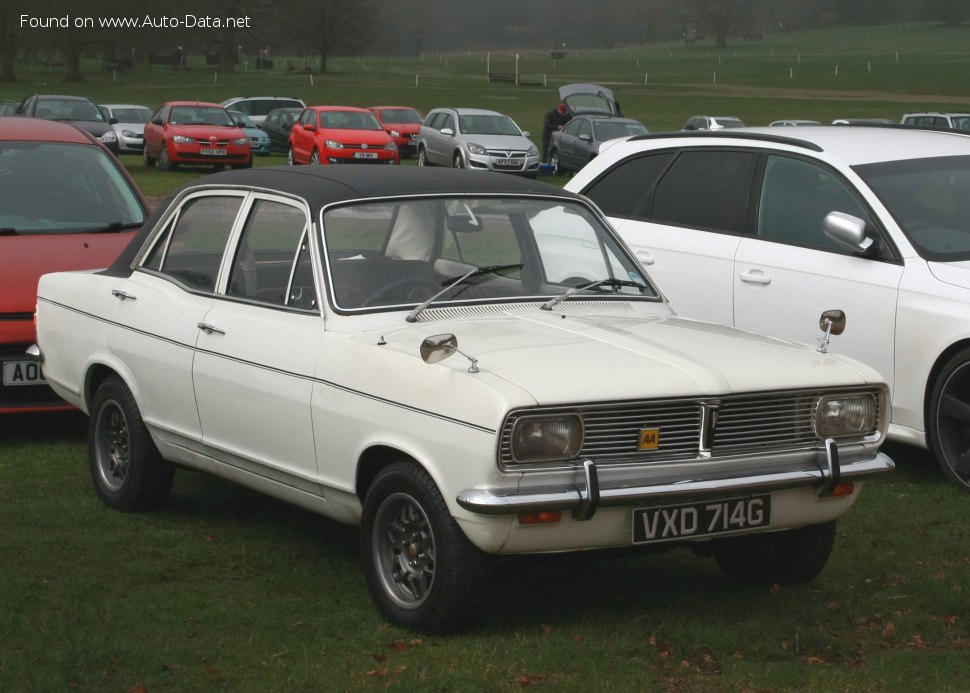
The Vauxhall Viva HB, produced between 1966 and 1970, represents a significant evolution in British small car design. As the second generation of the Viva, the HB aimed to address criticisms of the original model while maintaining its position as an affordable and practical family vehicle. Sold exclusively in the United Kingdom and other select export markets, the Viva HB was never officially offered in the United States. However, it provides a fascinating case study in post-war automotive engineering and the development of the British motor industry. The HB was available in both two-door and four-door saloon (sedan) body styles, offering buyers a choice based on their needs and budget.
Vauxhall Viva HB 1100: A Detailed Overview
The Viva HB was a direct response to market demands for a more refined and spacious small car. While the original Viva was considered somewhat basic, the HB featured improved styling, a more comfortable interior, and enhanced mechanical components. It competed directly with other British offerings like the Ford Anglia and Morris Minor, as well as imports from Europe. The HB’s success lay in its blend of affordability, reliability, and practicality, making it a popular choice for families and first-time car buyers.
Engine & Performance
The heart of the Viva HB 1100 was its 1.2-liter (1159 cm3 or 70.73 cu. in.) inline four-cylinder engine. This engine, producing 48 horsepower at 5200 rpm and 84 Nm (61.96 lb.-ft.) of torque at 2800 rpm, was a significant upgrade over the earlier Viva’s powerplant. While not a performance car by any means, the Viva HB 1100 offered adequate power for everyday driving. The engine featured a naturally aspirated configuration with an overhead valve (OHV) valvetrain and a compression ratio of 8.5:1. The power-to-weight ratio of 16.1 kg/Hp (62.3 Hp/tonne) and torque-to-weight ratio of 9.2 kg/Nm (108.9 Nm/tonne) reflected the car’s modest but usable performance. Power per litre was 41.4 Hp/l. The engine drove the rear wheels through a four-speed manual transmission, providing a traditional driving experience. The rear-wheel drive layout was typical for British cars of this era.
Design & Features
The Viva HB’s styling was a departure from the more rounded lines of the original Viva. The HB adopted a more angular and contemporary design, reflecting the styling trends of the mid-1960s. The body was a two or four-door sedan configuration, offering seating for four passengers. The interior was relatively simple but functional, with basic instrumentation and comfortable seating. Safety features were limited by the standards of the time, but the HB did offer features such as a steering column-mounted gear lever (on some models) and optional seat belts. The car’s relatively small size made it easy to maneuver in urban environments, and its rear-wheel drive layout provided decent handling characteristics. The fuel tank capacity was 36.37 liters (9.61 US gal | 8 UK gal), providing a reasonable driving range. The car’s design prioritized practicality and affordability over luxury or performance.
Technical Specifications
| Brand | Vauxhall |
| Model | Viva |
| Generation | Viva HB |
| Type (Engine) | 1100 (48 Hp) |
| Start of production | 1966 |
| End of production | 1970 |
| Powertrain Architecture | Internal Combustion engine |
| Body type | Sedan |
| Seats | 4 |
| Doors | 2-4 |
| Fuel Type | Petrol (Gasoline) |
| Weight-to-power ratio | 16.1 kg/Hp, 62.3 Hp/tonne |
| Weight-to-torque ratio | 9.2 kg/Nm, 108.9 Nm/tonne |
| Power | 48 Hp @ 5200 rpm |
| Power per litre | 41.4 Hp/l |
| Torque | 84 Nm @ 2800 rpm / 61.96 lb.-ft. @ 2800 rpm |
| Engine displacement | 1159 cm3 / 70.73 cu. in. |
| Number of cylinders | 4 |
| Engine configuration | Inline |
| Cylinder Bore | 77.7 mm / 3.06 in. |
| Piston Stroke | 61 mm / 2.4 in. |
| Compression ratio | 8.5:1 |
| Engine aspiration | Naturally aspirated engine |
| Valvetrain | OHV |
| Kerb Weight | 771-806 kg / 1699.76 – 1776.93 lbs. |
| Fuel tank capacity | 36.37 l / 9.61 US gal | 8 UK gal |
| Length | 4094 mm / 161.18 in. |
| Width | 1600 mm / 62.99 in. |
| Height | 1338 mm / 52.68 in. |
| Wheelbase | 2433 mm / 95.79 in. |
| Front track | 1295 mm / 50.98 in. |
| Rear (Back) track | 1295 mm / 50.98 in. |
| Drivetrain Architecture | The Internal combustion engine (ICE) drives the rear wheels of the vehicle. |
| Drive wheel | Rear wheel drive |
| Number of gears and type of gearbox | 4 gears, manual transmission |
| Steering type | Steering rack and pinion |
The Vauxhall Viva HB 1100, while not a groundbreaking vehicle, played an important role in the British automotive landscape of the late 1960s. It provided affordable and reliable transportation for a wide range of buyers, and its improved design and features over the original Viva helped to solidify Vauxhall’s position as a major player in the British motor industry. Though never sold in the US market, the Viva HB remains a fondly remembered classic among British car enthusiasts, representing a simpler era of automotive design and engineering.