The Vauxhall Viva HB 1600, produced between 1968 and 1970, represents a significant evolution of the original Viva, launched in 1963. Positioned as a small family car in the British market, the HB series aimed to address criticisms of the initial Viva, offering increased practicality and a more refined driving experience. The 1600 model, with its larger engine, was intended to provide a more spirited performance option within the Viva range. While not officially sold in the United States, understanding the Viva HB 1600 provides insight into the British automotive landscape of the late 1960s and the development of affordable, accessible transportation.
Vauxhall Viva HB 1600: A British Compact
The Viva HB was a crucial model for Vauxhall, then a major player in the UK automotive industry. It was designed to compete with rivals like the Ford Anglia and Hillman Imp, offering a blend of affordability, reliability, and practicality. The HB designation signified a substantial redesign over the original Viva, with a larger body, improved interior space, and updated styling. The introduction of the 1600 variant, powered by a 1.6-liter engine, broadened the Viva’s appeal to drivers seeking a bit more performance without sacrificing economy.
Engine & Performance
The heart of the Viva HB 1600 is its 1599 cc (97.58 cu. in.) inline-four cylinder engine. This engine produced 84 horsepower at 5800 rpm and 122 Nm (89.98 lb.-ft.) of torque at 3200 rpm, giving it a power-to-weight ratio of 52.5 hp per liter. While these figures may seem modest by modern standards, they were respectable for a small family car of the era. The engine utilized a naturally aspirated configuration with a single carburetor, and an overhead camshaft (OHC) valvetrain. Power was delivered to the rear wheels via a four-speed manual transmission. The rear-wheel-drive layout was typical for British cars of this period, contributing to a relatively engaging driving experience. The engine required 4.7 liters (4.97 US qt | 4.14 UK qt) of engine oil and 7.4 liters (7.82 US qt | 6.51 UK qt) of coolant for optimal operation. The engine’s bore and stroke measured 85.73 mm (3.38 in) and 69.24 mm (2.73 in) respectively, with a compression ratio of 8.5:1.
Design & Features
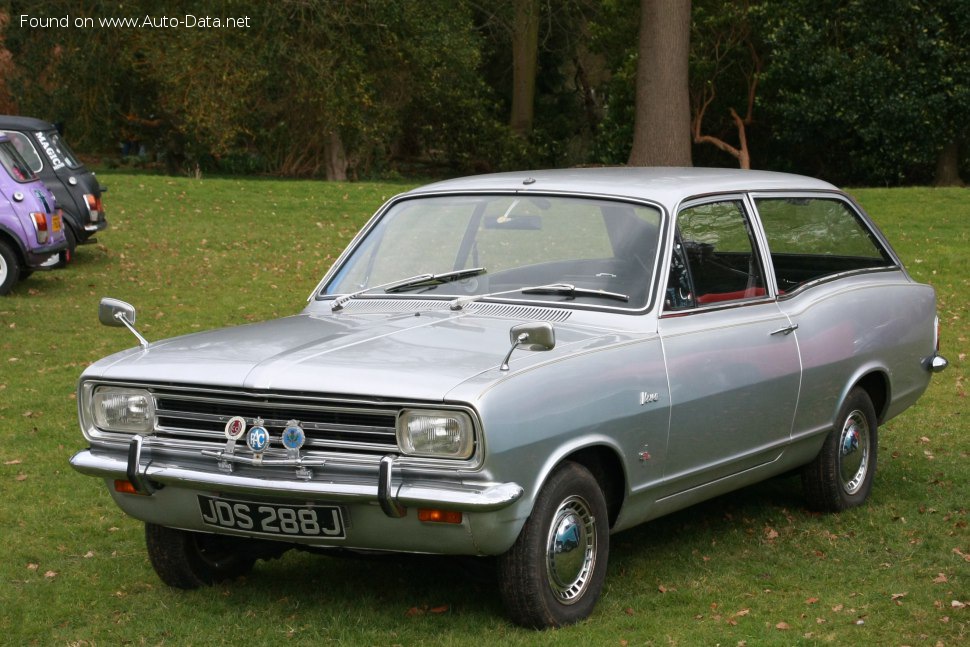
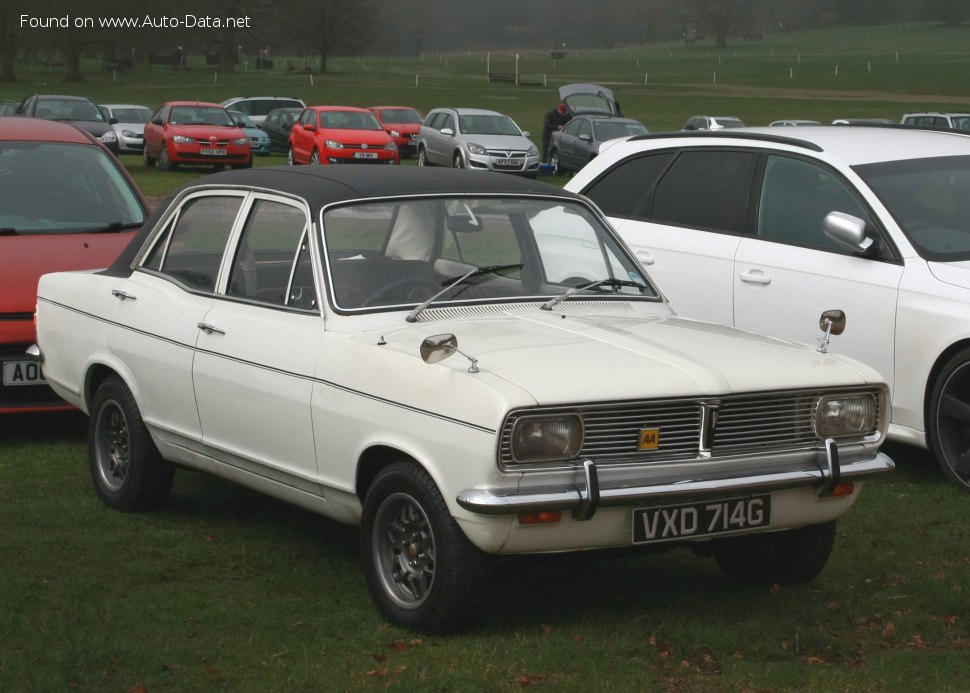
The Vauxhall Viva HB 1600 was available as a two-door or four-door sedan. Its styling reflected the design trends of the late 1960s, with a relatively boxy silhouette, rounded edges, and a prominent front grille. The interior was functional and aimed at providing comfortable seating for five passengers. Features were relatively basic compared to modern vehicles, focusing on essential functionality rather than luxury. Safety features were limited by the standards of the time, typically consisting of seatbelts and a steering column-mounted gear shift to minimize intrusion into the passenger compartment in the event of a collision. The car’s dimensions – 4094 mm (161.18 in) in length, 1600 mm (62.99 in) in width, and 1338 mm (52.68 in) in height – positioned it as a compact vehicle, easy to maneuver in urban environments. The wheelbase measured 2433 mm (95.79 in), and the front and rear track were both 1295 mm (50.98 in). Ground clearance was a modest 127 mm (5 in), and the minimum turning circle was 9.7 meters (31.82 ft).
Market Context and Legacy
The Viva HB, and particularly the 1600 variant, played a significant role in Vauxhall’s success during the late 1960s. It offered a practical and affordable transportation solution for British families. While the Viva never achieved the iconic status of some other British cars, it was a popular and well-regarded model that helped to establish Vauxhall as a leading automotive manufacturer in the UK. The HB series represented a step forward in terms of refinement and performance compared to the original Viva, and it paved the way for subsequent generations of the model. The Viva’s legacy lies in its contribution to the democratization of motoring in Britain, making car ownership accessible to a wider segment of the population.
Technical Specifications
| General Information | |
| Brand | Vauxhall |
| Model | Viva |
| Generation | Viva HB |
| Type (Engine) | 1600 (84 Hp) |
| Start of production | 1968 |
| End of production | 1970 |
| Powertrain Architecture | Internal Combustion engine |
| Body type | Sedan |
| Seats | 5 |
| Doors | 2-4 |
| Performance Specs | |
| Fuel Type | Petrol (Gasoline) |
| Power | 84 Hp @ 5800 rpm |
| Power per litre | 52.5 Hp/l |
| Torque | 122 Nm @ 3200 rpm |
| Torque (lb.-ft.) | 89.98 lb.-ft. @ 3200 rpm |
| Engine Specs | |
| Engine displacement | 1599 cm3 |
| Engine displacement (cu. in.) | 97.58 cu. in. |
| Number of cylinders | 4 |
| Cylinder Bore | 85.73 mm |
| Cylinder Bore (in.) | 3.38 in. |
| Piston Stroke | 69.24 mm |
| Piston Stroke (in.) | 2.73 in. |
| Compression ratio | 8.5:1 |
| Fuel injection system | Carburettor |
| Engine aspiration | Naturally aspirated engine |
| Valvetrain | OHC |
| Engine oil capacity | 4.7 l |
| Engine oil capacity (US qt) | 4.97 US qt |
| Engine oil capacity (UK qt) | 4.14 UK qt |
| Coolant | 7.4 l |
| Coolant (US qt) | 7.82 US qt |
| Coolant (UK qt) | 6.51 UK qt |
| Space, Volume and Weights | |
| Fuel tank capacity | 55 l |
| Fuel tank capacity (US gal) | 14.53 US gal |
| Fuel tank capacity (UK gal) | 12.1 UK gal |
| Dimensions | |
| Length | 4094 mm |
| Length (in.) | 161.18 in. |
| Width | 1600 mm |
| Width (in.) | 62.99 in. |
| Height | 1338 mm |
| Height (in.) | 52.68 in. |
| Wheelbase | 2433 mm |
| Wheelbase (in.) | 95.79 in. |
| Front track | 1295 mm |
| Front track (in.) | 50.98 in. |
| Rear track | 1295 mm |
| Rear track (in.) | 50.98 in. |
| Ride height (ground clearance) | 127 mm |
| Ride height (ground clearance) (in.) | 5 in. |
| Minimum turning circle | 9.7 m |
| Minimum turning circle (ft.) | 31.82 ft. |
| Drivetrain, Brakes and Suspension Specs | |
| Drivetrain Architecture | Rear wheel drive |
| Drive wheel | Rear wheel drive |
| Number of gears | 4 |
| Type of gearbox | manual transmission |
| Wheel rims size | 4J x 12 |