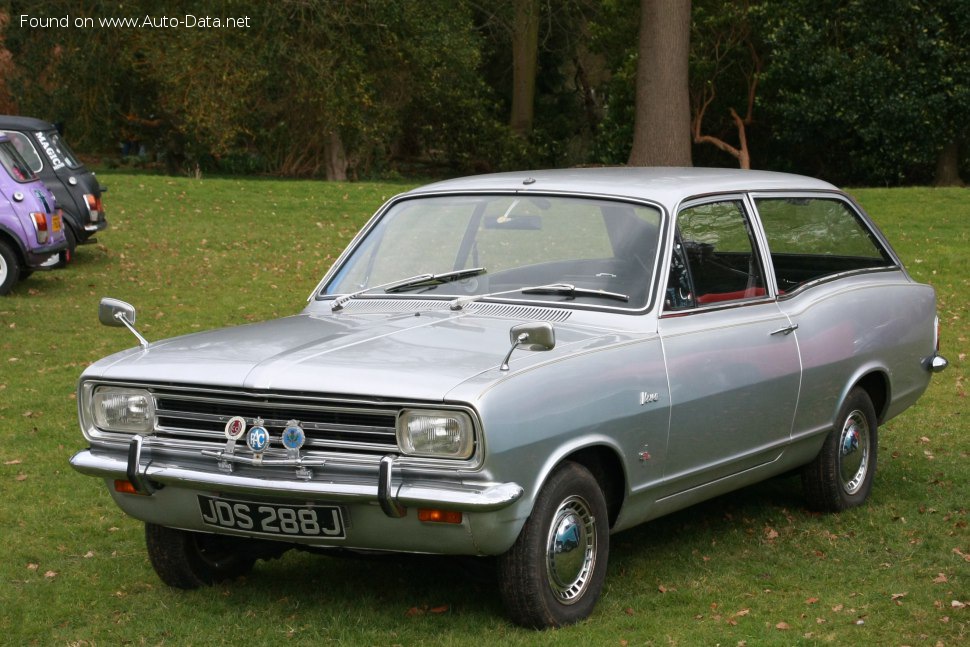
The Vauxhall Viva HB Estate 1.2, produced between 1968 and 1969, represents a practical and economical offering from the British manufacturer during a period of significant automotive development. As part of the broader Viva HB range, the Estate variant catered to families and those requiring additional cargo space. While not initially designed for the American market, understanding the Viva HB Estate provides insight into the compact car segment of the late 1960s and Vauxhall’s position within the European automotive landscape. The HB series was a significant update to the original Viva, offering improved styling, comfort, and mechanical refinement. The Estate, or station wagon as it would be known in the US, was a popular body style, offering versatility for a growing segment of car buyers.
The Vauxhall Viva HB Estate: A British Family Car
The Viva HB Estate occupied a niche as an affordable and functional family vehicle in the United Kingdom and other European markets. Vauxhall, at the time, was a major player in the British automotive industry, known for producing reliable and accessible cars. The HB Estate built upon the success of the original Viva, addressing criticisms regarding its styling and practicality. The Estate body style, in particular, broadened the Viva’s appeal, providing a viable alternative to larger, more expensive vehicles. It was a car designed for everyday use, prioritizing affordability and dependability over outright performance or luxury.
Engine & Performance
Powering the Viva HB Estate 1.2 was a 1.2-liter (1159 cm3 or 70.73 cu. in.) inline-four cylinder petrol engine. This engine produced 57 horsepower (Hp) at 5400 rpm and 90 Newton-meters (Nm) of torque at 3000 rpm, equating to approximately 66.38 lb.-ft. While not a powerhouse, the engine provided adequate performance for its intended purpose. The power-to-weight ratio was 15.6 kg/Hp (64.3 Hp/tonne), and the torque-to-weight ratio was 9.9 kg/Nm (101.5 Nm/tonne). The engine utilized a carburettor fuel injection system and was naturally aspirated. The drivetrain was a rear-wheel drive configuration, common for British cars of this era, coupled with a four-speed manual transmission. This setup provided a relatively simple and robust driving experience. Engine oil capacity was 2.8 liters (2.96 US qt | 2.46 UK qt) and coolant capacity was 6.5 liters (6.87 US qt | 5.72 UK qt).
Design & Features
The Viva HB Estate was a three-door station wagon with seating for five passengers. Its design reflected the styling trends of the late 1960s, with a boxy silhouette and relatively simple lines. The Estate body style significantly increased the car’s practicality, offering a generous 526 liters (18.58 cu. ft.) of trunk space with the rear seats up, expanding to a substantial 1522 liters (53.75 cu. ft.) when the seats were folded down. Features were modest by modern standards, focusing on functionality rather than luxury. Safety features were limited, typical for the period, with basic seatbelts being the primary safety provision. The car’s appeal lay in its affordability, practicality, and ease of maintenance. The 4J x 12 wheel rims were standard. The vehicle’s dimensions were 4104 mm (161.57 in.) in length, 1600 mm (62.99 in.) in width, and 1349 mm (53.11 in.) in height, with a wheelbase of 2433 mm (95.79 in.).
Technical Specifications
| General Information | |
| Brand | Vauxhall |
| Model | Viva |
| Generation | Viva HB Estate |
| Type (Engine) | 1.2 (57 Hp) |
| Start of production | 1968 |
| End of production | 1969 |
| Powertrain Architecture | Internal Combustion engine |
| Body type | Station wagon (estate) |
| Seats | 5 |
| Doors | 3 |
| Performance Specs | |
| Fuel Type | Petrol (Gasoline) |
| Weight-to-power ratio | 15.6 kg/Hp, 64.3 Hp/tonne |
| Weight-to-torque ratio | 9.9 kg/Nm, 101.5 Nm/tonne |
| Engine Specs | |
| Power | 57 Hp @ 5400 rpm |
| Power per litre | 49.2 Hp/l |
| Torque | 90 Nm @ 3000 rpm / 66.38 lb.-ft. @ 3000 rpm |
| Engine displacement | 1159 cm3 / 70.73 cu. in. |
| Number of cylinders | 4 |
| Cylinder Bore | 77.7 mm / 3.06 in. |
| Piston Stroke | 61 mm / 2.4 in. |
| Compression ratio | 8.5:1 |
| Fuel injection system | Carburettor |
| Engine aspiration | Naturally aspirated engine |
| Engine oil capacity | 2.8 l / 2.96 US qt | 2.46 UK qt |
| Coolant | 6.5 l / 6.87 US qt | 5.72 UK qt |
| Space, Volume and Weights | |
| Kerb Weight | 887-949 kg / 1955.5 – 2092.19 lbs. |
| Max. weight | 1148 kg / 2530.91 lbs. |
| Max load | 199-261 kg / 438.72 – 575.41 lbs. |
| Trunk (boot) space – minimum | 526 l / 18.58 cu. ft. |
| Trunk (boot) space – maximum | 1522 l / 53.75 cu. ft. |
| Fuel tank capacity | 36 l / 9.51 US gal | 7.92 UK gal |
| Dimensions | |
| Length | 4104 mm / 161.57 in. |
| Width | 1600 mm / 62.99 in. |
| Height | 1349 mm / 53.11 in. |
| Wheelbase | 2433 mm / 95.79 in. |
| Front track | 1295 mm / 50.98 in. |
| Rear (Back) track | 1295 mm / 50.98 in. |
| Ride height (ground clearance) | 127 mm / 5 in. |
| Minimum turning circle (turning diameter) | 9.7 m / 31.82 ft. |
| Drivetrain, Brakes and Suspension Specs | |
| Drivetrain Architecture | The Internal combustion engine (ICE) drives the rear wheels of the vehicle. |
| Drive wheel | Rear wheel drive |
| Number of gears and type of gearbox | 4 gears, manual transmission |
| Wheel rims size | 4J x 12 |
The Vauxhall Viva HB Estate 1.2, while a relatively simple vehicle by today’s standards, played an important role in providing affordable transportation for families in post-war Britain. Its practicality, combined with Vauxhall’s reputation for reliability, ensured its success in a competitive market. The HB Estate represents a snapshot of automotive engineering and design from a bygone era, offering a glimpse into the priorities and preferences of car buyers in the late 1960s.