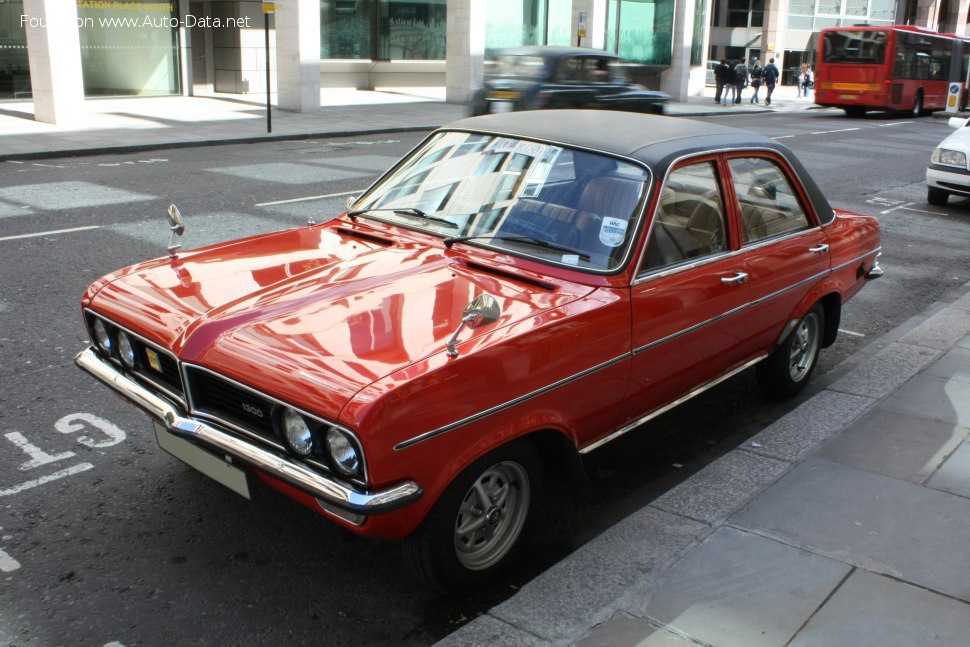
The Vauxhall Viva HC, produced between 1971 and 1975, represents a significant evolution in the lineage of the British-built Viva. Positioned as a small family car, the HC generation aimed to address criticisms leveled at its predecessor, the Viva HA and HB, offering improved practicality, comfort, and styling. While never officially sold in the United States, the Viva HC was a mainstay of the British automotive landscape, competing with vehicles like the Ford Escort and Morris Marina. It served as an affordable and reliable mode of transportation for a broad segment of the population, embodying the design and engineering philosophies of the early 1970s.
Vauxhall Viva HC 1256: A Detailed Overview
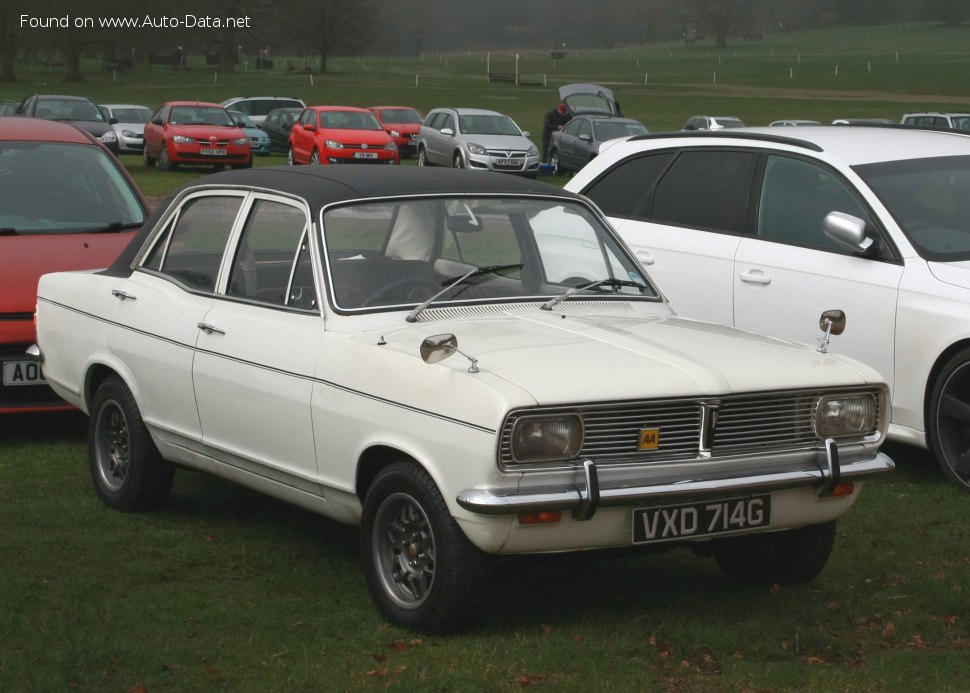
The Viva HC marked a substantial departure from earlier Viva models. It featured a more spacious interior, a redesigned body shell, and a more modern appearance. Available in two-door and four-door saloon (sedan) body styles, the HC catered to families and individuals seeking a practical and economical vehicle. The “1256” designation refers to the engine displacement, and the “58 Hp” indicates the engine’s power output. This particular variant was a popular choice due to its balance of performance and fuel efficiency.
Engine & Performance
The heart of the Viva HC 1256 is a 1.3-liter (1256 cc) inline-four cylinder petrol (gasoline) engine. This naturally aspirated engine produces 58 horsepower at 5500 rpm and 85 Nm (62.69 lb-ft) of torque at 3400 rpm. While not a performance powerhouse, the engine provided adequate power for everyday driving. The power-to-weight ratio of 14.1 kg/Hp (71 Hp/tonne) and torque-to-weight ratio of 9.6 kg/Nm (104 Nm/tonne) reflect the car’s modest but usable performance characteristics. The engine’s 9.2:1 compression ratio was typical for the era, balancing efficiency and reliability. The engine’s oil capacity is 2.8 liters (2.96 US qt / 2.46 UK qt) and requires a specification detailed in the vehicle’s service manual. The cooling system holds 5.8 liters (6.13 US qt / 5.1 UK qt) of coolant. Power per liter is rated at 46.2 Hp/l.
Design & Features
The Viva HC’s design represented a move towards more contemporary styling. The body, available as a two or four-door sedan, featured a boxy, yet relatively streamlined shape. Interior space was a key improvement over previous Viva models, offering comfortable seating for four passengers. Features were relatively basic by modern standards, reflecting the car’s price point and the era in which it was produced. Standard equipment typically included cloth upholstery, basic instrumentation, and a heater. Safety features were limited, consisting primarily of seat belts. The trunk (boot) space, at a maximum of 566 liters (19.99 cu. ft.), was reasonably generous for a car of its size. The Viva HC’s relatively simple construction made it relatively easy to maintain and repair, contributing to its popularity as a reliable and affordable vehicle.
Technical Specifications
| General Information | |
| Brand | Vauxhall |
| Model | Viva |
| Generation | Viva HC |
| Type (Engine) | 1256 (58 Hp) |
| Start of production | 1971 |
| End of production | 1975 |
| Powertrain Architecture | Internal Combustion engine |
| Body type | Sedan |
| Seats | 4 |
| Doors | 2-4 |
| Performance Specs | |
| Fuel Type | Petrol (Gasoline) |
| Weight-to-power ratio | 14.1 kg/Hp, 71 Hp/tonne |
| Weight-to-torque ratio | 9.6 kg/Nm, 104 Nm/tonne |
| Engine Specs | |
| Power | 58 Hp @ 5500 rpm |
| Power per litre | 46.2 Hp/l |
| Torque | 85 Nm @ 3400 rpm / 62.69 lb.-ft. @ 3400 rpm |
| Engine displacement | 1256 cm3 / 76.65 cu. in. |
| Number of cylinders | 4 |
| Engine configuration | Inline |
| Cylinder Bore | 81 mm / 3.19 in. |
| Piston Stroke | 61 mm / 2.4 in. |
| Compression ratio | 9.2:1 |
| Engine aspiration | Naturally aspirated engine |
| Engine oil capacity | 2.8 l / 2.96 US qt | 2.46 UK qt |
| Coolant | 5.8 l / 6.13 US qt | 5.1 UK qt |
| Space, Volume and Weights | |
| Kerb Weight | 817-941 kg / 1801.18 – 2074.55 lbs. |
| Max. weight | 1243-1445 kg / 2740.35 – 3185.68 lbs. |
| Max load | 426-504 kg / 939.17 – 1111.13 lbs. |
| Trunk (boot) space – maximum | 346/566 l / 12.22 cu. ft. |
| Fuel tank capacity | 36 l / 9.51 US gal | 7.92 UK gal |
| Dimensions | |
| Length | 4138 mm / 162.91 in. |
| Width | 1643 mm / 64.69 in. |
| Height | 1348 mm / 53.07 in. |
| Wheelbase | 2461 mm / 96.89 in. |
| Front track | 1306 mm / 51.42 in. |
| Rear (Back) track | 1308 mm / 51.5 in. |
| Ride height (ground clearance) | 127 mm / 5 in. |
| Minimum turning circle (turning diameter) | 9.62 m / 31.56 ft. |
| Drivetrain, Brakes and Suspension Specs | |
| Drivetrain Architecture | The Internal combustion engine (ICE) drives the rear wheels of the vehicle. |
| Drive wheel | Rear wheel drive |
| Number of gears and type of gearbox | 4 gears, manual transmission |
The Viva HC 1256, while not a groundbreaking vehicle, played an important role in providing affordable transportation to a wide range of buyers in the United Kingdom and other European markets. Its improvements over earlier Viva models, combined with its reliability and ease of maintenance, ensured its success during its production run. Today, the Viva HC is appreciated by classic car enthusiasts as a representative example of 1970s British motoring.