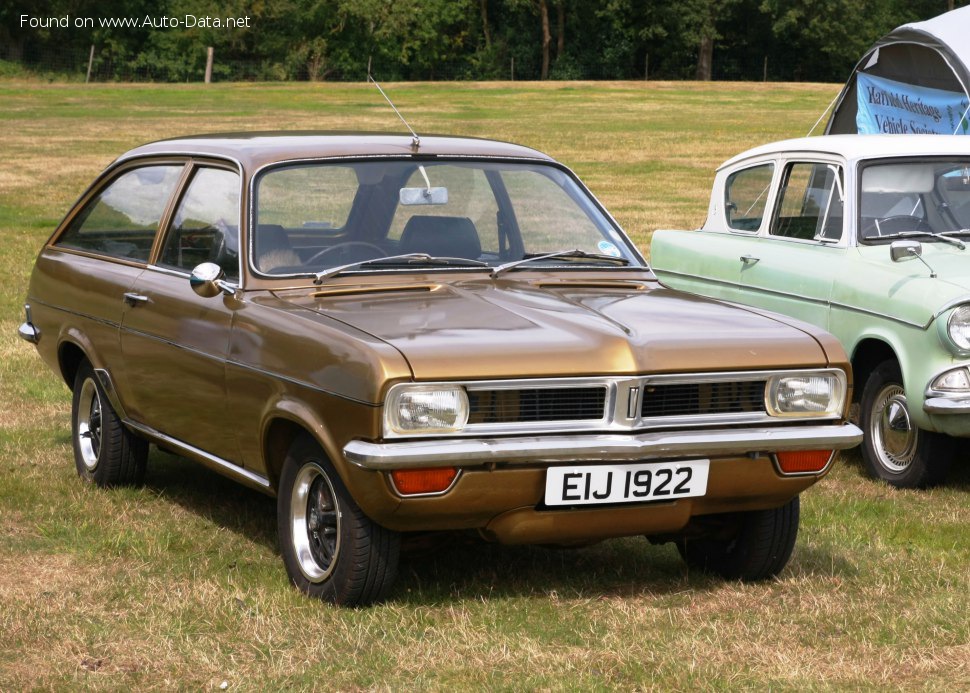
The Vauxhall Viva HC Estate 1800, produced between 1973 and 1979, represents a significant iteration of the Viva lineage, a compact car that played a crucial role in British motoring during the latter half of the 20th century. While not officially sold in the United States, understanding the Viva HC Estate provides insight into the European small car market of the 1970s, a segment increasingly focused on practicality and affordability. The “HC” designation denotes the third generation of the Viva, introduced in 1970, and the Estate variant specifically refers to the station wagon body style, offering increased cargo capacity for families and businesses. This model aimed to provide a versatile and economical vehicle in a period marked by economic uncertainty and rising fuel costs.
Vauxhall Viva HC Estate: A Detailed Overview
The Viva HC Estate 1800 occupied a niche in the British market as a small, affordable family car. It competed with other European offerings like the Ford Escort Estate and the Hillman Avenger Estate. Unlike many American cars of the era, the Viva HC prioritized fuel efficiency and maneuverability, reflecting the different driving conditions and infrastructure prevalent in Europe. The Estate body style was particularly popular, offering a practical solution for those needing extra space without the expense of a larger vehicle. The Viva HC, and particularly the Estate, was a common sight on British roads throughout the 1970s, becoming a symbol of everyday motoring for a generation.
Engine & Performance
The Viva HC Estate 1800 was powered by a 1.8-liter (1759 cm3) inline-four cylinder petrol engine. This engine produced 78 horsepower at 5200 rpm and 132 Nm (97.36 lb.-ft.) of torque at 3000 rpm. While not a performance car by modern standards, the engine provided adequate power for everyday driving, especially considering the vehicle’s relatively light weight. The power-to-weight ratio of 11 kg/Hp (91 Hp/tonne) and torque-to-weight ratio of 6.5 kg/Nm (154 Nm/tonne) demonstrate a reasonable balance between power and mass. The engine featured a compression ratio of 8.5:1 and utilized a naturally aspirated configuration. Power delivery was relatively smooth, making it a comfortable vehicle for both urban and highway driving. The 4-speed manual transmission was the standard offering, providing drivers with direct control over the engine’s power. Fuel economy, while not exceptional, was a key selling point, particularly during the fuel crises of the 1970s.
Design & Features
The Vauxhall Viva HC Estate was a three-door station wagon with seating for five passengers. Its design was functional and utilitarian, prioritizing practicality over stylistic flourishes. The Estate body style significantly increased the vehicle’s cargo capacity, offering 759 liters (26.8 cu. ft.) with the rear seats up and a substantial 1764 liters (62.3 cu. ft.) with the seats folded down. This made it a versatile vehicle for families, tradespeople, and anyone needing to transport larger items. The vehicle’s dimensions – 4138 mm (162.91 in.) in length, 1643 mm (64.69 in.) in width, and 1366 mm (53.78 in.) in height – positioned it firmly within the compact car segment. Safety features were relatively basic by today’s standards, reflecting the automotive safety regulations of the 1970s. However, the Viva HC did offer features such as seatbelts and a robust chassis construction. The interior was simple and functional, with durable materials designed to withstand everyday use. The rear-wheel-drive layout was typical for European cars of this era, providing predictable handling characteristics.
Technical Specifications
| General Information | |
| Brand | Vauxhall |
| Model | Viva |
| Generation | Viva HC Estate |
| Type (Engine) | 1800 (78 Hp) |
| Start of production | 1973 |
| End of production | 1979 |
| Powertrain Architecture | Internal Combustion engine |
| Body type | Station wagon (estate) |
| Seats | 5 |
| Doors | 3 |
| Performance Specs | |
| Fuel Type | Petrol (Gasoline) |
| Weight-to-power ratio | 11 kg/Hp, 91 Hp/tonne |
| Weight-to-torque ratio | 6.5 kg/Nm, 154 Nm/tonne |
| Engine Specs | |
| Power | 78 Hp @ 5200 rpm |
| Power per litre | 44.3 Hp/l |
| Torque | 132 Nm @ 3000 rpm / 97.36 lb.-ft. @ 3000 rpm |
| Engine displacement | 1759 cm3 / 107.34 cu. in. |
| Number of cylinders | 4 |
| Cylinder Bore | 85.73 mm / 3.38 in. |
| Piston Stroke | 76.2 mm / 3 in. |
| Compression ratio | 8.5:1 |
| Engine aspiration | Naturally aspirated engine |
| Engine oil capacity | 4.6 l / 4.86 US qt | 4.05 UK qt |
| Coolant | 8 l / 8.45 US qt | 7.04 UK qt |
| Space, Volume and Weights | |
| Kerb Weight | 857-1007 kg / 1889.36 – 2220.05 lbs. |
| Max. weight | 1320-1474 kg / 2910.1 – 3249.61 lbs. |
| Max load | 463-467 kg / 1020.74 – 1029.56 lbs. |
| Trunk (boot) space – minimum | 759 l / 26.8 cu. ft. |
| Trunk (boot) space – maximum | 1764 l / 62.3 cu. ft. |
| Fuel tank capacity | 54 l / 14.27 US gal | 11.88 UK gal |
| Dimensions | |
| Length | 4138 mm / 162.91 in. |
| Width | 1643 mm / 64.69 in. |
| Height | 1366 mm / 53.78 in. |
| Wheelbase | 2461 mm / 96.89 in. |
| Front track | 1306 mm / 51.42 in. |
| Rear (Back) track | 1308 mm / 51.5 in. |
| Ride height (ground clearance) | 127 mm / 5 in. |
| Minimum turning circle (turning diameter) | 9.62 m / 31.56 ft. |
| Drivetrain, Brakes and Suspension Specs | |
| Drivetrain Architecture | The Internal combustion engine (ICE) drives the rear wheels of the vehicle. |
| Drive wheel | Rear wheel drive |
| Number of gears and type of gearbox | 4 gears, manual transmission |
The Vauxhall Viva HC Estate 1800, while a relatively simple vehicle by modern standards, represents a significant chapter in British automotive history. Its practicality, affordability, and fuel efficiency made it a popular choice for families and businesses during a challenging economic period. Although never sold in the US, it exemplifies the design philosophies and engineering priorities of the European automotive industry in the 1970s.