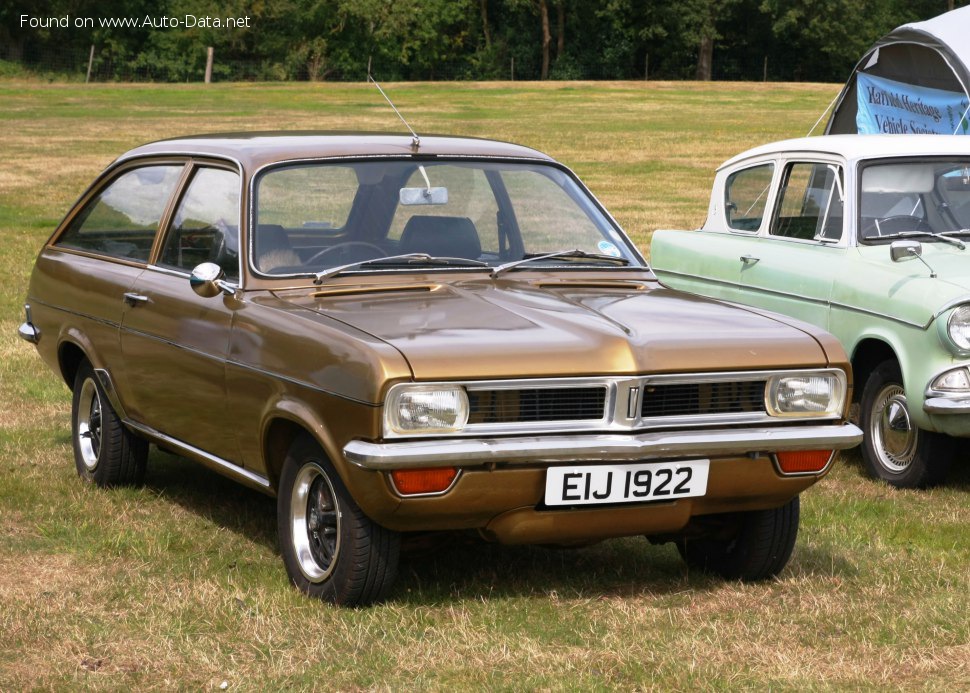
The Vauxhall Viva HC Estate 2300, produced between 1972 and 1973, represents a practical and relatively upscale offering within the British automotive landscape of the early 1970s. As part of the Viva HC range, the Estate (station wagon) variant aimed to provide family-oriented buyers with increased versatility without sacrificing the comfort and features that characterized the HC series. While the Viva nameplate had existed since 1963, the HC generation marked a significant step forward in terms of design, refinement, and available engine options. The 2300 Estate, with its larger engine, was positioned as a more capable and comfortable choice for those needing to transport both passengers and cargo. It was never officially sold in the United States, but it exemplifies the compact, rear-wheel-drive estates popular in Europe during this period.
Vauxhall Viva HC Estate 2300: A Detailed Overview
The Viva HC Estate 2300 occupied a niche in the British market, competing with other compact estates like the Ford Escort Estate and the Hillman Avenger Estate. It distinguished itself through its relatively spacious interior, comfortable ride, and the availability of a larger engine option – the 2.3-liter unit – which provided a noticeable performance advantage over its smaller-engined counterparts. The Estate body style, with its extended roofline and large rear hatch, was particularly appealing to families and those with active lifestyles. The Viva HC range, in general, was considered a well-rounded and reliable vehicle, contributing to its popularity in the UK and export markets.
Engine & Performance
The heart of the Viva HC Estate 2300 is its 2.3-liter (2279 cm3 or 139.07 cu. in.) inline-four cylinder engine. This naturally aspirated engine produced 110 horsepower (Hp) at 5200 rpm and 190 Newton-meters (Nm) of torque at 3000 rpm, equating to 140.14 lb.-ft. The power-to-weight ratio of 7.8 kg/Hp (128.4 Hp/tonne) and torque-to-weight ratio of 4.5 kg/Nm (221.7 Nm/tonne) provided reasonably brisk performance for a vehicle of its size and era. The engine featured an overhead camshaft (OHC) valvetrain and a compression ratio of 8.5:1. Power delivery was smooth and predictable, making it suitable for both town driving and longer journeys. The engine was paired with a four-speed manual transmission, driving the rear wheels. While not a sports car, the 2300 Estate offered a comfortable and capable driving experience, particularly when fully loaded with passengers and luggage.
Design & Features
The Viva HC Estate 2300 is characterized by its classic 1970s station wagon styling. The three-door body style provided easy access to the spacious interior, while the large rear hatch offered a wide opening for loading and unloading cargo. The vehicle’s dimensions – 4138 mm (162.91 in.) in length, 1643 mm (64.69 in.) in width, and 1366 mm (53.78 in.) in height – positioned it as a relatively compact estate car. The wheelbase measured 2461 mm (96.89 in.), contributing to a stable and comfortable ride. Inside, the Viva HC Estate offered seating for five passengers. While not lavishly equipped by modern standards, the HC series featured a relatively well-appointed interior for its price point. Features included comfortable seating, a functional dashboard layout, and adequate ventilation. Safety features were limited by the standards of the time, but included seat belts. The primary appeal of the Estate variant lay in its practicality and cargo-carrying capacity. The trunk (boot) space ranged from a minimum of 759 liters (26.8 cu. ft.) to a maximum of 1764 liters (62.3 cu. ft.) with the rear seats folded down, making it a versatile vehicle for families and those needing to transport large items.
Technical Specifications
| Brand | Vauxhall |
| Model | Viva |
| Generation | Viva HC Estate |
| Type (Engine) | 2300 (110 Hp) |
| Start of production | 1972 |
| End of production | 1973 |
| Powertrain Architecture | Internal Combustion engine |
| Body type | Station wagon (estate) |
| Seats | 5 |
| Doors | 3 |
| Fuel Type | Petrol (Gasoline) |
| Weight-to-power ratio | 7.8 kg/Hp, 128.4 Hp/tonne |
| Weight-to-torque ratio | 4.5 kg/Nm, 221.7 Nm/tonne |
| Power | 110 Hp @ 5200 rpm |
| Power per litre | 48.3 Hp/l |
| Torque | 190 Nm @ 3000 rpm / 140.14 lb.-ft. @ 3000 rpm |
| Engine displacement | 2279 cm3 / 139.07 cu. in. |
| Number of cylinders | 4 |
| Engine configuration | Inline |
| Cylinder Bore | 97.54 mm / 3.84 in. |
| Piston Stroke | 76.2 mm / 3 in. |
| Compression ratio | 8.5:1 |
| Engine aspiration | Naturally aspirated engine |
| Valvetrain | OHC |
| Engine oil capacity | 4.6 l / 4.86 US qt | 4.05 UK qt |
| Coolant | 8 l / 8.45 US qt | 7.04 UK qt |
| Kerb Weight | 857-1007 kg / 1889.36 – 2220.05 lbs. |
| Max. weight | 1320-1474 kg / 2910.1 – 3249.61 lbs. |
| Max load | 463-467 kg / 1020.74 – 1029.56 lbs. |
| Trunk (boot) space – minimum | 759 l / 26.8 cu. ft. |
| Trunk (boot) space – maximum | 1764 l / 62.3 cu. ft. |
| Length | 4138 mm / 162.91 in. |
| Width | 1643 mm / 64.69 in. |
| Height | 1366 mm / 53.78 in. |
| Wheelbase | 2461 mm / 96.89 in. |
| Front track | 1306 mm / 51.42 in. |
| Rear (Back) track | 1308 mm / 51.5 in. |
| Ride height (ground clearance) | 127 mm / 5 in. |
| Minimum turning circle (turning diameter) | 9.62 m / 31.56 ft. |
| Drivetrain Architecture | Rear wheel drive |
| Number of gears and type of gearbox | 4 gears, manual transmission |
The Vauxhall Viva HC Estate 2300, while not a groundbreaking vehicle, represents a significant example of British automotive engineering from the early 1970s. Its blend of practicality, comfort, and reasonable performance made it a popular choice for families and those seeking a versatile vehicle for both work and leisure. Though largely forgotten today, the Viva HC Estate remains a testament to a bygone era of automotive design and engineering.