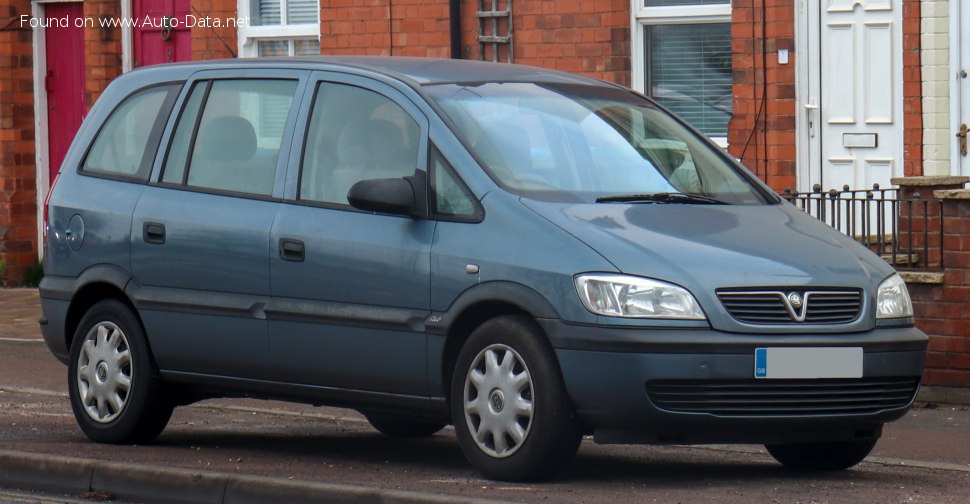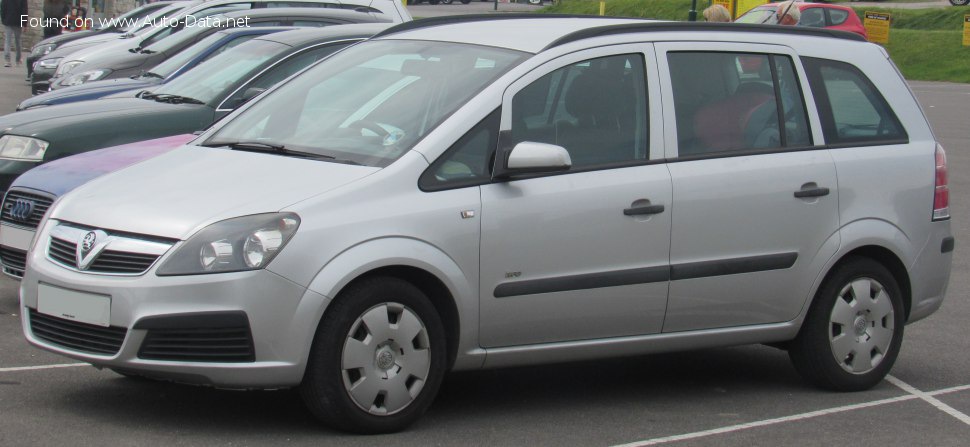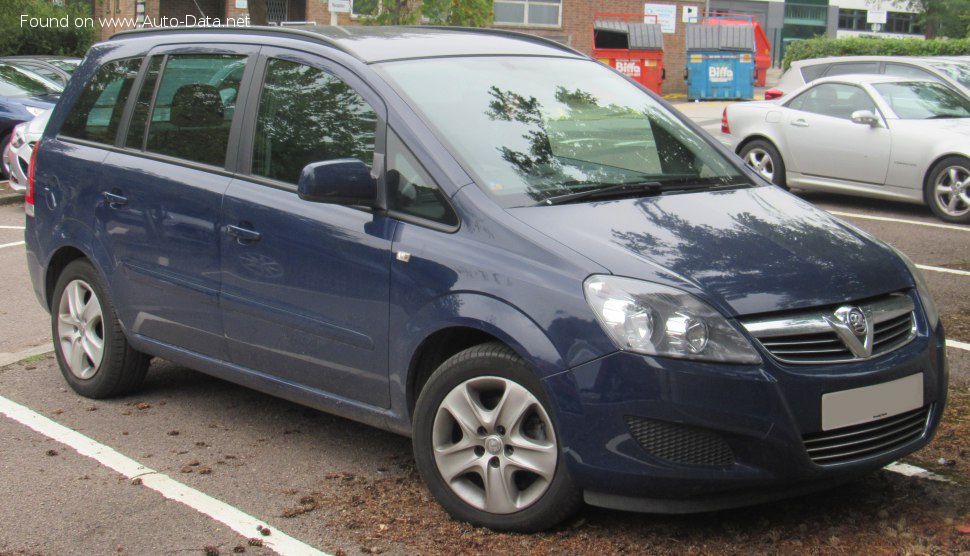
The Vauxhall Zafira B (facelift, produced 2008-2011) 1.6 XER, a 115 horsepower variant, represented a key entry point into the second-generation Zafira range. This seven-seat minivan, built on the GM Delta platform (internally designated as the 2008 facelift), aimed to provide affordable family transport with a focus on practicality and space. The 1.6 XER trim occupied a mid-range position within the Zafira B lineup, slotting below the more powerful 1.8L and 2.2L direct injection petrol engines, as well as the diesel options like the 1.9 CDTi and later 2.0 CDTi. It was designed to appeal to buyers prioritizing fuel efficiency and lower running costs over outright performance.
The 1.6 XER Engine and Powertrain
The heart of this Zafira variant is the 1.6 XER engine, a member of the GM Family 1 engine series. This is a naturally aspirated, inline-four cylinder petrol engine with a displacement of 1598 cc (97.52 cubic inches). The engine code ‘XER’ denotes a specific iteration of this engine, optimized for European markets and meeting Euro 5 emission standards. It features multi-port fuel injection and a double overhead camshaft (DOHC) valvetrain with four valves per cylinder. The compression ratio is 10.8:1, contributing to a balance between efficiency and power output.
The 1.6 XER produces 115 hp (86 kW) at 6000 rpm and 155 Nm (114.32 lb-ft) of torque at 4000 rpm. While not a high-performance engine, it provided adequate power for typical family motoring. The engine’s power-to-weight ratio is 13.1 kg/hp, and the torque-to-weight ratio is 9.7 kg/Nm. The engine is transversely mounted in the front of the vehicle.
The 1.6 XER was typically paired with a five-speed manual transmission. This configuration was the most common offering for this trim level. While an automatic transmission was available as an option, it was less frequently selected due to its impact on fuel economy and performance. The manual gearbox provided a relatively direct driving experience, although the gear ratios were tuned for fuel efficiency rather than sporty acceleration.
Fuel Injection and Engine Management
The 1.6 XER utilizes a multi-port fuel injection system, where fuel is injected into the intake ports just before the intake valves. This system is controlled by an electronic engine control unit (ECU) that monitors various sensors to optimize fuel delivery and ignition timing. The ECU plays a crucial role in meeting Euro 5 emission standards by precisely controlling the air-fuel mixture and managing exhaust gas recirculation (EGR) systems.
Driving Characteristics
The Zafira B 1.6 XER offered a comfortable, if not particularly exciting, driving experience. Acceleration was adequate for everyday driving, but the engine felt strained when fully loaded with passengers and luggage, or when tackling steep inclines. The 0-60 mph time was estimated to be around 11.5-12.5 seconds, depending on load and driving conditions. The five-speed manual transmission allowed drivers to keep the engine in its optimal power band, but frequent gear changes were often necessary to maintain momentum.
Compared to the higher-output 1.8L Zafira B, the 1.6 XER felt noticeably slower. The 1.8L offered a more responsive throttle and stronger acceleration, making it a better choice for drivers who frequently carried heavy loads or drove on motorways. The diesel variants, such as the 1.9 CDTi, provided significantly more torque and superior fuel economy, but at a higher initial cost.
The Zafira B’s suspension was tuned for comfort, absorbing bumps and imperfections in the road surface effectively. However, this also resulted in some body roll during cornering. The steering was light and easy to use, making it well-suited for urban driving.
Equipment and Trim Levels
The 1.6 XER trim of the Zafira B facelift typically included a reasonable level of standard equipment. This generally included air conditioning, electric front windows, central locking, a CD/radio stereo, and driver and passenger airbags. Higher trim levels, such as the Design and SE, added features like alloy wheels, rear parking sensors, cruise control, and upgraded interior trim.
Interior upholstery was typically cloth, with a durable and practical finish. The dashboard layout was functional and user-friendly, with clearly labeled controls. The Zafira B was renowned for its flexible seating arrangement, with the ability to fold down the rear seats to create a large cargo area. The 1.6 XER trim offered the same seating versatility as other Zafira B variants.
Chassis and Braking
The Zafira B 1.6 XER utilized a MacPherson strut front suspension and a torsion beam rear suspension. This setup provided a good balance between ride comfort and handling. The front brakes were ventilated discs, while the rear brakes were typically drum brakes, although some higher-spec models featured rear discs. Anti-lock Braking System (ABS) was standard equipment, enhancing braking performance and stability.
The steering system was a rack and pinion type, providing precise and responsive steering control. The Zafira B’s chassis was designed to accommodate the weight of passengers and luggage, while maintaining a stable and predictable driving experience.
Market Reception and Comparison
The Zafira B 1.6 XER was generally well-received by critics as a practical and affordable family vehicle. It was praised for its spacious interior, flexible seating arrangement, and reasonable fuel economy. However, some reviewers noted that the engine lacked power, particularly when fully loaded. Compared to its rivals, such as the Ford C-Max and Renault Scenic, the Zafira B offered a competitive level of space and practicality at a lower price point.
Fuel economy figures for the 1.6 XER were approximately 8.7 l/100 km (27 US mpg) in urban driving, 5.5 l/100 km (42.8 US mpg) on the extra-urban cycle, and 6.7 l/100 km (35.1 US mpg) combined. Reliability was generally good, although some owners reported minor issues with the engine’s cooling system and electrical components.
Technical Specifications
| Brand | Vauxhall |
| Model | Zafira |
| Generation | Zafira B (facelift 2008) |
| Type (Engine) | 1.6 XER (115 Hp) |
| Start of production | 2008 |
| End of production | 2011 |
| Powertrain Architecture | Internal Combustion engine |
| Body type | Minivan |
| Seats | 7 |
| Doors | 5 |
| Fuel consumption (urban) | 8.7 l/100 km (27 US mpg) |
| Fuel consumption (extra urban) | 5.5 l/100 km (42.8 US mpg) |
| Fuel consumption (combined) | 6.7 l/100 km (35.1 US mpg) |
| Fuel Type | Petrol (Gasoline) |
| Emission standard | Euro 5 |
| Weight-to-power ratio | 13.1 kg/Hp |
| Engine layout | Front, Transverse |
| Engine Model/Code | Z16XER |
| Engine displacement | 1598 cm3 (97.52 cu. in.) |
| Number of cylinders | 4 |
| Compression ratio | 10.8:1 |
| Fuel injection system | Multi-port manifold injection |
| Engine oil capacity | 4.5 l (4.76 US qt | 3.96 UK qt) |
| Kerb Weight | 1503 kg (3313.55 lbs.) |
| Max. weight | 2075 kg (4574.59 lbs.) |
| Trunk (boot) space – minimum | 140 l (4.94 cu. ft.) |
| Trunk (boot) space – maximum | 1820 l (64.27 cu. ft.) |
| Fuel tank capacity | 58 l (15.32 US gal | 12.76 UK gal) |
| Length | 4467 mm (175.87 in.) |
| Width | 1801 mm (70.91 in.) |
| Height | 1635 mm (64.37 in.) |
| Wheelbase | 2703 mm (106.42 in.) |
| Number of gears and type of gearbox | 5 gears, manual transmission |
Legacy
The Zafira B 1.6 XER remains a relatively common sight on used car markets. Its affordability and practicality continue to appeal to budget-conscious buyers. While the 1.6 XER engine is generally reliable, regular maintenance is essential to prevent issues. Common areas to check include the cooling system, oil leaks, and the condition of the timing chain. The availability of spare parts is good, and the Zafira B is relatively easy to repair. Overall, the 1.6 XER variant of the Zafira B represents a sensible and practical choice for families seeking affordable and spacious transportation.