
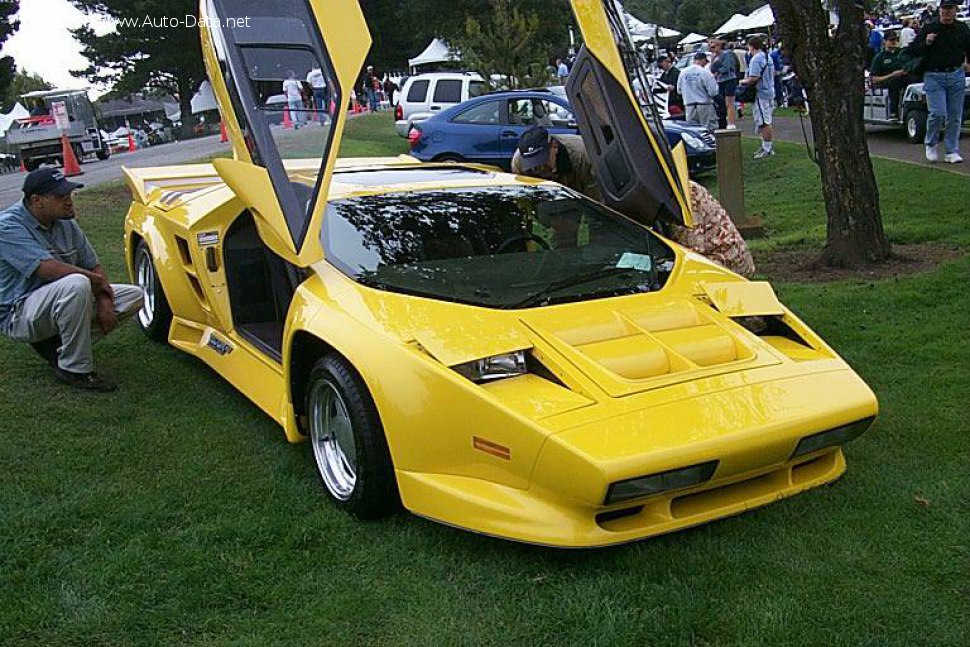
The Vector W8 Twin Turbo, produced between 1989 and 1993, represents a bold and technologically advanced foray into the American supercar market. Designed and built by Vector Aeromotive Corporation, the W8 was intended to be a statement of American engineering prowess, directly challenging established European marques like Lamborghini and Ferrari. This limited-production vehicle, characterized by its striking angular design and powerful twin-turbocharged V8 engine, remains a significant and highly collectible piece of automotive history. The W8 Twin Turbo was the flagship model of Vector, embodying the company’s vision of a no-compromise, high-performance machine. It was built on a custom-designed space frame chassis and featured extensive use of lightweight materials.
Vector W8 Twin Turbo: An Overview
The Vector W8 Twin Turbo was not simply a car; it was a technological demonstration. Gerald Wiegert, the founder of Vector, aimed to create a vehicle that surpassed anything else available at the time, both in terms of performance and design. The car’s futuristic aesthetic, heavily influenced by aircraft design, set it apart from the more curvaceous supercars of the era. Production numbers were extremely limited, with only around 19 examples built, making it one of the rarest production cars ever made. The W8 Twin Turbo was a two-seat, two-door coupe, and represented the pinnacle of Vector’s engineering capabilities.
Powertrain & Engine Architecture
At the heart of the Vector W8 Twin Turbo lies its remarkable 6.0-liter V8 engine, designated as the W8. This engine is not based on any existing production block; it was entirely designed and built by Vector. The engine utilizes a 90-degree V configuration and is equipped with twin Garrett T28 turbochargers, along with intercoolers, to deliver a staggering 634 horsepower at 5700 rpm and 854 Nm (629.88 lb-ft) of torque at 4900 rpm. The engine features multi-port fuel injection and a relatively low 8:1 compression ratio, optimized for the forced induction system. The engine displacement is 5973 cm3 (364.49 cu. in.), with a cylinder bore of 101.6 mm (4 in.) and a piston stroke of 92.1 mm (3.63 in.). Each cylinder has two valves. The engine’s power output translates to an impressive 106.1 horsepower per liter.
The W8 is paired with a 3-speed automatic transmission. While seemingly unconventional for a supercar of this caliber, the automatic transmission was chosen for its ease of use and to broaden the car’s appeal. The transmission is coupled to a rear-wheel-drive system, delivering power to the rear wheels. The drivetrain architecture is a conventional internal combustion engine (ICE) driving the rear wheels.
Driving Characteristics
The Vector W8 Twin Turbo’s performance is nothing short of breathtaking. Its acceleration figures are remarkable for its time, achieving 0-60 mph in approximately 4.1 seconds, 0-100 km/h in 4.3 seconds, and a top speed of 350 km/h (217.48 mph). The twin-turbocharged engine delivers a substantial amount of torque across a broad rev range, providing exhilarating acceleration in any gear. The 3-speed automatic transmission, while not offering the precise control of a manual gearbox, provides smooth and relatively quick shifts. However, the transmission’s limited number of gears means that the engine can feel somewhat strained at very high speeds. The car’s weight-to-power ratio of 2.6 kg/Hp and weight-to-torque ratio of 1.9 kg/Nm contribute to its impressive performance. The De-Dion rear suspension helps to maintain stability at high speeds, but the overall driving experience is characterized by its raw power and somewhat unforgiving nature.
Equipment & Trim Levels
Given its limited production run and high price point, the Vector W8 Twin Turbo was exceptionally well-equipped. The interior featured a minimalist design, with leather upholstery and a focus on functionality. Standard features included air conditioning, power windows, and power steering. The dashboard layout was unconventional, with a prominent digital instrument cluster displaying vital vehicle information. Options were limited, reflecting the car’s bespoke nature. Buyers could specify custom paint colors and interior trim materials. The W8’s interior, while luxurious, prioritized a driver-focused experience over opulent comfort.
Chassis & Braking
The Vector W8 Twin Turbo is built on a custom-designed space frame chassis constructed from steel tubing. This chassis provides a rigid and lightweight foundation for the vehicle. The suspension system features independent double wishbones at the front and a De-Dion rear suspension. The front brakes are ventilated discs, while the rear brakes are drums. The braking system is assisted by ABS (Anti-lock braking system), providing enhanced stopping power and control. The steering system is a rack and pinion type with hydraulic power assistance. The car’s relatively wide track – 1600 mm (62.99 in) at the front and 1650 mm (64.96 in) at the rear – contributes to its stability.
Market Reception & Comparison
The Vector W8 Twin Turbo received mixed reviews upon its release. While its performance and design were widely praised, concerns were raised about its build quality and the unconventional choice of an automatic transmission. Critics also noted the car’s high price tag, which placed it in direct competition with established supercar manufacturers. Compared to other supercars of the era, such as the Lamborghini Countach and the Ferrari Testarossa, the W8 offered a unique and arguably more technologically advanced package. However, its limited production run and relative lack of brand recognition hindered its market success. Fuel consumption was also notably high, with figures of 30 l/100 km (7.8 US mpg) in urban conditions and 15 l/100 km (15.7 US mpg) in extra-urban conditions.
Technical Specifications
| Brand | Vector |
| Model | W8 Twin Turbo |
| Generation | W8 Twin Turbo |
| Type (Engine) | 6.0 i V8 Biturbo (634 Hp) |
| Start of production | 1989 year |
| End of production | 1993 year |
| Body type | Coupe |
| Seats | 2 |
| Doors | 2 |
| Fuel consumption (economy) – urban | 30 l/100 km (7.8 US mpg) |
| Fuel consumption (economy) – extra urban | 15 l/100 km (15.7 US mpg) |
| Fuel Type | Petrol (Gasoline) |
| Acceleration 0 – 100 km/h | 4.3 sec |
| Acceleration 0 – 62 mph | 4.3 sec |
| Acceleration 0 – 60 mph | 4.1 sec |
| Maximum speed | 350 km/h (217.48 mph) |
| Weight-to-power ratio | 2.6 kg/Hp |
| Weight-to-torque ratio | 1.9 kg/Nm |
| Power | 634 Hp @ 5700 rpm |
| Torque | 854 Nm @ 4900 rpm (629.88 lb.-ft. @ 4900 rpm) |
| Engine displacement | 5973 cm3 (364.49 cu. in.) |
| Number of cylinders | 8 |
| Engine configuration | V-engine |
| Cylinder Bore | 101.6 mm (4 in.) |
| Piston Stroke | 92.1 mm (3.63 in.) |
| Compression ratio | 8:1 |
| Number of valves per cylinder | 2 |
| Fuel injection system | Multi-port manifold injection |
| Engine aspiration | Turbocharger |
| Kerb Weight | 1620 kg (3571.49 lbs.) |
| Trunk (boot) space – minimum | 115 l (4.06 cu. ft.) |
| Trunk (boot) space – maximum | 200 l (7.06 cu. ft.) |
| Fuel tank capacity | 106 l (28 US gal | 23.32 UK gal) |
| Length | 4370 mm (172.05 in.) |
| Width | 1930 mm (75.98 in.) |
| Height | 1080 mm (42.52 in.) |
| Wheelbase | 2615 mm (102.95 in.) |
| Front track | 1600 mm (62.99 in.) |
| Rear (Back) track | 1650 mm (64.96 in.) |
| Drivetrain Architecture | Rear wheel drive |
| Number of gears and type of gearbox | 3 gears, automatic transmission |
| Rear suspension | Suspension De-Dion |
| Front brakes | Disc |
| Rear brakes | Drum |
Legacy
The Vector W8 Twin Turbo, despite its limited production and initial challenges, has achieved a legendary status among automotive enthusiasts. Its unique design, powerful engine, and technological innovations have cemented its place in automotive history. Today, the W8 Twin Turbo is a highly sought-after collector’s item, with values continuing to rise. While the car’s long-term reliability can be a concern due to its complex engineering and limited parts availability, dedicated owners and specialists continue to maintain and restore these remarkable machines. The Vector W8 Twin Turbo remains a testament to the ambition and vision of Gerald Wiegert and a symbol of American automotive innovation.
