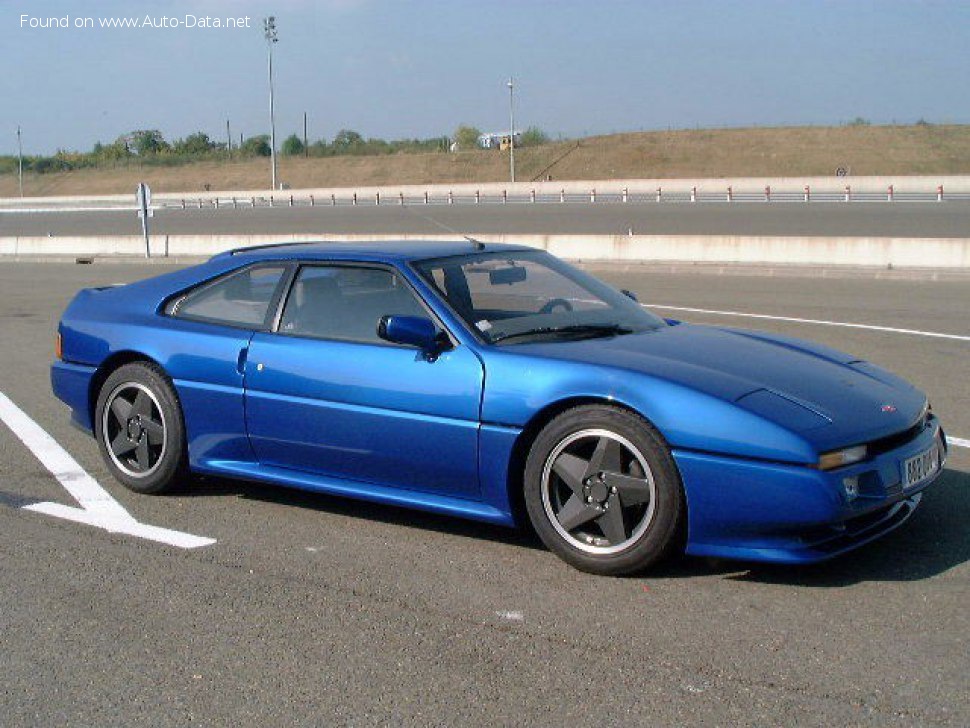
The Venturi 260 Cabrio, produced between 1989 and 1995, represented a significant offering from the small French manufacturer. Positioned as the flagship convertible model within the Venturi lineup, it aimed to deliver a blend of performance and luxury, appealing to enthusiasts seeking a unique grand touring experience. The 260 Cabrio was built upon the foundations of Venturi’s earlier models, evolving into a more refined and powerful package. It was a relatively low-volume production vehicle, contributing to its current rarity and collector appeal. The car was based on a steel backbone chassis with fiberglass body panels.
Venturi 260 Cabrio 2.8 i V6: An Overview
The 260 Cabrio 2.8 i V6 was the primary variant of the convertible model, distinguished by its 2.8-liter V6 engine producing 260 horsepower. This configuration was the standard offering throughout the production run, with minimal changes to the powertrain. The “260” designation directly referenced this power output, solidifying its position as the performance-oriented version of the Cabrio. It was a direct competitor to other European grand tourers of the era, such as the Porsche 944 Cabriolet and the BMW Z1, though Venturi occupied a more niche market segment.
Powertrain & Engine Architecture
At the heart of the Venturi 260 Cabrio was the PRV V6 engine, a 2.8-liter (2849 cc) naturally aspirated powerplant. This engine, a collaborative effort between Peugeot, Renault, and Volvo (hence the PRV designation), was notable for its 90-degree V-angle and dual overhead camshafts (OHC). The engine featured multi-port fuel injection and a compression ratio of 8.2:1. It produced a peak power output of 260 hp at 5500 rpm and 432 Nm (318.63 lb-ft) of torque at 2000 rpm. The engine was mounted longitudinally in a mid-engine configuration, contributing to the car’s balanced handling characteristics. The engine’s power-to-weight ratio was a respectable 4.3 kg/hp.
The 260 Cabrio was exclusively offered with a 5-speed manual transmission. This transmission was chosen to complement the engine’s performance characteristics and provide drivers with a more engaging driving experience. The gearbox was rear-wheel drive, further enhancing the car’s sporting credentials. The transmission was not known for being particularly robust, and careful maintenance is crucial for longevity.
Driving Characteristics
The Venturi 260 Cabrio offered a distinctly sporty driving experience. The mid-engine layout and rear-wheel drive configuration contributed to neutral handling and excellent balance. Acceleration from 0 to 100 km/h (0-62 mph) was achieved in 5.2 seconds, with a 0-60 mph time of approximately 4.9 seconds. The car boasted a top speed of 270 km/h (167.77 mph). The engine delivered strong torque throughout the rev range, making it responsive in various driving situations. However, the car’s relatively light weight (1110 kg or 2447.13 lbs) meant that it could be sensitive to changes in road surface and driving style. The steering, a hydraulic rack and pinion system, provided precise control, although it lacked the feedback of some contemporary sports cars.
Equipment & Trim Levels
The Venturi 260 Cabrio was positioned as a luxury sports car, and its equipment levels reflected this. Standard features included leather upholstery, power windows, central locking, and an AM/FM radio. The interior design was relatively minimalist, focusing on functionality and driver engagement. Optional extras included air conditioning, a premium sound system, and upgraded leather trim. The dashboard layout was straightforward, with clearly marked gauges and controls. The convertible top was manually operated, adding to the car’s driver-focused character. Interior space was limited, typical of a small two-seater convertible.
Chassis & Braking
The Venturi 260 Cabrio utilized a steel backbone chassis, providing a rigid and lightweight foundation for the vehicle. The suspension system consisted of double wishbones at the front and a spring strut arrangement at the rear. This setup aimed to balance ride comfort with handling performance. The car was equipped with ventilated disc brakes on all four wheels, providing ample stopping power. An Anti-lock Braking System (ABS) was included as standard, enhancing safety and control. Tire sizes were typically 205/55 ZR16 at the front and 245/45 ZR16 at the rear, providing good grip and stability.
Market Reception & Comparison
The Venturi 260 Cabrio received generally positive reviews from automotive critics. It was praised for its performance, handling, and distinctive styling. However, it was also criticized for its relatively high price and limited availability. Compared to its rivals, the 260 Cabrio offered a unique blend of French flair and British engineering. Fuel economy was relatively poor, averaging 11.1 l/100 km (21.2 US mpg). Reliability was also a concern for some owners, with reports of issues related to the engine and transmission. However, the car’s rarity and exclusivity contributed to its appeal among collectors.
Technical Specifications
| Brand | Venturi |
| Model | 260 Cabrio |
| Generation | 260 Cabrio |
| Type (Engine) | 2.8 i V6 (260 Hp) |
| Start of production | 1989 |
| End of production | 1995 |
| Fuel consumption (combined) | 11.1 l/100 km |
| Fuel consumption (US mpg) | 21.2 |
| Fuel consumption (UK mpg) | 25.4 |
| Fuel Type | Petrol (Gasoline) |
| Acceleration 0-100 km/h | 5.2 sec |
| Acceleration 0-62 mph | 5.2 sec |
| Acceleration 0-60 mph | 4.9 sec |
| Maximum speed | 270 km/h (167.77 mph) |
| Kerb Weight | 1110 kg (2447.13 lbs) |
| Engine Displacement | 2849 cm3 (173.86 cu. in.) |
| Number of Cylinders | 6 |
| Engine Configuration | V-engine |
| Power | 260 Hp @ 5500 rpm |
| Torque | 432 Nm @ 2000 rpm (318.63 lb.-ft. @ 2000 rpm) |
| Fuel tank capacity | 90 l (23.78 US gal | 19.8 UK gal) |
| Length | 4090 mm (161.02 in.) |
| Width | 1700 mm (66.93 in.) |
| Height | 1170 mm (46.06 in.) |
| Wheelbase | 2400 mm (94.49 in.) |
| Number of gears | 5 |
| Gearbox type | Manual transmission |
Legacy
The Venturi 260 Cabrio, while not a mainstream success, has gained a dedicated following among enthusiasts and collectors. The PRV V6 engine, while known for its complexity, is considered a charismatic and powerful unit. The car’s rarity and distinctive styling have contributed to its increasing value in the used car market. The 260 Cabrio’s mid-engine layout and rear-wheel drive configuration provide a rewarding driving experience that is increasingly difficult to find in modern vehicles. Maintenance can be challenging due to the car’s age and limited parts availability, but dedicated owners are able to keep these vehicles running and enjoying them for years to come. The Venturi 260 Cabrio remains a unique and desirable example of 1990s French sports car engineering.