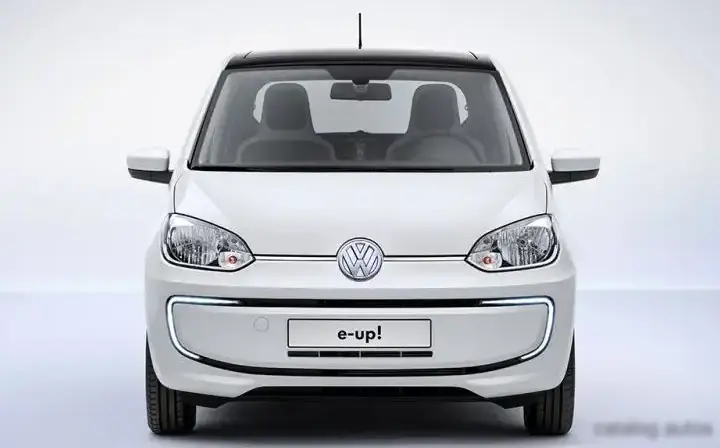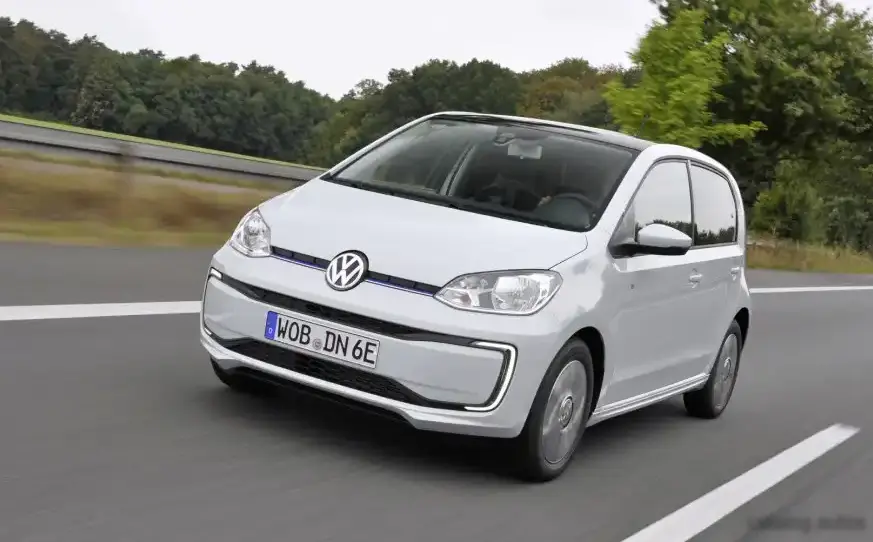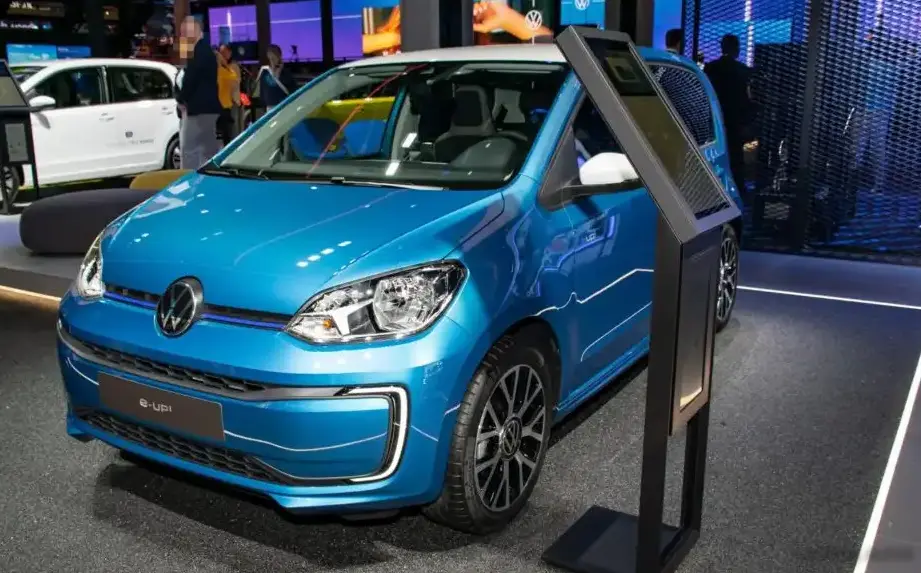
The Volkswagen e-Up! facelift, introduced in 2019, represents Volkswagen’s entry into the all-electric city car segment. This variant, equipped with a 36.8 kWh battery pack and an 83 horsepower electric motor, was a key component of Volkswagen’s broader electrification strategy, particularly within the European market. Positioned as an affordable and practical electric vehicle, the e-Up! aimed to provide a zero-emission alternative for urban commuters. The 2019 facelift brought significant improvements over the initial e-Up! released in 2013, including a larger battery, increased range, and updated technology. It falls within the broader Volkswagen Up! family, sharing the same basic platform (A05/VW Polo platform) but distinguished by its fully electric powertrain.
Technical Specifications
| Brand | Volkswagen |
| Model | Up! |
| Generation | e-Up! (facelift 2019) |
| Type (Engine) | 36.8 kWh (83 Hp) |
| Start of production | 2019 |
| Powertrain Architecture | BEV (Electric Vehicle) |
| Body type | Hatchback |
| Seats | 5 |
| Doors | 5 |
| Fuel Type | Electricity |
| Acceleration 0 – 100 km/h | 11.9 sec |
| Acceleration 0 – 62 mph | 11.9 sec |
| Acceleration 0 – 60 mph | 11.3 sec |
| Maximum speed | 130 km/h (80.78 mph) |
| Weight-to-power ratio | 14 kg/Hp, 71.6 Hp/tonne |
| Weight-to-torque ratio | 5.5 kg/Nm, 182.8 Nm/tonne |
| Gross battery capacity | 36.8 kWh |
| Net (usable) battery capacity | 32.3 kWh |
| Battery voltage | 350 V |
| Battery technology | Lithium-ion (Li-Ion) |
| Battery weight | 248 kg (546.75 lbs) |
| Battery location | Below the floor |
| Recuperation output | 40 kW |
| All-electric range (WLTP) | 256-258 km (159.07 – 160.31 mi) |
| All-electric range | 180-260 km (111.85 – 161.56 mi) |
| Average Energy consumption | 12.7-12.9 kWh/100 km (20.44 – 20.76 kWh/100 mi) |
| MPGe | 165 – 162 |
| km/kWh | 7.9 – 7.8 |
| mi/kWh | 4.9 – 4.8 |
| Electric motor power | 83 Hp @ 2750-11000 rpm |
| Electric motor Torque | 212 Nm @ 0-2750 rpm (156.36 lb.-ft. @ 0-2750 rpm) |
| Electric motor location | Front axle, Transverse |
| Electric motor type | Synchronous |
| System power | 83 Hp @ 2750-11000 rpm |
| System torque | 212 Nm @ 0-2750 rpm (156.36 lb.-ft. @ 0-2750 rpm) |
| Kerb Weight | 1160 kg (2557.36 lbs) |
| Max. weight | 1530 kg (3373.07 lbs) |
| Max load | 370 kg (815.71 lbs) |
| Trunk (boot) space – minimum | 250 l (8.83 cu. ft) |
| Trunk (boot) space – maximum | 923 l (32.6 cu. ft) |
| Length | 3600 mm (141.73 in) |
| Width | 1645 mm (64.76 in) |
| Width including mirrors | 1910 mm (75.2 in) |
| Height | 1507 mm (59.33 in) |
| Wheelbase | 2417 mm (95.16 in) |
| Front track | 1428 mm (56.22 in) |
| Rear (Back) track | 1424 mm (56.06 in) |
| Ride height (ground clearance) | 135 mm (5.31 in) |
| Drag coefficient (Cd) | 0.31 |
| Minimum turning circle | 9.8 m (32.15 ft) |
| Drivetrain Architecture | One electric motor drives the front wheels |
| Drive wheel | Front wheel drive |
| Number of gears | 1 |
| Gearbox type | Automatic transmission |
| Front suspension | Independent type McPherson, Transverse stabilizer |
| Rear suspension | Torsion |
| Front brakes | Ventilated discs |
| Rear brakes | Drum |
| Assisting systems | ABS (Anti-lock braking system) |
| Steering type | Steering rack and pinion |
| Power steering | Electric Steering |
| Tires size | 165/70 R14; 165/65 R15; 185/50 R16 |
| Wheel rims size | 5J x 14; 5J x 15; 6J x 16 |
Powertrain & Engine Architecture
The heart of the 2019 e-Up! is its electric powertrain. The synchronous electric motor, producing 83 horsepower and 212 Nm (156 lb-ft) of torque, delivers instant torque, characteristic of electric vehicles. This motor is mounted transversely at the front of the vehicle, driving the front wheels. The 36.8 kWh lithium-ion battery pack is located under the floor, contributing to a low center of gravity and enhancing stability. The battery utilizes a sophisticated thermal management system to maintain optimal operating temperatures. The e-Up! employs a single-speed automatic transmission, simplifying the driving experience. The motor’s power delivery is linear and predictable, optimized for efficient urban driving. The charging port is located at the front of the vehicle, allowing for convenient access to public charging stations.
Driving Characteristics
The e-Up! 36.8 kWh offers a surprisingly peppy driving experience for a city car. While not designed for high-speed performance, the instant torque of the electric motor provides brisk acceleration in urban environments. The 0-60 mph time of around 11.3 seconds is adequate for everyday driving. The single-speed transmission means there are no gear changes, resulting in smooth and seamless acceleration. The regenerative braking system allows for deceleration by simply lifting off the accelerator pedal, recovering energy and extending the range. Compared to the standard gasoline-powered Up!, the e-Up! offers a quieter and more refined driving experience. The low center of gravity contributes to stable handling, and the steering is light and precise.
Equipment & Trim Levels
The 2019 e-Up! facelift typically came with a good level of standard equipment, reflecting its position as a modern electric vehicle. Standard features included air conditioning, power windows, central locking, and an infotainment system with a touchscreen display. Safety features such as ABS, airbags, and stability control were also standard. Higher trim levels offered additional features such as parking sensors, a rearview camera, and upgraded interior upholstery. Optional extras included a fast-charging capability, allowing for quicker replenishment of the battery at compatible charging stations. The interior design was functional and modern, with a focus on practicality and ease of use.
Chassis & Braking
The e-Up! utilizes a McPherson strut front suspension and a torsion beam rear suspension. This setup provides a good balance between comfort and handling. The front brakes are ventilated discs, while the rear brakes are drums. The electric power steering provides light and precise steering feel. The vehicle’s relatively low weight, thanks to the battery placement and efficient design, contributes to its agile handling. The ABS (Anti-lock Braking System) ensures safe and controlled braking in various conditions.
Market Reception & Comparison
The Volkswagen e-Up! was generally well-received by critics as an affordable and practical electric city car. Its compact size, nimble handling, and zero-emission powertrain made it an attractive option for urban commuters. Compared to other trims in the Up! lineup, the e-Up! offered a significantly different driving experience, prioritizing efficiency and environmental friendliness over outright performance. Fuel economy, measured in kWh per 100 km, was a key selling point, and the e-Up! consistently outperformed gasoline-powered alternatives in this regard. Reliability was generally good, although some owners reported minor issues with the battery management system.
Legacy
The Volkswagen e-Up! played a significant role in popularizing electric vehicles in Europe. It demonstrated that electric cars could be affordable, practical, and enjoyable to drive. While production has ceased, the e-Up! remains a popular choice on the used car market, particularly for those seeking a cost-effective and environmentally friendly city car. The powertrain, while not groundbreaking, proved to be reliable and efficient. The e-Up! paved the way for Volkswagen’s broader electric vehicle strategy, including the ID. series of electric cars. Its legacy lies in its contribution to the democratization of electric mobility.