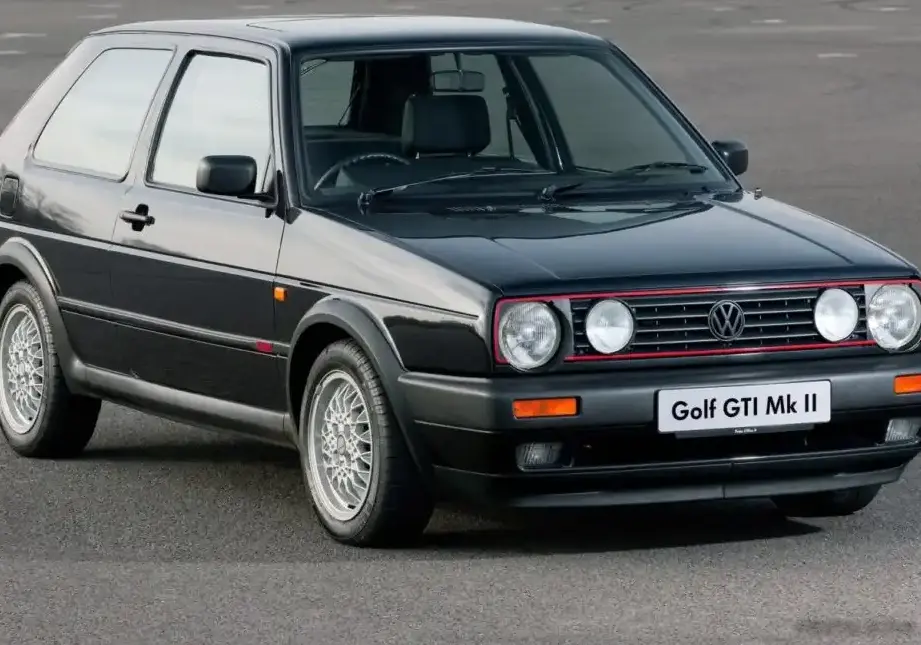
The Volkswagen Golf II 1.6 Automatic, produced from 1987 to 1991, represented an entry-level offering within the extensively popular second-generation Golf lineup (the 19E and 1G chassis codes). This variant, typically a three-door hatchback, was aimed at buyers prioritizing affordability and ease of use over outright performance. It occupied the lower end of the Golf II spectrum, positioned below the more powerful GTI and diesel models. The facelifted Golf II, introduced in 1987, featured subtle cosmetic updates including revised grilles, bumpers, and interior trim, enhancing its appeal in a competitive market. This 1.6-liter automatic configuration was particularly significant in markets where manual transmissions were less favored, offering a comfortable and convenient driving experience.
Technical Specifications
| Brand | Volkswagen |
| Model | Golf |
| Generation | Golf II (3-door, facelift 1987) |
| Type (Engine) | 1.6 (70 Hp) Automatic |
| Start of production | 1987 |
| End of production | 1991 |
| Powertrain Architecture | Internal Combustion engine |
| Body type | Hatchback |
| Seats | 5 |
| Doors | 3 |
| Fuel consumption (urban) | 9.8 l/100 km (24 US mpg, 28.8 UK mpg, 10.2 km/l) |
| Fuel consumption (extra urban) | 7.2 l/100 km (32.7 US mpg, 39.2 UK mpg, 13.9 km/l) |
| Fuel Type | Petrol (Gasoline) |
| Acceleration 0 – 100 km/h | 16.4 sec |
| Acceleration 0 – 62 mph | 16.4 sec |
| Acceleration 0 – 60 mph | 15.6 sec |
| Maximum speed | 157 km/h (97.56 mph) |
| Weight-to-power ratio | 12.9 kg/Hp, 77.3 Hp/tonne |
| Weight-to-torque ratio | 7.7 kg/Nm, 130.4 Nm/tonne |
| Power | 70 Hp @ 5200 rpm |
| Power per litre | 43.9 Hp/l |
| Torque | 118 Nm @ 2700 rpm (87.03 lb.-ft. @ 2700 rpm) |
| Engine layout | Front, Transverse |
| Engine Model/Code | PN |
| Engine displacement | 1595 cm3 (97.33 cu. in.) |
| Number of cylinders | 4 |
| Engine configuration | Inline |
| Cylinder Bore | 81 mm (3.19 in.) |
| Piston Stroke | 77.4 mm (3.05 in.) |
| Compression ratio | 9:1 |
| Number of valves per cylinder | 2 |
| Fuel injection system | Carburettor |
| Engine aspiration | Naturally aspirated engine |
| Valvetrain | SOHC |
| Engine oil capacity | 4 l (4.23 US qt | 3.52 UK qt) |
| Coolant | 4.5 l (4.76 US qt | 3.96 UK qt) |
| Kerb Weight | 905 kg (1995.18 lbs.) |
| Max. weight | 1420 kg (3130.56 lbs.) |
| Max load | 515 kg (1135.38 lbs.) |
| Trunk (boot) space – minimum | 330 l (11.65 cu. ft.) |
| Trunk (boot) space – maximum | 1145 l (40.44 cu. ft.) |
| Fuel tank capacity | 55 l (14.53 US gal | 12.1 UK gal) |
| Permitted trailer load with brakes (12%) | 1000 kg (2204.62 lbs.) |
| Permitted trailer load without brakes | 470 kg (1036.17 lbs.) |
| Length | 3985-4040 mm (156.89 – 159.06 in.) |
| Width | 1665 mm (65.55 in.) |
| Height | 1415 mm (55.71 in.) |
| Wheelbase | 2475 mm (97.44 in.) |
| Front track | 1427 mm (56.18 in.) |
| Rear (Back) track | 1422 mm (55.98 in.) |
| Drag coefficient (Cd) | 0.34 |
| Minimum turning circle (turning diameter) | 10.5 m (34.45 ft.) |
| Drivetrain Architecture | The Internal combustion engine (ICE) drives the front wheels of the vehicle. |
| Drive wheel | Front wheel drive |
| Number of gears and type of gearbox | 3 gears, automatic transmission |
| Front suspension | Independent type McPherson |
| Rear suspension | Elastic beam |
| Front brakes | Disc |
| Rear brakes | Drum |
| Steering type | Steering rack and pinion |
| Tires size | 175/70 R13 |
| Wheel rims size | 5.5J x 13 |
Powertrain & Engine Architecture
The Golf II 1.6 Automatic was powered by the Volkswagen PN engine, a 1.6-liter inline four-cylinder gasoline engine. This engine utilized a single overhead camshaft (SOHC) valvetrain with two valves per cylinder. Crucially, this version employed a carburetor for fuel delivery, a cost-saving measure compared to the fuel injection systems found in higher-spec Golf models. The carburetor, while simpler and cheaper, resulted in slightly lower fuel efficiency and performance compared to injection. The PN engine produced 70 horsepower at 5200 rpm and 118 Nm (87 lb-ft) of torque at 2700 rpm. The automatic transmission was a three-speed unit, designed for smooth, if not particularly rapid, gear changes. This transmission was chosen to provide ease of driving, especially in urban environments.
Driving Characteristics
The 1.6 Automatic Golf II offered a comfortable, but unhurried, driving experience. Acceleration from 0 to 60 mph took around 15.6 seconds, and top speed was approximately 97.56 mph. The three-speed automatic transmission, while providing convenience, resulted in noticeable gear changes and a lack of the responsiveness found in manual transmission or higher-powered variants. The gear ratios were optimized for fuel economy rather than performance. Compared to the Golf GTI, which boasted significantly more power and a closer-ratio manual gearbox, the 1.6 Automatic felt considerably slower. Even compared to the 1.8-liter versions, the 1.6 Automatic lacked the punch needed for brisk overtaking maneuvers. However, for everyday commuting and relaxed cruising, it proved perfectly adequate.
Equipment & Trim Levels
The 1.6 Automatic Golf II was typically equipped with basic, but functional, features. Standard equipment generally included cloth upholstery, a basic stereo system, and manual windows and door locks. Air conditioning and power steering were often optional extras. Interior trim was relatively simple, with a focus on durability rather than luxury. The dashboard layout was typical of the Golf II, with clearly marked gauges and easy-to-use controls. Optional extras could include upgraded stereo systems, sunroofs, and alloy wheels, allowing buyers to personalize their vehicles to some extent.
Chassis & Braking
The Golf II 1.6 Automatic utilized a McPherson strut front suspension and an elastic beam rear suspension. This setup provided a reasonable balance between ride comfort and handling. The front brakes were disc brakes, while the rear brakes were drum brakes – a cost-saving measure common in entry-level models. The steering was a rack and pinion system, offering precise control. Tire size was typically 175/70 R13. The suspension was tuned for comfort, resulting in a slightly softer ride compared to the sportier GTI models. Stabilizer bars were often omitted or smaller in diameter on the 1.6 models, further contributing to the softer ride.
Market Reception & Comparison
The Golf II 1.6 Automatic was generally well-received as an affordable and practical family car. Critics acknowledged its comfortable ride and ease of use, but noted its lack of performance compared to other Golf II variants. Fuel economy was considered reasonable for the time, although not exceptional. Compared to the GTI, the 1.6 Automatic appealed to a different demographic – those prioritizing practicality and affordability over sporty driving dynamics. The diesel-powered Golfs offered superior fuel economy, but at the expense of performance and refinement. The 1.6 Automatic found a niche among buyers who wanted the Golf’s reputation for reliability and build quality, but didn’t require the extra power or features of the more expensive models.
Legacy
The Volkswagen Golf II 1.6 Automatic, while not the most exciting variant in the lineup, proved to be a reliable and durable car. The PN engine, though carbureted, was generally robust and capable of high mileage with proper maintenance. The three-speed automatic transmission, while simple, was also relatively reliable. Today, these cars are increasingly sought after by classic car enthusiasts and collectors. Parts availability is generally good, although some specific trim pieces may be difficult to find. The 1.6 Automatic Golf II represents a significant piece of automotive history, embodying the practicality and affordability that made the Golf II such a success.