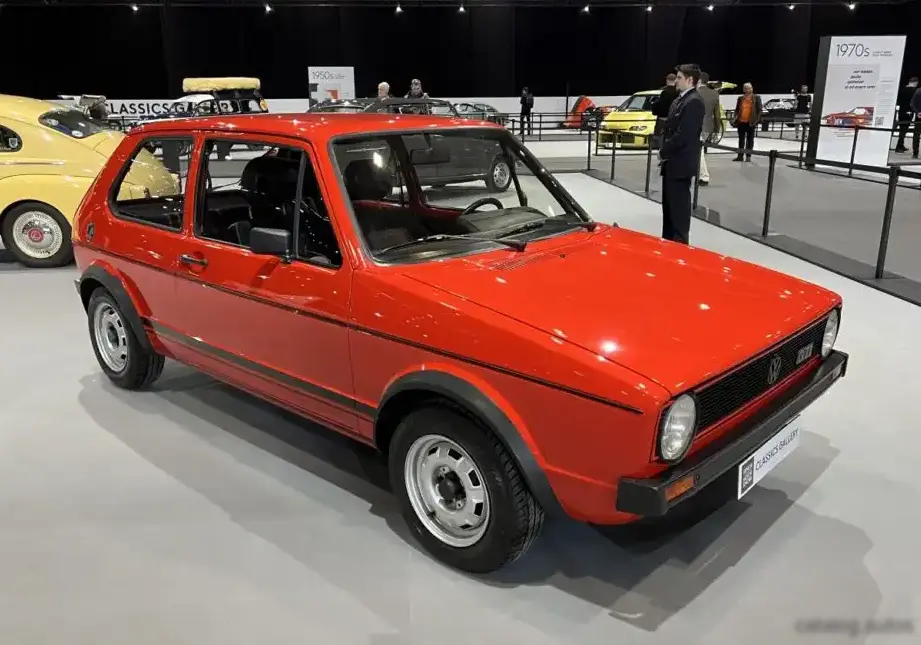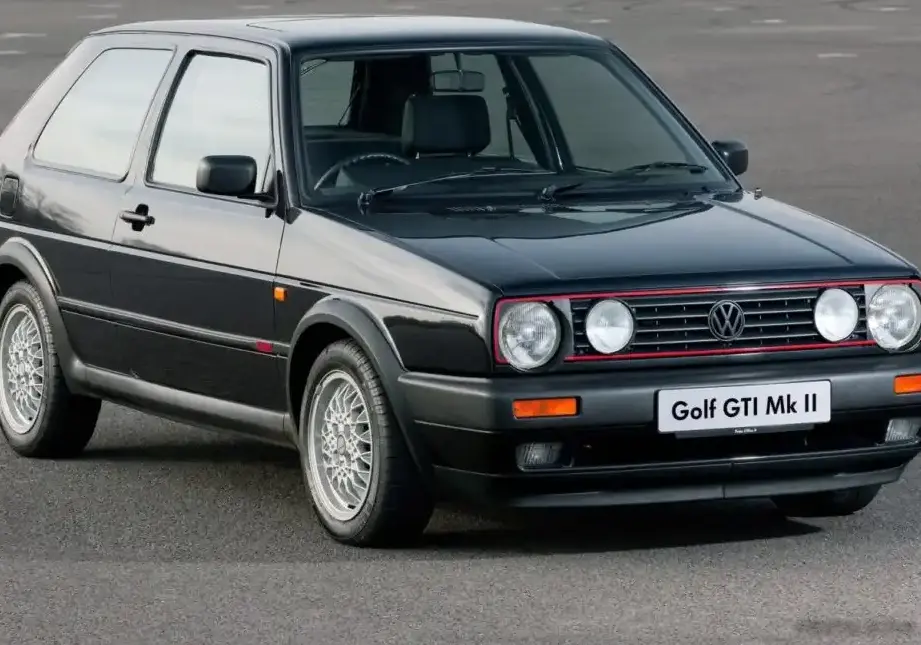
The Volkswagen Golf Mk2, produced from 1983 to 1992, represented a significant evolution of the original Golf, offering improved refinement, space, and technology. Within the Mk2 range, the 1.8-liter (98 horsepower) Syncro model, specifically the 3-door facelift version introduced in 1987 and continuing through 1991, occupied a unique position. It combined the practicality of the Golf with Volkswagen’s Synchro all-wheel-drive system, offering enhanced traction and stability. This variant was aimed at drivers needing all-weather capability without the expense or bulk of larger, more dedicated off-road vehicles.
Technical Specifications
| Brand | Volkswagen |
| Model | Golf |
| Generation | Golf II (3-door, facelift 1987) |
| Type (Engine) | 1.8 (98 Hp) Syncro |
| Start of production | 1988 |
| End of production | 1991 |
| Powertrain Architecture | Internal Combustion engine |
| Body type | Hatchback |
| Seats | 5 |
| Doors | 3 |
| Fuel consumption (urban) | 11.7 l/100 km (20.1 US mpg, 24.1 UK mpg, 8.5 km/l) |
| Fuel consumption (extra urban) | 6.8 l/100 km (34.6 US mpg, 41.5 UK mpg, 14.7 km/l) |
| Fuel Type | Petrol (Gasoline) |
| Acceleration 0 – 100 km/h | 11.3 sec |
| Acceleration 0 – 62 mph | 11.3 sec |
| Acceleration 0 – 60 mph | 10.7 sec |
| Maximum speed | 180 km/h (111.85 mph) |
| Weight-to-power ratio | 11.1 kg/Hp, 90.3 Hp/tonne |
| Weight-to-torque ratio | 7.6 kg/Nm, 131.8 Nm/tonne |
| Power | 98 Hp @ 5400 rpm |
| Power per litre | 55 Hp/l |
| Torque | 143 Nm @ 3000 rpm (105.47 lb.-ft. @ 3000 rpm) |
| Engine layout | Front, Transverse |
| Engine Model/Code | 1P |
| Engine displacement | 1781 cm3 (108.68 cu. in.) |
| Number of cylinders | 4 |
| Engine configuration | Inline |
| Cylinder Bore | 81 mm (3.19 in.) |
| Piston Stroke | 86.4 mm (3.4 in.) |
| Compression ratio | 10:1 |
| Number of valves per cylinder | 2 |
| Fuel injection system | Multi-port manifold injection |
| Engine aspiration | Naturally aspirated engine |
| Valvetrain | SOHC |
| Engine oil capacity | 4 l (4.23 US qt | 3.52 UK qt) |
| Coolant capacity | 6.3 l (6.66 US qt | 5.54 UK qt) |
| Kerb Weight | 1085 kg (2392.02 lbs.) |
| Max. weight | 1570 kg (3461.26 lbs.) |
| Max load | 485 kg (1069.24 lbs.) |
| Trunk (boot) space – minimum | 230 l (8.12 cu. ft.) |
| Trunk (boot) space – maximum | 1030 l (36.37 cu. ft.) |
| Fuel tank capacity | 55 l (14.53 US gal | 12.1 UK gal) |
| Permitted trailer load with brakes (12%) | 1500 kg (3306.93 lbs.) |
| Permitted trailer load without brakes | 560 kg (1234.59 lbs.) |
| Permitted towbar download | 75 kg (165.35 lbs.) |
| Length | 3985 mm (156.89 in.) |
| Width | 1665-1680 mm (65.55 – 66.14 in.) |
| Height | 1415 mm (55.71 in.) |
| Wheelbase | 2475 mm (97.44 in.) |
| Front track | 1427 mm (56.18 in.) |
| Rear track | 1432 mm (56.38 in.) |
| Drag coefficient (Cd) | 0.34 |
| Minimum turning circle | 10.5 m (34.45 ft.) |
| Drivetrain Architecture | All wheel drive (4×4) |
| Number of gears | 5 |
| Gearbox type | Manual transmission |
| Front suspension | Independent type McPherson, Transverse stabilizer |
| Rear suspension | Transverse stabilizer, Trailing arm |
| Front brakes | Disc |
| Rear brakes | Drum |
| Assisting systems | ABS (Anti-lock braking system) |
| Steering type | Steering rack and pinion |
| Tires size | 175/70 R13; 185/60 R14 |
| Wheel rims size | 5.5J x 13; 6J x 14 |
INTRODUCTION
The Volkswagen Golf Mk2 1.8 Syncro (3-door, facelift) was produced between 1988 and 1991. It built upon the success of the original Golf by offering a more refined and technologically advanced package. The “facelift” designation refers to cosmetic updates introduced in 1987, including revised front and rear styling. The Syncro system, a part-time all-wheel-drive setup, distinguished this variant. It utilized a viscous coupling to engage the rear wheels when front wheel slip was detected, providing improved traction in slippery conditions. This model sat in the mid-range of the Mk2 Golf lineup, offering a balance between affordability and capability.
Powertrain & Engine Architecture
The heart of the Golf Mk2 1.8 Syncro was the 1781cc inline-four cylinder engine, designated as the 1P engine code. This engine featured a single overhead camshaft (SOHC) valvetrain with two valves per cylinder. Fuel delivery was handled by Bosch multi-port fuel injection, contributing to improved efficiency and drivability compared to earlier carbureted Golfs. The engine produced 98 horsepower at 5400 rpm and 143 Nm (105.47 lb-ft) of torque at 3000 rpm. The Syncro system itself was a key component, utilizing a viscous coupling to distribute power to the rear wheels as needed. The transmission was a five-speed manual, chosen for its efficiency and driver engagement. While an automatic transmission was available on other Mk2 Golf models, it wasn’t offered with the Syncro drivetrain due to torque limitations.
Driving Characteristics
The 1.8-liter engine, paired with the Syncro all-wheel-drive system, provided a competent and sure-footed driving experience. Acceleration from 0-60 mph took approximately 10.7 seconds, and the top speed was around 111.85 mph. While not a performance-oriented model, the Syncro offered a noticeable improvement in traction, particularly on loose surfaces or in inclement weather. The five-speed manual transmission allowed for precise control over the engine’s power band. Compared to the more powerful GTI models, the 1.8 Syncro prioritized fuel efficiency and usability. It also offered a more forgiving driving experience than the 1.9 TDI diesel, which focused on torque rather than outright power.
Equipment & Trim Levels
The Golf Mk2 1.8 Syncro typically came equipped with features such as power steering, central locking, and a basic stereo system. Interior upholstery was typically cloth, with a relatively simple dashboard layout. Optional extras included electric windows, a sunroof, and upgraded audio systems. The Syncro models often featured unique badging to denote their all-wheel-drive capability. The trim level was generally positioned as a step up from the base models, offering a more comfortable and well-equipped interior without the premium price tag of the GTI or GL models.
Chassis & Braking
The Golf Mk2 1.8 Syncro utilized an independent McPherson strut suspension at the front, providing good handling and ride comfort. The rear suspension employed a trailing arm setup with a transverse stabilizer bar, contributing to stability. Braking duties were handled by disc brakes at the front and drum brakes at the rear. Anti-lock braking system (ABS) was available as an option, enhancing safety. The Syncro system added weight compared to the front-wheel-drive Golfs, necessitating slightly stiffer suspension settings to maintain handling balance.
Market Reception & Comparison
The Golf Mk2 1.8 Syncro was generally well-received by automotive critics for its practicality, all-weather capability, and relatively affordable price. It was seen as a sensible choice for drivers living in regions with harsh winters or challenging road conditions. Compared to the GTI, the 1.8 Syncro offered less outright performance but superior traction and fuel economy. Against the 1.9 TDI, it provided a more responsive engine but lacked the diesel’s low-end torque. Fuel economy was respectable for the time, averaging around 34.6 US mpg on the highway.
Legacy
The Golf Mk2 1.8 Syncro has become a sought-after classic among Volkswagen enthusiasts. The Syncro system is particularly valued for its reliability and effectiveness. While the 1.8-liter engine is generally robust, regular maintenance is essential to prevent issues such as oil leaks and corrosion. Today, well-maintained examples command a premium in the used car market. The Golf Mk2 1.8 Syncro represents a unique blend of practicality, capability, and classic Volkswagen charm, solidifying its place in automotive history.