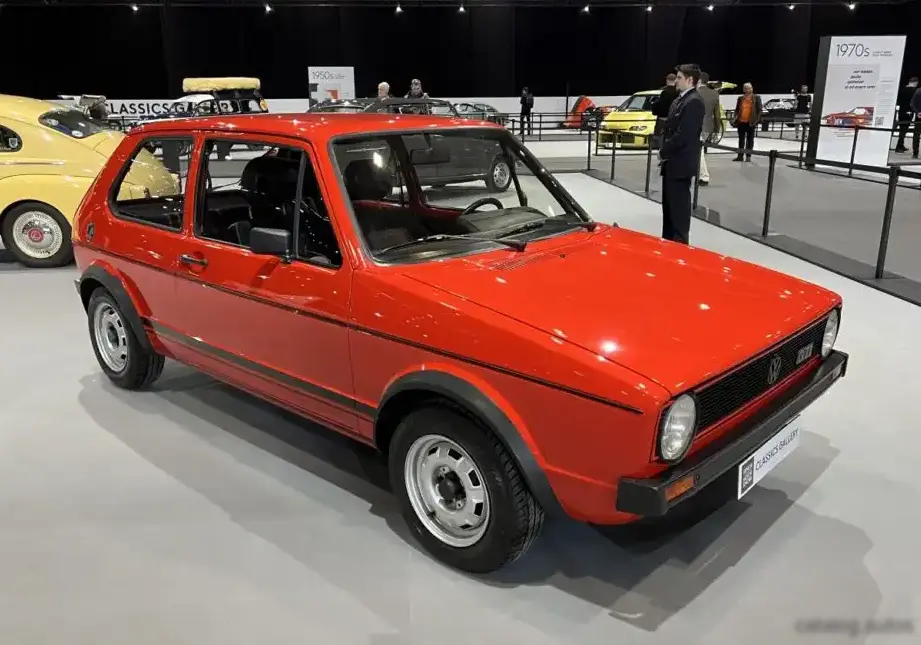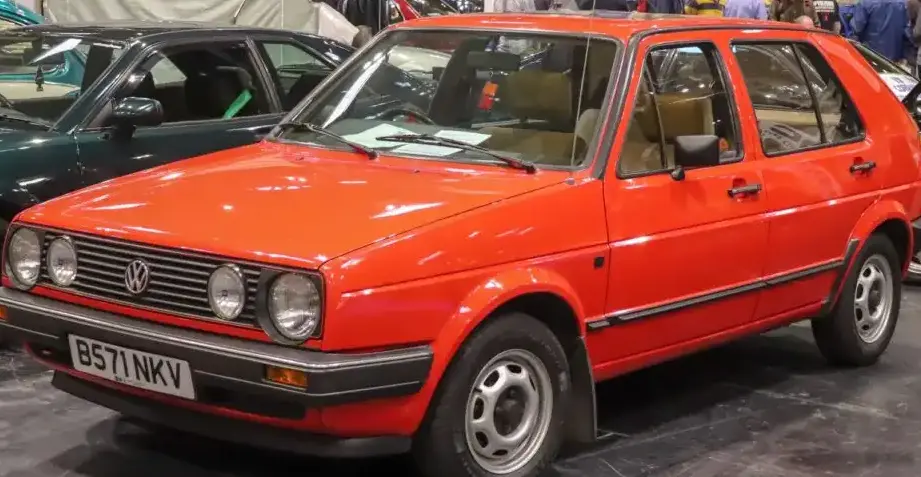
The Volkswagen Golf II 1.8 GTI 8V, produced from 1984 to 1987, represents a pivotal point in the evolution of the Golf lineage. Positioned as a performance-oriented variant within the second-generation Golf (Mk2) range, it offered a blend of sporty handling and accessible power. This five-door hatchback was a key model for Volkswagen, solidifying the Golf’s reputation as a versatile and engaging vehicle in the European market. It was a step up from the base models, offering more power and a sportier driving experience, but remained more affordable and practical than the later, more potent 16V GTI versions. The Golf II chassis, designated 1HX0, provided a robust foundation for this popular variant.
Technical Specifications
| Brand | Volkswagen |
| Model | Golf |
| Generation | Golf II (5-door) |
| Type (Engine) | 1.8 GTI 8V (112 Hp) |
| Start of production | 1984 |
| End of production | 1987 |
| Powertrain Architecture | Internal Combustion engine |
| Body type | Hatchback |
| Seats | 5 |
| Doors | 5 |
| Fuel consumption (urban) | 10.9 l/100 km (21.6 US mpg, 25.9 UK mpg, 9.2 km/l) |
| Fuel consumption (extra urban) | 5.7 l/100 km (41.3 US mpg, 49.6 UK mpg, 17.5 km/l) |
| Fuel Type | Petrol (Gasoline) |
| Acceleration 0 – 100 km/h | 9.7 sec |
| Acceleration 0 – 62 mph | 9.7 sec |
| Acceleration 0 – 60 mph | 9.2 sec |
| Maximum speed | 191 km/h (118.68 mph) |
| Weight-to-power ratio | 8.4 kg/Hp, 119.1 Hp/tonne |
| Weight-to-torque ratio | 6.1 kg/Nm, 164.9 Nm/tonne |
| Power | 112 Hp @ 5500 rpm |
| Power per litre | 62.9 Hp/l |
| Torque | 155 Nm @ 3100 rpm (114.32 lb.-ft. @ 3100 rpm) |
| Engine layout | Front, Transverse |
| Engine Model/Code | EV |
| Engine displacement | 1781 cm3 (108.68 cu. in.) |
| Number of cylinders | 4 |
| Engine configuration | Inline |
| Cylinder Bore | 81 mm (3.19 in.) |
| Piston Stroke | 86.4 mm (3.4 in.) |
| Compression ratio | 10:1 |
| Number of valves per cylinder | 2 |
| Fuel injection system | Multi-port manifold injection |
| Engine aspiration | Naturally aspirated engine |
| Valvetrain | SOHC |
| Engine oil capacity | 3 l (3.17 US qt | 2.64 UK qt) |
| Coolant capacity | 6.5 l (6.87 US qt | 5.72 UK qt) |
| Kerb Weight | 940 kg (2072.35 lbs.) |
| Max. weight | 1430 kg (3152.61 lbs.) |
| Max load | 490 kg (1080.27 lbs.) |
| Trunk (boot) space – minimum | 345 l (12.18 cu. ft.) |
| Trunk (boot) space – maximum | 1145 l (40.44 cu. ft.) |
| Fuel tank capacity | 55 l (14.53 US gal | 12.1 UK gal) |
| Permitted trailer load with brakes (12%) | 1200 kg (2645.55 lbs.) |
| Permitted trailer load without brakes | 490 kg (1080.27 lbs.) |
| Length | 3985 mm (156.89 in.) |
| Width | 1680 mm (66.14 in.) |
| Height | 1415 mm (55.71 in.) |
| Wheelbase | 2475 mm (97.44 in.) |
| Front track | 1427 mm (56.18 in.) |
| Rear track | 1422 mm (55.98 in.) |
| Front overhang | 810 mm (31.89 in.) |
| Rear overhang | 700 mm (27.56 in.) |
| Drag coefficient (Cd) | 0.34 |
| Minimum turning circle | 10.5 m (34.45 ft.) |
| Drivetrain Architecture | ICE, Front wheel drive |
| Number of gears and type of gearbox | 5 gears, manual transmission |
| Front suspension | Independent type McPherson, Transverse stabilizer |
| Rear suspension | Transverse stabilizer, Elastic beam |
| Front brakes | Ventilated discs |
| Rear brakes | Disc |
| Steering type | Steering rack and pinion |
| Tires size | 175/70 R13 |
| Wheel rims size | 5.5J x 13 |
Powertrain & Engine Architecture
The heart of the Golf II 1.8 GTI 8V is the Volkswagen EV engine, an inline four-cylinder, naturally aspirated powerplant displacing 1781cc. This engine utilized a single overhead camshaft (SOHC) valvetrain operating two valves per cylinder. Fuel delivery was managed by Bosch multi-port fuel injection, a significant advancement over earlier carbureted systems, contributing to improved efficiency and responsiveness. The ‘8V’ designation refers to the eight valves (two per cylinder). The EV engine was known for its relative simplicity and durability. While not the most powerful engine in the Golf II lineup (the later 16V GTI offered considerably more horsepower), the 1.8L engine provided a good balance of performance and fuel economy. The engine was transversely mounted, driving the front wheels. The five-speed manual transmission was the standard offering, providing precise gear changes and enhancing the driving experience.
Driving Characteristics
The 1.8 GTI 8V offered a noticeably more engaging driving experience than the base Golf models. With 112 horsepower and 114 lb-ft of torque, acceleration to 60 mph took around 9.2 seconds, and it could reach a top speed of approximately 118 mph. While these figures aren’t blistering by modern standards, they were respectable for the mid-1980s. The five-speed manual transmission allowed drivers to keep the engine in its optimal power band. The gear ratios were well-chosen, providing good acceleration in each gear. Compared to the later 16V GTI, the 8V felt less eager to rev, with peak power arriving at 5500 rpm. However, the 8V’s torque curve was broader, making it more forgiving in everyday driving situations. The front-wheel-drive layout provided good traction in most conditions, although torque steer could be noticeable under hard acceleration.
Equipment & Trim Levels
The Golf II 1.8 GTI 8V typically came equipped with a number of features considered standard for a performance-oriented vehicle of its time. These included a sporty three-spoke steering wheel, upgraded instrumentation, and a more supportive seating configuration. Interior upholstery was typically cloth, with options for patterned designs. Exterior features included GTI-specific badging, a small rear spoiler, and often, alloy wheels. Optional extras included a sunroof, central locking, and upgraded audio systems. The trim level was generally positioned as a mid-range offering within the Golf II lineup, bridging the gap between the base models and the more expensive and powerful 16V GTI.
Chassis & Braking
The Golf II’s chassis featured an independent McPherson strut front suspension and a torsion beam rear suspension. This setup provided a good balance of ride comfort and handling. The GTI variant typically received a slightly stiffer suspension setup compared to the base models, further enhancing its handling capabilities. Braking duties were handled by ventilated disc brakes at the front and disc brakes at the rear, providing adequate stopping power for the vehicle’s weight and performance. The steering system was a rack-and-pinion setup, offering precise and responsive steering feel.
Market Reception & Comparison
The Golf II 1.8 GTI 8V was generally well-received by automotive critics. It was praised for its blend of performance, practicality, and affordability. Compared to the base Golf models, the GTI offered a significant improvement in driving enjoyment. However, it was often overshadowed by the later 16V GTI, which offered considerably more power and a more aggressive driving experience. The 1.8 GTI 8V was also compared to other hot hatches of the era, such as the Peugeot 205 GTI and the Ford Escort XR3. In terms of fuel economy, the 1.8 GTI 8V offered a reasonable compromise between performance and efficiency, achieving around 22-41 mpg depending on driving conditions. Reliability was generally good, although regular maintenance was essential to ensure long-term durability.
Legacy
The Volkswagen Golf II 1.8 GTI 8V remains a popular classic car today. Its relatively simple mechanical design and readily available parts make it a relatively easy vehicle to maintain. While not as sought-after as the 16V GTI, the 8V variant offers a more affordable entry point into Golf GTI ownership. The EV engine is known for its durability, and many examples are still on the road today. The Golf II 1.8 GTI 8V represents a significant chapter in the Golf’s history, solidifying its reputation as a versatile and engaging vehicle that appealed to a wide range of drivers.