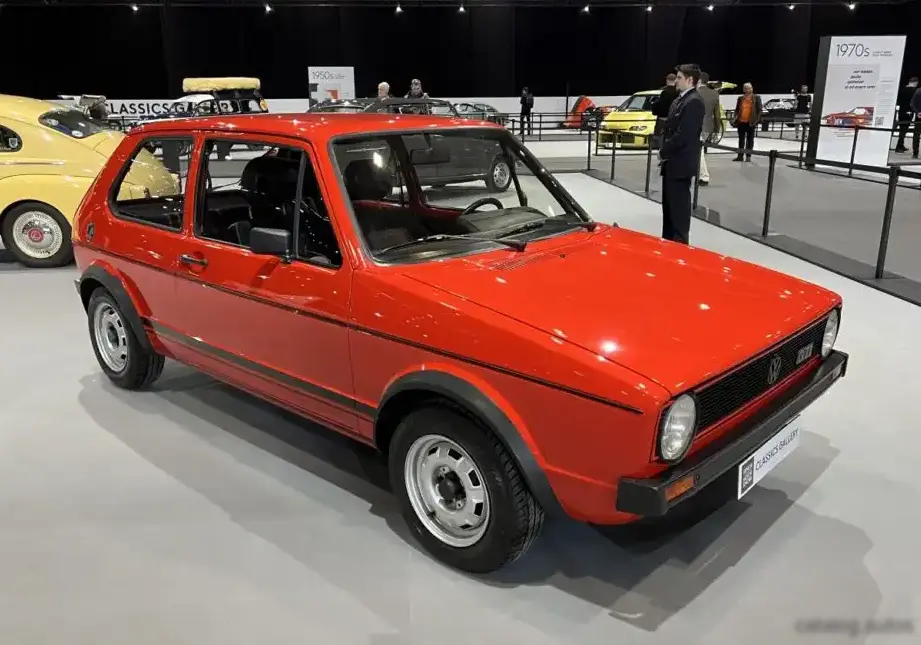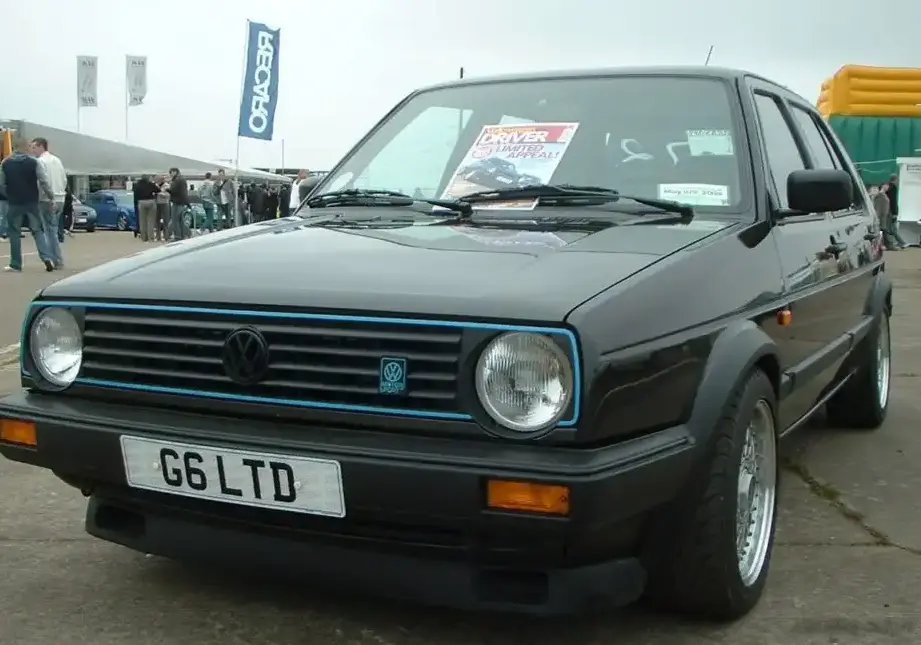
The Volkswagen Golf Mk2 1.6, produced from 1987 to 1991, represents a significant iteration of Volkswagen’s hugely successful Golf lineage. This five-door hatchback, often seen as a facelifted version of the earlier Mk2 models, offered a practical and affordable entry point into the compact car market. Positioned as a mainstream offering within the Golf II range, the 1.6-liter variant aimed for fuel efficiency and everyday usability rather than outright performance. It served as a core model in Europe, where the Golf was a dominant force, competing with rivals like the Ford Escort, Opel Astra, and Peugeot 205. This version was not officially sold in the United States, as the Mk2 Golf was not offered there.
Technical Specifications
| Brand | Volkswagen |
| Model | Golf |
| Generation | Golf II (5-door, facelift 1987) |
| Type (Engine) | 1.6 (70 Hp) |
| Start of production | 1987 |
| End of production | 1991 |
| Powertrain Architecture | Internal Combustion engine |
| Body type | Hatchback |
| Seats | 5 |
| Doors | 5 |
| Fuel consumption (urban) | 9.4 l/100 km (25 US mpg) |
| Fuel consumption (extra urban) | 5.8 l/100 km (40.6 US mpg) |
| Fuel Type | Petrol (Gasoline) |
| Acceleration 0 – 100 km/h | 14.1 sec |
| Acceleration 0 – 62 mph | 14.1 sec |
| Acceleration 0 – 60 mph | 13.4 sec |
| Maximum speed | 162 km/h (100.66 mph) |
| Weight-to-power ratio | 13.3 kg/Hp |
| Weight-to-torque ratio | 7.9 kg/Nm |
| Power | 70 Hp @ 5200 rpm |
| Torque | 118 Nm @ 2700 rpm (87.03 lb.-ft. @ 2700 rpm) |
| Engine layout | Front, Transverse |
| Engine Model/Code | PN |
| Engine displacement | 1595 cm3 (97.33 cu. in.) |
| Number of cylinders | 4 |
| Engine configuration | Inline |
| Cylinder Bore | 81 mm (3.19 in.) |
| Piston Stroke | 77.4 mm (3.05 in.) |
| Compression ratio | 9:1 |
| Number of valves per cylinder | 2 |
| Fuel injection system | Carburettor |
| Engine aspiration | Naturally aspirated |
| Valvetrain | SOHC |
| Engine oil capacity | 4 l (4.23 US qt | 3.52 UK qt) |
| Coolant capacity | 4.5 l (4.76 US qt | 3.96 UK qt) |
| Kerb Weight | 930 kg (2050.3 lbs.) |
| Max. weight | 1420 kg (3130.56 lbs.) |
| Max load | 490 kg (1080.27 lbs.) |
| Trunk (boot) space – minimum | 330 l (11.65 cu. ft.) |
| Trunk (boot) space – maximum | 1145 l (40.44 cu. ft.) |
| Fuel tank capacity | 55 l (14.53 US gal | 12.1 UK gal) |
| Permitted trailer load with brakes (12%) | 1000 kg (2204.62 lbs.) |
| Permitted trailer load without brakes | 470 kg (1036.17 lbs.) |
| Length | 3985-4040 mm (156.89 – 159.06 in.) |
| Width | 1665 mm (65.55 in.) |
| Height | 1415 mm (55.71 in.) |
| Wheelbase | 2475 mm (97.44 in.) |
| Front track | 1427 mm (56.18 in.) |
| Rear track | 1422 mm (55.98 in.) |
| Drag coefficient (Cd) | 0.34 |
| Minimum turning circle | 10.5 m (34.45 ft.) |
| Drivetrain | Front wheel drive |
| Number of gears | 5 |
| Gearbox type | Manual transmission |
| Front suspension | Independent type McPherson |
| Rear suspension | Elastic beam |
| Front brakes | Disc |
| Rear brakes | Drum |
| Steering type | Steering rack and pinion |
| Tires size | 175/70 R13 |
| Wheel rims size | 5.5J x 13 |
Powertrain & Engine Architecture
The heart of the Golf II 1.6 was the PN engine, a 1595cc inline four-cylinder unit. This engine utilized a single overhead camshaft (SOHC) valvetrain with two valves per cylinder. Unlike later Golf models that embraced fuel injection, the 1.6 PN engine relied on a carburetor for fuel delivery, a cost-saving measure that contributed to its affordability. This carburetor setup, while simpler, resulted in slightly lower performance and increased emissions compared to fuel-injected counterparts. The engine produced 70 horsepower at 5200 rpm and 118 Nm (87 lb-ft) of torque at 2700 rpm. The engine’s relatively low compression ratio of 9:1 was typical for the era and allowed it to run on lower octane fuel. The transmission was a standard five-speed manual, providing adequate gear ratios for everyday driving. While an automatic transmission was available as an option, it further reduced performance and fuel economy.
Driving Characteristics
The Golf II 1.6 with a manual transmission offered a reasonably engaging driving experience, albeit one focused on practicality rather than speed. Acceleration from 0 to 60 mph took around 13.4 seconds, and the top speed was approximately 100.66 mph. The carburetor engine delivered smooth, if not particularly brisk, power delivery. The five-speed gearbox allowed drivers to keep the engine in its optimal power band, but overtaking maneuvers required careful planning. Compared to the more powerful Golf GTI or the diesel-powered models, the 1.6 felt noticeably slower. However, its lighter weight and responsive steering made it enjoyable to drive around town. The optional automatic transmission significantly dulled performance, making the car feel sluggish and less responsive.
Equipment & Trim Levels
The Golf II 1.6 was typically equipped with basic but functional features. Standard equipment included cloth upholstery, a simple dashboard layout, and manual windows and door locks. Power steering and central locking were often optional extras. The interior was designed with durability and practicality in mind, rather than luxury. Trim levels varied slightly depending on the market, but generally, the 1.6 represented the entry-level offering. Options included a sunroof, upgraded stereo systems, and alloy wheels. The facelifted models from 1987 onwards featured a slightly revised dashboard and updated interior trim materials.
Chassis & Braking
The Golf II 1.6 utilized a McPherson strut front suspension and an elastic beam rear suspension. This setup provided a comfortable ride quality, although it wasn’t particularly sporty. The front brakes were discs, while the rear brakes were drums, a common configuration for cars in this price range at the time. The steering was a rack and pinion system, offering precise and responsive handling. The car’s relatively light weight contributed to its nimble handling characteristics. Tire size was typically 175/70 R13.
Market Reception & Comparison
The Golf II 1.6 was well-received as an affordable and reliable family car. Critics praised its practicality, fuel efficiency, and comfortable ride. However, its relatively low power output was often noted. Compared to the more expensive Golf GTI, the 1.6 lacked the performance to excite driving enthusiasts. The diesel-powered Golf models offered better fuel economy, but at the expense of refinement. The 1.6 struck a balance between affordability, usability, and fuel efficiency, making it a popular choice for budget-conscious buyers.
Legacy
The Volkswagen Golf II 1.6 remains a popular classic car today, particularly in Europe. Its simple mechanical design and readily available parts make it relatively easy to maintain. While not as sought-after as the GTI models, the 1.6 offers a charming and affordable entry point into classic Golf ownership. The PN engine, while not known for its high performance, is generally considered reliable if properly maintained. Rust can be a significant issue with these older Golfs, so finding a well-preserved example is crucial. The Golf II 1.6 represents a significant chapter in Volkswagen’s history, embodying the brand’s commitment to building practical, affordable, and reliable cars.