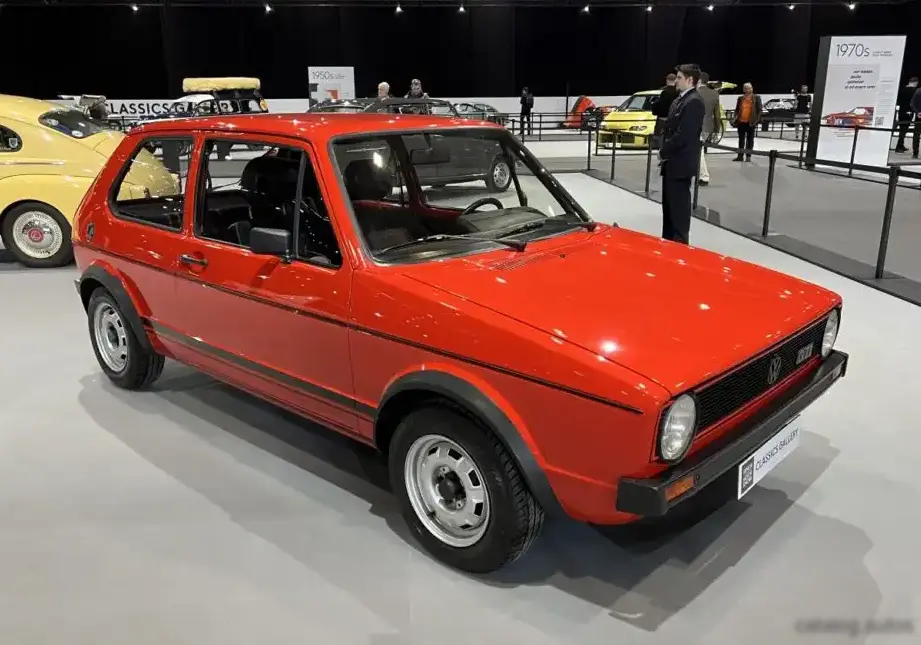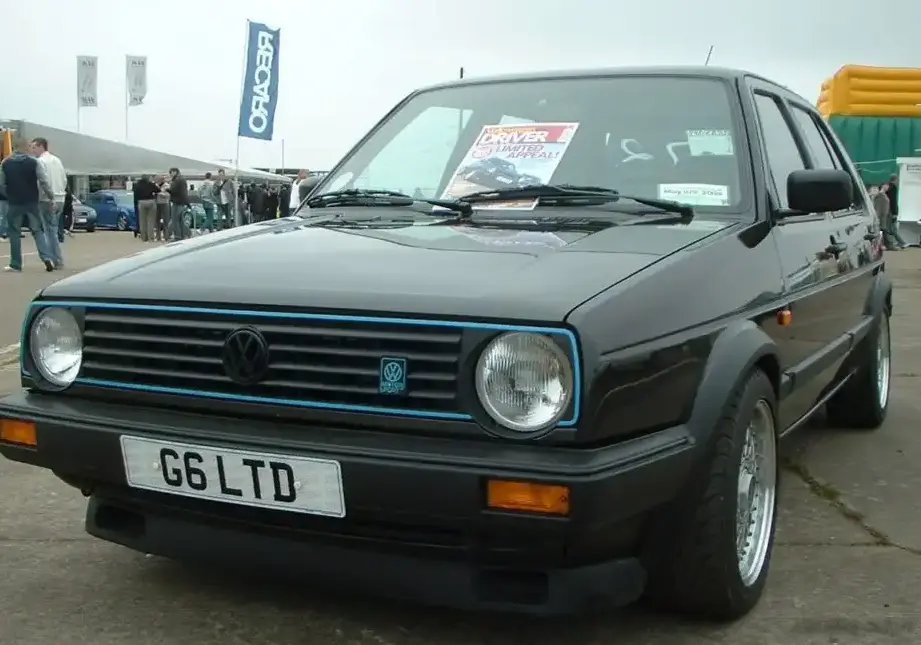
The Volkswagen Golf GTI 16V, specifically the 5-door facelift model produced from 1987 to 1991, represents a significant evolution of the iconic Golf lineage. Positioned as the performance variant within the second-generation Golf (Mk2) range, it offered a substantial upgrade over the base models, bridging the gap between the more economical trims and the later, more focused GTI variants. This iteration of the GTI 16V was a key player in the hot hatch market of the late 1980s, particularly in Europe, where it established a reputation for its blend of practicality, performance, and relatively accessible price point. It was built on the 1HX0/A3 platform, shared with other Volkswagen Group vehicles of the era.
Technical Specifications
| Brand | Volkswagen |
| Model | Golf |
| Generation | Golf II (5-door, facelift 1987) |
| Type (Engine) | 1.8 GTI 16V (129 Hp) |
| Start of production | 1987 |
| End of production | 1991 |
| Powertrain Architecture | Internal Combustion engine |
| Body type | Hatchback |
| Seats | 5 |
| Doors | 5 |
| Fuel consumption (urban) | 11.3 l/100 km (20.8 US mpg, 25 UK mpg, 8.8 km/l) |
| Fuel consumption (extra urban) | 6.9 l/100 km (34.1 US mpg, 40.9 UK mpg, 14.5 km/l) |
| Fuel Type | Petrol (Gasoline) |
| Acceleration 0 – 100 km/h | 9 sec |
| Acceleration 0 – 62 mph | 9 sec |
| Acceleration 0 – 60 mph | 8.6 sec |
| Maximum speed | 200 km/h (124.27 mph) |
| Weight-to-power ratio | 7.8 kg/Hp, 127.7 Hp/tonne |
| Weight-to-torque ratio | 6 kg/Nm, 166.3 Nm/tonne |
| Power | 129 Hp @ 5800 rpm |
| Power per litre | 72.4 Hp/l |
| Torque | 168 Nm @ 4250 rpm (123.91 lb.-ft. @ 4250 rpm) |
| Engine layout | Front, Transverse |
| Engine Model/Code | PL |
| Engine displacement | 1781 cm3 (108.68 cu. in.) |
| Number of cylinders | 4 |
| Engine configuration | Inline |
| Cylinder Bore | 81 mm (3.19 in.) |
| Piston Stroke | 86.4 mm (3.4 in.) |
| Compression ratio | 10:1 |
| Number of valves per cylinder | 4 |
| Fuel injection system | Multi-port manifold injection |
| Engine aspiration | Naturally aspirated engine |
| Valvetrain | DOHC |
| Engine oil capacity | 4 l (4.23 US qt | 3.52 UK qt) |
| Coolant | 6.3 l (6.66 US qt | 5.54 UK qt) |
| Kerb Weight | 1010 kg (2226.67 lbs.) |
| Max. weight | 1465 kg (3229.77 lbs.) |
| Max load | 455 kg (1003.1 lbs.) |
| Trunk (boot) space – minimum | 330 l (11.65 cu. ft.) |
| Trunk (boot) space – maximum | 1145 l (40.44 cu. ft.) |
| Fuel tank capacity | 55 l (14.53 US gal | 12.1 UK gal) |
| Permitted trailer load with brakes (12%) | 1200 kg (2645.55 lbs.) |
| Permitted trailer load without brakes | 510 kg (1124.36 lbs.) |
| Length | 4040 mm (159.06 in.) |
| Width | 1680 mm (66.14 in.) |
| Height | 1405 mm (55.31 in.) |
| Wheelbase | 2475 mm (97.44 in.) |
| Front track | 1427 mm (56.18 in.) |
| Rear (Back) track | 1422 mm (55.98 in.) |
| Drag coefficient (Cd) | 0.34 |
| Minimum turning circle (turning diameter) | 10.5 m (34.45 ft.) |
| Drivetrain Architecture | The Internal combustion engine (ICE) drives the front wheels of the vehicle. |
| Drive wheel | Front wheel drive |
| Number of gears and type of gearbox | 5 gears, manual transmission |
| Front suspension | Independent type McPherson, Transverse stabilizer |
| Rear suspension | Transverse stabilizer, Elastic beam |
| Front brakes | Ventilated discs |
| Rear brakes | Disc |
| Assisting systems | ABS (Anti-lock braking system) |
| Steering type | Steering rack and pinion |
| Tires size | 185/60 R14; 195/50 R15 |
| Wheel rims size | 6J x 14; 6.5J x 15 |
Powertrain & Engine Architecture
The heart of the Golf GTI 16V was the PL-code 1.8-liter inline-four engine. This engine was a significant upgrade from the earlier 8-valve GTI engines, featuring dual overhead camshafts (DOHC) and four valves per cylinder – hence the “16V” designation. This configuration allowed for improved breathing and higher engine speeds, resulting in increased power output. The engine utilized Bosch Motronic fuel injection, a sophisticated system for its time, which precisely controlled fuel delivery based on various sensor inputs. The PL engine was known for its relatively robust construction, though regular maintenance was crucial for longevity. The five-speed manual transmission was the standard offering, providing a direct connection between the engine and the front wheels. The transmission featured gear ratios optimized for both acceleration and highway cruising.
Driving Characteristics
The 129 horsepower and 124 lb-ft of torque delivered by the 1.8-liter 16V engine provided a noticeable performance boost compared to the standard Golf models. Acceleration from 0 to 60 mph took around 8.6 seconds, and the car could reach a top speed of 124 mph. While not blistering by modern standards, this performance was competitive within the hot hatch segment of the late 1980s. The five-speed manual transmission allowed drivers to keep the engine in its sweet spot, maximizing power delivery. Compared to the later, more powerful 16V variants (like the 139 hp version), this 129 hp version offered a more balanced driving experience, prioritizing usability and fuel economy alongside performance. The gear ratios were spaced to provide good acceleration in everyday driving situations.
Equipment & Trim Levels
The Golf GTI 16V typically came equipped with a number of features designed to enhance both comfort and performance. Standard equipment included sports seats with patterned upholstery, a leather-wrapped steering wheel, and a central locking system. Power windows and mirrors were often included, though sometimes as optional extras. The dashboard featured a distinctive GTI-specific instrument cluster with additional gauges. Optional extras included a sunroof, alloy wheels (typically 15-inch), and upgraded audio systems. The interior trim was generally well-appointed for a car in its class, offering a blend of sporty aesthetics and practicality.
Chassis & Braking
The Golf GTI 16V featured a McPherson strut front suspension and a torsion beam rear suspension. This setup provided a good balance between ride comfort and handling. A front stabilizer bar helped to reduce body roll during cornering. Braking duties were handled by ventilated discs at the front and discs at the rear, providing adequate stopping power. ABS (Anti-lock Braking System) was available as an option, enhancing safety in slippery conditions. The chassis was reinforced compared to the standard Golf models to handle the increased power and stresses of performance driving.
Market Reception & Comparison
The Golf GTI 16V was generally well-received by automotive critics. It was praised for its responsive engine, engaging handling, and practical hatchback body style. Compared to other hot hatches of the era, such as the Peugeot 205 GTI and the Ford Escort RS Turbo, the Golf GTI 16V offered a more refined and comfortable driving experience. Fuel economy was reasonable for a performance car, and reliability was generally good, although regular maintenance was essential. The 129 hp version was often seen as a sweet spot in the GTI lineup, offering a good balance between performance and affordability.
Legacy
The Golf GTI 16V remains a popular classic car today, particularly among enthusiasts of 1980s hot hatches. The PL-code engine, while not the most powerful version of the 16V, is known for its relative reliability and ease of maintenance. Parts availability is generally good, although some specific components can be difficult to find. Well-maintained examples of the Golf GTI 16V are highly sought after by collectors and continue to provide an enjoyable driving experience. The car’s enduring appeal is a testament to its blend of performance, practicality, and iconic design.