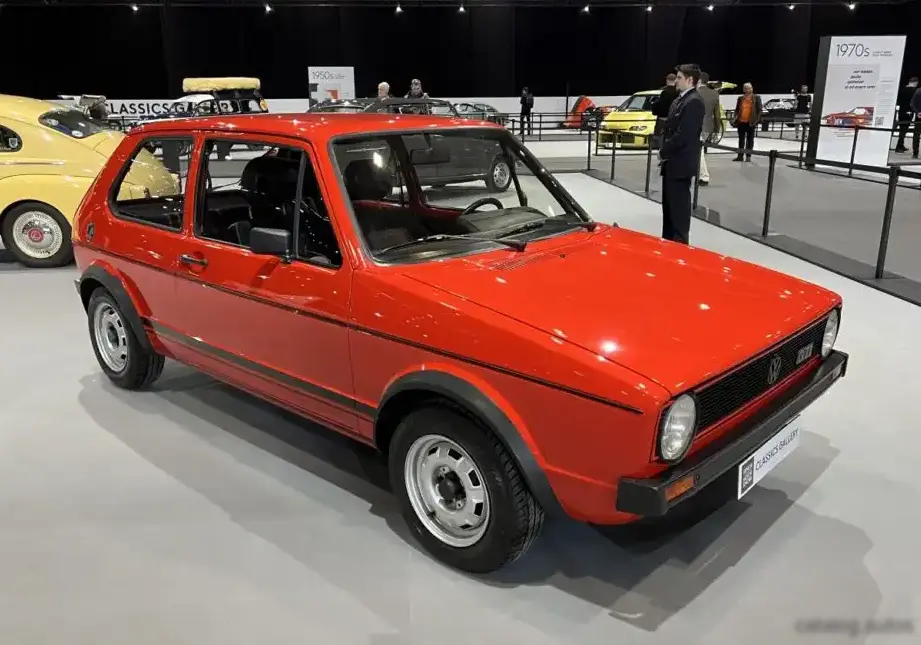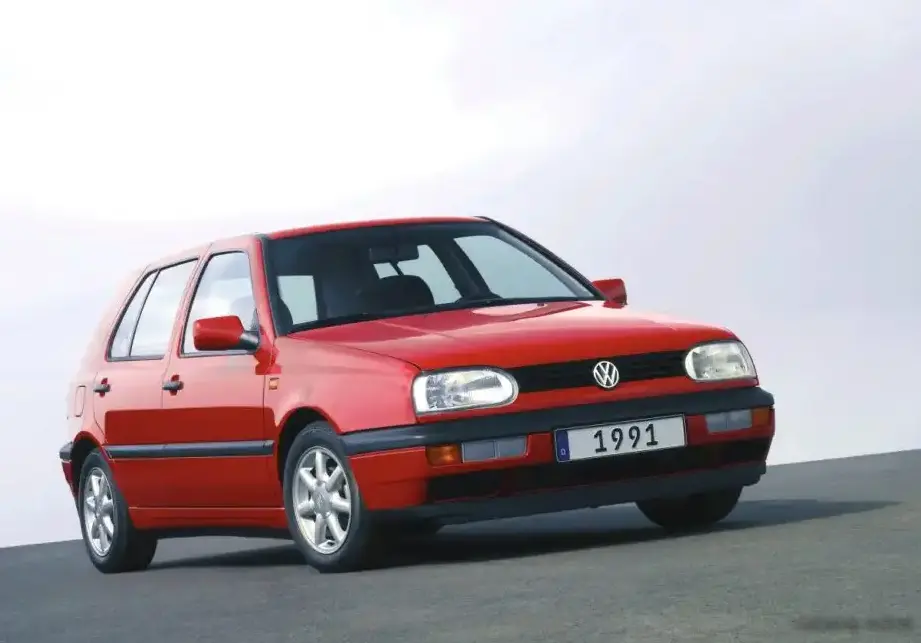
The Volkswagen Golf III 1.9 D, producing 65 horsepower, was a mainstay of the Golf Mk3 range from 1991 to 1997. Positioned as the entry-level diesel variant, it offered fuel economy and practicality, appealing to buyers prioritizing cost-effectiveness over outright performance. This model played a significant role in establishing the Golf as a versatile and accessible vehicle in the European market, and later, in other regions as imports grew. It was built on the A3 platform, shared with other Volkswagen Group vehicles like the SEAT Ibiza and Škoda Octavia.
Technical Specifications
| Brand | Volkswagen |
| Model | Golf |
| Generation | Golf III |
| Type (Engine) | 1.9 D (65 Hp) |
| Start of production | 1991 |
| End of production | 1997 |
| Powertrain Architecture | Internal Combustion engine |
| Body type | Hatchback |
| Seats | 4 |
| Doors | 3-5 |
| Fuel consumption (combined) | 5.6 l/100 km (42 US mpg, 50.4 UK mpg, 17.9 km/l) |
| Fuel Type | Diesel |
| Acceleration 0 – 100 km/h | 17.6 sec |
| Acceleration 0 – 62 mph | 17.6 sec |
| Acceleration 0 – 60 mph | 16.7 sec |
| Maximum speed | 156 km/h (96.93 mph) |
| Weight-to-power ratio | 16.1 kg/Hp, 62.1 Hp/tonne |
| Weight-to-torque ratio | 8.4 kg/Nm, 118.4 Nm/tonne |
| Power | 65 Hp @ 4400 rpm |
| Power per litre | 34.3 Hp/l |
| Torque | 124 Nm @ 2000 rpm (91.46 lb.-ft. @ 2000 rpm) |
| Engine layout | Front, Transverse |
| Engine Model/Code | 1Y |
| Engine displacement | 1896 cm3 (115.7 cu. in.) |
| Number of cylinders | 4 |
| Engine configuration | Inline |
| Cylinder Bore | 79.5 mm (3.13 in.) |
| Piston Stroke | 95.5 mm (3.76 in.) |
| Compression ratio | 22.5:1 |
| Number of valves per cylinder | 2 |
| Fuel injection system | Precombustion chamber injection |
| Engine aspiration | Naturally aspirated engine |
| Valvetrain | OHC |
| Engine oil capacity | 4.3 l (4.54 US qt | 3.78 UK qt) |
| Coolant | 6.3 l (6.66 US qt | 5.54 UK qt) |
| Kerb Weight | 1047 kg (2308.24 lbs.) |
| Max. weight | 1595 kg (3516.37 lbs.) |
| Max load | 548 kg (1208.13 lbs.) |
| Trunk (boot) space – minimum | 330 l (11.65 cu. ft.) |
| Trunk (boot) space – maximum | 687 l (24.26 cu. ft.) |
| Fuel tank capacity | 55 l (14.53 US gal | 12.1 UK gal) |
| Length | 4020 mm (158.27 in.) |
| Width | 1695 mm (66.73 in.) |
| Height | 1425 mm (56.1 in.) |
| Wheelbase | 2475 mm (97.44 in.) |
| Front track | 1478 mm (58.19 in.) |
| Rear (Back) track | 1462 mm (57.56 in.) |
| Drivetrain Architecture | The Internal combustion engine (ICE) drives the front wheels of the vehicle. |
| Drive wheel | Front wheel drive |
| Number of gears and type of gearbox | 5 gears, manual transmission |
| Front suspension | Wishbone |
| Rear suspension | Suspension with traction connecting levers |
| Front brakes | Disc |
| Rear brakes | Drum |
| Assisting systems | ABS (Anti-lock braking system) |
| Steering type | Steering rack and pinion |
| Power steering | Hydraulic Steering |
| Tires size | 175/70 R13 |
| Wheel rims size | 13 |
Powertrain & Engine Architecture
The Golf III 1.9 D was powered by the 1Y engine, a naturally aspirated, inline-four cylinder diesel engine displacing 1896cc. This engine utilized a precombustion chamber injection system, a common technology for diesel engines of the era. This system involved injecting fuel into a precombustion chamber connected to the main cylinder, promoting more complete combustion and reducing engine noise. The engine featured an overhead camshaft (OHC) valvetrain with two valves per cylinder. The 1Y engine was known for its durability and relatively simple construction. The 65 horsepower output was achieved at 4400 rpm, while peak torque of 124 Nm (91.46 lb-ft) was delivered at 2000 rpm. The engine was transversely mounted, driving the front wheels.
Driving Characteristics
The 1.9 D with its 65 horsepower and five-speed manual transmission offered modest performance. Acceleration was slow, with a 0-60 mph time of around 16.7 seconds and a top speed of 96.93 mph. The engine’s torque delivery was relatively low-end focused, making it suitable for everyday driving and hauling loads, but lacking in high-speed passing power. Compared to the more powerful gasoline variants like the 1.8 or VR6, the 1.9 D felt significantly slower. However, it offered a noticeable improvement in fuel economy. The gear ratios were optimized for fuel efficiency rather than performance, resulting in a relaxed cruising experience but requiring frequent downshifts when overtaking or climbing hills. The manual transmission was generally considered robust and reliable.
Equipment & Trim Levels
The 1.9 D typically came with a basic level of equipment. Standard features generally included power steering, central locking, and a basic stereo system. Interior upholstery was typically cloth, and the dashboard featured a simple, functional design. Optional extras included power windows, a sunroof, and upgraded stereo systems. Trim levels varied depending on the market, but the 1.9 D generally represented the entry point to the Golf III range. It was often seen as a practical and affordable option for those prioritizing economy and reliability over luxury features.
Chassis & Braking
The Golf III 1.9 D utilized a front independent suspension with wishbones and a rear suspension with traction connecting levers. This suspension setup provided a comfortable ride, although it wasn’t particularly sporty. The braking system consisted of disc brakes on the front wheels and drum brakes on the rear. ABS (Anti-lock Braking System) was often included as standard equipment, enhancing safety. The chassis was relatively lightweight, contributing to the car’s fuel efficiency. Stabilizer bars were typically fitted to reduce body roll during cornering, but the overall handling characteristics were geared towards comfort and stability rather than dynamic performance.
Market Reception & Comparison
The Golf III 1.9 D was well-received in the European market as a practical and economical choice. Critics praised its fuel efficiency and reliability, but noted its lack of performance. Compared to the gasoline-powered Golfs, the 1.9 D offered significantly better fuel economy, making it a popular choice for high-mileage drivers. However, the higher-output versions, such as the 1.8 and VR6, provided a more engaging driving experience. The 1.9 TDI, a turbocharged diesel variant, offered a compelling combination of performance and economy, often considered a step up from the naturally aspirated 1.9 D. The 1.9 D’s simplicity and robust construction made it a relatively inexpensive car to maintain.
Legacy
The Volkswagen Golf III 1.9 D has proven to be a remarkably durable vehicle. Many examples are still on the road today, testament to the engine’s reliability and the overall build quality of the Golf III. In the used car market, these models are often sought after by those looking for an affordable and dependable vehicle. While not a performance icon, the 1.9 D holds a place in automotive history as a practical and economical car that helped solidify the Golf’s reputation as a versatile and accessible vehicle. Parts availability remains relatively good, making maintenance and repairs straightforward. The engine, while simple, is known for its longevity, often exceeding 200,000 miles with proper maintenance.