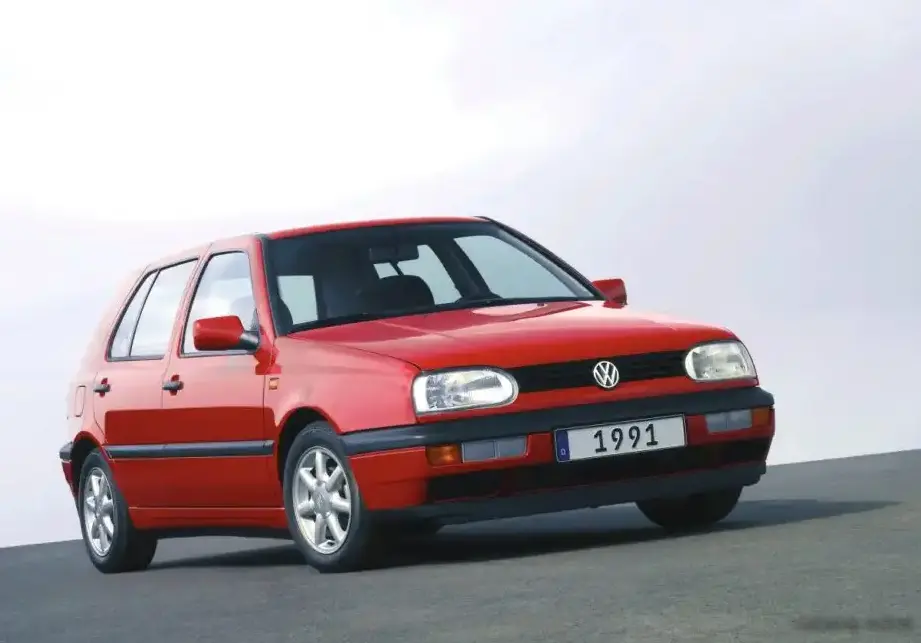
The Volkswagen Golf III 1.9 TDI, produced from 1996 to 1997, represents a significant step forward in diesel technology within the popular Golf range. Positioned as a fuel-efficient and practical option, this variant utilized the technologically advanced direct-injection diesel engine to deliver a compelling blend of performance and economy. It was a key offering within the Mk3 Golf lineup (1HX0/A3 platform), which itself was a pivotal model for Volkswagen, solidifying its reputation for build quality and engineering. The 1.9 TDI offered a more refined and powerful diesel experience compared to earlier Golf diesel models, appealing to drivers seeking a sensible and economical daily driver.
Technical Specifications
| Brand | Volkswagen |
| Model | Golf |
| Generation | Golf III |
| Type (Engine) | 1.9 TDI (110 Hp) |
| Start of production | 1996 |
| End of production | 1997 |
| Powertrain Architecture | Internal Combustion engine |
| Body type | Hatchback |
| Seats | 4 |
| Doors | 3-5 |
| Fuel consumption (urban) | 6 l/100 km (39.2 US mpg, 47.1 UK mpg, 16.7 km/l) |
| Fuel consumption (extra urban) | 4.2 l/100 km (56 US mpg, 67.3 UK mpg, 23.8 km/l) |
| Fuel consumption (combined) | 4.8 l/100 km (49 US mpg, 58.9 UK mpg, 20.8 km/l) |
| Fuel Type | Diesel |
| Acceleration 0 – 100 km/h | 10.8 sec |
| Acceleration 0 – 62 mph | 10.8 sec |
| Acceleration 0 – 60 mph | 10.3 sec |
| Maximum speed | 193 km/h (119.92 mph) |
| Weight-to-power ratio | 10.9 kg/Hp, 92.1 Hp/tonne |
| Weight-to-torque ratio | 5.1 kg/Nm, 196.7 Nm/tonne |
| Power | 110 Hp @ 4150 rpm |
| Power per litre | 58 Hp/l |
| Torque | 235 Nm @ 1900 rpm (173.33 lb.-ft. @ 1900 rpm) |
| Engine layout | Front, Longitudinal |
| Engine Model/Code | AFN |
| Engine displacement | 1896 cm3 (115.7 cu. in.) |
| Number of cylinders | 4 |
| Engine configuration | Inline |
| Cylinder Bore | 79.5 mm (3.13 in.) |
| Piston Stroke | 95.5 mm (3.76 in.) |
| Compression ratio | 19.5:1 |
| Number of valves per cylinder | 2 |
| Fuel injection system | Direct injection |
| Engine aspiration | Turbocharger, Intercooler |
| Valvetrain | OHC |
| Engine oil capacity | 4.3 l (4.54 US qt | 3.78 UK qt) |
| Coolant | 6.5 l (6.87 US qt | 5.72 UK qt) |
| Kerb Weight | 1195 kg (2634.52 lbs.) |
| Max. weight | 1630 kg (3593.53 lbs.) |
| Max load | 435 kg (959.01 lbs.) |
| Trunk (boot) space – minimum | 320 l (11.3 cu. ft.) |
| Trunk (boot) space – maximum | 677 l (23.91 cu. ft.) |
| Fuel tank capacity | 55 l (14.53 US gal | 12.1 UK gal) |
| Length | 4020 mm (158.27 in.) |
| Width | 1695 mm (66.73 in.) |
| Height | 1425 mm (56.1 in.) |
| Wheelbase | 2475 mm (97.44 in.) |
| Front track | 1464 mm (57.64 in.) |
| Rear (Back) track | 1428 mm (56.22 in.) |
| Drivetrain Architecture | The Internal combustion engine (ICE) drives the front wheels of the vehicle. |
| Drive wheel | Front wheel drive |
| Number of gears and type of gearbox | 5 gears, manual transmission |
| Front suspension | Wishbone |
| Rear suspension | Suspension with traction connecting levers |
| Front brakes | Ventilated discs |
| Rear brakes | Disc |
| Assisting systems | ABS (Anti-lock braking system) |
| Steering type | Steering rack and pinion |
| Power steering | Hydraulic Steering |
| Tires size | 185/60 R14 |
| Wheel rims size | 14 |
Powertrain & Engine Architecture
The heart of the Golf III 1.9 TDI is the 1.9-liter, four-cylinder diesel engine, specifically the AFN engine code. This engine was a significant advancement over previous Volkswagen diesel offerings, utilizing direct injection technology. Unlike older indirect injection systems, direct injection sprays fuel directly into the combustion chamber at extremely high pressure, resulting in more complete combustion, increased power, and improved fuel efficiency. The AFN engine featured a turbocharger with an intercooler, further boosting power output to 110 horsepower and 235 Nm (173 lb-ft) of torque. The engine employed an overhead camshaft (OHC) valvetrain with two valves per cylinder. The five-speed manual transmission was the standard offering, providing a good balance between performance and fuel economy. The engine’s longitudinal mounting was a characteristic of the platform.
Driving Characteristics
The 1.9 TDI with the five-speed manual transmission offered a surprisingly sprightly driving experience for a diesel. While not a sports car, the 235 Nm of torque available from just 1900 rpm provided ample pulling power for everyday driving and overtaking maneuvers. The gear ratios were well-chosen, allowing the engine to remain in its optimal torque band. Compared to the lower-powered 1.6-liter gasoline versions, the 1.9 TDI felt significantly more responsive. Compared to the more powerful VR6 models, the TDI prioritized fuel economy and low-end torque over outright horsepower. The manual transmission allowed for greater driver control, while the diesel engine’s inherent efficiency made it an ideal choice for long-distance journeys.
Equipment & Trim Levels
The Golf III 1.9 TDI typically came with a reasonable level of standard equipment. Base models included power steering, central locking, and electric front windows. Interior upholstery was typically cloth, with a functional and durable design. Optional extras included air conditioning, alloy wheels, a sunroof, and upgraded audio systems. Trim levels varied depending on the market, but generally, the 1.9 TDI sat in the mid-range of the Golf III lineup, offering a good balance of features and affordability. The dashboard layout was typical of the Mk3 Golf, with a clear and straightforward instrument cluster.
Chassis & Braking
The Golf III 1.9 TDI utilized a front-wheel-drive layout with a relatively simple suspension setup. The front suspension featured independent wishbones, while the rear employed a torsion beam axle. This configuration provided a comfortable ride and predictable handling. Braking duties were handled by ventilated discs on the front wheels and solid discs on the rear. Anti-lock Braking System (ABS) was standard, enhancing safety and stability during hard braking. The suspension was tuned to prioritize comfort and practicality, rather than outright sportiness.
Market Reception & Comparison
The Golf III 1.9 TDI was well-received by critics and consumers alike. It was praised for its fuel efficiency, strong torque, and overall reliability. Compared to the gasoline-powered Golfs, the TDI offered significantly better fuel economy, making it a popular choice for drivers covering high mileage. Compared to other diesel offerings in the market, the Golf III TDI stood out for its refinement and performance. Some critics noted that the diesel engine was slightly noisier than its gasoline counterparts, but this was generally considered a minor drawback given the benefits of improved fuel economy and torque.
Legacy
The 1.9 TDI engine, particularly the AFN variant, has earned a reputation for exceptional durability and longevity. Many examples are still on the road today, testament to the engine’s robust construction and reliable design. The Golf III 1.9 TDI remains a popular choice in the used car market, particularly among those seeking an economical and dependable vehicle. While maintenance costs can increase with age, the engine’s inherent reliability makes it a worthwhile investment for many. The engine’s success paved the way for further development of Volkswagen’s TDI technology, which continues to be a significant part of the company’s powertrain strategy.