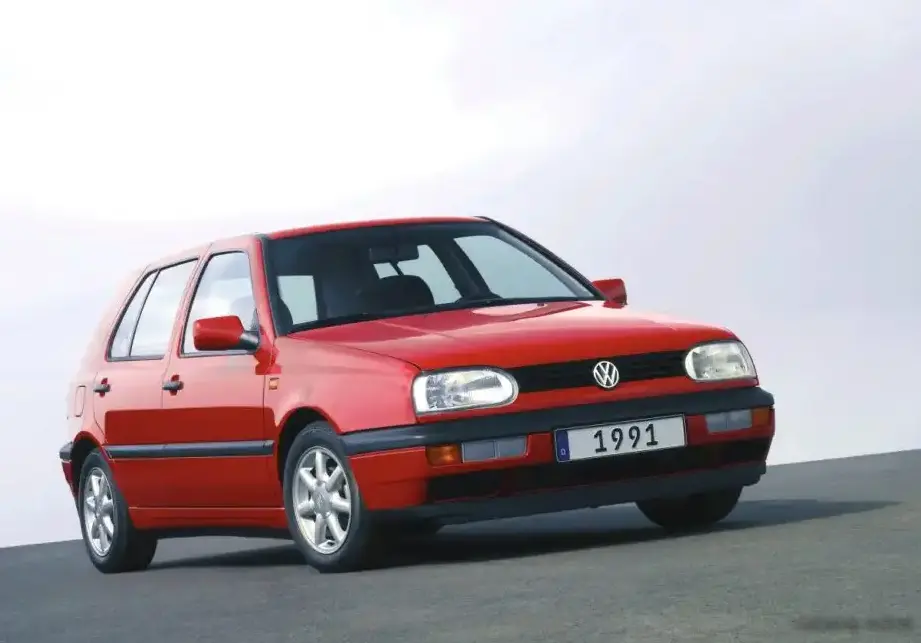
The Volkswagen Golf III 1.9 TDI (90 hp) was a popular variant of the third-generation Golf, produced between 1993 and 1997. Positioned as a fuel-efficient and practical option within the Golf III range, it represented a significant step forward in diesel technology for the European market. Built on the 1HX0/A3 platform, this model aimed to provide a balance between performance, economy, and affordability, appealing to a broad customer base seeking a versatile family hatchback. It was a key player in establishing Volkswagen’s reputation for quality diesel engines.
Technical Specifications
| Brand | Volkswagen |
| Model | Golf |
| Generation | Golf III |
| Type (Engine) | 1.9 TDI (90 Hp) |
| Start of production | 1993 |
| End of production | 1997 |
| Powertrain Architecture | Internal Combustion engine |
| Body type | Hatchback |
| Seats | 5 |
| Doors | 3-5 |
| Fuel consumption (urban) | 6.5 l/100 km (36.2 US mpg, 43.5 UK mpg, 15.4 km/l) |
| Fuel consumption (extra urban) | 4.9 l/100 km (48 US mpg, 57.6 UK mpg, 20.4 km/l) |
| Fuel consumption (combined) | 5.9 l/100 km (39.9 US mpg, 47.9 UK mpg, 16.9 km/l) |
| Fuel Type | Diesel |
| Acceleration 0 – 100 km/h | 12.5 sec |
| Acceleration 0 – 62 mph | 12.5 sec |
| Acceleration 0 – 60 mph | 11.9 sec |
| Maximum speed | 178 km/h (110.6 mph) |
| Emission standard | Euro 2 |
| Weight-to-power ratio | 13.3 kg/Hp, 75.3 Hp/tonne |
| Weight-to-torque ratio | 5.9 kg/Nm, 169 Nm/tonne |
| Power | 90 Hp @ 4000 rpm |
| Power per litre | 47.5 Hp/l |
| Torque | 202 Nm @ 1900 rpm (148.99 lb.-ft. @ 1900 rpm) |
| Engine layout | Front, Longitudinal |
| Engine Model/Code | 1Z |
| Engine displacement | 1896 cm3 (115.7 cu. in.) |
| Number of cylinders | 4 |
| Engine configuration | Inline |
| Cylinder Bore | 79.5 mm (3.13 in.) |
| Piston Stroke | 95.5 mm (3.76 in.) |
| Compression ratio | 19.5:1 |
| Number of valves per cylinder | 2 |
| Fuel injection system | Direct injection |
| Engine aspiration | Turbocharger, Intercooler |
| Valvetrain | OHC |
| Engine oil capacity | 4.3 l (4.54 US qt | 3.78 UK qt) |
| Coolant | 6.5 l (6.87 US qt | 5.72 UK qt) |
| Kerb Weight | 1195 kg (2634.52 lbs.) |
| Max. weight | 1630 kg (3593.53 lbs.) |
| Max load | 435 kg (959.01 lbs.) |
| Trunk (boot) space – minimum | 330 l (11.65 cu. ft.) |
| Trunk (boot) space – maximum | 687 l (24.26 cu. ft.) |
| Fuel tank capacity | 55 l (14.53 US gal | 12.1 UK gal) |
| Length | 4020 mm (158.27 in.) |
| Width | 1695 mm (66.73 in.) |
| Height | 1425 mm (56.1 in.) |
| Wheelbase | 2475 mm (97.44 in.) |
| Front track | 1464 mm (57.64 in.) |
| Rear (Back) track | 1428 mm (56.22 in.) |
| Drivetrain Architecture | The Internal combustion engine (ICE) drives the front wheels of the vehicle. |
| Drive wheel | Front wheel drive |
| Number of gears and type of gearbox | 5 gears, manual transmission |
| Front suspension | Wishbone |
| Rear suspension | Suspension with traction connecting levers |
| Front brakes | Disc |
| Rear brakes | Drum |
| Assisting systems | ABS (Anti-lock braking system) |
| Steering type | Steering rack and pinion |
| Power steering | Hydraulic Steering |
| Tires size | 175/70 R13 |
| Wheel rims size | 13 |
INTRODUCTION
The Volkswagen Golf III 1.9 TDI (90 hp) represented a significant advancement in diesel engine technology when it was introduced. This variant, produced from 1993 to 1997, was a cornerstone of the Golf III lineup, particularly in Europe where diesel engines were – and continue to be – highly favored for their fuel efficiency. The 1.9 TDI engine, designated with the code 1Z, quickly gained a reputation for its reliability and impressive torque output for its size. This model was available in both 3-door and 5-door hatchback configurations, catering to a wide range of buyers. It sat in the mid-range of the Golf III offerings, providing a more economical alternative to the petrol engines and a more accessible entry point than the more powerful TDI variants.
Powertrain & Engine Architecture
The heart of the Golf III 1.9 TDI (90 hp) is the 1Z engine, a 1.9-liter inline-four cylinder diesel engine. This engine utilized a direct injection system, a relatively new technology at the time, which significantly improved fuel efficiency and reduced emissions compared to older indirect injection diesels. The 1Z engine featured a single overhead camshaft (OHC) valvetrain operating two valves per cylinder. A turbocharger with an intercooler was employed to boost power output, delivering 90 horsepower at 4000 rpm and a substantial 202 Nm (148.99 lb-ft) of torque at just 1900 rpm. The engine’s robust construction and relatively simple design contributed to its longevity. The 90 hp variant was typically paired with a five-speed manual transmission, although a four-speed automatic transmission was also available, albeit less common. The automatic transmission, while offering convenience, did impact acceleration and fuel economy compared to the manual.
Driving Characteristics
The Golf III 1.9 TDI (90 hp) with the manual transmission offered a surprisingly engaging driving experience. While not a sports car, the engine’s strong low-end torque made it feel responsive in everyday driving situations. The gear ratios were well-chosen to maximize fuel efficiency and provide adequate acceleration. The automatic transmission version, however, felt noticeably slower, particularly during overtaking maneuvers. The automatic’s shift points were sometimes hesitant, and it didn’t allow the engine to operate in its optimal torque band as effectively as the manual. The suspension provided a comfortable ride, absorbing bumps and imperfections in the road well. Steering was precise and well-weighted, contributing to a confident feel behind the wheel.
Equipment & Trim Levels
The Golf III 1.9 TDI (90 hp) typically came equipped with a reasonable level of standard features. These included central locking, power steering, and an adjustable steering column. Interior upholstery was typically cloth, with a relatively simple dashboard layout. Optional extras included air conditioning, electric windows, a sunroof, and upgraded audio systems. Higher trim levels, such as the ‘GL’ and ‘GT’, offered additional features like alloy wheels, fog lights, and more luxurious interior trim. The base models were fairly spartan, focusing on practicality and affordability, while the higher trims aimed for a more premium feel.
Chassis & Braking
The Golf III 1.9 TDI (90 hp) utilized a front-wheel-drive layout with a MacPherson strut front suspension and a torsion beam rear suspension. The braking system consisted of disc brakes on the front wheels and drum brakes on the rear wheels. ABS (Anti-lock Braking System) was often included as standard equipment, enhancing safety. The suspension setup was tuned for comfort and stability, providing a balanced ride. The relatively lightweight nature of the car, combined with the effective braking system, ensured adequate stopping power.
Market Reception & Comparison
The Golf III 1.9 TDI (90 hp) was well-received by critics and consumers alike. It was praised for its fuel efficiency, reliability, and strong torque output. Compared to the petrol-powered Golf III models, the TDI offered significantly better fuel economy, making it a popular choice for high-mileage drivers. Compared to the more powerful 1.9 TDI 110 hp variant, the 90 hp version was more affordable and offered a slightly smoother driving experience, although at the expense of outright performance. The 90 hp TDI was often seen as the sweet spot in the Golf III range, offering a good balance of economy, performance, and price.
Legacy
The 1.9 TDI engine, particularly the 1Z variant found in the Golf III, has become legendary for its durability and longevity. Many examples are still on the road today, testament to the engine’s robust construction and relatively simple design. The Golf III 1.9 TDI (90 hp) remains a popular choice in the used car market, particularly among those seeking a reliable and economical vehicle. While maintenance costs can increase with age, the engine’s inherent reliability and readily available parts make it a relatively affordable car to keep on the road. The success of this engine paved the way for future generations of Volkswagen TDI engines, solidifying the brand’s reputation for diesel technology.