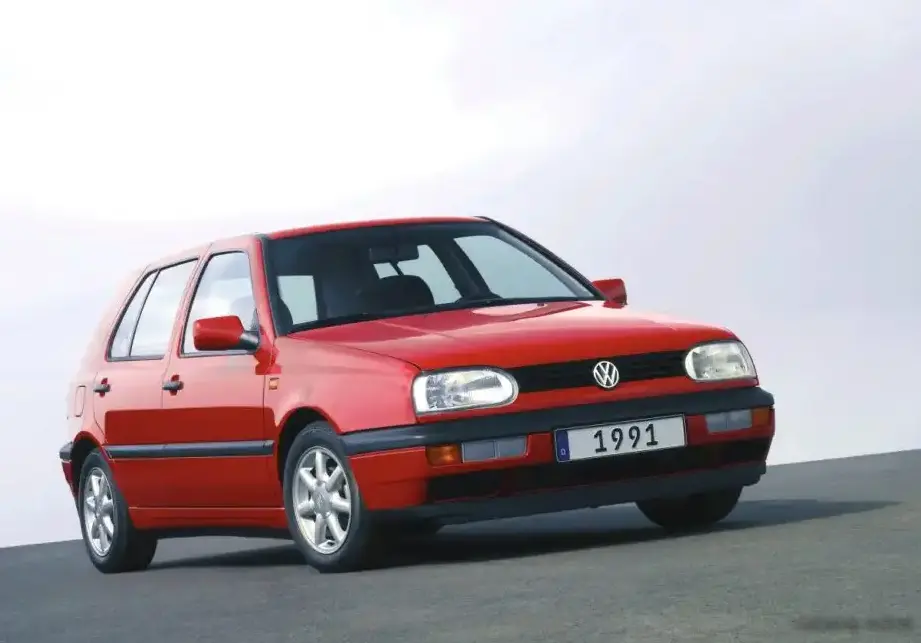
The Volkswagen Golf III 2.0 Syncro, produced between 1995 and 1997, represented a compelling all-wheel-drive option within the popular Golf Mk3 range. Positioned as a more capable and sure-footed variant, the 2.0 Syncro catered to drivers in regions experiencing inclement weather or desiring enhanced traction. It utilized Volkswagen’s Synchro all-wheel-drive system, differentiating it from the standard front-wheel-drive Golf models. This model was primarily sold in Europe, where the demand for all-wheel-drive compact cars was higher, though limited numbers were imported to other markets. The Golf III generation (1HX0/A3 platform) was a significant evolution for Volkswagen, introducing improved build quality, safety features, and a more refined driving experience compared to its predecessor.
| Brand | Volkswagen |
| Model | Golf |
| Generation | Golf III |
| Type (Engine) | 2.0 Syncro (115 Hp) |
| Start of production | 1995 |
| End of production | 1997 |
| Powertrain Architecture | Internal Combustion engine |
| Body type | Hatchback |
| Seats | 5 |
| Doors | 3-5 |
| Fuel consumption (combined) | 8.7 l/100 km (27 US mpg, 32.5 UK mpg, 11.5 km/l) |
| Fuel Type | Petrol (Gasoline) |
| Acceleration 0 – 100 km/h | 11 sec |
| Acceleration 0 – 62 mph | 11 sec |
| Acceleration 0 – 60 mph | 10.5 sec |
| Maximum speed | 193 km/h (119.92 mph) |
| Weight-to-power ratio | 11.1 kg/Hp, 90.2 Hp/tonne |
| Weight-to-torque ratio | 7.7 kg/Nm, 130.2 Nm/tonne |
| Power | 115 Hp @ 5400 rpm |
| Power per litre | 58 Hp/l |
| Torque | 166 Nm @ 3200 rpm (122.44 lb.-ft. @ 3200 rpm) |
| Engine layout | Front, Longitudinal |
| Engine Model/Code | 2E, ADY, AGG |
| Engine displacement | 1984 cm3 (121.07 cu. in.) |
| Number of cylinders | 4 |
| Engine configuration | Inline |
| Cylinder Bore | 82.5 mm (3.25 in.) |
| Piston Stroke | 92.8 mm (3.65 in.) |
| Compression ratio | 10:1 |
| Number of valves per cylinder | 2 |
| Fuel injection system | Multi-port manifold injection |
| Engine aspiration | Naturally aspirated engine |
| Valvetrain | OHC |
| Engine oil capacity | 3.8 l (4.02 US qt | 3.34 UK qt) |
| Coolant | 5.5 l (5.81 US qt | 4.84 UK qt) |
| Kerb Weight | 1275 kg (2810.89 lbs.) |
| Max. weight | 1715 kg (3780.93 lbs.) |
| Max load | 440 kg (970.03 lbs.) |
| Trunk (boot) space – minimum | 220 l (7.77 cu. ft.) |
| Trunk (boot) space – maximum | 577 l (20.38 cu. ft.) |
| Fuel tank capacity | 65 l (17.17 US gal | 14.3 UK gal) |
| Length | 4020 mm (158.27 in.) |
| Width | 1695 mm (66.73 in.) |
| Height | 1405 mm (55.31 in.) |
| Wheelbase | 2475 mm (97.44 in.) |
| Front track | 1478 mm (58.19 in.) |
| Rear (Back) track | 1448 mm (57.01 in.) |
| Drive wheel | All wheel drive (4×4) |
| Number of gears and type of gearbox | 5 gears, manual transmission |
| Front suspension | Wishbone |
| Rear suspension | Suspension with traction connecting levers |
| Front brakes | Ventilated discs |
| Rear brakes | Disc |
| Assisting systems | ABS (Anti-lock braking system) |
| Steering type | Steering rack and pinion |
| Power steering | Hydraulic Steering |
| Tires size | 185/60 R14 |
| Wheel rims size | 14 |
Powertrain & Engine Architecture
The Golf III 2.0 Syncro was powered by the Volkswagen 2E, ADY, or AGG inline four-cylinder engine. These engines, displacing 1984cc, were naturally aspirated and utilized a multi-port fuel injection system. The 2E engine, introduced earlier in the Mk3 range, was gradually replaced by the ADY and AGG variants, which incorporated minor refinements for improved emissions and fuel efficiency. The engine featured a single overhead camshaft (OHC) valvetrain with two valves per cylinder. The longitudinal engine layout was a key component of the Syncro system, allowing for a more efficient transfer of power to the rear wheels. The 5-speed manual transmission was the only gearbox option available with this engine, providing a direct connection to the drivetrain. The Syncro system itself employed a viscous coupling to distribute power between the front and rear axles, automatically adjusting the torque split based on available traction.
Driving Characteristics
The 115 horsepower and 122 lb-ft of torque produced by the 2.0-liter engine provided adequate, though not exhilarating, performance. Acceleration from 0-60 mph took around 10.5 seconds, and the top speed was approximately 119.92 mph. Compared to the more powerful VR6 models, the 2.0 Syncro offered a more economical driving experience. The Syncro system significantly enhanced handling and stability, particularly on slippery surfaces. The all-wheel-drive configuration reduced understeer and provided increased grip during cornering. The 5-speed manual transmission offered precise shifts, and the gear ratios were well-suited for everyday driving. While not a sports car, the 2.0 Syncro provided a confident and secure driving experience in a variety of conditions.
Equipment & Trim Levels
The 2.0 Syncro trim level typically included features such as power steering, ABS anti-lock brakes, and central locking. Interior appointments varied depending on the specific market and optional packages selected. Standard upholstery was typically cloth, with options for upgraded materials. Dashboard configurations were consistent with other Golf III models, featuring a functional and straightforward layout. Common optional extras included a sunroof, air conditioning, and upgraded audio systems. The Syncro models often received slightly upgraded interior trim details to distinguish them from the standard Golf variants.
Chassis & Braking
The Golf III 2.0 Syncro utilized a wishbone front suspension and a torsion beam rear suspension with traction connecting levers. The suspension was tuned to provide a comfortable ride while maintaining good handling characteristics. Braking duties were handled by ventilated discs at the front and solid discs at the rear. The ABS system provided enhanced braking control, particularly in emergency situations. The Syncro system added weight to the vehicle, necessitating slightly stiffer suspension components compared to the front-wheel-drive models.
Market Reception & Comparison
The Golf III 2.0 Syncro was generally well-received by automotive critics, who praised its all-wheel-drive capability and improved handling. However, some reviewers noted that the 115 horsepower engine felt somewhat underpowered, especially when fully loaded. Compared to the more popular 1.8-liter and VR6 models, the 2.0 Syncro offered a unique combination of practicality and all-weather performance. Fuel economy was comparable to other 2.0-liter Golf variants, averaging around 27 US mpg in combined driving. Reliability was generally good, although the Syncro system itself required periodic maintenance to ensure proper operation.
Legacy
The Golf III 2.0 Syncro remains a popular choice among enthusiasts seeking a classic Volkswagen with all-wheel-drive capability. The 2E, ADY, and AGG engines are known for their durability and relatively simple maintenance requirements. While finding well-maintained examples can be challenging, the 2.0 Syncro offers a unique and rewarding driving experience. Parts availability is generally good, although some Syncro-specific components may be more difficult to source. Today, these cars are appreciated for their blend of practicality, reliability, and all-weather performance, making them a desirable classic in the used car market.