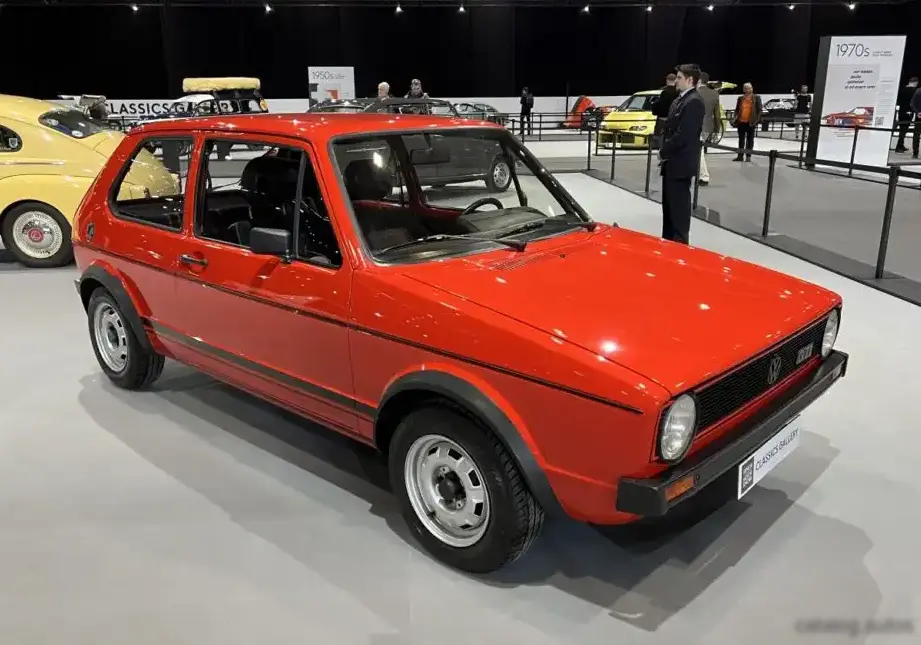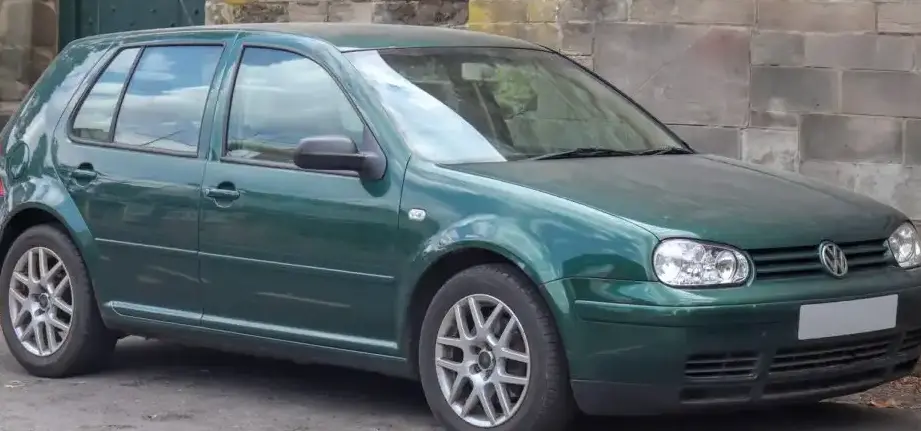
The Volkswagen Golf IV 1.8, produced between 1997 and 2000, represented a significant evolution in the Golf lineage. Falling within the Mk4 generation (Typ 1J), this variant occupied a crucial mid-range position in the Golf IV lineup, offering a balance between affordability, fuel efficiency, and acceptable performance. It was primarily marketed in Europe, where the Golf held a dominant position in the compact hatchback segment, competing with rivals like the Ford Focus, Opel/Vauxhall Astra, and Peugeot 306. The 1.8-liter engine, paired with a five-speed automatic transmission, aimed to provide a comfortable and convenient driving experience for a broad customer base.
Technical Specifications
| Brand | Volkswagen |
| Model | Golf |
| Generation | Golf IV |
| Type (Engine) | 1.8 (125 Hp) |
| Start of production | 1997 |
| End of production | 2000 |
| Powertrain Architecture | Internal Combustion engine |
| Body type | Hatchback |
| Seats | 5 |
| Doors | 3-5 |
| Fuel consumption (urban) | 11.7 l/100 km (20.1 US mpg) |
| Fuel consumption (extra urban) | 6.3 l/100 km (37.3 US mpg) |
| Fuel Type | Petrol (Gasoline) |
| Acceleration 0 – 100 km/h | 9.9 sec |
| Acceleration 0 – 62 mph | 9.9 sec |
| Acceleration 0 – 60 mph | 9.4 sec |
| Maximum speed | 201 km/h (124.9 mph) |
| Weight-to-power ratio | 9.6 kg/Hp |
| Weight-to-torque ratio | 7 kg/Nm |
| Power | 125 Hp @ 6000 rpm |
| Torque | 170 Nm @ 4200 rpm (125.39 lb.-ft. @ 4200 rpm) |
| Engine layout | Front, Transverse |
| Engine Model/Code | AGN |
| Engine displacement | 1781 cm3 (108.68 cu. in.) |
| Number of cylinders | 4 |
| Engine configuration | Inline |
| Cylinder Bore | 81 mm (3.19 in.) |
| Piston Stroke | 86.4 mm (3.4 in.) |
| Compression ratio | 10.3:1 |
| Number of valves per cylinder | 5 |
| Fuel injection system | Multi-port manifold injection |
| Engine aspiration | Naturally aspirated engine |
| Valvetrain | DOHC |
| Engine oil capacity | 4.5 l (4.76 US qt | 3.96 UK qt) |
| Coolant | 5 l (5.28 US qt | 4.4 UK qt) |
| Kerb Weight | 1195 kg (2634.52 lbs.) |
| Max. weight | 1695 kg (3736.84 lbs.) |
| Max load | 500 kg (1102.31 lbs.) |
| Trunk (boot) space – minimum | 330 l (11.65 cu. ft.) |
| Trunk (boot) space – maximum | 1184 l (41.81 cu. ft.) |
| Fuel tank capacity | 55 l (14.53 US gal | 12.1 UK gal) |
| Length | 4149 mm (163.35 in.) |
| Width | 1735 mm (68.31 in.) |
| Height | 1439 mm (56.65 in.) |
| Wheelbase | 2511 mm (98.86 in.) |
| Front track | 1513 mm (59.57 in.) |
| Rear (Back) track | 1494 mm (58.82 in.) |
| Drivetrain Architecture | The Internal combustion engine (ICE) drives the front wheels of the vehicle. |
| Drive wheel | Front wheel drive |
| Number of gears and type of gearbox | 5 gears, automatic transmission |
| Front suspension | Wishbone |
| Rear suspension | Coil spring |
| Front brakes | Ventilated discs |
| Rear brakes | Disc |
| Assisting systems | ABS (Anti-lock braking system) |
| Steering type | Steering rack and pinion |
| Power steering | Hydraulic Steering |
| Tires size | 195/65 R15 |
| Wheel rims size | 6J x 15 |
Powertrain & Engine Architecture
The heart of the Golf IV 1.8 was the AGN engine code, a 1781cc inline-four cylinder gasoline engine. This engine belonged to Volkswagen’s EA827 family, known for its relatively simple and robust design. It featured a cast iron block and an aluminum cylinder head, incorporating a dual overhead camshaft (DOHC) valvetrain with five valves per cylinder (three intake, two exhaust). This configuration aimed to improve breathing and enhance volumetric efficiency. Fuel delivery was managed by a Bosch Motronic multi-port fuel injection system, providing precise control over the air-fuel mixture. The automatic transmission used was typically a four-speed unit, designed for smooth and comfortable shifting. While not particularly sporty, it was well-suited to the engine’s torque characteristics.
Driving Characteristics
The 1.8-liter engine with the automatic transmission delivered a comfortable, if not exhilarating, driving experience. Acceleration from 0-60 mph took around 9.4 seconds, and top speed was approximately 125 mph. The automatic transmission, while convenient, did detract from the engine’s responsiveness. Gear changes were generally smooth, but the transmission’s programming prioritized fuel economy over performance. Compared to the five-speed manual version, the automatic felt noticeably slower, particularly during overtaking maneuvers. The 1.8 automatic was significantly less powerful than the Golf IV’s higher-performance variants, such as the 1.8T (turbocharged) and VR6 models. However, it offered a more refined and relaxed driving experience than the base 1.6-liter engine.
Equipment & Trim Levels
The Golf IV 1.8 automatic typically came equipped with a reasonable level of standard features. These included power windows, central locking, power steering, and an anti-lock braking system (ABS). Interior upholstery was usually cloth, with a relatively simple dashboard layout. Optional extras included air conditioning, alloy wheels, a sunroof, and a CD stereo system. Trim levels varied depending on the market, but generally, the 1.8 automatic sat in the mid-range of the Golf IV lineup, offering a step up in comfort and convenience compared to the base models.
Chassis & Braking
The Golf IV utilized a MacPherson strut front suspension and a multi-link rear suspension, providing a good balance between ride comfort and handling. The 1.8 automatic models typically featured ventilated disc brakes at the front and solid disc brakes at the rear. The suspension was tuned for comfort, resulting in a relatively soft ride. Stabilizer bars were fitted to both the front and rear axles to reduce body roll during cornering. The chassis was robust and well-engineered, contributing to the Golf IV’s reputation for solid build quality.
Market Reception & Comparison
The Golf IV 1.8 automatic was generally well-received by critics as a practical and reliable family car. It offered a good compromise between performance, fuel economy, and comfort. However, some reviewers criticized the automatic transmission for its lack of responsiveness and its impact on fuel consumption. Compared to the manual version, the automatic returned slightly lower fuel economy figures. In terms of reliability, the 1.8-liter engine proved to be generally dependable, although regular maintenance was essential. The 1.8T offered significantly more performance, while the diesel variants (like the 1.9 TDI) provided superior fuel economy.
Legacy
The Golf IV 1.8 automatic remains a popular choice in the used car market, particularly for buyers seeking a reliable and affordable hatchback. The AGN engine is known for its durability, and parts availability is generally good. While not a performance icon, the 1.8 automatic offers a comfortable and practical driving experience. Common issues include occasional oil leaks and wear and tear on the automatic transmission, but these are typically manageable with regular maintenance. The Golf IV’s enduring popularity is a testament to its well-rounded design and solid engineering, cementing its place as a classic of the modern hatchback era.