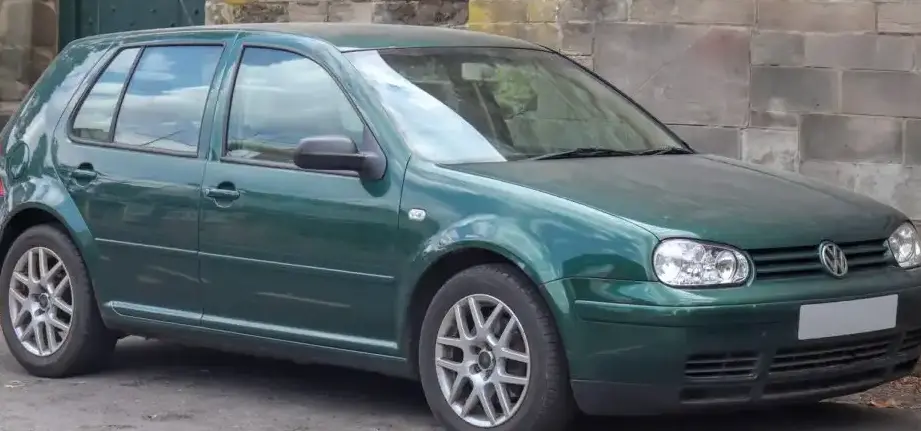
The Volkswagen Golf IV 1.9 SDI, produced from 1997 to 2003, represents an important iteration of Volkswagen’s iconic hatchback. Positioned as an economy-focused variant within the fourth generation Golf (Mk IV) lineup – internally designated the 1HX0/A3 platform – the 1.9 SDI served as a practical and fuel-efficient option for buyers prioritizing affordability and reliability over outright performance. It occupied the entry-level position in the Golf IV range, sitting below the 1.8 liter gasoline models and the more powerful 1.9 TDI diesel variants. This model was primarily aimed at the European market, where diesel engines held a significant share of the automotive landscape, but limited numbers were also available in other regions.
Technical Specifications
| Brand | Volkswagen |
| Model | Golf |
| Generation | Golf IV |
| Type (Engine) | 1.9 SDI (68 Hp) |
| Start of production | 1997 |
| End of production | 2003 |
| Powertrain Architecture | Internal Combustion engine |
| Body type | Hatchback |
| Seats | 5 |
| Doors | 3-5 |
| Fuel consumption (urban) | 6.9 l/100 km (34.1 US mpg) |
| Fuel consumption (extra urban) | 4.2 l/100 km (56 US mpg) |
| Fuel consumption (combined) | 5.1 l/100 km (46.1 US mpg) |
| Fuel Type | Diesel |
| Acceleration 0 – 100 km/h | 17.2 sec |
| Acceleration 0 – 62 mph | 17.2 sec |
| Acceleration 0 – 60 mph | 16.3 sec |
| Maximum speed | 160 km/h (99.42 mph) |
| Weight-to-power ratio | 17.2 kg/Hp |
| Weight-to-torque ratio | 8.8 kg/Nm |
| Power | 68 Hp @ 4200 rpm |
| Power per litre | 35.9 Hp/l |
| Torque | 133 Nm @ 2200-2600 rpm (98.1 lb.-ft. @ 2200-2600 rpm) |
| Engine layout | Front, Transverse |
| Engine Model/Code | AGP, AQM |
| Engine displacement | 1896 cm3 (115.7 cu. in.) |
| Number of cylinders | 4 |
| Engine configuration | Inline |
| Cylinder Bore | 79.5 mm (3.13 in.) |
| Piston Stroke | 95.5 mm (3.76 in.) |
| Compression ratio | 19:1 |
| Number of valves per cylinder | 2 |
| Fuel injection system | Direct injection |
| Engine aspiration | Naturally aspirated engine |
| Valvetrain | OHC |
| Engine oil capacity | 4.5 l (4.76 US qt | 3.96 UK qt) |
| Coolant | 6 l (6.34 US qt | 5.28 UK qt) |
| Kerb Weight | 1170 kg (2579.41 lbs.) |
| Max. weight | 1720 kg (3791.95 lbs.) |
| Max load | 550 kg (1212.54 lbs.) |
| Trunk (boot) space – minimum | 330 l (11.65 cu. ft.) |
| Trunk (boot) space – maximum | 1184 l (41.81 cu. ft.) |
| Fuel tank capacity | 55 l (14.53 US gal | 12.1 UK gal) |
| Length | 4149 mm (163.35 in.) |
| Width | 1735 mm (68.31 in.) |
| Height | 1439 mm (56.65 in.) |
| Wheelbase | 2511 mm (98.86 in.) |
| Front track | 1513 mm (59.57 in.) |
| Rear (Back) track | 1494 mm (58.82 in.) |
| Drivetrain Architecture | The Internal combustion engine (ICE) drives the front wheels of the vehicle. |
| Drive wheel | Front wheel drive |
| Number of gears and type of gearbox | 5 gears, manual transmission |
| Front suspension | Wishbone |
| Rear suspension | Coil spring |
| Front brakes | Ventilated discs |
| Rear brakes | Disc |
| Assisting systems | ABS (Anti-lock braking system) |
| Steering type | Steering rack and pinion |
| Power steering | Hydraulic Steering |
| Tires size | 175/80 R14 |
| Wheel rims size | 6J x 14 |
Powertrain & Engine Architecture
The Golf IV 1.9 SDI utilized the AGP or AQM engine codes, both representing variations of Volkswagen’s 1.9-liter inline-four diesel engine. This engine was a naturally aspirated, direct injection (DI) diesel, a technology that allowed for more efficient combustion and reduced emissions compared to older indirect injection systems. The direct injection system employed a distributor-type pump, delivering fuel directly into the combustion chamber at extremely high pressure. The engine featured an overhead camshaft (OHC) valvetrain with two valves per cylinder. Unlike the more sophisticated TDI engines, the SDI lacked a turbocharger or intercooler, resulting in lower power output but also greater simplicity and potentially improved long-term reliability. The five-speed manual transmission was the standard offering, providing a relatively long-geared setup optimized for fuel economy rather than rapid acceleration.
Driving Characteristics
The 1.9 SDI’s driving experience was characterized by its modest performance. With only 68 horsepower, acceleration was slow, taking over 17 seconds to reach 62 mph. However, the engine’s 133 Nm (98 lb-ft) of torque, available from 2200-2600 rpm, provided adequate pulling power for everyday driving situations. The long gearing of the five-speed manual transmission further emphasized fuel efficiency, but also meant that the engine often felt strained when attempting to accelerate quickly or maintain high speeds on inclines. Compared to the 1.8 liter gasoline versions, the SDI offered significantly better fuel economy but lacked the responsiveness and refinement of the petrol engines. The TDI models, with their turbocharging, provided a substantial performance upgrade, but at a higher purchase price and with potentially more complex maintenance requirements.
Equipment & Trim Levels
The Golf IV 1.9 SDI typically came with a basic level of equipment. Standard features generally included power steering, central locking, electric front windows, and an anti-lock braking system (ABS). Interior upholstery was typically cloth, and the dashboard featured a simple, functional design. Optional extras included air conditioning, alloy wheels, a radio/cassette player, and upgraded interior trim. The trim level varied slightly depending on the market, but the SDI generally represented the entry point into the Golf IV range, with fewer luxury features compared to higher-spec models.
Chassis & Braking
The Golf IV 1.9 SDI utilized a MacPherson strut front suspension and a coil spring rear suspension. The front brakes were ventilated discs, providing adequate stopping power, while the rear brakes were typically solid discs. The suspension setup was tuned for comfort and ride quality, rather than sporty handling. Stabilizer bars were fitted to both the front and rear axles to reduce body roll during cornering. The relatively lightweight nature of the SDI, compared to some of the more powerful Golf IV variants, contributed to its manageable handling characteristics.
Market Reception & Comparison
The Golf IV 1.9 SDI was generally well-received as a practical and economical choice. Critics praised its fuel efficiency and reliability, but noted its lack of performance. Compared to the 1.8 liter gasoline models, the SDI offered significantly better fuel economy, making it an attractive option for drivers covering long distances. However, the gasoline engines provided a more refined and enjoyable driving experience. The TDI models offered a compelling combination of performance and fuel economy, but were more expensive to purchase and maintain. The SDI’s simplicity and robust construction made it a popular choice for fleet operators and budget-conscious buyers.
Legacy
The 1.9 SDI engine, while not known for its power, proved to be remarkably durable and reliable. Many examples of the Golf IV 1.9 SDI remain on the road today, testament to the engine’s longevity. In the used car market, these models are often sought after by buyers looking for an affordable and dependable vehicle. Maintenance costs are generally low, and parts availability is good. While not a performance icon, the Golf IV 1.9 SDI holds a significant place in automotive history as a practical and fuel-efficient hatchback that provided reliable transportation for a generation of drivers.