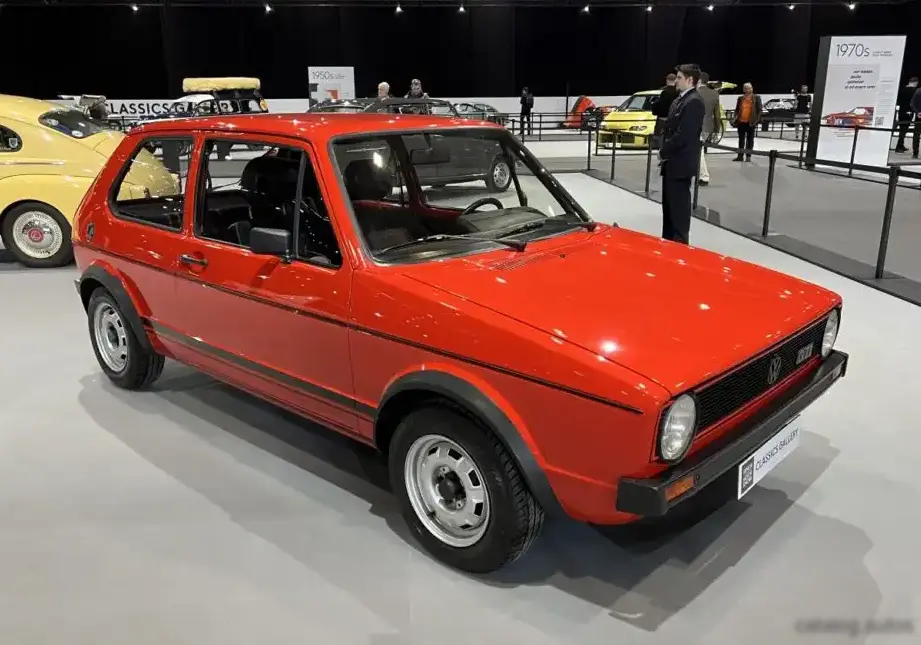
The Volkswagen Golf IV 3.2i VR6 24V RSI, produced from 2002 to 2003, represents the pinnacle of performance for the fourth-generation Golf. Positioned as the flagship model within the Golf IV range, the RSI (Rallye Sport Injection) offered a substantial increase in power and handling capabilities compared to other variants. Built on the 1HX0/A3 platform, this hot hatch aimed to deliver a refined yet exhilarating driving experience, appealing to enthusiasts seeking a premium and capable compact car. It was primarily marketed in Europe, offering a more focused alternative to front-wheel-drive performance Golfs.
Technical Specifications
| Brand | Volkswagen |
| Model | Golf |
| Generation | Golf IV |
| Type (Engine) | 3.2 i VR6 24V RSI (240 Hp) |
| Start of production | 2002 |
| End of production | 2003 |
| Powertrain Architecture | Internal Combustion engine |
| Body type | Hatchback |
| Seats | 5 |
| Doors | 3 |
| Fuel consumption (urban) | 16.4 l/100 km (14.3 US mpg, 17.2 UK mpg, 6.1 km/l) |
| Fuel consumption (extra urban) | 8.6 l/100 km (27.4 US mpg, 32.8 UK mpg, 11.6 km/l) |
| Fuel Type | Petrol (Gasoline) |
| Acceleration 0 – 100 km/h | 6.6 sec |
| Acceleration 0 – 62 mph | 6.6 sec |
| Acceleration 0 – 60 mph | 6.3 sec |
| Maximum speed | 247 km/h (153.48 mph) |
| Weight-to-power ratio | 6.1 kg/Hp, 162.7 Hp/tonne |
| Weight-to-torque ratio | 4.8 kg/Nm, 210.2 Nm/tonne |
| Power | 240 Hp @ 6200 rpm |
| Power per litre | 75.3 Hp/l |
| Torque | 310 Nm @ 3000 rpm (228.64 lb.-ft. @ 3000 rpm) |
| Engine layout | Front, Transverse |
| Engine Model/Code | BJS, BML |
| Engine displacement | 3189 cm3 (194.6 cu. in.) |
| Number of cylinders | 6 |
| Engine configuration | V-engine |
| Cylinder Bore | 84 mm (3.31 in.) |
| Piston Stroke | 95.9 mm (3.78 in.) |
| Compression ratio | 11.3:1 |
| Number of valves per cylinder | 4 |
| Fuel injection system | Multi-port manifold injection |
| Engine aspiration | Naturally aspirated engine |
| Valvetrain | DOHC |
| Engine oil capacity | 5.5 l (5.81 US qt, 4.84 UK qt) |
| Coolant capacity | 9.2 l (9.72 US qt, 8.09 UK qt) |
| Kerb Weight | 1475 kg (3251.82 lbs.) |
| Max. weight | 2000 kg (4409.25 lbs.) |
| Max load | 525 kg (1157.43 lbs.) |
| Trunk (boot) space – minimum | 330 l (11.65 cu. ft.) |
| Trunk (boot) space – maximum | 1185 l (41.85 cu. ft.) |
| Fuel tank capacity | 62 l (16.38 US gal, 13.64 UK gal) |
| Length | 4150 mm (163.39 in.) |
| Width | 1735 mm (68.31 in.) |
| Height | 1414 mm (55.67 in.) |
| Wheelbase | 2518 mm (99.13 in.) |
| Front track | 1513 mm (59.57 in.) |
| Rear track | 1487 mm (58.54 in.) |
| Drive wheel | All wheel drive (4×4) |
| Number of gears | 6 |
| Gearbox type | Manual transmission |
| Front suspension | Spring Strut |
| Rear suspension | Coil spring |
| Front brakes | Ventilated discs |
| Rear brakes | Ventilated discs |
| Assisting systems | ABS (Anti-lock braking system) |
| Steering type | Steering rack and pinion |
| Power steering | Hydraulic Steering |
| Tires size | 225/40 R18 |
| Wheel rims size | 18 |
INTRODUCTION
The Golf IV RSI, produced for a limited two-year run, was Volkswagen’s answer to the growing demand for high-performance hatchbacks. It distinguished itself from other Golf IV models through its potent 3.2-liter VR6 engine, all-wheel-drive system (4Motion), and a host of performance-oriented upgrades. The RSI was intended to be a more mature and refined performance offering than the earlier Golf GTI, targeting drivers who desired both exhilarating performance and everyday usability. It was a premium offering, priced significantly higher than other Golf IV variants.
Powertrain & Engine Architecture
The heart of the Golf IV RSI is the BJS or BML engine code 3.2-liter VR6 engine. This engine is a 24-valve, naturally aspirated V6, notable for its narrow V-angle (15 degrees) which allows it to be packaged more compactly than a traditional V6. The engine utilizes multi-port fuel injection and a double overhead camshaft (DOHC) valvetrain. The VR6’s unique firing order contributes to a distinctive exhaust note. The RSI exclusively came with a six-speed manual transmission, optimized to handle the engine’s substantial torque output and deliver precise gear changes. The 4Motion all-wheel-drive system is a permanent system, distributing power between the front and rear axles for enhanced traction and stability, particularly in adverse weather conditions.
Driving Characteristics
The Golf IV RSI delivers a noticeably more engaging driving experience than lower-powered Golf IV models. The 240 horsepower and 310 Nm (228.64 lb-ft) of torque provide brisk acceleration, with 0-60 mph times consistently around 6.3 seconds. The six-speed manual transmission allows drivers to keep the engine in its optimal power band, while the 4Motion system provides excellent grip and stability, inspiring confidence in corners. Compared to the 1.8T or even the VR5 Golfs, the RSI offers a more linear power delivery and a more refined overall feel. While not as raw or focused as some contemporary sports cars, the RSI strikes a compelling balance between performance and everyday usability.
Equipment & Trim Levels
The Golf IV RSI came generously equipped as standard. Interior features included sport seats upholstered in a unique “Lord Nelson” fabric, a leather-wrapped steering wheel and gearshift knob, and aluminum trim accents. The dashboard featured a distinctive instrument cluster with unique graphics. Standard equipment also included automatic climate control, power windows and locks, and an upgraded audio system. Optional extras included leather upholstery, sunroof, and a premium sound system. The RSI’s interior was designed to convey a sense of sporty luxury, differentiating it from the more utilitarian interiors of other Golf IV models.
Chassis & Braking
The Golf IV RSI benefited from several chassis upgrades to complement its increased power. The suspension was stiffened and lowered compared to standard Golf IV models, resulting in reduced body roll and improved handling. Larger diameter ventilated disc brakes were fitted to all four wheels, providing ample stopping power. The RSI also featured a thicker stabilizer bar to further enhance cornering stability. The 4Motion all-wheel-drive system contributed to the car’s balanced handling characteristics, distributing weight evenly and minimizing understeer.
Market Reception & Comparison
The Golf IV RSI was generally well-received by automotive critics, who praised its potent engine, capable handling, and refined interior. However, its relatively high price tag limited its appeal to a niche market. Compared to the Golf GTI, the RSI offered significantly more power and a more sophisticated all-wheel-drive system, but at a considerable price premium. Against rivals like the Audi S3 and Subaru WRX, the RSI offered a more understated and refined experience, but lacked the outright performance of those dedicated sports cars. Fuel economy, while respectable for a V6, was not a strong point, averaging around 16.4 l/100 km (14.3 US mpg) in urban driving.
Legacy
The Golf IV RSI remains a sought-after model among Volkswagen enthusiasts. The 3.2-liter VR6 engine is known for its durability and reliability, provided it is properly maintained. However, like any performance car, the RSI requires regular servicing and attention to detail. Parts availability can be a challenge, as some components are specific to the RSI and are no longer in production. Today, well-maintained examples command a premium in the used car market, appealing to collectors and drivers who appreciate its unique blend of performance, refinement, and exclusivity. The RSI represents a high point in the Golf IV lineage, showcasing Volkswagen’s engineering prowess and commitment to creating engaging and rewarding driving experiences.