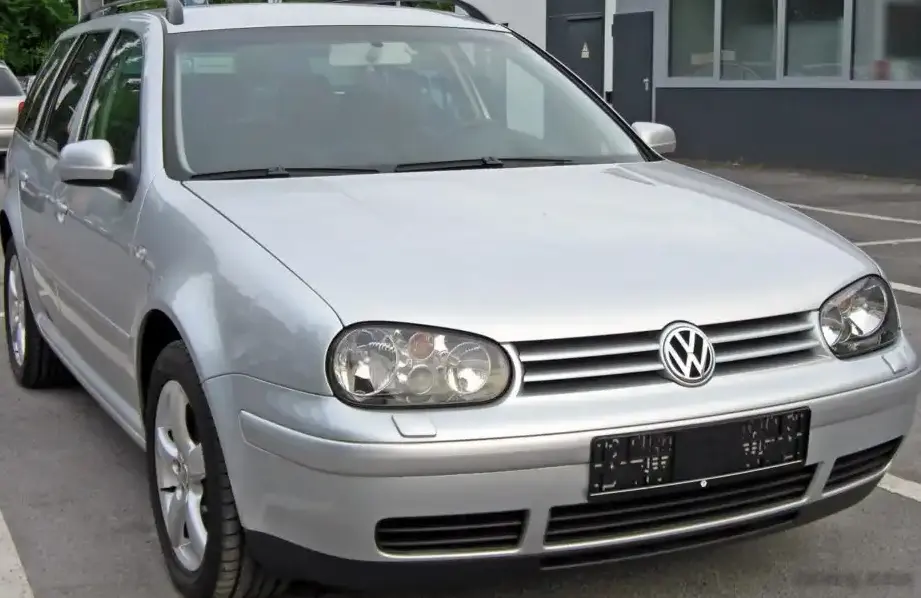
The Volkswagen Golf IV Variant 1.6 FSI (110 hp) was a station wagon (estate) model produced between 2002 and 2005. It represented a practical and fuel-efficient option within the fourth generation (Mk IV) Golf lineup, which utilized the Volkswagen Group’s 1HX0/A3 platform. Positioned as a mid-range offering, it bridged the gap between the base 1.4-liter models and the more powerful 1.8-liter turbocharged and diesel variants. The Variant body style, offering increased cargo capacity, was popular in Europe where estate cars held a significant market share, though it saw limited sales in the United States.
Technical Specifications
| Brand | Volkswagen |
| Model | Golf |
| Generation | Golf IV Variant |
| Type (Engine) | 1.6 FSI (110 Hp) |
| Start of production | 2002 |
| End of production | 2005 |
| Powertrain Architecture | Internal Combustion engine |
| Body type | Station wagon (estate) |
| Seats | 5 |
| Doors | 5 |
| Fuel consumption (urban) | 8.1 l/100 km (29 US mpg, 34.9 UK mpg, 12.3 km/l) |
| Fuel consumption (extra urban) | 5.3 l/100 km (44.4 US mpg, 53.3 UK mpg, 18.9 km/l) |
| Fuel consumption (combined) | 6.2 l/100 km (37.9 US mpg, 45.6 UK mpg, 16.1 km/l) |
| Fuel Type | Petrol (Gasoline) |
| Acceleration 0 – 100 km/h | 11.7 sec |
| Acceleration 0 – 62 mph | 11.7 sec |
| Acceleration 0 – 60 mph | 11.1 sec |
| Maximum speed | 194 km/h (120.55 mph) |
| Emission standard | Euro 4 |
| Weight-to-power ratio | 11.4 kg/Hp, 87.5 Hp/tonne |
| Weight-to-torque ratio | 8.1 kg/Nm, 123.3 Nm/tonne |
| Power | 110 Hp @ 5800 rpm |
| Power per litre | 68.8 Hp/l |
| Torque | 155 Nm @ 4400 rpm (114.32 lb.-ft. @ 4400 rpm) |
| Engine layout | Front, Transverse |
| Engine Model/Code | BAD |
| Engine displacement | 1598 cm3 (97.52 cu. in.) |
| Number of cylinders | 4 |
| Engine configuration | Inline |
| Cylinder Bore | 76.5 mm (3.01 in.) |
| Piston Stroke | 86.9 mm (3.42 in.) |
| Compression ratio | 12:1 |
| Number of valves per cylinder | 4 |
| Fuel injection system | Direct injection |
| Engine aspiration | Naturally aspirated engine |
| Engine oil capacity | 3.5 l (3.7 US qt | 3.08 UK qt) |
| Coolant | 6 l (6.34 US qt | 5.28 UK qt) |
| Kerb Weight | 1257 kg (2771.21 lbs.) |
| Max. weight | 1820 kg (4012.41 lbs.) |
| Max load | 563 kg (1241.2 lbs.) |
| Fuel tank capacity | 60 l (15.85 US gal | 13.2 UK gal) |
| Length | 4397 mm (173.11 in.) |
| Width | 1735 mm (68.31 in.) |
| Height | 1485 mm (58.46 in.) |
| Front track | 1513 mm (59.57 in.) |
| Rear track | 1494 mm (58.82 in.) |
| Minimum turning circle | 10 m (32.81 ft.) |
| Drivetrain Architecture | The Internal combustion engine (ICE) drives the front wheels of the vehicle. |
| Drive wheel | Front wheel drive |
| Number of gears | 5 gears, manual transmission |
| Front brakes | Ventilated discs |
| Rear brakes | Ventilated discs |
| Assisting systems | ABS (Anti-lock braking system) |
| Steering type | Steering rack and pinion |
| Power steering | Hydraulic Steering |
Powertrain & Engine Architecture
The Golf IV Variant 1.6 FSI was powered by the Volkswagen BAD engine, a 1.6-liter inline-four cylinder engine featuring direct fuel injection (FSI – Fuel Stratified Injection). This technology, relatively new at the time, allowed for more precise fuel delivery, resulting in improved fuel economy and reduced emissions compared to traditional port fuel injection systems. The engine produced 110 horsepower at 5800 rpm and 155 Nm (114 lb-ft) of torque at 4400 rpm. The FSI system utilized a high-pressure fuel pump to inject fuel directly into the combustion chamber, enabling a higher compression ratio of 12:1. The engine also featured four valves per cylinder and a single overhead camshaft. The transmission was a five-speed manual gearbox, offering a balance between fuel efficiency and driver engagement. While an automatic transmission was available on other Golf IV variants, it was less common with the 1.6 FSI engine.
Driving Characteristics
The 1.6 FSI engine, paired with the five-speed manual transmission, provided adequate performance for everyday driving. Acceleration from 0 to 60 mph took approximately 11.1 seconds, and the top speed was around 120.55 mph. However, it wasn’t a particularly sporty setup. The engine felt somewhat underpowered when fully loaded or tackling steep inclines. The gear ratios were tuned for fuel efficiency rather than outright acceleration. Compared to the 1.8-liter turbocharged engine, the 1.6 FSI lacked the punch and responsiveness favored by enthusiasts. The 1.9 TDI diesel offered significantly more torque and better fuel economy, appealing to drivers prioritizing efficiency and low-end power. The 1.6 FSI’s strength lay in its smooth operation and reasonable fuel consumption, making it a good choice for commuters and families.
Equipment & Trim Levels
The Golf IV Variant 1.6 FSI typically came with a reasonable level of standard equipment. This included central locking, electric front windows, power steering, and an ABS anti-lock braking system. Interior upholstery was usually cloth, with a relatively simple dashboard layout. Optional extras included alloy wheels, air conditioning, a CD stereo system, and rear electric windows. Higher trim levels, such as the ‘Trendline’ or ‘Comfortline’, added features like climate control, upgraded upholstery, and additional safety equipment. The Variant’s estate body style naturally offered a larger cargo area than the hatchback, making it a practical choice for those needing to transport larger items.
Chassis & Braking
The Golf IV Variant 1.6 FSI utilized a MacPherson strut front suspension and a multi-link rear suspension, providing a comfortable and controlled ride. The suspension was tuned for everyday use, prioritizing comfort over sporty handling. Front brakes were ventilated discs, while rear brakes were also ventilated discs, offering adequate stopping power for the vehicle’s weight and performance. The hydraulic power steering provided light and precise steering feel. Stabilizer bars were fitted to both the front and rear axles to reduce body roll during cornering.
Market Reception & Comparison
The Golf IV Variant 1.6 FSI was generally well-received by automotive critics as a practical and economical family car. It was praised for its fuel efficiency, comfortable ride, and spacious interior. However, some critics found the engine to be underpowered, particularly when compared to other engines in the Golf IV lineup. The 1.9 TDI diesel consistently outperformed the 1.6 FSI in terms of fuel economy and torque, while the 1.8T offered a more engaging driving experience. In terms of reliability, the 1.6 FSI engine proved to be generally dependable, although the direct injection system could require occasional maintenance.
Legacy
The Volkswagen Golf IV Variant 1.6 FSI remains a relatively common sight on European roads today. Its simple mechanical design and generally robust build quality contribute to its longevity. While not a particularly sought-after model by enthusiasts, it represents a solid and practical choice for those seeking an affordable and reliable used car. The FSI technology, while innovative for its time, has proven to be reasonably durable, although regular maintenance is essential to prevent issues with the fuel injectors. The Golf IV Variant 1.6 FSI’s legacy lies in its role as a fuel-efficient and versatile family car that offered a good balance of practicality and affordability.